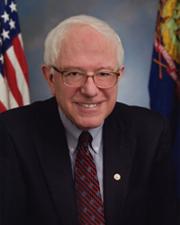
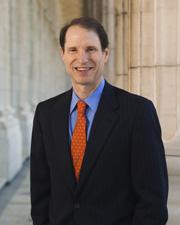
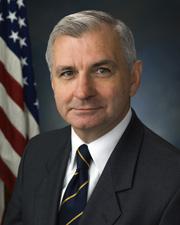
Mr. President, I rise today to join my colleagues in introducing the Nuclear Waste Administration Act. This bipartisan legislation, which has been years in the making, is also cosponsored by Senators…
Mr. President, I rise today to join my colleagues in introducing the Nuclear Waste Administration Act.
This bipartisan legislation, which has been years in the making, is also cosponsored by Senators Ron Wyden, Lisa Murkowski, and Lamar Alexander.
This legislation represents our best attempt to establish a workable, long term nuclear waste policy for the United States, something our Nation lacks today, by implementing the unanimous recommendations of the Blue Ribbon Commission on America's Nuclear Future.
First, the bill would create an independent entity, the Nuclear Waste Administration, with the sole purpose of managing nuclear waste.
Second, the bill would authorize the siting and construction of three types of waste facilities: a ``pilot'' waste storage facility for waste from shut down reactors, additional storage facilities for waste from other facilities, and permanent repositories to dispose of nuclear waste.
Third, the bill creates a consent-based siting process for both storage facilities and repositories, based on the successful efforts to build waste facilities in other countries.
The legislation requires that local, tribal, and State governments must consent to host waste facilities by signing incentive agreements, assuring that waste is only stored in the States and communities that want and welcome it.
Fourth, the bill would direct the fees currently collected from nuclear power ratepayers to fund nuclear waste management, currently about $750 M annually, into a new Working Capital Fund available to the Nuclear Waste Administration to fund construction of waste facilities.
Finally, the legislation ensures that the new Nuclear Waste Administration will be held accountable for meeting Federal responsibilities and stewarding Federal dollars.
The Nuclear Waste Administrator will be appointed by the President and confirmed by the Senate. The Administration will be overseen by a five-member Nuclear Waste Oversight Board, modeled on the Defense Nuclear Facilities Board. The administration will have an Inspector General. The administration will not be able to access the corpus of the Nuclear Waste Trust Fund until it reaches agreement with a host community. Appropriators may limit the administration's spending, if necessary. Finally, if the agency fails to open a nuclear waste facility by 2025, additional funding will cease.
The United States has 104 operating commercial nuclear power reactors that supply \1/5\ of our electricity and nearly 75 percent of our emissions-free power.
However, production of this nuclear power has a significant downside: it produces nuclear waste that will take hundreds of thousands of years to decay. Unlike most nuclear nations, the United States has no program to consolidate waste in centralized facilities.
Instead, we leave the waste next to operating and shut down reactors sitting in pools of water or in cement and steel dry casks. Today, approximately 70,000 metric tons of nuclear waste is stored at commercial reactor sites. This total grows by 2,000 metric tons each year.
In addition to commercial nuclear waste, we must also address waste generated from creating our nuclear weapons stockpile and powering our Navy.
The byproducts of nuclear energy represent some of the nation's most hazardous materials, but for decades we have failed to find a solution for their safe storage and permanent disposal. Most experts agree that this failure is not a scientific problem or an engineering impossibility; it is a failure of government.
Although the Federal Government signed contracts committing to pick up commercial waste beginning in 1998, the Federal government's waste program has failed to take possession of a single fuel assembly.
Our government has not honored its contractual obligations. We have been sued, and we have lost. So today, the Federal taxpayer is paying power plants to store the waste at reactor sites all over the nation. The cost of this liability is forecast to reach $20 billion by 2020.
As we try to manage our growing national debt, we simply cannot tolerate continued inaction.
In January 2012, the Blue Ribbon Commission on America's Nuclear Future completed a two-year comprehensive study and published unanimous recommendations for fixing our Nation's broken nuclear waste management program.
The commission found that the only long-term, technically feasible solution for this waste is to dispose of it in a permanent underground repository. Until such a facility is opened, which will take many decades, spent nuclear fuel will continue to be an expensive, dangerous burden.
That is why the commission also recommended that we establish an interim storage facility program to begin consolidating this dangerous waste, in addition to working on a permanent repository.
Finally, after studying the experience of all nuclear nations, the commission found that siting these facilities is most likely to succeed if the host states and communities are welcome and willing partners, not adversaries. The commission recommended that we adopt a consent based nuclear facility siting process.
Senators Wyden, Murkowski, Alexander, and I introduce this legislation in order to begin implementing those recommendations, putting us on a dual track toward interim and permanent storage facilities. The bill also reflects much work by former Senator Bingaman, who put forward a similar proposal as one of the last bills he wrote.
In my view, one of the most important provisions in this legislation is the pilot program to begin consolidating nuclear waste at safer, more cost-efficient centralized facilities on an interim basis. The legislation will facilitate interim storage of nuclear waste in above- ground canisters called dry casks. These facilities would be located in willing communities, away from population centers, and on thoroughly assessed sites.
Some members of Congress argue that we should ignore the need to interim storage sites and instead push forward with a plan to open Yucca Mountain as a permanent storage site.
Others argue that we should push forward only with repository plans in new locations.
But the debate over Yucca Mountain, a controversial waste repository proposed in the Nevada desert, which lacks State approval, is unlikely to be settled any time soon.
I believe the debate over a permanent repository does not need to be settled in order to recognize the need for interim storage. Even if Congress and a future president reverse course and move forward with Yucca Mountain, interim storage facilities would still be an essential component of a badly needed national nuclear waste strategy.
By creating interim storage sites, a top recommendation of the Blue Ribbon Commission, we would begin reducing Federal liability while providing breathing room to site and build a permanent repository.
Interim storage facilities could also provide alternative storage locations in emergency situations requiring spent nuclear fuel to be moved quickly from a reactor site.
Both short- and long-term storage programs are vital. Permanently disposing of our current inventory of nuclear waste will take several decades.
Because of that long timeline, interim storage facilities allow us to achieve significant cost savings for taxpayers and utility ratepayers by shuttering a number of nuclear plants.
One thing is certain: inaction is the most costly and least safe option.
Our longstanding stalemate is costly to taxpayers, utility ratepayers and communities that are involuntarily saddled with waste after local nuclear power plants have shut down.
It leaves nuclear waste all over the country, stored in all different ways.
It is long overdue for the government to honor its obligation to safely dispose of the Nation's nuclear waste.
This will be a long journey, but we must take the first step.
Mr. President, I rise today to introduce the Preventing Antibiotic Resistance Act.
This legislation puts in place reasonable safeguards on when and how antibiotics can be used in agriculture.
Few people realize that antibiotics are used in animal agriculture; even fewer realize the scope of the problem.
Last year 29.9 million pounds of antibiotics were sold in the U.S. for meat and poultry production. That is four times what was used in all forms of human medicine.
But there is more to be concerned about. The vast majority of these drugs are fed to healthy livestock and poultry, with little or no veterinary oversight. The drugs are used for growth promotion, to fatten up animals before slaughter.
At these low levels, the doses are not large enough, or powerful enough, to eliminate all the bacteria inside the animal's body. The small dose only kills off the weakest bacteria, leaving the strongest, most resistant bacteria behind to reproduce.
It creates a perfect storm for antibiotic resistance.
This isn't just a problem for the animals. These antibiotic resistant pathogens make their way into our food, our water, and our communities.
A recent study published in the medical journal Clinical Infectious Diseases found that nearly 50 percent of grocery store meat was contaminated with antibiotic resistant pathogens. Even more concerning, 25 percent of the meat was contaminated with pathogens that were resistant to three or more type of antibiotics.
Antibiotics are the closest thing to a ``silver bullet'' in human medicine. They are capable of wiping out a wide variety of bacterial infections. But we are in danger of losing this weapon in the fight against infectious diseases.
Tens of thousands of people in the U.S. die each year from antibiotic resistant infections. Unfortunately, we are learning the hard way that these precious, lifesaving drugs no longer work as well as they once did.
That is why I am so committed to this bill, to preserve the efficacy of these drugs that save lives every day.
The Preventing Antibiotic Resistance Act directs the Food and Drug Administration to prohibit the use of antibiotics in ways that accelerate antibiotic resistance.
The bill requires drug companies and producers to demonstrate that they are using antibiotics to treat clinically diagnosable diseases, not just to fatten their livestock.
But the bill takes a nuanced approach; the restrictions only apply to the limited number of antibiotics that are critical to human health. Any drug not used in human medicine is left untouched by this legislation.
The Preventing Antibiotic Resistance Act also preserves the ability of farmers to use all available antibiotics to treat sick animals. If a veterinarian identifies a sick animal, or a herd of animals that are likely to become sick, there are no restrictions on what drugs can be used.
This legislation is not revolutionary. Fifteen years ago Denmark became the first country to ban the routine use of antibiotics in the food and water of livestock. The entire European Union
followed suit in 2006. Australia, New Zealand, Chile, Korea, Thailand, the Philippines and Japan have also implemented full or partial bans on non-therapeutic uses of antibiotics.
But the majority of producers in the U.S. have not followed suit; and it is time for a wakeup call.
Put simply--irresponsible use of antibiotics endangers us all. And if the drugs can't be used safely, they shouldn't be used at all.
Some still refuse to accept the facts; they say that there is no evidence that antibiotic use in agriculture leads to infections in humans.
They are wrong.
Rear Admiral Ali S. Khan, MD, MPH, Assistant Surgeon General and Director of the Office of Public Health Preparedness and Response at the Centers for Disease Control and Prevention, testified in the House Energy Committee that ``studies related to Salmonella as both a human and animal pathogen, including many studies in the United States, have demonstrated that use of antibiotic agents in food animals results in antibiotic resistant bacteria in food animals, resistant bacteria are present in the food supply and are transmitted to humans, and resistant bacterial infections result in adverse human health consequences, e.g., increased hospitalization.''
Doctor Joshua Sharfstein, Principal Deputy Commissioner of the Food and Drug Administration, also testified at the hearing and agreed with Rear Admiral Khan. The FDA, he said, ``supports the conclusion that using medically important antimicrobial drugs for production purposes is not in the interest of protecting and promoting the public health.''
Quantitative evidence from the EU and Canada also support this conclusion. In response to public health concerns about the rise of resistance to the antibiotic cephalosporin in Salmonella and E. coli, chicken hatcheries in Quebec voluntarily stopped using the drug in February 2005. Following the ban, the public health agency of Canada reported a dramatic 89 percent decrease in the incidence of resistant salmonella in chicken meat and 77 percent decrease in related human infections. Once the drug was partially reintroduced in 2007, antibiotic resistant infections in people jumped back up 50 percent.
Unfortunately we are fighting an uphill battle with antibiotic resistant infections. Our tools and resources are diminishing even while the number and severity of these infections are increasing.
One example is Methicillin-resistant Staphylococcus aureus, or MRSA. According to the Centers for Disease Control and Prevention, CDC, MRSA infections in 1974 accounted for only two percent of the total number of staph infections; in 1995 it was 22 percent; and by 2004 it was 63 percent.
CDC estimates that by 2005, there were 94,360 MRSA infections in the United States. Tragically, about 19,000 of them, 20 percent, were fatal. The primary reason is that MRSA is virtually immune to almost every antibiotic used in modern medicine.
By comparison, during the same year there were 17,011 deaths due to AIDS; so the scope and consequence of this problem is stunning.
Of course not all MRSA is derived from the overuse of antibiotics on the farm. Many infections are acquired in the hospital, and it is believed that these bacteria became resistant to antibiotics due to the misuse of drugs in human medicine.
But MRSA is infecting individuals who have not been in a hospital setting.
There is strong evidence that at least one strain of MRSA infecting people is coming directly from livestock. This strain, known as ST398, has been shown to disproportionately infect farmers and their families. Like all MRSA, ST398 is resistant to the antibiotics methicillin and oxacillin. But resistance to other antibiotics is also common among ST398 strains which make treatment especially challenging.
A study by the CDC in December 2009 showed that hospital-acquired MRSA strains and community-acquired MRSA strains such as ST398 are trending in opposite directions.
The study found that community-acquired MRSA, a type of MRSA that did not emerge in the hospital setting and is not contracted there, increased 700 percent between 1999 and 2006.
By contrast, hospital-acquired MRSA cases declined roughly 10 percent over this same time period.
Over the past decade, it has become clear that MRSA is not just a problem for hospital administrators. More and more individuals are acquiring this devastating infection in their homes, at their gyms or in restaurants.
While it is exceedingly difficult to determine the exact extent that antibiotic use in agriculture influences individual MRSA cases, we know for certain that statistical evidence overwhelmingly suggests that a reduction of antibiotic use in agriculture will result in a reduction of highly resistant MRSA cases.
Since the recent data released by the FDA confirm that more than 80 percent of all antibiotics sold in this country are for meat and poultry producing animals, one can reasonably conclude that a reduction of antibiotic use in agriculture will result in a reduction of highly resistant MRSA cases.
This legislation will very likely reduce the number of resistant infections and will very likely save lives.
But some still claim that this legislation may make our food supply less safe. They argue that antibiotics keep our animals healthy, and healthy animals make for healthy food.
But research shows us that these concerns are misguided. More than 375 public, consumer and environmental health groups, including the American Medical Association, the American Public Health Association, and the Infectious Diseases Society of America, support the legislation.
This bill makes incremental changes to ensure that our actions on the farm do not negatively impact the health and well being of our farmers, their families, and every one of us who consume the food they produce.
I look forward to working with my colleagues to pass these critical reforms.