I
114th CONGRESS
1st Session
H. R. 1233
IN THE HOUSE OF REPRESENTATIVES
March 4, 2015
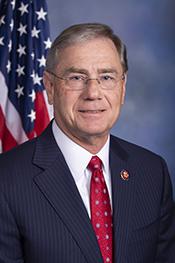
Mr. Luetkemeyer introduced the following bill; which was referred to the Committee on Financial Services
A BILL
To provide regulatory relief to community financial institutions, and for other purposes.
Short title
This Act may be cited as the Community Lending Enhancement and Regulatory Relief Act of 2015
or the CLEARR Act of 2015
.
Exception to annual privacy notice requirement under the Gramm-Leach-Bliley Act
Section 503 of the Gramm-Leach-Bliley Act (15 U.S.C. 6803) is amended by adding at the end the following:
Exception to annual notice requirement
A financial institution that—
provides nonpublic personal information only in accordance with the provisions of subsection (b)(2) or (e) of section 502 or regulations prescribed under section 504(b), and
has not changed its policies and practices with regard to disclosing nonpublic personal information from the policies and practices that were disclosed in the most recent disclosure sent to consumers in accordance with this section,
.
Community bank mortgage servicing asset capital requirements study
Definitions
For purposes of this section:
Banking institution
The term banking institution means an insured depository institution, Federal credit union, State credit union, bank holding company, or savings and loan holding company.
Basel III capital requirements
The term Basel III capital requirements
means the Global Regulatory Framework for More Resilient Banks and Banking Systems issued by the Basel Committee on Banking Supervision on December 16, 2010, as revised on June 1, 2011.
Federal banking agencies
The term Federal banking agencies
means the Board of Governors of the Federal Reserve System, the Office of the Comptroller of the Currency, the Federal Deposit Insurance Corporation, and the National Credit Union Administration.
Mortgage servicing asset
The term mortgage servicing asset
means those assets that result from contracts to service loans secured by real estate, where such loans are owned by third parties.
NCUA capital requirements
The term NCUA capital requirements
means the proposed rule of the National Credit Union Administration titled Risk-Based Capital
(80 Fed. Reg. 4340; January 27, 2015).
Nonsystemic banking institution
The term nonsystemic banking institution
means any banking institution other than an institution identified by the Financial Stability Board as a global systemically important bank
.
Other definitions
Banking definitions
The terms bank holding company
, insured depository institution
, and savings and loan holding company
have the meanings given such terms, respectively, under section 3 of the Federal Deposit Insurance Act (12 U.S.C. 1813).
Credit union definitions
The terms Federal credit union
and State credit union
have the meanings given such terms, respectively, under section 101 of the Federal Credit Union Act (12 U.S.C. 1752).
Study of the appropriate capital for mortgage servicing assets
In general
The Federal banking agencies shall, jointly, conduct a study of the appropriate capital requirements for mortgage servicing assets for nonsystemic banking institutions.
Issues To be studied
The study required by this subsection shall include, with a specific focus on nonsystemic banking institutions—
the risk to banking institutions of holding mortgage servicing assets;
the history of the market for mortgage servicing assets, including particularly the market for such assets in the period of the financial crisis;
the ability of banking institutions to establish a value for their mortgage servicing assets through periodic sales or other means;
regulatory approaches to mortgage servicing assets in addition to capital requirements that could be used to address concerns about the value of and ability to sell mortgage servicing assets;
the impact of imposing the Basel III capital requirements and the NCUA capital requirements on nonsystemic banking institutions on their ability to compete in the mortgage servicing business, including the need for economies of scale to compete in that business, and on their ability to provide service to consumers to whom they have made a mortgage loan;
an analysis of what the mortgage servicing marketplace would look like if the Basel III capital requirements and the NCUA capital requirements on mortgage servicing assets were fully implemented;
the significance of problems with mortgage servicing assets, if any, in banking institution failures and problem banking institutions, including specifically identifying failed banking institutions where mortgage servicing assets contributed to the failure; and
an analysis of the relevance of the Basel III capital requirements and the NCUA capital requirements on mortgage servicing assets to the banking systems of other significant developed countries.
Report to Congress
Not later than the end of the 1-year period beginning on the date of the enactment of this Act, the Federal banking agencies shall issue a report to the Committee on Banking, Housing, and Urban Affairs of the Senate and the Committee on Financial Services of the House of Representatives containing—
the results of the study required under paragraph (1); and
any analysis on the specific issue of mortgage servicing assets undertaken by the Federal banking agencies prior to finalizing regulations implementing the Basel III capital requirements and the NCUA capital requirements.
Delay of rulemaking
Rules on mortgage servicing assets
Notwithstanding any other provision of law, no regulation to implement the Basel III capital requirements or the NCUA capital requirements with respect to mortgage servicing assets for nonsystemic banking institutions shall take effect before the end of the 6-month period beginning on the date the report is issued under subsection (b)(3).
Final rule requirements
Before any final rule is issued by a Federal banking agency with respect to capital requirements on mortgage servicing assets for nonsystemic banking institutions, the Federal banking agency shall—
if the related proposed rule was issued before the date on which the report is issued under subsection (b)(3), issue a new proposed rule for public comment; and
consider regulatory approaches to mortgage servicing assets that could address concerns about the value of and ability to sell mortgage servicing assets.
Community Institution Mortgage Relief
Exemption from escrow requirements for loans held by small creditors
Section 129D(c) of the Truth in Lending Act (15 U.S.C. 1639d(c)), as added by section 1461(a) of the Dodd-Frank Wall Street Reform and Consumer Protection Act, is amended—
by redesignating paragraphs (1), (2), (3), and (4) as subparagraphs (A), (B), (C), and (D) and moving such subparagraphs 2 ems to the right;
by striking The Board
and inserting the following:
In general
The Board
; and
by adding at the end the following new paragraph:
Treatment of loans held by smaller creditors
The Board shall, by regulation, exempt from the requirements of subsection (a) any loan secured by a first lien on a consumer’s principle dwelling, if such loan is held by a creditor with assets of $10,000,000,000 or less.
.
Modification to exemption for small servicers of mortgage loans
Section 6 of the Real Estate Settlement Procedures Act of 1974 (12 U.S.C. 2605) is amended by adding at the end the following:
Small Servicer Exemption
The Bureau shall, by regulation, provide exemptions to, or adjustments for, the provisions of this section for servicers that annually service 20,000 or fewer mortgage loans, in order to reduce regulatory burdens while appropriately balancing consumer protections.
.
Access to Affordable Mortgages
Exemption from property appraisal requirements for lower-Cost dwellings
Section 129H of the Truth in Lending Act (15 U.S.C. 1639h) is amended by adding at the end the following new subsection:
Exemption for higher-Risk mortgages
This section shall not apply to a higher-risk mortgage loan of $250,000 or less if such loan appears on the balance sheet of the creditor of such loan for a period of not less than 3 years.
.
Exemption from penalties for failure To report appraisers
Paragraph (1) of section 129E(k) of the Truth in Lending Act (15 U.S.C. 1639e(k)(1)) is amended by inserting after this section
the following: , other than subsection (e),
.
Exemption from appraisal standard requirements for lower-Cost dwellings
Section 1110 of the Financial Institutions Reform, Recovery, and Enforcement Act of 1989 (12 U.S.C. 3339) is amended—
by striking Each Federal financial institutions regulatory agency
and inserting the following:
Real estate appraisals in connection with federally related transactions
Each Federal financial institutions regulatory agency
;
by striking Each such agency or instrumentality
and inserting the following:
Additional standards
Each such agency or instrumentality described under subsection (a)
; and
by adding at the end the following new subsection:
Exception for certain higher-Risk mortgage loans
Standards prescribed under this section shall not apply to a real estate appraisal or evaluation conducted in connection with a higher-risk mortgage loan (as defined in section 129H(f) of the Truth in Lending Act (15 U.S.C. 1639h(f))) of $250,000 or less if such loan appears on the balance sheet of the creditor of such loan for a period of not less than 3 years.
.
Short form call report and examination cycle
In general
Section 7(a) of the Federal Deposit Insurance Act (12 U.S.C. 1817(a)) is amended by adding at the end the following:
Short form reporting
In general
The appropriate Federal banking agencies shall issue regulations allowing for a reduced reporting requirement for covered depository institutions when making the first and third report of condition for a year, as required pursuant to paragraph (3).
Covered depository institution defined
For purposes of this paragraph, the term covered depository institution
means an insured depository institution that—
has a CAMELS composite rating of 1 or 2 under the Uniform Financial Institutions Rating System (or an equivalent rating under a comparable rating system) as of the most recent examination of such institution; and
satisfies such other criteria as the appropriate Federal banking agencies determine appropriate.
.
Longer examination cycle
Section 10(d) of the Federal Deposit Insurance Act (12 U.S.C. 1820(d)) is amended—
by redesignating paragraphs (5) through (10) as paragraphs (6) through (11), respectively;
in each of paragraphs (8) and (9), as so redesignated, by striking paragraph (6)
and inserting paragraph (7)
; and
by inserting after paragraph (4) the following:
24-month rule for certain institutions
With respect to an insured depository institution and notwithstanding paragraph (4), paragraphs (1), (2), and (3) shall apply with 24-month
substituted for 12-month
if the insured depository institution—
meets the requirements under subparagraphs (B) through (D) of paragraph (4); and
is a covered depository institution, as defined under section 7(a)(12)(B).
.
Coordination among financial institutions
Chapter 53 of title 31, United States Code, is amended—
by inserting after section 5332 the following new section:
Coordination among financial institutions
In general
In the case of an entry received via an automated clearing house, no receiving depository financial institution shall be required to verify that the entry is not a prohibited transaction, if the originating depository financial institution has warranted, pursuant to the automated clearing house rules governing such entry or otherwise, that the originating depository financial institution has complied with the sanctions programs administered by the Office of Foreign Assets Control in connection with such entry.
Definitions
For purposes of this section:
Automated clearing house
The term automated clearing house
means a funds transfer system governed by rules which provide for the interbank clearing of electronic entries for participating depository financial institutions.
Depository financial institution
The term depository financial institution
means—
any insured depository institution, as such term is defined under section 3 of the Federal Deposit Insurance Act (12 U.S.C. 1813);
any depository institution which is eligible to apply to become an insured depository institution under section 5 of the Federal Deposit Insurance Act (12 U.S.C. 1815);
any insured credit union, as defined in section 101 of the Federal Credit Union Act (12 U.S.C. 1752); and
any credit union which is eligible to apply to become an insured credit union pursuant to section 201 of the Federal Credit Union Act (12 U.S.C. 1781).
Entry
The term entry
means an order to request for the transfer of funds through an automated clearing house.
Originating depository financial institution
The term originating depository financial institution
means a depository financial institution that transmits entries via an automated clearing house for transmittal to a receiving depository financial institution.
Prohibited transaction
The term prohibited transaction
means a funds transfer originated on behalf of a person to or from whom funds transfers are restricted by a sanctions program administered by the Office of Foreign Assets Control, including persons appearing on the list of specially designated nationals and blocked persons maintained by the Office of Foreign Assets Control.
Receiving depository financial institution
The term receiving depository financial institution
means a depository financial institution that receives entries via an automated clearing house from an originating depository financial institution for debit or credit to the accounts of its customers.
; and
in the table of contents for such chapter by inserting after the item relating to section 5332 the following new item:
5333. Coordination among financial institutions.
.
Changes required to small bank holding company policy statement on assessment of financial and managerial factors
Before the end of the 6-month period beginning on the date of the enactment of this Act, the Board of Governors of the Federal Reserve System shall revise the Small Bank Holding Company Policy Statement on Assessment of Financial and Managerial Factors (12 C.F.R. part 225—appendix C) to raise the consolidated asset threshold under such policy statement from $1,000,000,000 (as adjusted by Public Law 113–250) to $5,000,000,000.
Safe harbor for certain loans held on portfolio
In general
Section 129C of the Truth in Lending Act (15 U.S.C. 1639c) is amended by adding at the end the following:
Safe harbor for certain loans held on portfolio
Safe harbor for creditors that are depository institutions
In general
A creditor that is a depository institution shall not be subject to suit for failure to comply with subsection (a), (c)(1), or (f)(2) of this section or section 129H with respect to a residential mortgage loan, and the banking regulators shall treat such loan as a qualified mortgage, if—
the creditor has, since the origination of the loan, held the loan on the balance sheet of the creditor; and
all prepayment penalties with respect to the loan comply with the limitations described under subsection (c)(3).
Exception for certain transfers
In the case of a depository institution that transfers a loan originated by that institution to another depository institution by reason of the bankruptcy or failure of the originating depository institution or the purchase of the originating depository institution, the depository institution transferring such loan shall be deemed to have complied with the requirement under subparagraph (A)(i).
Safe harbor for mortgage originators
A mortgage originator shall not be subject to suit for a violation of section 129B(c)(3)(B) for steering a consumer to a residential mortgage loan if—
the creditor of such loan is a depository institution and has informed the mortgage originator that the creditor intends to hold the loan on the balance sheet of the creditor for the life of the loan; and
the mortgage originator informs the consumer that the creditor intends to hold the loan on the balance sheet of the creditor for the life of the loan.
Definitions
For purposes of this subsection:
Banking regulators
The term banking regulators
means the Federal banking agencies, the Bureau, and the National Credit Union Administration.
Depository institution
The term depository institution
has the meaning given that term under section 19(b)(1) of the Federal Reserve Act (12 U.S.C. 505(b)(1)).
Federal banking agencies
The term Federal banking agencies
has the meaning given that term under section 3 of the Federal Deposit Insurance Act.
.
Rule of construction
Nothing in the amendment made by this section may be construed as preventing a balloon loan from qualifying for the safe harbor provided under section 129C(j) of the Truth in Lending Act if the balloon loan otherwise meets all of the requirements under such subsection (j), regardless of whether the balloon loan meets the requirements described under clauses (i) through (iv) of section 129C(b)(2)(E) of such Act.