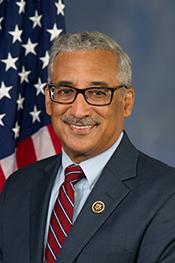
Madam Speaker, it is my pleasure to yield 3 minutes to the distinguished gentleman from Georgia (Mr. Johnson), an active and committed member of the House Judiciary Committee and ranking member on…
Madam Speaker, it is my pleasure to yield 3 minutes to the distinguished gentleman from Georgia (Mr. Johnson), an active and committed member of the House Judiciary Committee and ranking member on the Commercial Subcommittee.
Madam Speaker, it is my privilege to yield 3 minutes to the gentleman from Virginia (Mr. Scott), who has served so ably on this committee, and we congratulate him for his ranking position on the Education Committee.
Madam Speaker, I yield myself such time as I may consume.
We started out this afternoon by saying that we join together in stopping the scourge of human trafficking and sex trafficking, and I still stand by that premise. I support the Stop Advertising Victims of Exploitation Act. I do believe that adding advertising and having the provision in the law that includes mens rea is an important protection, that there must be an intent to sell and to advertise victims of exploitation.
This, of course, is part of a number of proposals that we are considering today--and we hope we are successful--to combat sex trafficking; but, as we have discussed with respect to these other bills, much more must be done to prevent sex trafficking as well as to aggressively investigate and prosecute these crimes. H.R. 285 amends the current Federal sex trafficking statute so that advertising would now be one of the prohibitive means of facilitating this type of exploitive criminal conduct.
We know, of course, that technology, however, sometimes is tricky. The bill correctly recognizes the fact that sex traffickers increasingly obtain customers for their illegal acts through the means of mass communication, either through various forms of print media or via the Internet. Maybe they throw in the cell phone or hard line as well, but they are out to get their victim. They are out to get that child. They are out to get that young woman or young man, boy or girl, and we must stop them in their tracks. In fact, sex traffickers use generalized marketplace Web pages to advertise, as well as sites and pages devoted to advertising the availability of commercial sex.
While the Internet has enriched our lives greatly, these sex traffickers are only interested in using it in the most vile manner; and they use the Internet to perpetrate heinous criminal schemes, such as the selling of minors for sex. Without question, sex traffickers who advertise their scheme should be penalized for their criminal acts.
While I realize that some have raised questions about how the advertising prohibitions under this bill would apply to online companies, I am concerned that we have a free use of that, if I might throw in a word, ``net neutrality.'' Because of this, we adopted an amendment during the Judiciary Committee's markup last Congress and now again, in a bipartisan effort, to address such concerns. That amendment is included in the text of H.R. 285.
We know, for example, however, that with the way the Internet is, some innocent person might wind up finding things on their site that they may not have had anything to do with. We hope the standard of mens rea will help those individuals have a defense.
So as it relates to this legislation, I raise concerns, as my colleagues have done, about the utilization, conduct, of mandatory minimums, primarily because of the vastness of the Internet, and our friends made the point that this advertising could wind up or some act could wind up on there without their knowledge.
We know the one-size-fits-all approach, which is part of the mandatory minimum approach, to criminal actions in the form of mandatory minimums has greatly contributed to our Nation's crisis of overincarceration, and our Judiciary Committee, rightly so, has looked at this over the years.
In the markup of this bill, the Judiciary Committee did not adopt an amendment that would have removed application of the statute's mandatory minimum penalties and instead allow a judge to apply an appropriate sentence under the circumstances of the case up to the statute's existing penalty, which I support enthusiastically, life in prison.
Given the complicated nature of Internet communications networks with respect to how advertisements are delivered, the role of the judge might help to carve through, to ferret out, the facts and determine the level of guilt. So authorizing life imprisonment is a good thing. It would allow sufficient latitude for the imposition of extremely lengthy sentences where appropriate.
I am hoping as we move forward with this legislation, which has a very important premise and point, that we will have the opportunity to discuss with our colleagues in the Senate to see how we can best make sure that this bill works to, in essence, target the bad guys and make sure that it does it fairly and directly, because sex trafficking, as I have always said on this floor, should be weeded out. Sex trafficking should not be.
I ask my colleagues again to consider the mandatory minimum. I ask my colleagues to support this legislation.
Madam Speaker, H.R. 285, the ``Stop Advertising Victims of Exploitation Act,'' is among a number of important proposals we are considering today to combat sex trafficking.
As we have discussed with respect to these other bills, much more must be done to prevent sex trafficking as well as to aggressively investigate and prosecute these crimes.
H.R. 285 amends the current federal sex trafficking statute so that advertising would now be one of the prohibited means of facilitating this type of exploitative criminal conduct.
The bill correctly recognizes the fact that sex traffickers increasingly obtain customers for their illegal acts through the means of mass communication, either through various forms of print media or via the Internet.
In fact, sex traffickers use generalized marketplace Web pages to advertise, as well as sites and pages devoted to advertising the availability of commercial sex.
While the Internet has enriched our lives greatly, these sex traffickers use the Internet to perpetrate heinous criminal schemes such as the selling of minors for sex.
Without question, sex traffickers who advertise their schemes should be penalized for their criminal acts, while I recognize that some have raised questions about how the advertising prohibitions under this bill would apply to online companies.
Because of this, we adopted an amendment during the Judiciary Committee's markup last Congress to help address such concerns. That amendment is included in the text of H.R. 285.
Nevertheless, I cannot support this bill in its current form because it would subject yet another category of conduct to mandatory minimum sentences.
Mandatory minimums lead to sentences that sometimes are not appropriate based on the facts of a particular case. A one-size-fits- all approach to criminal actions in the form of mandatory minimums has greatly contributed to our Nation's crisis of overincarceration.
In the markup of this bill, the Judiciary Committee declined to adopt an amendment that would have removed application of the statute's mandatory minimum penalties and instead allow a judge to apply an appropriate sentence--under the circumstances of the case--up to the statute's existing maximum penalty of life in prison.
Given the complicated nature of internet communications networks with respect to how advertisements are delivered, the role of the judge in evaluating each case is particularly important.
And, authorizing life imprisonment would allow sufficient latitude for the imposition of extremely lengthy sentences--when appropriate.
Because of this defect involving mandatory minimum sentences, I must oppose the bill that we consider today.
By voting ``no,'' the House will allow the Judiciary Committee time to fix this serious flaw.
With this important consideration in mind, I must ask my colleagues to oppose the bill today so that we may consider a better bill dealing with this aspect of sex trafficking in the near future.
I reserve the balance of my time.
Madam Speaker, I would ask the gentleman from Wisconsin, the chairman, if he has any further speakers.
Madam Speaker, I will continue to reserve the balance of my time.
Madam Speaker, in closing, I yield myself such time as I might consume.
Madam Speaker, we have had three bills so far, and we are getting ready to offer two others that all speak to this very devastating impact on our children--human trafficking and sex trafficking. I think the Stop Advertising Victims of Exploitation Act, H.R. 285, does focus on a particular niche that is heinous.
Our children are on the Internet, they are tech savvy, and they easily can become victims of an attractive site or attractive sounds and music, so I think this legislation, again, pinpoints a very serious issue.
The bill is an amendment of an existing legislation that includes a mens rea. There must be intent; but we do know, in the course of legislation, we have the opportunity to make sure that what we do does meet the test of getting those who are truly the perpetrators.
I would hope as this bill moves to the Senate, as we recognize the importance of this legislation, we, again, be reminded that one size does not often fit all and that judges can rightly have discretion to a sentence of life.
I ask my colleagues to support this legislation so that we can have a comprehensive approach to legislative bills that have been on the floor today to attack head on, if you will, those who prey on our children, young men and women, people who find themselves lost with no place to go and become the serious victims of child pornography, sex trafficking, and human trafficking. As Members, we know that, many times, the entire life of that individual is changed forever.
I yield back the balance of my time and ask for support of the underlying bill.