Mr. Speaker, I move to suspend the rules and pass the bill (H.R. 810) to authorize the programs of the National Aeronautics and Space Administration, and for other purposes. Mr. Speaker, I ask…
Mr. Speaker, I move to suspend the rules and pass the bill (H.R. 810) to authorize the programs of the National Aeronautics and Space Administration, and for other purposes.
Mr. Speaker, I ask unanimous consent that all Members may have 5 legislative days within which to revise and extend their remarks and include extraneous material on the bill under consideration.
Mr. Speaker, I yield myself such time as I may consume.
Mr. Speaker, this is truly a bipartisan bill. The House should be proud of the work the committee has done and continues to do to be inclusive of Members on both sides of the aisle.
In a time of partisanship on Capitol Hill, both Republicans and Democrats came together last year to craft legislation that moves beyond congressional districts and parochial interests.
This bill provides clear and consistent guidance to NASA. The authorization levels are responsible and consistent with the Consolidated and Further Continuing Appropriations Act of 2015. It also continues looking to NASA to provide a strategic roadmap that will guide exploration development in the future.
Space Subcommittee Ranking Member Donna Edwards and I worked long days to put this legislation together last year. While Ms. Edwards and I don't always agree, we are united in our unwavering support for NASA and space exploration during this crucial time in our Nation's history. We are committed to once more launching American astronauts on American rockets from American soil.
I know many of our colleagues agree that American leadership in space is
both a matter of national pride, but also of national security; yet over the last decade, the human exploration program at NASA has been plagued with instability from constantly changing requirements, budgets, and missions.
We cannot continue changing our program of record every time there is a new President. We must be consistent in our commitment to human exploration.
As identified by numerous reports and committees, NASA needs Congress to provide consistency of purpose. That commitment is reflected in today's bipartisan bill, and I am confident it will continue into the future.
The bill before us today requires the agency to develop a human exploration roadmap and provides a framework to build an executable plan for future exploration efforts. NASA must use this plan as an opportunity to utilize assets from all the mission directorates to find the most efficient and effective ways to build technologies and capabilities within constrained budgets.
Both the Space Launch System and Orion crew vehicle are reaffirmed in this bill, consistent with the NASA Authorization Act of 2010, which laid out very clear guidelines and direction for the development of these systems.
This bill authorizes ample funding for the Commercial Crew Program to ensure safe and ontime development of domestic access to the international space station. There are also oversight provisions to ensure transparency during the development of these systems.
This agreement represents an understanding that both our Commercial Crew partners and those developing SLS and Orion have a crucial role to play in ending our reliance on Russian rockets.
NASA must develop a concrete plan for the future of human exploration if we have any hope of ensuring America's leadership in space. This bill tasks the scientists and engineers at NASA, rather than the administration, to develop such a plan.
As a study last year from the National Academy of Sciences pointed out, ``a return to extended surface operations on the Moon would make significant contributions to a strategy ultimately aimed at landing people on Mars.''
I hope that the roadmap NASA produces in response to this bill will also incorporate the valued guidance from the National Academies, as well as the NASA Advisory Council, the Aerospace Safety Advisory Panel, and the many other groups that advise NASA.
Our bill is not perfect, but it represents a serious bipartisan commitment to space exploration at a critical time in our Nation's space exploration history. As a good steward of taxpayer dollars, I will continue to raise questions and concerns over NASA's budgets.
For instance, since 2007, NASA's earth science budget grew almost 75 percent while NASA's exploration budget remained stagnant. Even with these historic increases, I am worried that the additional responsibilities being thrust on NASA by NOAA and USGS will consume NASA's already challenged budget even more.
The administration continues to advocate for an ever-changing and poorly justified asteroid mission which was universally criticized by all of NASA's advisory groups. One study from the National Academies even called a portion of the mission a ``dead-end technology.''
In these budget-constrained times, NASA must be frugal with its precious exploration resources and focus on core developments, such as the SLS and Orion, which will provide the foundation for any potential deep space missions in the future.
I also have interest in strengthening provisions dealing with cumbersome termination liability requirements, and I hope those can be addressed as we work with the Senate.
American leadership in space depends on our ability to put people and sound policy ahead of politics. This is what we have tried to do with this House bill. This bill has been tested, debated, and passed multiple times over the last year.
It has passed the subcommittee, full committee, and the House once already, and I urge our friends in the Senate to move forward with us by adopting our commonsense compromise and passing the House bill. Our Nation's space program needs this legislation.
Space exploration has always had its challenges, but the United States has always risen to the occasion. This country was built by people who dream big and do the hard things.
I believe the decisions we make today will determine whether the U.S. maintains its leadership in space tomorrow. In the future, as in the past, I hope we will be able to focus mission priorities and goals to ensure our best chances of success.
Mr. Speaker, I reserve the balance of my time.
Mr. Speaker, I yield 4 minutes to the gentleman from Texas (Mr. Smith), the chairman of the full Committee on Science, Space, and Technology.
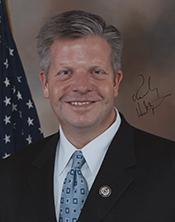
Mr. Speaker, I yield 3 minutes to the gentleman from Illinois (Mr. Hultgren).
Mr. Speaker, I yield 3 minutes to the gentleman from California (Mr. Rohrabacher).
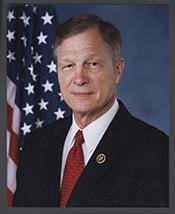
Mr. Speaker, I yield 3 minutes to the gentleman from Texas (Mr. Babin).
Mr. Speaker, I have no further requests for time, and I am prepared to close.
I reserve the balance of my time.
Mr. Speaker, I yield myself the balance of my time.
As I close, I would like to acknowledge all the hard work and bipartisan efforts of Science Committee Chairman Lamar Smith, full committee Ranking Member Eddie Bernice Johnson, and Space Subcommittee Ranking Member Donna Edwards.
Like Ms. Edwards, I also want to acknowledge the work of my personal staff, Patrick Large; Ms. Edwards' personal staff, Anne Nelson; the majority staff, Tom Hammond, Jared Stout, Allison Rose-Sonnesyn, and Christian Rice; and the minority staff, Pam Whitney and Allen Li.
Mr. Speaker, I urge support for H.R. 810, and I yield back the balance of my time.
House of Representatives, Committee on Transportation and
Infrastructure,
Washington, DC, February 10, 2015.
Hon. Lamar Smith,
Chairman, Committee on Science, Space, and Technology
Committee, Washington, DC.
Dear Chairman Smith: I write concerning H.R. 810, the
National Aeronautics and Space Administration Authorization
Act of 2015. This legislation includes matters that fall
within the Rule X jurisdiction of the Committee on
Transportation and Infrastructure.
In order to expedite floor consideration of H.R. 810, the
Committee on Transportation and Infrastructure will forgo
action on this bill. However, this is conditional on our
mutual understanding that forgoing consideration of the bill
does not prejudice the Committee with respect to the
appointment of conferees or to any future jurisdictional
claim over the subject matters contained in the bill or
similar legislation that fall within the Committee's Rule X
jurisdiction. I request you urge the Speaker to name members
of the Committee to any conference committee named to
consider such provisions.
Please place a copy of this letter and your response
acknowledging our jurisdictional interest into the
Congressional Record during consideration of the measure on
the House floor.
Sincerely,
Bill Shuster,
Chairman.