Mr. Speaker, I ask unanimous consent that all Members may have 5 legislative days in which to revise and extend their remarks and include extraneous material on the topic of my Special Order. Mr.…
Mr. Speaker, I ask unanimous consent that all Members may have 5 legislative days in which to revise and extend their remarks and include extraneous material on the topic of my Special Order.
Mr. Speaker, I chair the Asia and the Pacific Subcommittee on Foreign Affairs. I have been in Congress for 5 years, and what I have noticed over the last, probably, 30 years is a growing China. China is a culture that has been around for thousands of years. What we have seen is a growing China, but, more recently, in the last 25 years, a more aggressive China, in the policies and the different things that they do around the world.
Twenty-eight years ago, Deng Xiaoping announced that China's strategy to accrue global power would be to ``hide one's strength and bide one's time.'' As I rise, today, in the House, this evening, it is clear that China is done biding its time.
I can remember seeing a documentary several years ago from 1986, where that leader, Deng Xiaoping, talked about that he could not compete with the U.S. or the Japanese in the intellectual property, computer manufacturing, or in IT.
What they said at that time was that they will compete by taking over the rare earth metals that are required in all of that. So, from that point forward, they led that charge to strategically set out a 100-year plan.
At China's 19th National Congress of the Communist Party of China last October 2017, Xi Jinping announced a new era, in which China has started to overcome the humiliations of colonialism and that it has stood up, grown rich, and is becoming strong.
We talked about this. It came out in a meeting. Somebody brought up that, through their whole adult life, China was just kind of this big, stumbling child. But they had reached a point and grown through puberty, where the hormones had kicked in, and they found out how strong they were. Then they discovered how rich they were, and they started to flex both of those.
He explicitly offered the Chinese model as an alternative to liberal democracy. Liberal democracy, that is what the Western world and the United States rests on: allowing people to be self-determining, allowing people to be free-thinking, allowing people to be empowered. This is something that is to the antithesis of the Chinese doctrine, stating that ``the banner of socialism with Chinese characteristics is now flying high and proud for all to see,'' offering ``a new option for other countries and nations.''
Mr. Speaker, as the new year begins, we must decide how we want to craft policy and legislation that will address not just Xi Jinping's so-called new era, and China's. I say that we should welcome China's effort to assume its rightful place on the world stage. But we must also reject China's efforts to undermine the values, institutions, and rules that generations of Americans have died for, along with other countries, to establish and uphold. We must never allow a socialist, authoritarian model of government, to supplant the primacy of democracy, no matter how rich and how strong the authoritarians become.
China is not choosing to rise through the global order that the United States and our allies have built with our blood and our sweat--a global order made up of the international institutions that have held the peace since World War II; of the competitive and rules-based economic playing field; and of a free marketplace of ideas where people, not governments, decide what they will think.
Instead, China has grown to become a revisionist power--not rising within the current order, but seeking to change, subvert, or coerce it to suit China's end--not playing by the rules, but rewriting the rules to suit the needs of China.
China's foreign policy is rewriting the rules in three key areas:
First, China is replacing traditional soft power, which is based on a nation's attractiveness, with ``sharp power,'' which leverages coerciveness. The scale is astounding. China has used sharp power to buy political influence in Australia, academic influence on American campuses, and even bought off Panama's diplomatic alliance with Taiwan. The National Endowment for Democracy, which coined the term ``sharp power,'' has exhaustively documented China's efforts to turn Latin America elites into ``de facto ambassadors of the Chinese cause''-- right in our own backyard.
The world will not tolerate these coercive influence operations. Last month, Prime Minister Turnbull of Australia captured this indignation best when he used Mandarin to play on a classic Mao Zedong quote, ``the Chinese people have stood up.'' Turnbull said that ``the Australian people stand up.'' Congress must, likewise, ensure that the American people stand up to coercion in our politics, academia, and culture.
Second, China is rewriting the rules of engagement by using gray zone tactics that erode the distinction between peace and conflict. In the South China Sea, China has used what it has referred to as ``salami slicing'' to gradually attain its military objectives without provoking a confrontation, undermining the international mechanisms that are supposed to decide territorial disputes. It goes back to the saying of Deng Xiaoping: ``Hide one's strength and bide one's time.''
As I said, I chair the Subcommittee on Asia and the Pacific, and at one of our hearings last year, one witness testified that ``by slowly changing the situation on the ground, China hopes to transform `Asia Mediterranean' into a Chinese lake.''
We can't keep standing idly by while China does these things. Xi Jinping once stood next to President Obama at the White House and pledged that he would not militarize the South China Sea.
As an aside, I was at a hearing. We were there with one of the representatives of the Chinese Government. They were talking about how everything they have done in the South China Sea was for peaceful navigational purposes. I brought up that I wish I could feel the love, or I wish I could feel the sincerity
of that, because our military satellites showed a 10,000-foot runway, our military satellites showed military barracks, our satellites showed both offensive and defensive weapons, radar systems. Yes, there was a lighthouse, but I didn't see a resort on there that showed peaceful navigational purposes.
Then he built a network of air bases, missile emplacements, radars, and ports that we had seen. Four thousand acres of the South China Sea that were dredged, destroying the environment--coral reefs--and they put in this today, which is militarized, and they don't hide it. We should look to India's example rather than accept further lies. A little resistance to China's encroachment along their disputed border has prevented the same ``salami slicing'' from happening on land.
And, thirdly, China is rewriting the rules of trade and economics. At a hearing before my subcommittee last year, one witness warned that ``China has doubled down on its unfair, mercantilist strategies, and is now seeking global dominance in a wide array of advanced industries that are key to U.S. economic and national security interests.'' These zero-sum policies benefit China's domestic champions at the expense of fairness and competition in global trade.
At home, China wields its massive market as a blunt instrument, forcing foreign companies to divulge what it wants without giving them a chance to compete. Abroad, China is acquiring or stealing the industries of tomorrow, unfairly boosting its domestic innovation and hollowing out our competitors. Throughout the developing world, China has undertaken a massive infrastructure program that exports surplus industrial capacity and aligns closely with military interests.
In 2018, the United States must stand up to China's revisionism in these three key areas: sharp power influence operations, gray zone warfare, and mercantilist economics.
Some important policy steps have already begun. For example, Congressman Pittenger has introduced legislation in the House to improve CFIUS, which is a review, and the Treasury Department has undertaken a section number, called 301 investigation into China's innovation of mercantilism.
These actions will help protect the future of the U.S. economy. This is a warning sign that we have seen that we must rise up to and counteract, but more must be done.
We have to blunt China's sharp power in the United States by countering Confucius institutes at schools and propaganda outlets in our cities that spread communist propaganda. We have to respond to the malicious state-sponsored activity in shared domains like the cyber realm. We have to modernize our international development work to compete with China in the developing world.
This year I will be introducing legislation to accomplish these goals, and I hope my colleagues will join me in this important work.
We must also remember that standing up for American interests means standing up for our values. Xi Jinping's leadership has turned to creeping totalitarianism. He is building an unprecedented surveillance state, increasing the communist party's ideological control of society and the reconciliation of the party's authority over every aspect of life. Human rights and civil liberties in China is worsening, and Xi Jinping must be held accountable.
In the year ahead, I hope all of my colleagues would join me in standing up for America's interests and values, and resisting China's revisionism.
After the 19th Congress, the Communist Party Congress, Xi Jinping stood up and said the era of China has arrived. No longer would China be made or forced to swallow their interests around the world, nor should they, but he also said the era of China has arrived and it is time to take the center stage.
That is a threat, and not acceptable, I don't think, to the American people. It sounds like it is a warning that they are going to throw us off the stage. However, talking to people in the administration and the rest of the world, I think we would be willing to share the stage, but to think that they are going to supplant every other country is not acceptable.
Mr. Speaker, I yield to the gentleman from Ohio (Mr. Chabot), who used to be the chair of the Asia and the Pacific Subcommittee, and who has brought up some important legislation on this topic that we are talking about tonight.
Mr. Speaker, I thank the gentleman for the kind words, and I look to follow in his footsteps.
I want to also give a shout-out that the first version of the six assurances, Mr. Chabot introduced to Congress on October 28, 2015, what the six assurances were proposed to be, and we will read those later on.
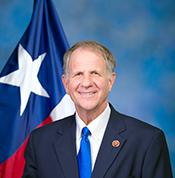
Mr. Speaker, at this time I yield to the gentleman from Texas (Mr. Poe). Judge Poe has been a strong supporter of the whole Asia-Pacific region and he has got some wise words that I think we all can learn from.
Mr. Speaker, the whole purpose of this Special Order is to draw attention to what China is doing, and I think, as Mr. Chabot brought up, we are not against China. It is the practices that they are doing that we need to make sure that the American people know, the American people know what is going on, the amount of theft that we see, intellectual property, that costs the American taxpayers between $300 billion and $600 billion.
I have been at expos held by the Department of Homeland Security where they have counterfeit products that come from American manufacturers that are in China on goodwill, good faith efforts to create a good product, to create jobs in China, but yet that product winds up being counterfeited by Chinese companies that we think the Chinese Government--and we have evidence that they are complicit in it. They are selling products against our own competition, our own manufacturers in this country, and it is eroding the American economy, and China gains from this. This is a practice that has to be stopped, and we have to stop allowing this to happen.
One of the other things, if we look back over history, in the 1840s, there were the opium wars between the United Kingdom and China. A lot of opium and drugs flowed into China, and it hurt the Chinese population. At one
point, 90 percent of the males in China were hooked on opium.
Yet today, in the 21st century, we are seeing the reverse of that, and we are seeing narcotics flow from China, or precursors of synthetic opioids flow into Central America, to Mexico, to come into our borders. There is no medicinal use for fentanyl other than pain control, or heroin. Heroin has no medicinal use, very limited.
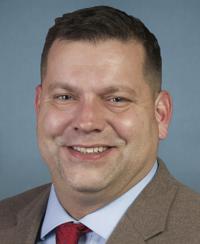
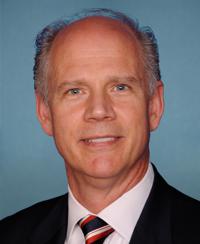
Mr. Speaker, I yield to the gentleman from New York (Mr. Donovan), who, in the last Congress, introduced the Comprehensive Fentanyl Control Act to combat illegal fentanyl, a synthetic opioid, coming from China.
Not only do they send the precursors, they send the presses to create the pills into these other countries. Again, it does not serve us or the American people or our economy at all.
If you are a trading partner and you want to go by the rule of law and you want to, hopefully, in trade, do what is best for your country, but you also want to have a benefit for your trading partner, this is a one-way street, and it is going to have to end.
Mr. Speaker, I appreciate the work that the gentleman from New York (Mr. Donovan) has done with the Comprehensive Fentanyl Control Act to combat illegal fentanyl. I thank him for his participation, being on the committee, and his passion for what he is doing.
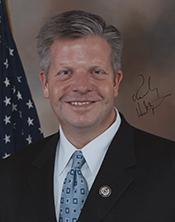
Mr. Speaker, I yield to the gentleman from Illinois (Mr. Hultgren), a good friend of mine and a good Member of Congress, to add to this discussion.
Mr. Speaker, I appreciate the remarks by Mr. Hultgren. He did a great job, and I hope that guy gets released.
The gentleman brought up a very good point, and this is something I have noticed. I am so blessed, and I know we are so blessed to live in this great country of ours. Our Founders got it right. I don't know how they did other than divine intervention, that our rights come from a Creator, not from government. Government is instituted by we the people to protect our God-given rights and our core values of life, liberty, and the pursuit of happiness.
Our government is a government that empowers the people. Empowered people do great things. In the 19th Congress, it was said--the Chinese Government has set up a Chinese United Front, which is to show soft power in the world instead of doing the things they have done, where they go into a country, put up infrastructure, suck out the resources, and leave and don't care. So they have changed their tactics. They have gotten smart, and they started the Chinese United Front.
But in that communique that they said, it said that the role of the citizens of China is to serve the Government of China. It is the antithesis of what we stand for, and that is why I feel confident in our form of government because we believe in the people. We believe in the greatness of people.
The greatest resource a country has is not their gold, their timber, or any of that other stuff; it is the people. And our country values that.
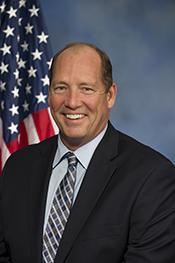
Mr. Speaker, I yield to the gentleman from Virginia (Mr. Garrett), a good friend of mine, a passionate speaker on China who sits on the Foreign Affairs Committee.
Mr. Speaker, I thank the gentleman from Virginia, and if he wants to participate in a colloquy back and forth, we have a few more minutes. But I want to touch on some issues that I think we need to draw out again. I want the American people to understand what is going on.
When you buy something that says ``made in China,'' I want you to understand what is happening. China has gone from where they were in the 1970s and the 1960s. Richard Nixon went over there, kind of normalized relationships in 1972.
We had a relationship with Taiwan prior to that. I don't want to go into the history of the war between the KMT and Chiang Kai-shek back in the 1940s, but there was a relationship we had with Taiwan. We had a relationship with Great Britain on Hong Kong, and here we are in the 21st century.
Things have changed. Now we have got North Korea on the stage. It is a different world than what it was. We had some longstanding traditions that we stood by as a nation, and people respected that, and then I look at the trade imbalance that we have with China.
Here is a country that Richard Nixon and Henry Kissinger in 1971 and 1972 opened up the trade that we have today, that has led to what we have today. And China has done great, and they ought to be applauded for what they have done. They have raised a lot of people out of poverty. But at what expense?
When I look at what is going on in the South China Sea, taking islands that were just coral reefs right under the top of the sea, and they have reclaimed over 4,000 acres--probably the largest ecological disaster and insult to the environment that the world has ever seen-- the world stood idly by.
One country, Vietnam, stood up, took them to the court in The Hague, the tribunals. The tribunal ruled against China, and again, the world stood by, did nothing.
The previous administration had a policy of strategic patience. The profession I come from, the veterinary profession, we call that benign neglect. That is where you have a disease that is not life-threatening and you hope it goes away if you ignore it.
But what was going on in the South China Sea could not be handled with benign neglect. What happened is China militarized the islands that they built, even though they said they wouldn't.
And if we look at the other things they said they would help us on with North Korea, China has the biggest influence with North Korea of anybody else. Ninety percent of the trade of North Korea goes through China. China says they are there with us, but yet we know fuel is going in there, coal is going in there. They are trading with them.
In addition, they are complicit in allowing other companies to have shell companies that keep the Kim Jong-un regime afloat developing nuclear weapons. They have a hand in bringing this to a close.
I look at the trade deficit we have with China. It is over $350 billion. Add to that the intellectual property theft, over $350 billion, some people say up to $600 billion. And China says: We are going to get it under control. But just last month they had a trade deficit of over $60 billion.
I want to pose a question to the American people: Do you want a trading partner that is doing these things?
They flood our borders with illegal drugs, as you heard Mr. Donovan talk about. They erode our culture. They kill our citizens. They break down our culture. Do you want a trading partner that steals the intellectual property at the cost of American entrepreneurship, American intellectual property, and American jobs?
Do you want a partner that does not honor their word when they said they are going to do something? You talk to other countries around the world and they say: We like doing business with America because you have a rule of law and you will follow it. China does not.
They have halfheartedly agreed to help us with North Korea. And so when you go into a department store and you buy cheap as far as cost and it says ``China'' on it, ``made in China,'' I want people to think: What are you selling? What are you buying, and what are you giving away for your future generation--not just of your kids, but for the posterity of this Nation?
And I would like to get Mr. Garrett's response on that or anything else he wants to add as an afterthought here.
Mr. Speaker, I need to make a correction. I said it was Vietnam that took China to court. It was the Philippines.
But along these lines that you were just talking about, when you look at the word of a nation, the integrity of a nation, I think of Hong Kong. Great Britain and China came to an agreement in 1996, 1997 that Hong Kong would revert back to China.
There was a 50-year agreement that China was to allow them to have self-rule, the rule of law, self-determining, their own government, the right to choose that. Twenty years into this, China has got a strong influence. The freedom in Hong Kong is going backwards.
If we look at the Tibetan people, the Tibetan are probably one of the most peaceful populations on Earth, but yet I can't travel there as a U.S. dignitary or as a U.S. Member of Congress. They can't come here and be recognized. The Dalai Lama can't come here and be recognized because China gets mad. Beijing gets mad.
The Tibetan people have a way to pass on the Dalai Lama to the next generation. China kidnapped the Panchen child and said: We will replace it with who we think should be the next leader, and it is somebody they are going to groom.
And I look at our country, being a Christian. That would be like one of the kings of the Old Testament going in and stealing the baby Jesus and saying: Well, we will put in who we think should be the leader of Christianity.
It is ludicrous what is going on.
And then I think of Taiwan. Taiwan is our 10th largest trading partner, and we have had an agreement since before Richard Nixon. But during Richard Nixon's time, there have been three communiques that talked about how we were going to deal with Taiwan.
And I just want to reiterate the six assurances that Ronald Reagan and Steve Chabot talked about, and they are:
Number one, we did not agree to set a date certain for ending arms sales to Taiwan. Robert Gates talked about this in his book, ``Duty.'' We had had this agreement for years, and during that time, about 2012, we were having our arms sales agreement with Taiwan. China raised holy heck about this, and our negotiators said: What is your problem? We have been doing this since the 1970s?
China's response was this, and I think this sets the tone for the future: Back then, we were weak. We are strong now.
I think that speaks loudly of China's intention.
Number two, we see no mediation role of the United States between Taiwan and the PRC.
Number three, nor will we attempt to exert pressure on Taiwan to enter into negotiations with the PRC.
Number four, there has been no change in our longstanding position on the issue of sovereignty over Taiwan.
Number five, we have no plans to seek revision of the Taiwan Relations Act.
And number six, the August 17 communique should not be read to imply that we have agreed to engage prior consultations with Beijing on arms sales to Taiwan. And we tend to stay with that in this administration.
So with that, does the gentleman from Virginia have any closing remarks?
Mr. Speaker, I am ready to close.
I thank everybody for their participation, and I want the American people, again, when you look at something that says ``made in China,'' how is that affecting the future of America?
And nothing against China. If they play fair, they play by the rules, we wish them the best of luck, but we will not be supplanted from our role in the free world.
And again, I feel confident about where America will be 100 years from now because we believe in our people, we empower our people, and we have a government that will stand and protect our constitutional rights that come from a creator.
Mr. Speaker, I yield back the balance of my time.