Mr. Speaker, I yield myself such time as I may consume. Mr. Speaker, today we are considering a bill that purports to make it easier for small businesses to obtain coverage, and tomorrow we will vote…
Mr. Speaker, I yield myself such time as I may consume.
Mr. Speaker, today we are considering a bill that purports to make it easier for small businesses to obtain coverage, and tomorrow we will vote on a bill that will take away health insurance coverage for 24 million Americans and force everyone else to pay more for less. So not only are we considering a bill today that will make things worse, we are considering it a day before we vote on ruining health security for working families in order to provide tax cuts for the wealthy.
As we debate the possible replacement of the Affordable Care Act, I think it is instructive that we look back at what the situation was before the ACA passed.
Listening to some, you would think that the costs weren't going up at all. In fact, costs were going through the roof before the ACA, and small businesses, particularly, were having spectacular cost increases--and that is until somebody got sick. At that point, you were unlikely to be able to afford any insurance at all.
Every year before the ACA, small businesses were dropping insurance right and left, particularly after somebody got sick. Also, before the Affordable Care Act, people with preexisting conditions couldn't get insurance. Women were paying more than men. Millions of people were losing their insurance every year.
Since then, the costs have continued to go up, but at the lowest rate in the last 50 years. People with preexisting conditions can get insurance at the standard rate. Small businesses can cover their employees through the Affordable Care Act at the average cost, whether or not anybody in their small business has cancer or diabetes. Women are not paying more than men. Instead of millions of people losing their insurance every year, 20 million more people have insurance.
In addition to that, families now enjoy strong consumer protections. The full name of the Affordable Care Act is the Patient Protection and Affordable Care Act. Now there are no caps on what an insurance company pays, and they can't cancel your policy for anything other than nonpayment. Preventive services such as cancer screenings are available with no copay or deductible. Those up to 26 can stay on their parents' policy, and the doughnut hole is being closed.
The ACA did not cure every problem, but it went a long way to making Americans healthier and giving them some economic security. It could have gone further if, in the past 7 years, Republicans would have been willing to work with Democrats to build on the progress instead of forcing over 60 votes to repeal all parts of the Affordable Care Act.
If we do anything now, we ought to improve the situation, not make it worse. The Republican plan makes things worse. The CBO analysis concluded that 24 million fewer people will have insurance, and most of those that get insurance in the future will be paying more for policies that don't deliver as much.
For seniors, particularly, the costs will skyrocket. And, in fact, the prediction that the rates will go down in
the future are a result of the conclusion that so few seniors will be able to buy insurance that they will no longer be in the insurance pool.
The insurance pool would be younger, and, therefore, the costs would go down. But that is only because seniors won't be able to afford the insurance. Therefore, the insurance pool will be younger and cheaper for those who can actually afford it, but that is not a good thing for seniors who need the insurance and can't afford it.
So today we are considering another failed policy. The association plan ideas have been studied for years, and it has been concluded that it is a bad idea. Under the Affordable Care Act, essentially everybody pays average. If you change that arithmetic so some can pay a little less, then arithmetic matters. Everybody else is going to pay a little more.
In the association plans, quite frankly, I will admit, they will always work for the few that can get into them. That is because, if you can draw out your own group, if they are healthier than average and can pay less, they will pay less and the association will work. But if you pull out a group and it turns out they are a little sicker than average and the bids come in above average, then the association will dissolve and everybody will go back into the insurance pool.
So if you can pull out a group, they will always pay less until somebody gets sick, and then everybody jumps back into the insurance pool. The higher cost groups will be left behind. The lower cost groups will segment out, and then the rates will go down for a few and up for everybody else.
This is exactly why the American Academy of Actuaries has said that expanding association plans ``could result in unintended consequences such as market segmentation that could threaten . . . viability and make it more difficult for high-cost individuals and groups to obtain coverage.''
One of the other problems is a lack of regulation. If a group is allowed to circumvent State regulations, that policy may be cheaper because the policy is not as good.
There are a lot of ways that you can save money. You can pull out a group of just young men and save on maternity benefits. That would be cheaper for them but more expensive for everybody else.
And what happens when a new spouse needs coverage and tries to get it as an optional benefit? They won't be able to afford it.
Workers and businessowners are likely to get fewer benefits under the association approach and will be disadvantaged compared to those in the regular pool getting comprehensive benefits.
This is exactly why Consumers Union has stated that the legislation is ``likely . . . to provide minimal and nonuniform benefits.''
Mr. Speaker, this bill will make it easier to set up these kinds of associations and let them avoid State regulations, which could require solvency, nice solvency requirements, and consumer protections. The protections in this bill are not sufficient to protect consumers, and most States would require stronger capital requirements than the bill requires.
Much like the Republican replacement bill, this bill goes in the wrong direction, so I urge my colleagues to vote ``no.''
Mr. Speaker, I reserve the balance of my time.
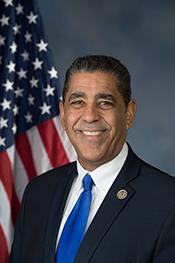
Mr. Speaker, I yield 4 minutes to the gentleman from New York (Mr. Espaillat).
Mr. Speaker, I yield 4 minutes to the gentleman from Connecticut (Mr. Courtney).
Mr. Speaker, I yield an additional 1 minute to the gentleman.
Mr. Speaker, would the Chair advise us how much time is available on both sides?
Mr. Speaker, I yield myself such time as I may consume.
Mr. Speaker, I just wanted to point out a few letters that we have received, one from the Diabetes Association, which includes, in part: ``The Association has serious concerns that AHPs would lead to a two- tiered market, in which AHPs offer inadequate coverage to healthy groups only, while State-regulated plans provide adequate coverage with consumer protections but at an increasingly higher premiums. For these reasons, we urge you to oppose the Small Business Health Fairness Act of 2017, H.R. 1101.''
We have also received a letter, Mr. Speaker, from the National Association of Insurance Commissioners. They said in their letter: ``The legislation as written would eliminate all State consumer protections and solvency standards that ensure consumers receive the coverage for which they pay their monthly premium. These protections are the very core of a State regulatory system that has protected consumers for nearly 150 years . . . history has demonstrated that AHP- type entities have done more harm than good to small businesses.''
Mr. Speaker, we also received a letter from The Main Street Alliance, which said: ``In short, H.R. 1101 would result in higher premiums and poorer coverage for the most vulnerable small-business owners, would destabilize the small group market, and would lead small-business owners and employees to assume unnecessary financial risks.''
We also heard from the Consumers Union: ``Consumer's Union has long raised the inadequacies of AHPs . . . and urges Congress to reject them as likely to fragment the insurance risk pool and provide minimal and nonuniform benefits exempt from State benefit mandates.''
We also heard from a long coalition of consumer groups, providers, and labor unions which said that this bill would just move backward to a two-tiered system that makes it harder to purchase comprehensible, affordable coverage for all but a minority of small businesses.
Mr. Speaker, I include in the Record these letters.
American Diabetes Association,
March 21, 2017.
Hon. Paul Ryan,
Speaker, House of Representatives,
Washington, DC.
Hon. Nancy Pelosi,
Democratic Leader, House of Representatives,
Washington, DC.
Dear Speaker Ryan and Leader Pelosi: On behalf of the
nearly 30 million Americans living with diabetes and the 86
million more with prediabetes, the American Diabetes
Association (Association) is writing to express our strong
opposition to the Small Business Health Fairness Act (H.R.
1101). This legislation is nearly identical to legislation
considered by previous Congresses and that last passed the
House of Representatives in 2003. The Association opposed
that legislation and writes now to express our strong
concerns with this bill and the impact it will have for
people with, and at risk for, diabetes.
The legislation would create federally certified
association health plans (AHPs) with the goal of making
coverage more affordable for small businesses by allowing
them to band together to purchase coverage on behalf of a
larger insurance pool. We share the goal of making coverage
more affordable, but not at the expense of required consumer
protections, signed into law in 47 states, which ensure
people with diabetes have access to the services and
financial protection they need.
H.R. 1101 would broadly exempt AHPs from critical state
benefit standards, solvency rules, and consumer protections,
including requirements to cover health services essential to
those with diabetes. Specifically, H.R. 1101 would confer on
AHPs wide authority to:
Determine benefits to be covered: Other than requiring AHPs
to meet limited federal requirements for ERISA-governed
plans, H.R. 1101 would give AHPs broad discretion to omit
important health benefits.
Determine eligibility for coverage: While H.R. 1101 would
require AHPs to comply with ERISA non-discrimination
provisions, the AHP board would retain sole discretion to
approve applications for participation in the plan and to set
premiums based on an employer's health care claims
experience.
Maintain inadequate reserves: H.R. 1101 applies federally
determined solvency standards that are weaker than state
standards, exposing plan members to the risk of insolvency
and unpaid medical bills.
Because AHPs would compete with state-regulated plans on an
uneven playing field, they would likely cherry-pick healthy
small employer groups, making the risk pool in the state-
regulated market less healthy and more costly. In addition,
those who obtain coverage through an AHP would likely have
benefits that lack coverage for essential services and would
expose them to higher out-of-pocket costs and potential plan
insolvencies. In fact, numerous AHPs offered in the past have
gone insolvent and left consumers uninsured and with unpaid
medical bills.
The Association has serious concerns that AHPs would lead
to a two-tiered market, in which AHPs offer inadequate
coverage to healthy groups only, while state-regulated plans
provide adequate coverage with consumer protections but at
increasingly higher premiums. For these reasons, we urge you
to oppose the Small Business Health Fairness Act of 2017,
Mr. Speaker, I yield myself such time as I may consume.
Mr. Speaker, the bad idea in this plan has been exposed in one of the letters that I mentioned. I said there are a lot of consumer groups, and I just want to name the groups that signed the letter. The American Nurses Association; the Alliance for Retired Americans; the American Cancer Society Cancer Action Network; the American Diabetes Association; the American Federation
of State, County and Municipal Employees; the Association of Reproductive Health Professionals; Bazelon Center for Mental Health Law; Community Catalyst; Consumers Union; Families USA; International Union, United Automobile, Aerospace and Agricultural Implement Workers of America--the UAW; NARAL Pro-Choice America; the National Council of La Raza; the National Education Association; the National Institute for Reproductive Health; National Partnership for Women and Families; National Women's Health Network; Raising Women's Voices for the Health Care We Need; and the Service Employees International Union all oppose this legislation.
Mr. Speaker, I reserve the balance of my time.
Mr. Speaker, I just want to quote from another letter that we received from Blue Cross Blue Shield Association. They say: ``We have very serious concerns that H.R. 1101 would create preferential rules that would allow an AHP to be entirely exempt from State regulation by being self-insured or follow the rules of a single State nationwide. Research clearly shows that creating special rules for AHPs and exempting them from State regulation would lead to major problems, including . . . increased insolvency risk . . . increased costs for older, sicker workers.'' Therefore, they are also in opposition to this legislation.
I include in the Record the entire letter.
BlueCross BlueShield Association,
Washington, DC, March 7, 2017.
Hon. Virginia Foxx,
Chair, Committee on Education and the Workforce, House of
Representatives, Washington, DC.
Hon. Robert C. Scott,
Ranking Member, Committee on Education and the Workforce,
House of Representatives, Washington, DC.
Dear Madam Chairwoman and Mr. Ranking Member: The Blue
Cross and Blue Shield Association shares your commitment to
ensuring small employers are able to provide their employees
with high quality, affordable health coverage. However, we
are concerned that H.R. 1101, the ``Small Business Health
Fairness Act'' would not accomplish this critical goal, as it
does not reflect key principles that are essential to
ensuring a viable private health insurance market: (1) all
competitors should abide by the same set of rules; and (2)
states should have clear authority to regulate.
Today, small businesses are able to join together to
purchase coverage through association health plans (AHPs).
AHPs are currently regulated by the states, just like other
insurance in the small group market, and can be a good option
for small employers who want to provide their employees with
affordable coverage.
We have very serious concerns that H.R. 1101 would create
preferential rules that would allow an AHP to be entirely
exempt from state regulation by being self-insured or follow
the rules of a single state nationwide. Research clearly
shows that creating special rules for AHPs and exempting them
from state regulation would lead to major problems,
including:
Increased insolvency risk: The legislation as drafted would
allow for some AHPs to be entirely exempt from state
regulation, and instead operate under very limited federal
rules and oversight. Past experiences with these kinds of
arrangements left millions without health coverage and unpaid
claims due to insolvencies.
Increased costs for older, sicker workers: Ultimately, H.R.
1101 would make it much harder for small employers with
older, sicker workers to obtain coverage. This is because
lower-cost groups would move to a more loosely regulated AHP
with fewer benefit and rating rules, while older and/or high-
cost groups would remain in traditional insurance plans.
Attached is a compendium of research findings, which
provides overwhelming evidence that AHP legislation would
make health insurance less accessible, less affordable and
less secure for small employers and individual consumers.
We look forward to working with you on solutions that can
be taken to improve access and affordability for small
employers.
Sincerely,
Alissa Fox,
Senior Vice President.
Mr. Speaker, I yield myself the balance of my time.
Mr. Speaker, association plans will help the fortunate few who can get in so long as the members of that association remain healthier than average. But everybody else will pay more. Furthermore, these plans, when they are formed under the bill, will evade important State regulations that could improve solvency and provide important consumer protections.
This is not unlike the philosophy, I guess, on the other replace bill where 24 million fewer people will have insurance; the rest will pay more and get less; while millionaires benefit with huge tax cuts. In this, the fortunate few benefit to the expense of everybody else.
I would hope we would defeat the legislation.
Mr. Speaker, I yield back the balance of my time.
Mr. Speaker, I ask unanimous consent to claim the time in opposition, although I am not opposed to the amendment.
Mr. Speaker, I appreciate the intent of the amendment offered by the gentlewoman from Washington, which seems to allow health association plans that are currently in existence to continue to operate under existing State and Federal law. In fact, giving States the ability to regulate association plans is very important. That is why I oppose the underlying bill.
The amendment also points out another interesting fact, and that is associations currently exist under current law, and the underlying bill simply unravels most of the regulations that apply to them, and this amendment would at least maintain State regulations.
We know that this bill creates winners and losers. The winners are those who are young and healthy enough to be invited into an association. The losers are small businesses and employers who are older, sicker, or just have more costly health bills. There is no guarantee that plans under this legislation will have the standard level of benefits or consumer protections, and that is why I am disappointed that the majority failed to rule any Democratic amendments submitted to the Rules Committee in order, although each and every one was germane.
The gentleman from New York (Mr. Espaillat), who is a member of the committee, offered an amendment that
would have protected the ability of the States to regulate any association health plan, including regulation related to benefits, consumer protections, and rating restrictions. Representative Torres from California offered an amendment to ensure that association plans cover 10 essential health benefits under the Patient Protection and Affordable Care Act.
One amendment was offered by Representatives Susan Davis of California and Suzanne Bonamici from Oregon--both committee members-- would have required association plans to provide for women's health benefits, including maternity care.
Representatives Bonamici, Davis, and Wilson also offered an amendment to prevent this legislation from taking effect if it would lead to increased premiums for older workers. These older workers will not be able to get into the associations because they would increase average costs of the association, and the point of the association is to get away from high-cost enrollees like older Americans. So these older people will be left out of the pool with other older and sicker workers where they will necessarily be paying more.
It is simple arithmetic. Their amendment would have been particularly important because we know that the Republican replacement plan contains an age tax that will severely disadvantage older populations.
None of the Democratic amendments, although germane, were allowed under the rule, and there does not seem to be any earnest attempt to look to try to correct the shortcomings of the bill. So while I do not intend to oppose this amendment, I do not think the amendment is enough of an improvement of the bill, nor does it change the underlying fact that the legislation does not adequately protect small businesses, workers, and their families, nor does it help those left behind who are not invited into the association who will necessarily be paying more.
Mr. Speaker, if those on the other side of the aisle want to go on a rescue mission, they ought to improve things, not make things worse. For most Americans, this bill will make things worse, and, tomorrow, 24 million Americans will be left out while many others will be paying more for less while millionaires get huge tax cuts. That is not an improvement.
Mr. Speaker, I reserve the balance of my time.
Mr. Speaker, I would point out that when one size fits all, everybody can benefit; but when you start picking and choosing winners and losers, some will benefit and many others will lose. Under this bill, a fortunate few who get into association plans will benefit; everybody else loses.
Mr. Speaker, I yield back the balance of my time.
Mr. Speaker, I demand a recorded vote.