Mr. Speaker, I yield myself such time as I may consume. (Mr. McGOVERN asked and was given permission to revise and extend his remarks.) Mr. Speaker, I thank the gentleman from Alabama (Mr. Byrne) for…
Mr. Speaker, I yield myself such time as I may consume.
(Mr. McGOVERN asked and was given permission to revise and extend his remarks.)
Mr. Speaker, I thank the gentleman from Alabama (Mr. Byrne) for yielding me the customary 30 minutes.
Mr. Speaker, we are less than 2 months into 2017, and today we have another closed rule, or as I call them, ``Putin rules.'' This is how they operate in Russia--no deliberation. It is simply astonishing that here in the people's House we continue to have this closed process: no amendments, no debate, no nothing, completely shut down.
I have very serious concerns about the road we are traveling down. The 115th Congress is only 6 weeks old, and we have already ushered in a process that is alarmingly restrictive. It should distress not just Democrats, but Republicans as well. This is now the norm and is very, very sad.
Mr. Speaker, today's rule would pave the way for the House to repeal two important consumer protections that help working families save for retirement. These protections went through a very lengthy process of review. We are repealing these protections without the committees of jurisdiction having any chance to weigh in and in a rushed process that is completely closed.
These protections, as I said, were reviewed by the relevant agencies; they were subjected to public commentary; and we are bringing them to the floor to repeal them without even giving the committees of jurisdiction an opportunity to actually discuss these bills, to discuss whether this makes sense.
Mr. Speaker, America is facing a retirement savings crisis, and rules like this--I should say, protections like this--are essential to helping workers plan for the future. As of today, 55 million Americans lack access to a way to save for retirement out of their regular paycheck. As a result, nearly half of all workers have no retirement assets. Yet we know that employees are 15 times more likely to save just by having access to a workplace retirement plan. These programs are a commonsense solution for working families and small businesses.
Republicans should be working to strengthen programs like these, not rip them apart. If you have a problem and you want to make a tweak, maybe you ought to work with the agency to make that tweak, but not an outright repeal.
Quite frankly, Mr. Speaker, pushing dangerous bills like this in a closed process with no debate is a lousy way to conduct the people's business. But with the avalanche of alternative facts coming out of the Trump White House every day, it should be no surprise that the House Republican majority on Capitol Hill is carrying on in such a heavy- handed way. God forbid, in the people's House, we should actually deliberate and have debate and have the kind of give-and-take that the American people expect.
Mr. Speaker, as bad as this process is, as bad as dismantling the rules and regulations put in place to protect the savings of working families is, I would like to take a few minutes to talk about something that is very serious and troubling to the American people.
Mr. Speaker, this administration regularly goes on TV and appears before the press--and let me say this as plainly as I can--and consistently spouts falsehoods. Now, I am told, Mr. Speaker, that under the rules and precedents of the House that there are certain things that cannot be said. Mr. Speaker, as a member of the Rules Committee and as somebody who respects the precedents of the House, I am going to be very polite in how I respond here today. I will speak plainly, but politely. I want people to understand that I would like to say things much stronger based on what is happening in this country and based on what is happening in this administration.
Mr. Speaker, I certainly wouldn't want to do anything to hurt anybody's feelings, but it is troubling what is happening, the falsehoods and fabrications that we hear each and every day. Some of it is trivial and some of it is silly, like saying that his inaugural crowd size was bigger than President Obama's. Who cares?
But some are more sinister and more dangerous, like the claim that 3 million to 5 million ``illegal aliens'' voted for his opponent in the 2016 Presidential election. Every fact checker, every Secretary of State, both Republicans and Democrats, say this is absolutely false. There is no basis for this falsehood. It undermines confidence in our political system. My fear is that the real purpose of this claim is to put in place policies to restrict voter rights in order to make it more difficult for people to vote in this country.
Mr. Speaker, every day it feels like President Trump and his White House are trying to set a new record in terms of misinformation. There are so many falsehoods coming out of this White House, it makes me nostalgic for Nixon.
President Trump, in a meeting with U.S. Senators last week, repeated another falsehood, that he only lost New Hampshire because thousands of Massachusetts residents were bussed to the State to vote illegally. This is simply not true. There is no basis for this statement. This is similar to the President's fabrication that 3 million to 5 million votes were cast illegally in the 2016 election. Plain and simple, President Trump and his White House staff continue to provide zero evidence to back up their claims of voter fraud.
On Sunday, when top White House aide Stephen Miller was asked about the judiciary challenging President Trump's unconstitutional Muslim ban, he aggressively attacked critics and said that ``the powers of the President to protect our country are very substantial and will not be questioned.'' The powers of the President will not be questioned. I couldn't believe my ears when I heard that.
President Trump might talk a lot about his love for Vladimir Putin, but this is not Russia. This is the United States of America. We have checks and balances to stop authoritarianism. Kellyanne Conway, when she is not giving free commercials for the Trump family business on the taxpayers's dime, is making up stories about the Bowling Green massacre, a terrorist attack which never happened, and spouting alternative facts on a daily basis. The latest falsehood from the Trump White House is one of the most serious yet.
In repeated interviews, both Vice President Mike Pence and National Security Adviser Michael Flynn--I should be saying now, former National Security Adviser Michael Flynn--said that Flynn did not speak with Russian officials about U.S. sanctions before President Trump took office. A new report shows that that is blatantly false.
After the U.S. intelligence community overwhelmingly agreed that Russia had actively meddled in our 2016 Presidential election to tip the result in favor of Donald Trump, President Obama announced strong sanctions against Russia, including expelling 35 Russian diplomats or agents from U.S. soil. When Vladimir Putin responded by saying that they would not expel any U.S. officials in Russia--what many expected he would not do--a lot of red flags were raised. A new report now shows that, in the 24 hours that followed, Michael Flynn communicated with Russian Government officials about the sanctions and may have actively undermined U.S. foreign policy weeks before Donald Trump even took the oath of office. And now we know that last month the Justice Department informed the White House of Flynn's deception of the Vice President and of the American people in the days immediately following the inauguration.
Mr. Speaker, this is outrageous, and the fact that President Trump did not immediately fire Michael Flynn as soon as this came to light is stunning. I guess he was too concerned about crowd size rather than a deeply compromised national security adviser.
Mr. Speaker, getting rid of Flynn is not enough. President Trump must stop the blatant and dangerous falsehoods coming from his White House. We need a full and independent and bipartisan investigation not only under the purview of the intelligence committees; we need to have a full investigation out in the open so the American people actually know what happened and know how many others were involved in Flynn's undermining of our national security.
Who knew what when?
Was Donald Trump aware of these unauthorized talks with Russia while President Obama was enforcing sanctions?
The American people deserve the truth. They deserve transparency. They deserve this Congress to actually do proper oversight.
One of the most troubling parts of all this is that the American people would have been completely in the dark if it were not for the hardworking journalists and patriotic U.S. officials who helped bring this outrageous scandal to light. Now, more than ever, we need to support freedom of the press, to hold President Trump and his White House accountable.
The Republicans in Congress need to start doing their job by exercising the strong oversight needed. President Trump needs to know that he answers to the American people and he and no President is above the law.
Mr. Speaker, America's hardworking families deserve a Congress that puts them first and a President and a White House that tells the truth instead of spreading falsehoods to stir up fear and advance a dangerous and extreme agenda. We can have policy disagreements, but you have to tell the truth. You can't just make stuff up.
As we are seeing with this administration, alternative facts are contagious. The White House is rapidly losing the public's trust, and every day that Congress fails to hold the Trump White House accountable, we are losing the public's trust as well.
Members of Congress, both Democrats and Republicans, have a responsibility to stand up for the truth and hold the President and his White House accountable. We are here to serve the American people, and they need to know that we are fighting for them, not serving as a rubber stamp for this administration.
I urge my colleagues to vote against this rule, and I reserve the balance of my time.
Mr. Speaker, I yield myself such time as I may consume.
The gentleman is correct, I did rise to object to certifying the electoral college vote. Part of it was because I was appalled by the unprecedented Russian interference in our election system. I would urge the gentleman to read--maybe he doesn't want to read the classified version of the report--the unclassified version of the report. It is pretty outrageous. That is why so many of us have been calling for an independent bipartisan commission to investigate this.
But the other reason why I objected was because of voter suppression. I would say to the gentleman that that is an equally serious issue, that there is still voter suppression in the United States of America, and it is something that we need to deal with. I worry very much under the Republican majority and under this White House that we are going to see more of an effort to restrict people's right to vote.
Now, the gentleman is trying to paint a rosy picture about what we are doing here. I mean, we have had 13 closed rules, 6 structured rules, zero modified open rules, zero open rules. By the end of this week, we will be a third of the way to breaking the record for the Republicans' most closed Congress in the history of the United States, and we are still in February. My friends have outdone themselves in terms of closing up this process, of shutting people out from participation.
The fact of the matter is, as I mentioned, these protections that the Republicans want to repeal went through a long process, lots of review within the agencies, lots of public commentary, a long time to develop these protections. Now, if the Republicans aren't happy with it, one of the things they might do is they could bring up these rules in the form of legislation where we could have an open process, and people can amend and add and change and do whatever they want to do to make it better, if that is what they want to do.
But that is not what they are interested in. It is all about a press release. This is mindless legislating. When committees of jurisdiction do not do their job, do not hold hearings, do not do markups, and all of a sudden the Rules Committee just reports something out and sends it to the floor under a closed rule, that is mindless legislating. By the way, I am on the Rules Committee. I don't think that we have yet had a single bill come before the Rules Committee that went through committee. I am happy I am on the Rules Committee. At least you see a little action going on, but I feel bad if you are on any of these other committees.
This is a lousy way to do business, and I am shocked that my Republican friends come to the floor and defend the indefensible. This is not the way this House should be run. This is the kind of process, as I said at the opening, you would expect to see in Russia, not here in the United States Congress. Different ideas should be debated. People ought to have an opportunity to have their voices be heard. But yet here, in this House of Representatives--which will break records in terms of being the most restrictive Congress, I think, in history--the name of the game is to try to shut people out. I think that is wrong. I think my Republican friends should be ashamed of the way they are conducting themselves in this Congress. This is not right.
I just point that out because I think it is important for people to note that, by the end of this week, my Republican friends will be a third of the way to breaking their own record for the most restrictive Congress in history, with the most closed rules. That is something that I don't think anyone should be proud of. But it is the new norm here: shut everything down, shut everybody out. I think that results in bad legislation and, again, mindless legislating like we are doing here today.
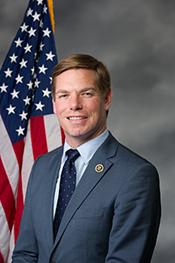
Mr. Speaker, we are all deeply concerned, as I mentioned in my opening statement, with the reports from our intelligence community regarding potential foreign interference in our most recent election. Everybody should be. Mr. Speaker, I am going to ask people to vote ``no'' on the previous question. If we defeat the previous question, I will offer an amendment to the rule to bring up Representative Swalwell's and Representative Cummings' bill which would create a bipartisan commission to investigate foreign interference in our 2016 election. With the revelations about General Flynn coming to light, and all that we know about his dealings with the Russians, this is extremely timely.
Mr. Speaker, I ask unanimous consent to insert the text of my amendment in the Record, along with extraneous material, immediately prior to the vote on the previous question.
Mr. Speaker, to discuss our proposal, I yield 3 minutes to the distinguished gentleman from California (Mr. Swalwell).
Mr. Speaker, I yield an additional 2 minutes to the gentleman.
Mr. Speaker, I yield myself the balance of my time.
Mr. Speaker, there is one similarity with Russia and what we are doing here today, and that is the process. This is completely closed. This is totally undemocratic. There is no opportunity for amendment. There is no opportunity for different opinions to be presented here. So, again, this process is deeply flawed.
Again, my friends on the other side of the aisle may want to defend it, but I will tell you this is unprecedented. With the number of closed rules that we have seen, you are going to break all records.
My Republican friends also have the distinction of presiding over the most closed Congress in history. This will outdo that because they are moving in such a restrictive and closed way. This is not right.
The idea that we are going to repeal protections with an up-or-down vote without having the committees of jurisdiction even do a hearing, even to weigh the very points of view on this, to bring these bills to the floor like this in a way that would not allow people to improve these protections is outrageous. But this is the new norm here. Everything is shut down.
And the gentleman is right that the previous question maybe is a little bit off subject from the two underlying bills here, but as the gentleman knows, we are currently debating the rule. This is a tool used to set the House's agenda and to prioritize consideration of legislation.
For that very reason, this is, in fact, the appropriate time for us to explain to the American people what legislation we would like to prioritize and what agenda we would like to pursue in this House. Because the fact of the matter is, if we offer amendments to the Rules Committee by a 9-4 vote, we are turned down. We are shut out all the time.
So this is our only opportunity to be able to bring some of our priorities before our fellow Members in the House and to be able to let the American people know that some of us in this House are horrified by Russian interference in our election. It is unprecedented what they did. Anybody who sat through any of the briefings or even read the unclassified report, I don't know how you could not be horrified by the deliberate attempt to impact our elections.
And yet, we can't even get oversight in this House. The wagons have all circled around the President. You can't do anything that will make him uncomfortable. Well, the fact of the matter is this is about more than making a President of the United States uncomfortable. This is about defending our electoral system, defending our democracy.
And the gentleman from California, in arguing in favor of voting ``no'' on the previous question so we can bring up a bill that would allow there to be an independent bipartisan investigation of Russian interference on our election I think is even more important, given what we know about what happened with General Flynn. Many of us said, when he was being considered for the top national security spot in the White House, that this was a bad choice. Why? Well, because this is a guy who regularly peddled in conspiracy theories, whacky conspiracy theories.
Members of the intelligence community, members of our Defense Department regularly said, when he was being considered, that this was a bad choice. My Republican friends said nothing. Now we realize just how bad a choice this was and how bad the President's judgment was in allowing a man like this to be elevated to such a high position in the White House.
There are serious questions that need to be answered here. I would say to my colleagues, rather than trying to dodge and rather than trying to hide and rather than trying to frustrate attempts to get to the truth, there ought to be a bipartisan effort, similar to the 9/11 Commission, where people come together and, in an open, transparent way so the American people know what is going on, are able to get to the truth. That is what we are trying to do here. We have no other means to be able to get our views heard--certainly not in the Rules Committee. Every amendment we offer is turned down.
So I would say to my colleagues, vote ``no'' on the previous question. Let us be able to bring up the Swalwell-Cummings bill and have a vote on it. If you don't want to do an investigation, then vote ``no.'' But this is important and, I would argue, more important than the underlying bills, given what we are faced with. This is serious business, and it is about time my friends on the other side of the aisle treated it as serious business.
I will just close, Mr. Speaker, by saying that I have served here now for 20 years, and I have gotten to know some of the finest people in this Chamber, both Democrats and Republicans. I know there are a lot of Republicans who believe, as we do on the Democratic side, that we need to find out
what happened and we need to get to the truth. We don't want to see more attempts to block investigations.
I hope that those Republicans would join with us and vote ``no'' on the previous question because, if you vote ``no,'' we get to bring this up, we get to vote on it, and we still get to vote on the underlying legislation. This doesn't slow anything down; this doesn't stop anything; but it allows us, at this very important moment, to be able to debate something that I know a lot of people in this country are very concerned about.
Mr. Speaker, again, vote `no' on the previous question, and vote ``no'' on this closed, restrictive Putin rule.
I yield back the balance of my time.
Mr. Speaker, a parliamentary inquiry.
My parliamentary inquiry is, are there any amendments that have been made in order under this rule?
Can the Speaker respond to whether this is a closed rule, which means that no amendments are in order?
Thank you, Mr. Speaker.
Mr. Speaker, on that I demand the yeas and nays.