I
115th CONGRESS
1st Session
H. R. 1666
IN THE HOUSE OF REPRESENTATIVES
March 22, 2017
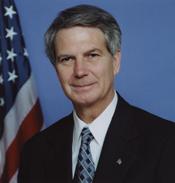
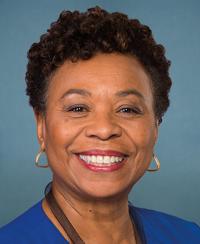
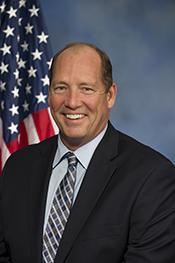
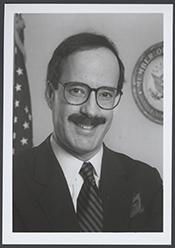
Mr. Jones (for himself, Mr. Duncan of Tennessee, Mr. Garamendi, Mr. Young of Alaska, Ms. Lee, Mr. Massie, Ms. Speier, and Mr. Cleaver) introduced the following bill; which was referred to the Committee on Foreign Affairs, and in addition to the Committee on Rules, for a period to be subsequently determined by the Speaker, in each case for consideration of such provisions as fall within the jurisdiction of the committee concerned
A BILL
To prohibit the availability of funds for activities in the Islamic Republic of Afghanistan, and for other purposes.
Findings
Congress finds the following:
The United States has been involved militarily, and with nation building and reconstruction, in the Islamic Republic of Afghanistan since 2001.
The United States military engagement in Afghanistan began in 2001 under a congressional authorization for the use of military force against those nations, organizations, or persons [the President] determines planned, authorized, committed, or aided the terrorist attacks that occurred on September 11, 2001.
.
On October 2, 2011, United States Navy Seals killed Osama Bin Laden, the head of Al-Qaeda, the terrorist organization responsible for the September 11, 2001, attacks on the United States.
Since 2001, the United States military and its coalition partners have killed or captured tens of thousands of Al Qaeda, Taliban, and other insurgents in Afghanistan.
In 2014, the United States announced the end of 13 years of combat operations in Afghanistan.
The war in Afghanistan is the longest war in American history.
According to the Department of Defense, since 2001, 2,216 United States service members have been killed in Afghanistan, and over 20,049 service members have been wounded.
Since 2001, 150 coalition personnel, including United States service members, have been killed by the Afghan security forces personnel that American taxpayers are paying to train. Another 189 service members have been wounded.
Over the past 15 years, nearly $800 billion of United States taxpayers’ money has been spent on Afghanistan.
The Special Inspector General for Afghanistan Reconstruction (SIGAR), John Sopko, has documented billions of dollars of waste, fraud, and abuse of American taxpayers hard-earned money in Afghanistan, which continues to this day. For example:
According to a 2016 USA Today article entitled Report cites wasted Pentagon money in Afghanistan
, among the more egregious examples of boondoggles Sopko cited included importing rare blond Italian goats to boost the cashmere industry
. The $6 million program included shipping nine male goats to western Afghanistan from Italy, setting up a farm, lab, and staff to certify their wool.
An ongoing SIGAR investigation found that American taxpayers are paying as many as 200,000 fictitious Afghan ghost
soldiers, potentially costing hundreds of millions of dollars annually.
On May 1, 2012, Afghan President Hamid Karzai and United States President Barack Obama signed the Enduring Strategic Partnership Agreement between the Islamic Republic of Afghanistan and the United States of America
, which committed the United States to supporting the social and economic development, and security, of Afghanistan for at least 10 years. The agreement was submitted to the Afghan Parliament, which approved it. However, the agreement was never submitted to, voted on, or approved by the Congress of the United States.
The United States continues to maintain a military presence of 8,400 troops in Afghanistan, and continues to annually spend roughly $43 billion of American taxpayers’ money there. That money funds, among other things, America’s 15-year-long effort to train and equip Afghan military and police forces, as well as a variety of reconstruction and foreign aid programs.
General Charles Krulak, 31st Commandant of the United States Marine Corps, has stated, Attempting to find a true military and political answer to the problems in Afghanistan would take decades, not years, and drain our nation of precious resources … with the most precious being our sons and daughters. Simply put, the U.S. cannot solve the Afghan problem … no matter how brave and determined our troops are.
.
In a January 2017 article in the Wall Street Journal, Hamid Karzai, former President of the Islamic Republic of Afghanistan from 2004 to 2014, stated, The fact is that the U.S. presence in Afghanistan has not brought security to us. It has caused more extremism.
.
There has never been a full debate in Congress on whether to continue the United States engagement in Afghanistan.
Prohibition on availability of funds for activities in Afghanistan
In general
No funds may be made available for activities in Afghanistan after the date that is one year after the date of the enactment of this Act.
Exceptions
The prohibition in subsection (a) shall not apply with respect to—
operations of the United States Embassy in Afghanistan; or
intelligence gathering activities.
Waiver
The prohibition in subsection (a) may be waived on a case-by-case basis if—
the President submits to Congress a certification that the availability of funds for the activities described in subsection (a) is in the national interests of the United States; and
Congress, within 30 days after receipt of a certification under paragraph (1), enacts a joint resolution authorizing the availability of funds for the activities described in subsection (a).
Expedited procedures
A joint resolution described in subsection (c)(2) and introduced within the appropriate 30-day period shall be considered in the Senate and House of Representatives in accordance with paragraphs (3) through (7) of section 8066(c) of the Department of Defense Appropriations Act, 1985 (as contained in Public Law 98–473; 98 Stat. 1935), except that in applying and administering such paragraphs—
references in such paragraphs to the Committees on Appropriations of the House of Representatives and the Senate shall be deemed to be references to the Committee on Foreign Affairs of the House of Representatives and the Committee on Foreign Relations of the Senate, respectively; and
paragraph (5)(B) of such section 8066(c) shall be applied and administered by substituting not less than eight hours but not more than ten hours
for not more than ten hours
.