Mr. Speaker, I come to the floor this evening with a heavy heart, deeply concerned about my fellow Floridians and my fellow Americans who have seen benefits as a consequence of medical marijuana.…
Mr. Speaker, I come to the floor this evening with a heavy heart, deeply concerned about my fellow Floridians and my fellow Americans who have seen benefits as a consequence of medical marijuana.
Throughout this great country, there have been circumstances where States have chosen to experiment and afford their citizens the opportunity to receive medical marijuana treatments, and that opportunity flourished as a consequence of a series of actions, one of which was the Cole memo.
The Cole memo was direction from the Attorney General of the United States in the last administration not to prioritize the arrest and prosecution of people who were using medical marijuana legally under their State laws, not to punish the doctors or prescribers or dispensing organizations that were assisting in the logistics for that care but, instead, to focus our precious Federal resources where they could do the most good: to stop drug trafficking, human trafficking, illegal illicit activity that surrounds the drug trade, to
ensure that there wasn't access for minors or cartels or people who would drive a medical practice deeper into the black market.
It is deeply unfortunate that Attorney General Jeff Sessions has recently rescinded the Cole memo, placing into question the very channels of medicine that have helped so many of my constituents and so many fellow Americans.
This evening, I am going spend some time speaking about this issue, but I wanted to take the opportunity first and yield to my good friend, my colleague from the State of Florida, who has been a leader not only on this issue, but on so many of the critically important bipartisanship reforms that we should be working on here in the Congress.
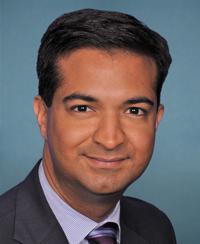
I yield to the gentleman from Florida (Mr. Curbelo).
Mr. Speaker, I thank the gentleman from Florida (Mr. Curbelo) for joining me this evening. Each and every point that Mr. Curbelo made wasn't partisan. It didn't lend itself to a conservative or a liberal ideology. It just made sense: just adhere to our constitutional principles in a way that we can help people without getting the government in the way.
I am particularly grateful that the movement criticizing Attorney General Sessions for this very poor judgment exercised is not a Republican movement or a Democratic movement. It is bipartisan.
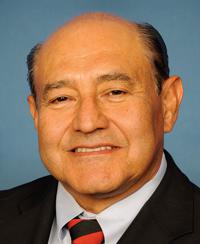
In that bipartisan spirit, I yield to my friend Mr. Correa from California. I want to thank the many Californians who have been a part of this effort going forward, and I yield to him.
Mr. Speaker, I thank the gentleman from California for joining
us this evening. His words are a clarion call to sympathize with, empathize with, and support parents who have children with refractory epilepsy and other diseases that lead to chronic and, at times, unstoppable seizures.
There is a desperation in the voice of parents who have children who have these seizures. That moves me. A child's eyes can roll in the back of their head. They can turn blue, gasping for air. The gentleman from California (Mr. Correa) referenced circumstances where a parent would reach out and ask for help.
I yield to the gentleman to maybe further explain how it makes you feel as a policymaker when you have got someone who wants to cut through the normal discord and disruption in the policymaking process, and they just want their child to be able to breathe in the absence of these debilitating symptoms. If the gentleman wouldn't mind, I yield to him for that explanation.
Mr. Speaker, I wish his constituents the best of luck in these trying times. One may reasonably wonder: What does the repeal of the Cole memo really mean for a patient, or a doctor, or a dispensing organization? It presents a series of logistical challenges that could be crippling not only to this industry, but to the very vulnerable Americans who rely upon it for medicine.
Today, all across America, banks do not know whether or not their receipt of deposits from cannabis organizations operating legally under the color of State law would subject that bank to some broader consequence, to the oppressive hand of the Federal Government coming in and creating all kinds of other bad consequences for the people who bank with that institution.
And so the result is that dispensing organizations that want to grow, that want to make investments, that want to do research, that want to be able to deliver to fragile and vulnerable patients, won't be able to meet payroll, won't be able to fund the infrastructure of their companies, and won't be able to do the research so that we find out what strains of cannabis can be uniquely helpful to specific ailments.
So this repeal of the Cole memo isn't merely a circumstance where you are okay, so long as you are not being arrested or prosecuted in that very moment. It literally erodes the framework that has allowed people to be able to bring medicine to the doorstep of some of our most vulnerable Americans.
That is the true danger here: confusing policy and lack of clarity regarding the rules. In an area where innovation could do so much good for people, why would we not want the clearest, most predictable rules possible? Why wouldn't we want the highest standards for testing, labeling, and research? Why wouldn't we want to introduce cannabis, not in a context that could lead to abuse, or money laundering, or other illicit activity? Why would we not want it introduced in the most clinical setting possible, approved by researchers, prescribed by doctors, and then used by patients that oftentimes have seen every other reasonable medical remedy fail.
I am a limited government guy. I just don't understand why any administration, Republican or Democrat, would want to place the government between vulnerable people and something that could potentially help them. Again, recognizing the bipartisan flavor of this evening, I wanted to take just a moment to recognize one of my conservative friends, someone who has led in this institution on conservative causes during his tenure here.
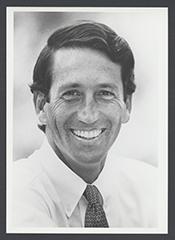
Mr. Speaker, I yield to the gentleman from South Carolina (Mr. Sanford).
Mr. Speaker, I thank the gentleman for his comments. It is worth noting that so many of the experiences that make up the people who serve in this body come from local government, or State legislatures, or governorships. I am very proud to have served in the Florida Legislature. I know my colleague, Mr. Sanford, served as the Governor of the State of South Carolina. And we have seen how States can function as the laboratories of democracy. And from time to time, a State may look at another and say there is a circumstance where they have done something right, or they have done something that we wouldn't necessarily agree with. And then we can tailor proposals that have withstood scrutiny and review experiences in other States and try to improve upon them.
That is the great federalist system that our Founders promised us that remains guaranteed in our Constitution today. Federalism is not some quaint, little notion of how government should run. It is the enduring promise that we have a right to live under today. And so I thank my colleague for reminding the Congress that it is the States that are the necessary constituents of the Federal Government, not the other way around.
It highlights why the decision of the Attorney General to rescind the Cole memo was so deeply flawed because it highlights the arrogance of a Federal Government that believes that its policies should always stand in primacy to innovation at the State level.
Here, that innovation is helping people, and that is the point that I would really like to stress. I have met with hundreds of families in the State of Florida and throughout the country who have seen benefits from medical marijuana. This isn't a medical theory. It is not something that people are merely hopeful for. It has actually created a more meaningful quality of life in American families.
Why wouldn't we be for that? Why don't we want to champion the opportunity for a parent to be able to hear their child speak for the first time?
Why wouldn't we want to give a grandparent some respite who might be caring for a child that has compulsory and reflexive seizures?
Why wouldn't we want to help a caretaker who might be caring for a parent of their own suffering from Alzheimer's, or Parkinson's, or dementia where we have seen improved research and growing opportunity for progress?
The Attorney General's decision is a step backward, but it doesn't have to be, because the Trump administration can step forward and fulfill the promise that President Trump made on the campaign trail to respect the rights of States and to have a noninterference policy with medical marijuana.
I have called on Treasury Secretary Mnuchin to issue guidance and instruction to financial institutions that they will not be prosecuted or harmed or they will not face some adverse regulatory action if they continue to accept the deposits of medical marijuana companies. I am hopeful that Secretary Mnuchin has more foresight than we have seen from the Attorney General's Office and that he will provide this guidance.
Mr. Speaker, I would also ask that the President personally engage. I know the President. I know him to be a man with a huge heart who cares about people. Throughout the Trump family, there is a particular focus on caring for the vulnerable and children who have to deal with complex medical issues.
I would hope that the President and that the members of the administration would find it within their hearts to take action on this important priority. Let us not allow Attorney General Jeff Sessions to limit progress on American families and on an industry that is growing and creating jobs and developing key innovations that can help people.
Beyond dealing with this inartful rescinding of the Cole memo, there is broader medical marijuana reform that needs to happen. There is no excuse to maintain marijuana on the list of Schedule I drugs.
Schedule I is reserved for those drugs that have no medical value, that can't help anyone, and that should be subjected to the strictest scrutiny. Not even cocaine is a Schedule I drug. I don't even think that some of the drugs that are doing the most harm and causing the most deaths throughout the panoply of this opioid crisis are all Schedule I drugs. But marijuana is? It is indefensible, and it is indicative of a dogma of a lie that the Federal Government has told to the American people for a generation.
Think of the opportunity if we could come together and make some progress on this issue. Throughout the 115th Congress, we have had robust opportunities to debate about our discord and disagreement and to discuss issues where perhaps we won't be able to come together as Republicans and Democrats, but this should not be one of those issues. This isn't partisan. It is not even conservative or liberal. You just have to believe that the role of government isn't to hurt people who are trying to get better or hurt people who are trying to help others who are trying to get better.
We spend way too much time arresting people for marijuana in the first place. In the year 2015, 643,000 people were arrested for marijuana. That is one person every 49 seconds for a year. 574,000 of these arrests were for possession, not distribution or sale.
Forty percent of all drug-related arrests are for marijuana possession. This is particularly discriminatory. African Americans are more than 2\1/2\ times more likely to be arrested for possession than Whites.
Marijuana is a $20 billion industry in this country. If we allow Attorney General Sessions to have his way, we will drive that $20 billion into the black markets, into the hands of the money launderers and the cartels, and the consequence will be fewer solutions for patients.
Marijuana has shown tremendous promise in the treatment of Alzheimer's to slow the protein deposits on the brain. For patients with AIDS and HIV, medical marijuana can stimulate appetite and slow muscle wasting syndrome. It can function as an antinausea medicine, as an analgesic, and it can reduce peripheral neuropathy. For arthritis patients, there can be a reduction in certain types of symptoms that could clear people's airways suffering from debilitating arthritis.
We have also seen very favorable results for the many millions of Americans dealing with chronic pain who right now are getting prescriptions for opioids. So many of the prescriptions written for opioids today in America causing deaths, taking away our children, our aunts and uncles and our parents, could be avoided if we weren't prescribing opioids in the first place and if we had a lower impact alternative like medical cannabis.
People with cancer have been given new hope not only that these symptoms can be relieved through medical cannabis, but that the actual growth of tumors can be slowed. There is really great research that has been published by the British Journal of Pharmacology regarding the antitumor properties that medical cannabis can have. But, unfortunately, that research has to be done in Israel, in Europe, and in other places in the world because in this country we continue to maintain the indefensible policy that no research can reasonably occur on medical cannabis.
As a matter of fact, this very Attorney General and this very Department of Justice have frustrated reasonable efforts to make more medical cannabis available for research, to unlock cures for the American people and to help American families.
Mr. Speaker, may I inquire as to how much time I have remaining.
Mr. Speaker, I will conclude with this.
I wasn't always a believer in medical cannabis, but I met a girl in my district who was being told by her doctor that she was going to have to saw her brain in half to stop the seizures from firing across. Today, that little girl is a medical cannabis patient. She has traded surgeries for softball games; she
has traded doctors for dancing lessons; and she brings hugs, hope, and joy to our entire community. It is for her--it is for the millions of Americans benefiting from medical cannabis--that I call upon this administration to stop the Attorney General from harming Americans through his repeal of the Cole memo.
Mr. Speaker, I thank my bipartisan group of colleagues who joined with me this evening.
Mr. Speaker, I yield back the balance of my time.