Mr. Speaker, I ask unanimous consent that all Members have 5 legislative days within which to revise and extend their remarks and to include extraneous material on H.R. 238. Mr. Chairman, I yield…
Mr. Speaker, I ask unanimous consent that all Members have 5 legislative days within which to revise and extend their remarks and to include extraneous material on H.R. 238.
Mr. Chairman, I yield myself such time as I may consume.
I rise in support of H.R. 238, the Commodity End-User Relief Act.
The Commodity End-User Relief Act is a bipartisan bill to reauthorize the Commodity Futures Trading Commission, to make much-needed regulatory reforms, and, most importantly, to make statutory changes to protect end users and give them access to the tools they need to manage their risks.
Over the past 4 years, the House Committee on Agriculture has held almost two dozen hearings that have examined the Commission and have investigated the impacts of the Dodd-Frank Act on derivatives markets. Our witnesses, many of whom were market participants who were struggling to comply with burdensome rules and ambiguous portions of the underlying statute, were consistent in their call for relief. To address their concerns, H.R. 238 makes reforms that fall into three broad categories: customer protections, Commission reforms, and end- user relief.
Title I of the bill protects customers and the margin funds they deposit at their Futures Commission Merchants by codifying critical changes made during the collapse and bankruptcies of MF Global and Peregrine Financial Group.
Title II makes meaningful reforms to the operations of the Commission to improve the agency's deliberative process. In doing so, it also requires the Commission to conduct more thorough and robust cost- benefit analysis to help get future rulemakings right the first time. While the CFTC is already required to consider costs and benefits of the rules it proposes, its work has been called into question by the CFTC's inspector general, who reported the Commission staff seemed to view the process as more of a legal one than an economic one.
End users are the businesses that provide Americans with food, clothing, transportation, electricity, heat, and much more. Companies that produce, consume, and transport the commodities that make modern life possible use futures and swaps markets to reduce the uncertainty that their businesses face. Farmers hedge their crops in the spring so they know what they will get paid in the fall. Utilities hedge the price of energy so they can charge customers at a steady rate. Manufacturers hedge the cost of steel, energy, and other inputs to lock in prices as they work to fill orders.
The fact is that no end user played any part in the financial crisis, and no end user currently poses a systemic risk to U.S. derivative markets. Yet, as the Agriculture Committee heard in countless hours of testimony, today it is more difficult and more expensive for them to manage their risks than it was for them 5 years ago. Some of these challenges are the result of ambiguities and oversights in the text of the Commodity Exchange Act, and some of them result from overzealous rulemakings by the Commission itself.
Today's legislation fixes statutory problems, like section 304, which amends the definition of ``financial entity'' to ensure that some end users don't lose their clearing exemption simply because a hedging strategy makes up for losses in a physical transaction; or like section 315, which makes small changes to the swaps' core principles to align them with conventions in the swaps industry, rather than the futures industry, easing compliance burdens for these newly regulated entities.
It also fixes problems that have grown out of the CFTC's own rulemakings. For example, section 308 sets aside a Commission rule that would automatically lower the transaction threshold triggering registration as a swap dealer. This costly, complex registration process was intended for large financial institutions, but because this registration threshold was set arbitrarily, it has swept up some commodity firms as well.
If the limits fall by 60 percent next year, it could sweep up to 100 more firms into the reach of Dodd-Frank. H.R. 238 would fix the level at its current $8 billion unless the Commission proposes a new rule with evidence of a needed reduction. Similarly, section 313 exempts religious pension plans and university endowments from a new rule that requires them to register as commodity pool operators simply because they use standardized hedging products.
What H.R. 238 does not do is roll back a single core tenet of title VII of Dodd-Frank. It does not change the execution, clearing, margining, capital, or reporting frameworks set up by that Act.
In fact, not a single witness who appeared before the House Committee on Agriculture ever asked us to fundamentally upend these principles. These are concepts that have been part of the swaps markets long before the financial reform happened. The Committee, the Commission, and the industry will continue to grapple with the details of these core tenets, seeking to provide the right mix of flexibility and oversight.
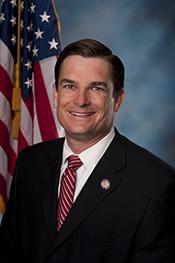
Before I close, I would like to thank members of the Agriculture Committee who sat through all these hearings and all the markups on this issue. Chairman Austin Scott and Ranking Member David Scott, two of my cosponsors on this legislation, have led most of the Committee's hearings on these issues, and they have done great work.
Together, we have put forward a bipartisan bill that makes narrowly targeted changes to provide relief from regulatory burdens on American businesses. The Commodity End-User Relief Act offers meaningful improvements for market participants without undermining the basic goals of title VII of Dodd-Frank, and it does so by providing the right relief to the right people.
I urge support of the Commodity End-User Relief Act with all its amendments, and I include for the Record letters of support from over 30 groups.
House of Representatives,
Committee on Financial Services,
Washington, DC, January 4, 2017.
Hon. K. Michael Conaway,
Chairman, Committee on Agriculture, Washington, DC.
Dear Chairman Conaway: I am writing concerning H.R. 238,
the ``Customer Protection and End-User Relief Act.''
As a result of your having consulted with the Committee on
Financial Services concerning provisions in the bill that
fall within our Rule X jurisdiction, I agree to forgo action
on the bill so that it may proceed expeditiously to the House
Floor. The Committee on Financial Services takes this action
with our mutual understanding that, by foregoing
consideration of H.R. 238 at this time, we do not waive any
jurisdiction over the subject matter contained in this or
similar legislation, and that our Committee will be
appropriately consulted and involved as this or similar
legislation moves forward so that we may address any
remaining issues that fall within our Rule X jurisdiction.
Our Committee also reserves the right to seek appointment of
an appropriate number of conferees to any House-Senate
conference involving this or similar legislation, and
requests your support for any such request.
Finally, I would appreciate your response to this letter
confirming this understanding with respect to H.R. 238 and
would ask that a copy of our exchange of letters on this
matter be placed in the Congressional Record during floor
consideration thereof.
Sincerely,
Jeb Hensarling,
Chairman.
Mr. Chair, I reserve the balance of my time.
Mr. Chairman, I yield 3 minutes to the gentleman from Arkansas (Mr. Crawford), who is the subcommittee chairman for the General Farm Commodities and Risk Management Subcommittee.
Mr. Chairman, I yield 3 minutes to the gentleman from Illinois (Mr. Davis), who is the subcommittee chairman for the Subcommittee on Biotechnology, Horticulture, and Research.
Mr. Chairman, I would like to point out for the Record that over the past two fiscal years, since 2013, the CFTC has received a 29 percent increase in funding. It has gone from $194 million to its current level of $250 million. I think you would be hard-pressed to find any other agency throughout this government that has gotten a 29 percent increase in its resources over that timeframe.
I now yield 3 minutes to the gentlewoman from Missouri (Mrs. Hartzler), a valuable member of the Ag Committee.
Mr. Chairman, I am proud to yield 3 minutes to the gentleman from Florida (Mr. Yoho), another valuable member of the Agriculture Committee.
Mr. Chairman, I would like to point out for the Record that the cost-benefit analysis rules in this bill are modeled after Executive Order 13563, which President Obama signed into the executive order status, and they are forward-looking. Nothing in our bill would require what might be a much-needed re-look at the Dodd-Frank rules done in the past. The cost-benefit analysis would require any future rulemaking to comply.
I yield 3 minutes to the gentleman from California (Mr. LaMalfa), another valuable member of the Agriculture Committee.
Mr. Chairman, may I inquire as to how much time is left on both sides.
Mr. Chair, I yield 3 minutes to the gentleman from Georgia (Mr. Austin Scott), who is the chairman of the Subcommittee on Commodity Exchanges, Energy, and Credit.
I have no further speakers.
Mr. Chairman, may I inquire as to who has the right to close?
Mr. Chairman, I yield myself such time as I may consume.
As I close, I want to remind us of the need to act today. But before I do, I also want to thank the ranking member. While we may vote differently on this bill, he and I generally work well together on a myriad of issues that face not only production agriculture, but rural America as well, and I thank him for his work, even though we may not vote exactly the same way today.
Over the past 4 years, the Committee on Agriculture heard dozens of witnesses about the upheaval end users have been facing while trying to use derivative markets in the wake of the post-crisis financial reforms. While this Congress took affirmative steps in Dodd-Frank to protect end users from harm, today it is clear that there is still work to be done. have been facing while trying to use derivative markets in the wake of the post-crisis financial reforms. While this Congress took affirmative steps in Dodd-Frank to protect end users from harm, today it is clear that there is still work to be done.
It isn't enough to simply raise these issues and hope that the CFTC will take care of them for us--for one, sometimes they cannot. There are numerous small oversights in the statute that have big implications for end users that we must correct in this legislation.
Currently, the CEA defines some utility companies as financial entities, stripping them of their status as end users. The Commission can't fix this.
The core principles for SEFs, which were added to the CEA by Dodd- Frank, were lifted almost word for word from the core principles for futures exchanges, even though swaps exchanges and futures exchanges operate completely differently and SEFs cannot perform many of the functions of a futures exchange. The Commission cannot fix this.
Certainly, the Commission can and has tried to paper over these problems, issuing staff letters explaining how it will deal with incongruities in the law. But that isn't good enough. We know the problems. We should fix them, and fix them now.
Sometimes, though, the problem isn't the statute. There are a number of end-user issues that we have heard testimony about which the CFTC will not fix, because the Commission simply disagrees with Congress about how to apply the law. We know these problems also.
The Commission has promulgated a rule that reduces the transaction threshold to be considered a swap dealer from $8 billion to $3 billion, a 60 percent decline, while it is still studying the matter. We should require that the CFTC complete the study and have a public vote on that matter.
The Commission has proposed a new method of granting bona fide hedge exemptions that is significantly narrower than the current method, upending longstanding hedging conventions for market participants. This proposal has the added disadvantage of being dramatically more labor intensive for the Commission. We should insist that historic hedging practices be protected.
The Commission has issued a new rule on ownership, control, and reporting that it knows isn't working. They have delayed its implementation for over 3 years by continuing to parcel out temporary reprieves. We should insist the Commission amend the rule so that market participants know definitively what their compliance obligations are.
The definition of swap does not exclude transactions that are wholly contained within a single company and not market facing. Regulators have used this leeway to require businesses and financial institutions to follow rules that are, quite frankly, inappropriate for risk management purposes and costly for the companies to use them. We should amend the statute, to make it clear that inter-affiliate transactions should not be regulated the same way as publicly transacted swaps.
The challenges facing businesses who hedge their risks in derivatives markets are real. Today we have an opportunity to fix some of those problems. Every dollar that a business can save by better managing its risk is a dollar available to grow that business, pay higher wages, and lower costs to consumers or protect investors.
Over the past week, over 30 organizations representing thousands of American businesses have voiced their support for the important reforms in the Commodity End-User Relief Act. Businesses from farm country to major manufacturers, to public utilities need every tool available to manage their businesses and reduce the uncertainties they face each day in today's global economy.
I urge my colleagues to support the Commodity End-User Relief Act, protect these companies, and ensure that they have the tools they need to compete in a global economy.
Mr. Chairman, I yield back the balance of my time.
Mr. Chair, I include in the Record the following letters of support for H.R. 238:
January 11, 2017.
Hon. Paul Ryan,
Speaker, House of Representatives, Washington, DC.
Hon. Nancy Pelosi,
Democratic Leader, House of Representatives, Washington, DC.
Dear Speaker Ryan and Leader Pelosi: FIA supports H.R. 238,
the ``Commodity End User Relief Act''. Notably, this
legislation reauthorizes the Commodity Futures Trading
Commission (CFTC), which has been without statutory
authorization for almost four years. In addition to
reauthorizing the CFTC, Congress has historically taken the
opportunity of reauthorization to periodically review and
enhance the CFTC's authorities. This is essential in a
regulatory environment where the marketplace is extremely
dynamic. Given the constantly evolving structure to which
these regulatory authorities apply, it is prudent for
Congress to consider updating the statute in response to
market changes. We commend the House Committee on Agriculture
for efforts to build upon previous work and advance this
legislation.
H.R. 238 contains prudent internal risk controls to
safeguard market data and improved customer protections
sought by the market participants who rely on derivatives to
manage their risks. These are examples of policy enhancements
that have garnered tremendous favor in recent years as
evidenced by the bi-partisan support they have received in
previous Congressional sessions.
As noted above, the constant evolution of the markets
regulated by the CFTC has advanced even since the last time
the House of Representatives passed similar legislation,
which warrants the introduction of new statutory updates
expected to be offered as floor amendments. In particular,
FIA would like to lend our support to the bi-partisan Duffy/
Scott amendment protecting critical intellectual property
that is key to the innovative culture in the United States.
Additionally, we commend Congresswoman Hartzler for her
amendment recognizing the need to improve the quality of
information submitted for the Commission's surveillance and
large trader reporting programs.
We look forward to seeing this effort advance to the Senate
where we expect to have continued dialogue on refinements.
Sincerely,
President and CEO.
Mr. Chairman, I have an amendment at the desk.
Mr. Chairman, this is a pretty straightforward amendment. It proposes certain technical corrections within the bills. This would have normally been handled by the Rules Committee without need for a particular amendment, but because, as I said yesterday, the language of H.R. 238 is the exact language out of last year's June 15 bill, except for things that we dropped and limiting the appropriations to $250 million.
So, in the spirit of total transparency, I bring this amendment forward so the full body can work its will on this technical correction that would have normally been fixed by the Rules Committee.
I yield to the gentleman from Minnesota.
Mr. Chair, I yield back the balance of my time.
Mr. Chairman, the amendment I offer today will clarify amendments made to the Commodity Exchange Act by Dodd-Frank and require the CFTC to actually determine that position limits will, in fact, help reduce excessive speculation before they implement those new rules.
This past fall, my colleagues and I all ran for reelection promising to reduce government regulation and eliminate rules that needlessly burden the economy. As we consider the CFTC's ongoing work, we should look no further than the position limits rulemaking to begin that task.
Position limits are a tool that have merit and purpose in regulating the commodities market. Today, designated contract markets core principle V requires every U.S. exchange to impose, as is necessary and appropriate, position limits or position accountability levels on the contracts they offer.
Further, there are several agricultural contracts that have long- established and well understood federally mandated position limits. My amendment will not change any of those existing position limits regime.
Prior to Dodd-Frank, the law was clear: if the Commission wanted to impose position limits, it first had to make a determination that such limits would diminish, eliminate, or prevent the burdens of excessive speculation. Post-Dodd-Frank, the courts have ruled that additions to the statute have rendered it ambiguous.
Chairman Massad and I have disagreed for the past 3 years about how to read the statute. So today, my amendment fixes the ambiguity by affirmatively requiring the Commission to determine that position limits will serve to reduce the burdens of excessive speculation before they put them in place.
It is important that the Commission affirmatively determines the need for position limits because limits are an unmistakable burden on market participants.
The current position limits proposal will cost market participants substantially in time and money to comply with. Most importantly, it fundamentally changes the way hedgers can seek relief from the rules.
Agricultural producers and processors, power companies, and other commercial hedgers may have fewer bona fide hedges. What is more, they might get a hedge exemption, only to get a call from Washington telling them their hedge is invalid and they must liquidate their position.
The proposal also imposes new recordkeeping and reporting obligations on Futures Commission Merchants, exchanges, and market participants. Less well understood, but no less important, is the impact that position limits in later months might have on market liquidity.
Position limits do not have anything to do with the long-term price of commodities. The price of oil, no matter how high it climbs or how low it falls, is driven by supply and demand.
Congress itself recognized this when it characterized the burdens of excessive speculation as the sudden or unreasonable fluctuations or unwarranted changes in the price of a commodity. There is nothing sudden about a year's-long run-up or a year's-long decline in commodity prices.
That said, I agree there is a role for position limits to play in the management of our commodity markets, especially in managing the convergence of prices at the expiration of a contract. But limits are a regulatory tool to promote orderly markets, not a silver bullet to lower commodity prices for consumers.
As a tool, they need to be calibrated to the unique characteristics and historical patterns of each commodity. We cannot impose them in blind faith that more regulation automatically improves markets.
My amendment is agnostic about the merits of position limits, but it is clear about the need for the government to justify its rules that restrict economic activity.
As this Congress sets about reducing regulatory burdens, it is important that we start by requiring the CFTC to make a determination about the need for further regulations before they act.
Mr. Chair, I reserve the balance of my time.
Mr. Chairman, how much time do I have remaining?
Mr. Chairman, the CFTC prepared a draft report this past year. Quoting from page 142 of that draft, it says the Masters Hypothesis, which my colleague--who I do have great respect for--said the mere presence of passives distorts the marketplace, that is what Masters Hypothesis said. The CFTC found there are no reputable economic studies which fully endorse this view of how the commodity futures markets work.
I would like to close with this comment from another study by the chief economist: ``Comment letters on either side declaring that the matter is settled in their favor among respectable economists is simply incorrect. The best economists on both sides of the debate concede that there is legitimate debate afoot. This analysis paper documents that the academic debate amongst economists about the magnitude, prevalence, and pervasiveness of the risk of outsized market positions has reputable and legitimate standard-bearers for opposing positions.''
I agree with that in full. All we are asking the CFTC to do, Mr. Chairman, is to do the work to prove that the specific position list they want to implement, should they believe one is needed, that they would have to go through regular order, their regular order, to make that happen. I encourage a ``yes'' vote on the amendment.
Mr. Chairman, I yield back the balance of my time.
Mr. Chairman, I support the gentleman's amendment.
I would point out that at the end of his amendment is an antievasion requirement which would allow the CFTC to watch for the kinds of things that
the gentlewoman from California was worried about in which foreign markets might be involved and other things. So there are, structured in the Lucas amendment, protections to avoid a crafty, interaffiliate kind of circumstance that she was concerned about.
Mr. Chairman, I move that the Committee do now rise.