Mr. Speaker, I move to suspend the rules and pass the bill (H.R. 2333) to amend the Small Business Investment Act of 1958 to increase the amount of leverage made available to small business…
Mr. Speaker, I move to suspend the rules and pass the bill (H.R. 2333) to amend the Small Business Investment Act of 1958 to increase the amount of leverage made available to small business investment companies, as amended.
Mr. Speaker, I yield myself such time as I may consume.
Mr. Speaker, as chairman of the House Small Business Committee, a day does not go by without me hearing from our Nation's job creators. From inspiring accounts that are driven by their work ethic to stories of sacrifice all in the name of growing their company, the Nation's small businesses are the true lifeblood of the American economy.
With over 29 million small businesses operating in the United States, they are responsible for two out of every three new jobs created in this country. However, their full potential is being held back by heavy-handed regulations and uncertainty. Unfortunately, their inability to access capital continues to prevent job creation and expansion.
As a way to increase access to capital, the Small Business Administration jump-starts and enhances the flow of venture and private equity capital through the Small Business Investment Company program, also known as the SBIC program.
Created in the 1958 Small Business Investment Act, the program utilizes a privately owned and SBA licensed model to increase access to capital. With over 300 SBICs operating in the country and more than $24 billion of capital under management, the program in fiscal year 2015 invested more than $5.4 billion in approximately 1,000 small businesses.
In 2015, I introduced a SBIC bill that focused on increasing the family of funds limit.
Similar to my 2015 legislation that was signed into law, the bill we have before us today concentrates on the individual leverage limit. Currently set at $150 million, the individual limit determines how much capital can be deployed by a SBIC that has only one fund under management. To better utilize this program and allow an increase in capital to small businesses, H.R. 2333--the bill that we are considering here this afternoon--increases the individual leverage limit to $175 million.
I want to thank the gentleman from California (Mr. Knight), the chairman of our Subcommittee on Contracting
and Workforce, for his leadership on this issue.
With access to capital being such a critical need for small business expansion and job creation, an increase in the individual leverage limit could deliver the needed capital that the next great American company is searching for.
This bill has broad bipartisan support and was favorably passed out of committee unanimously. I urge my colleagues to vote ``yes'' on H.R. 2333.
Mr. Speaker, I thank Ms. Judy Chu, who is here this afternoon, I believe, on behalf of Ms. Velazquez, who is the ranking member. We have a very strong bipartisan working committee. It is one of those in Congress that I think can be a model for other committees in how the two parties can actually work together and push forward with policies that are good for the country overall. We are not a very partisan committee. We work together. And I want to thank both Ms. Velazquez and Ms. Judy Chu for their participation in that bipartisanship.
Mr. Speaker, I reserve the balance of my time.
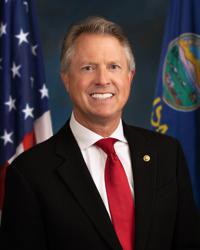
Mr. Speaker, I yield such time as he may consume to the gentleman from Kansas (Mr. Marshall).
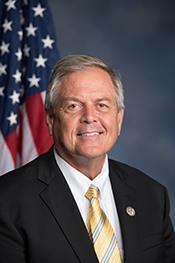
Mr. Speaker, I yield such time as he may consume to the gentleman from South Carolina (Mr. Norman), the newest member of the Small Business Committee.
Mr. Speaker, I want to, again, commend the gentleman from California (Mr. Knight) for his leadership on this particular legislation. He is the subcommittee chairman of the Contracting and Workforce Subcommittee.
Mr. Speaker, in closing, let me reiterate the importance of this bill, which aims to increase access to capital for small businesses. It simply increases the SBIC's individual leverage limit from $150 million to $175 million.
This legislation really is common sense. And, as I mentioned before, it is bipartisan. I, again, want to thank the gentlewoman from California (Ms. Judy Chu) for her bipartisan leadership on this as well.
It will enhance the ability of small businesses to gain the needed money to expand and create jobs in our communities.
Mr. Speaker, I urge my colleagues to vote ``yes'' on H.R. 2333, and I yield back the balance of my time.