








H.R. 3030House115th Congress (2017-2019)Passed House

Elie Wiesel Genocide and Atrocities Prevention Act of 2018

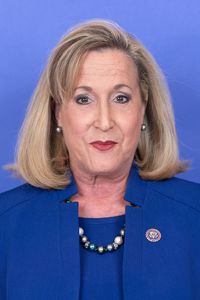
Sponsored by Ann WagnerRep. Ann Wagner (R-MO)
Introduced June 22, 2017

AI-Generated Summary

Updated April 15, 2026 at 4:51 PM UTC

The Elie Wiesel Genocide and Atrocities Prevention Act of 2018 directs the U.S. government to strengthen its ability to prevent, mitigate, and respond to genocide and other mass atrocities. It calls for regular interagency coordination, expands training for foreign service officers, and requires periodic reporting to Congress. The law applies to all relevant federal agencies and foreign service personnel.

Key Provisions

  • Directs an Atrocities Prevention Board (or successor) to meet regularly, monitor global risks, identify policy gaps, and advise the President on prevention and response.
  • Requires the State Department to add training for foreign service officers on early warning signs of atrocities, peacebuilding, mediation, and transitional justice.
  • Mandates the President to submit a detailed report to congressional committees within 180 days and annually for six years, covering U.S. capabilities, funding, risk assessments, and recommendations.
  • Defines “genocide” consistent with existing U.S. law and emphasizes its prevention as a national security interest.
  • Calls for increased funding and coordination through mechanisms like the Complex Crises Fund and enhanced collaboration with NGOs, civil society, and international organizations.

Legislative Activity

Stay on top of the latest movement without scrolling through every action

16 earlier actions
SenateCalendars Latest Action

Received in the Senate. Read twice. Placed on Senate Legislative Calendar under General Orders. Calendar No. 521.

July 18, 2018

View full timeline
HouseIntro Referral

Introduced in House

June 22, 2017

HouseIntro Referral

Referred to the Committee on Foreign Affairs, and in addition to the Committee on Intelligence (Permanent Select), for a period to be subsequently determined by the Speaker, in each case for consideration of such provisions as fall within the jurisdiction of the committee concerned.

June 22, 2017

HouseIntro Referral

Sponsor introductory remarks on measure. (CR H5238-5239)

June 28, 2017

HouseCommittee

Referred to the Subcommittee on Africa, Global Health, Global Human Rights and International Organizations.

September 5, 2017

HouseCommittee

Subcommittee on Africa, Global Health, Global Human Rights and International Organizations Discharged.

May 10, 2018

HouseCommittee

Committee Consideration and Mark-up Session Held.

May 17, 2018

HouseCommittee

Ordered to be Reported in the Nature of a Substitute (Amended) by Voice Vote.

May 17, 2018

HouseCommittee

Committee Agreed to Seek Consideration Under Suspension of the Rules,.

May 17, 2018

HouseFloor

Mr. Royce (CA) moved to suspend the rules and pass the bill, as amended.

July 17, 2018 • 4:34 PM

HouseFloor

Considered under suspension of the rules. (consideration: CR H6315-6319)

July 17, 2018 • 4:34 PM

HouseFloor

DEBATE - The House proceeded with forty minutes of debate on H.R. 3030.

July 17, 2018 • 4:34 PM

HouseFloor

At the conclusion of debate, the Yeas and Nays were demanded and ordered. Pursuant to the provisions of clause 8, rule XX, the Chair announced that further proceedings on the motion would be postponed.

July 17, 2018 • 4:58 PM

HouseFloor

Considered as unfinished business. (consideration: CR H6343-6344)

July 17, 2018 • 6:43 PM

HouseFloor

Passed/agreed to in House: On motion to suspend the rules and pass the bill, as amended Agreed to by the Yeas and Nays: (2/3 required): 406 - 5 (Roll no. 334).(text: CR H6315-6316)

July 17, 2018 • 6:49 PM

HouseFloor

On motion to suspend the rules and pass the bill, as amended Agreed to by the Yeas and Nays: (2/3 required): 406 - 5 (Roll no. 334). (text: CR H6315-6316)

July 17, 2018 • 6:49 PM

HouseFloor

Motion to reconsider laid on the table Agreed to without objection.

July 17, 2018 • 6:49 PM

SenateCalendars

Received in the Senate. Read twice. Placed on Senate Legislative Calendar under General Orders. Calendar No. 521.

July 18, 2018

Floor Debate

13 members

What members said about H.R. 3030 on the floor

7 Republicans6 Democrats
Christopher H. Smith
Rep. Christopher H. SmithR-NJ-4 · Jul 18, 2018

Mr. Speaker, yesterday we voted on a number of critical pieces of legislation. One of these, which I supported, was H.R. 3030, the Elie Wiesel Genocide and Atrocities Prevention Act of 2017,…

Ann Wagner
Rep. Ann WagnerR-MO-2 · Apr 25, 2018

Mr. Speaker, I ask unanimous consent that all Members may have 5 legislative days in which to revise and extend their remarks and to include extraneous material on the subject of my Special Order.…

Claudia Tenney
Rep. Claudia TenneyR-NY-22 · Apr 25, 2018

Mr. Speaker, I thank Congresswoman Ann Wagner for yielding. She is a wonderful inspiration to me as a new Member. I also want to thank Congressman McGovern for his comments. This is really important…

Christopher H. Smith
Rep. Christopher H. SmithR-NJ-4 · May 21, 2018

Mr. Speaker, last week we marked up H.R. 1911, the Special Envoy to Monitor and Combat Anti-Semitism. All of the Co-Chairs of the Bipartisan Task Force for Combating Anti-Semitism are cosponsors of…

Edward R. Royce
Rep. Edward R. RoyceR-CA-39 · Jul 17, 2018

Mr. Speaker, I move to suspend the rules and pass the bill (H.R. 3030) to help prevent acts of genocide and other atrocity crimes, which threaten national and international security, by enhancing…

Show 8 more
James P. McGovern
Rep. James P. McGovernD-MA-2 · Apr 25, 2018

Mr. Speaker, I want to thank my colleague, the gentlewoman from Missouri, for her leadership. I am honored to join her and other distinguished colleagues this evening in recognition of Genocide…

Ann Wagner
Rep. Ann WagnerR-MO-2 · Jul 17, 2018

Mr. Speaker, I rise today in support of the Elie Wiesel Genocide and Atrocities Prevention Act. I introduced this bill to improve U.S. efforts to prevent mass atrocity crimes. The legislation honors…

Joseph Crowley
Rep. Joseph CrowleyD-NY-14 · Jul 17, 2018

Mr. Speaker, I thank the gentleman from California for yielding me this time. Mr. Speaker, I rise in support of the Elie Wiesel Genocide and Atrocities Prevention Act. I thank my good friend, the…

Steve Chabot
Rep. Steve ChabotR-OH-1 · Apr 25, 2018

Mr. Speaker, I thank the gentlewoman from Missouri for yielding. It is Genocide Awareness and Prevention Month, and the gentlewoman from Missouri (Mrs. Wagner) has been a leader in speaking out on…

Brad Sherman
Rep. Brad ShermanD-CA-30 · Jul 17, 2018

Mr. Speaker, I yield myself such time as I may consume, and I rise in support of this measure. Mr. Speaker, this bill passed our committee by unanimous, bipartisan voice vote. It is named for Elie…

Christopher H. Smith
Rep. Christopher H. SmithR-NJ-4 · Jul 17, 2018

Mr. Speaker, I rise today in support of H.R. 3030, the Elie Wiesel Genocide and Atrocities Prevention Act of 2017, sponsored by my friend Ann Wagner. This bill will greatly strengthen our efforts to…

Debbie Wasserman Schultz
Rep. Debbie Wasserman SchultzD-FL-23 · Jul 17, 2018

Mr. Speaker I thank the gentleman for yielding. Mr. Speaker, I want to add my voice to commend Congresswoman Wagner, Congressman Engel, and Congressman Crowley for working in a bipartisan fashion to…

Ileana Ros-Lehtinen
Rep. Ileana Ros-LehtinenR-FL-27 · Jul 17, 2018

Mr. Speaker, as always, I thank Chairman Royce and Ranking Member Engel for their work in always bringing forth solid, bipartisan bills to the House floor. Mr. Speaker, I offer my full support for…

Show 4 more
Edward R. Royce
Rep. Edward R. RoyceR-CA-39 · Dec 21, 2018

Mr. Speaker, I move to suspend the rules and pass the bill (S. 1158) to help prevent acts of genocide and other atrocity crimes, which threaten national and international security, by enhancing…

Eliot L. Engel
Rep. Eliot L. EngelD-NY-16 · Dec 21, 2018

Mr. Speaker, I yield myself such time as I may consume. Mr. Speaker, I rise in support of this measure. This is an important bill that improves our ability to prevent and respond to genocides and…

Earl Blumenauer
Rep. Earl BlumenauerD-OR-3 · Jul 17, 2018

Mr. Speaker, had I been present for the vote today on the House Amendment to S. 488, the JOBS and Investor Confidence Act of 2018 (Roll No. 333), I would have voted ``aye.'' Additionally, had I been…

Thomas Massie
Rep. Thomas MassieR-KY-4 · Dec 21, 2018

Mr. Speaker, on that I demand the yeas and nays.

Bill Text

3 versions available

Reading Mode
Latest
Placed on Calendar SenateIssued July 18, 2018

II

Calendar No. 521

115th CONGRESS

2d Session

H. R. 3030

IN THE SENATE OF THE UNITED STATES

July 18, 2018

Received; read twice and placed on the calendar

AN ACT

To help prevent acts of genocide and other atrocity crimes, which threaten national and international security, by enhancing United States Government capacities to prevent, mitigate, and respond to such crises.

1.

Short title

This Act may be cited as the Elie Wiesel Genocide and Atrocities Prevention Act of 2018.

2.

Sense of Congress

It is the sense of Congress that the United States affirms the critical importance of strengthening the United States Government’s efforts at atrocity prevention and response through interagency coordination such as the Atrocities Prevention Board (referred to in this section as the Board) or successor entity. In carrying out the work of the Board or successor entity, appropriate officials of the United States Government should—

(1)

meet regularly to monitor developments throughout the world that heighten the risk of atrocities;

(2)

identify any gaps in United States foreign policy concerning regions or particular countries related to atrocity prevention and response;

(3)

facilitate the development and implementation of policies to enhance the capacity of the United States to prevent and respond to atrocities worldwide;

(4)

provide the President with recommendations to improve policies, programs, resources, and tools related to atrocity prevention and response;

(5)

conduct outreach, including consultations, not less frequently than biannually, with representatives of nongovernmental organizations and civil society dedicated to atrocity prevention and response;

(6)

operate with regular consultation and participation of designated interagency representatives of relevant Federal agencies, executive departments, or offices; and

(7)

ensure funds are made available for the policies, programs, resources, and tools related to atrocity prevention and response, including through mechanisms such as the Complex Crises Fund or other related accounts.

3.

Statement of policy

It shall be the policy of the United States to—

(1)

regard the prevention of genocide and other atrocities as in its national security interests;

(2)

mitigate threats to United States security by addressing the root causes of insecurity and violent conflict to prevent—

(A)

the mass slaughter of civilians;

(B)

conditions that prompt internal displacement and the flow of refugees across borders; and

(C)

other violence that wreaks havoc on regional stability and livelihoods;

(3)

enhance the capacity of the United States to identify, prevent, address, and respond to the drivers of atrocities and violent conflict as part of the United States’ humanitarian, development, and strategic interests; and

(4)

pursue a Government-wide strategy to prevent and respond to the risk of genocide and other atrocities by—

(A)

strengthening the diplomatic, risk analysis and monitoring, strategic planning, early warning, and response capacities of the Government;

(B)

improving the use of foreign assistance to respond early, effectively, and urgently in order to address the root causes and drivers of violence, and systemic patterns of human rights abuses and atrocities;

(C)

strengthening diplomatic response and the use of foreign assistance to support transitional justice measures, including criminal accountability, for past atrocities;

(D)

supporting and strengthening local civil society, including human rights defenders and others working to help prevent and respond to atrocities, and protecting their ability to receive support from and partner with civil society at large;

(E)

promoting financial transparency and enhancing anti-corruption initiatives as part of addressing a root cause of insecurity; and

(F)

employing a variety of unilateral, bilateral, and multilateral means to prevent and respond to conflicts and atrocities by—

(i)

placing a high priority on timely, preventive diplomatic efforts; and

(ii)

exercising a leadership role in promoting international efforts to end crises peacefully.

4.

Training of Foreign Service officers in conflict and atrocities prevention

Section 708 of the Foreign Service Act of 1980 (22 U.S.C. 4028) is amended—

(1)

in subsection (a)(1)—

(A)

in subparagraph (B), by striking and at the end;

(B)

in subparagraph (C), by striking the period at the end and inserting ; and; and

(C)

by adding at the end the following new subparagraph:

(D)

instruction on recognizing patterns of escalation and early warning signs of potential atrocities or violence, including gender-based violence, and methods of conflict assessment, peacebuilding, mediation for prevention, early action and response, and transitional justice measures to address atrocities.

; and

(2)

by adding at the end the following new subsection:

(d)

Definition

In this section, the term peacebuilding means nonviolent activities designed to prevent conflict through—

(1)

addressing root causes of violence;

(2)

promoting sustainable peace;

(3)

delegitimizing violence as a dispute resolution strategy;

(4)

building capacity within society to peacefully manage disputes, including the capacity of governments to address citizen grievances; and

(5)

reducing vulnerability to triggers that may spark violence.

.

5.

Reports

Not later than 180 days after the date of the enactment of this Act and annually thereafter for the following 6 years, the President shall transmit to the Committee on Foreign Affairs and the Permanent Select Committee on Intelligence of the House of Representatives and the Committee on Foreign Relations and the Select Committee on Intelligence of the Senate a report, with a classified annex if necessary, that includes—

(1)

a review, in consultation with appropriate interagency representatives, consisting of a detailed description of—

(A)

current efforts based on United States and locally identified indicators, including capacities and constraints for Government-wide detection, early warning and response, information-sharing, contingency planning, and coordination of efforts to prevent and respond to situations of genocide and atrocities and other mass violence, such as gender-based violence and violence against religious minorities;

(B)

recommendations to further strengthen United States capabilities described in subparagraph (A);

(C)

funding expended by relevant Federal departments and agencies on atrocities prevention activities, including transitional justice measures and the legal, procedural, and resource constraints faced by the Department of State and the United States Agency for International Development throughout respective budgeting, strategic planning, and management cycles to support conflict and atrocities prevention activities in countries identified to be at risk of atrocities;

(D)

current annual Government global assessments of sources of instability, conflict, and atrocities, the outcomes and findings of such assessments, and, where relevant, a review of activities, and the efficacy of such activities, that the Atrocities Prevention Board or successor entity undertook to respond to sources of instability, conflict, and atrocities;

(E)

consideration of analysis, reporting, and policy recommendations to prevent and respond to atrocities produced by civil society, academic, and other nongovernmental organizations and institutions;

(F)

countries and regions at risk of atrocities, including a description of most likely pathways to violence, specific risk factors, potential groups of perpetrators, and at-risk target groups; and

(G)

instruction on recognizing patterns of escalation and early warning signs of potential atrocities and methods of conflict assessment, peace-building, mediation for prevention, early action and response, and transitional justice measures to address atrocities in the Federal training programs for Foreign Service officers;

(2)

recommendations to ensure shared responsibility by—

(A)

enhancing multilateral mechanisms for preventing atrocities, including strengthening the role of international organizations and international financial institutions in conflict prevention, mitigation, and response; and

(B)

strengthening regional organizations;

(3)

implementation status of the recommendations contained in such review; and

(4)

identification of the Federal departments and agencies and civil society, academic, and nongovernmental organizations and institutions consulted for preparation of such report.

6.

Definition

In this Act, the term genocide means an offense under subsection (a) of section 1091 of title 18, United States Code, or any substantially similar conduct.

Passed the House of Representatives July 17, 2018.

Karen L. Haas,

Clerk.

July 18, 2018

Received; read twice and placed on the calendar