





H.R. 3407House115th Congress (2017-2019)In Committee

To amend chapter 301 of subtitle VI of title 49, United States Code, to require a cybersecurity plan for highly automated vehicles, and for other purposes.

Introduced July 26, 2017

AI-Generated Summary

Updated April 15, 2026 at 5:31 PM UTC

The bill amends the federal motor vehicle safety code to require manufacturers of highly automated and partially automated vehicles to have a comprehensive cybersecurity plan before they can sell or import those vehicles in the United States. The plan must cover policies for detecting and responding to cyber threats, assign a responsible officer, limit system access, and ensure employee training. The law also adds clear definitions for key terms related to automated driving and establishes a procedure for updating those definitions as industry standards evolve.

Key Provisions

  • Manufacturers may not sell, offer for sale, import, or otherwise place in commerce any highly automated vehicle, a vehicle with partial driving automation, or an automated driving system unless they have a written cybersecurity plan.
  • The plan must include a policy for detecting and responding to cyber attacks, a process for identifying and mitigating foreseeable vulnerabilities, and procedures for preventive and corrective actions such as intrusion‑detection systems and incident‑response plans.
  • The manufacturer must designate a specific officer or individual responsible for managing cybersecurity, limit access to the automated driving system, and provide employee training and supervision on the cybersecurity policies.
  • The new requirements become effective 180 days after the law is enacted.
  • The bill adds definitions for “automated driving system,” “dynamic driving task,” “highly automated vehicle,” “operational design domain,” and clarifies that vehicles with partial automation are excluded from the commercial motor vehicle definition.
  • It sets a process for updating these definitions when SAE International revises its standards, requiring notice to the Secretary of Transportation and possible rulemaking.

Legislative Activity

Stay on top of the latest movement without scrolling through every action

2 earlier actions
HouseCommittee Latest Action

Referred to the Subcommittee on Digital Commerce and Consumer Protection.

July 28, 2017

View full timeline
HouseIntro Referral

Introduced in House

July 26, 2017

HouseIntro Referral

Referred to the House Committee on Energy and Commerce.

July 26, 2017

HouseCommittee

Referred to the Subcommittee on Digital Commerce and Consumer Protection.

July 28, 2017

Floor Debate

22 members

What members said about H.R. 3407 on the floor

11 Republicans11 Democrats
Robert E. Latta
Rep. Robert E. LattaR-OH-5 · Sep 6, 2017

Mr. Speaker, I move to suspend the rules and pass the bill (H.R. 3388) to provide for information on highly automated driving systems to be made available to prospective buyers, as amended. Mr.…

Janice D. Schakowsky
Rep. Janice D. SchakowskyD-IL-9 · Sep 6, 2017

Mr. Speaker, I yield myself such time as I may consume. Mr. Speaker, I rise today in support of the bipartisan approach to autonomous vehicles reflected in the SELF DRIVE Act. As ranking member of…

Daniel Lipinski
Rep. Daniel LipinskiD-IL-3 · Sep 6, 2017

Mr. Speaker, I rise in support of H.R. 3388, the SELF DRIVE Act. Connected and automated vehicles are a rapidly evolving technology that are novel today, but will be a reality tomorrow. This…

Eddie Bernice Johnson
Rep. Eddie Bernice JohnsonD-TX-30 · Sep 6, 2017

Mr. Speaker, let me thank the majority and minority of the Energy and Commerce Committee for bringing this unanimous legislation to the floor on self-driving vehicles, which are revolutionizing the…

Greg Walden
Rep. Greg WaldenR-OR-2 · Sep 6, 2017

Mr. Speaker, I want to thank my colleagues on both sides of the aisle who have put enormous work into that, all the members of the committee, and especially Mr. Latta for his great leadership. Today…

Show 8 more
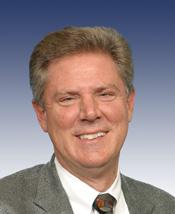
Frank Pallone, Jr.
Rep. Frank Pallone, Jr.D-NJ-6 · Sep 6, 2017

Mr. Speaker, I rise in support of H.R. 3388, the SELF DRIVE Act. I want to start by thanking Chairmen Walden and Latta, Ranking Member Schakowsky, and the other members of the Energy and Commerce…

Anna G. Eshoo
Rep. Anna G. EshooD-CA-18 · Sep 6, 2017

Mr. Speaker, I thank the gentlewoman from Illinois for yielding and for her leadership and work on the great Energy and Commerce Committee in the House. My congressional district is home to the…

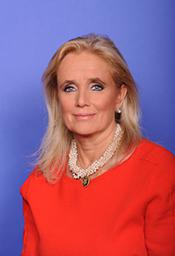
Debbie Dingell
Rep. Debbie DingellD-MI-12 · Sep 6, 2017

Mr. Speaker, I thank my colleague, Congresswoman Jan Schakowsky, for yielding and for her leadership on making this happen, as well as thanking Chairman Latta, Chairman Walden, Ranking Member…

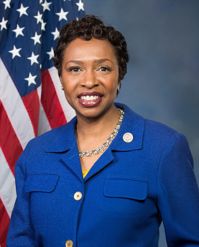
Yvette D. Clarke
Rep. Yvette D. ClarkeD-NY-9 · Sep 6, 2017

Mr. Speaker, I rise to support H.R. 3388, the SELF DRIVE Act. As you may know, autonomous vehicles are the wave of the future, and they are here now. As innovative technology for these vehicles…

Doris O. Matsui
Rep. Doris O. MatsuiD-CA-6 · Sep 6, 2017

Mr. Speaker, I rise today in support of the SELF DRIVE Act. With this legislation, we have the opportunity to unlock autonomous vehicle innovation and help improve the quality of life for millions.…

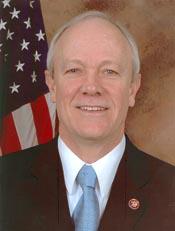
Jerry McNerney
Rep. Jerry McNerneyD-CA-9 · Sep 6, 2017

Mr. Speaker, this has been a bipartisan effort. It has been good. We made some progress. I want to say a few things, though. I am proud to be a cosponsor of the SELF DRIVE Act. This legislation puts…

Fred Upton
Rep. Fred UptonR-MI-6 · Sep 6, 2017

Mr. Speaker, I rise in support of this bill, H.R. 3388, the SELF DRIVE Act. This legislation and technology is, indeed, going to play a very important role in improving motor vehicle safety and…

Earl Blumenauer
Rep. Earl BlumenauerD-OR-3 · Sep 6, 2017

Mr. Speaker, I am pleased to join my colleagues on the floor of the House dealing with autonomous vehicles. I think this is one of the most important issues that nobody is really focused on. I wish…

Show 9 more
Michael C. Burgess
Rep. Michael C. BurgessR-TX-26 · Sep 6, 2017

Mr. Speaker, I thank the gentleman for yielding. Mr. Speaker, the country has stood, first, in awe of the power that was unleashed on the Texas-Louisiana coast, and then in admiration of constituents…

Tim Ryan
Rep. Tim RyanD-OH-13 · Sep 6, 2017

Mr. Speaker, I thank the gentlewoman for yielding. Mr. Speaker, I also thank the chairman from Bowling Green, Ohio, home of the Harvard of the Midwest, Bowling Green State University, and Ranking…

Gregg Harper
Rep. Gregg HarperR-MS-3 · Sep 6, 2017

Mr. Speaker, I rise in support of H.R. 3388, the SELF DRIVE Act. The bipartisan bill we are considering today is vital not only to all Americans, but especially individuals with disabilities. My…

Ryan A. Costello
Rep. Ryan A. CostelloR-PA-6 · Sep 6, 2017

Mr. Speaker, I rise today in support of the SELF DRIVE Act. With over 127,000 vehicle crashes in Pennsylvania in 2015, advances in deploying self-driving technology are critical to helping make our…

Mimi Walters
Rep. Mimi WaltersR-CA-45 · Sep 6, 2017

Mr. Speaker, I rise today in support of H.R. 3388, the SELF DRIVE Act, which will help advance the deployment of self-driving vehicles by allowing testing of this life- changing technology. Back home…

Leonard Lance
Rep. Leonard LanceR-NJ-7 · Sep 6, 2017

Mr. Speaker, I rise today in strong support of the SELF DRIVE Act. This groundbreaking work of the Energy and Commerce Committee is the first major step toward establishing a clear legal and…

Markwayne Mullin
Rep. Markwayne MullinR-OK-2 · Sep 6, 2017

Mr. Speaker, the House today will vote on an important piece of Federal legislation regarding self-driving vehicles that many on this body on both sides of the aisle have worked on. This legislation…

Gus M. Bilirakis
Rep. Gus M. BilirakisR-FL-12 · Sep 6, 2017

Mr. Speaker, I rise today in support of the SELF DRIVE Act, which will improve transportation safety, stimulate economic growth, and ensure we are embracing the full potential of technological…

Larry Bucshon
Rep. Larry BucshonR-IN-8 · Sep 6, 2017

Mr. Speaker, self-driving cars, once a providence of science fiction, are quickly becoming a reality. Self-driving vehicle technology has the potential to increase access to transportation in our…

Bill Text

Latest available legislative text

Reading Mode
Latest
Introduced in HouseIssued July 26, 2017

I

115th CONGRESS

1st Session

H. R. 3407

IN THE HOUSE OF REPRESENTATIVES

July 26, 2017

Mr. Kinzinger (for himself and Ms. Clarke of New York) introduced the following bill; which was referred to the Committee on Energy and Commerce

A BILL

To amend chapter 301 of subtitle VI of title 49, United States Code, to require a cybersecurity plan for highly automated vehicles, and for other purposes.

1.

Cybersecurity of automated driving systems

(a)

In general

Chapter 301 of subtitle VI of title 49, United States Code, is amended by inserting after section 30129 (as added by section 4) the following new section:

30130.

Cybersecurity of automated driving systems

(a)

Cybersecurity plan

A manufacturer may not sell, offer for sale, introduce or deliver for introduction into commerce, or import into the United States, any highly automated vehicle, vehicle that performs partial driving automation, or automated driving system unless such manufacturer has developed a cybersecurity plan that includes the following:

(1)

A written cybersecurity policy with respect to the practices of the manufacturer for detecting and responding to cyber attacks, unauthorized intrusions, and false and spurious messages or vehicle control commands. This policy shall include—

(A)

a process for identifying, assessing, and mitigating reasonably foreseeable vulnerabilities from cyber attacks or unauthorized intrusions, including false and spurious messages and malicious vehicle control commands; and

(B)

a process for taking preventive and corrective action to mitigate against vulnerabilities in a highly automated vehicle or a vehicle that performs partial driving automation, including incident response plans, intrusion detection and prevention systems that safeguard key controls, systems, and procedures through testing or monitoring, and updates to such process based on changed circumstances.

(2)

The identification of an officer or other individual of the manufacturer as the point of contact with responsibility for the management of cybersecurity.

(3)

A process for limiting access to automated driving systems.

(4)

A process for employee training and supervision for implementation and maintenance of the policies and procedures required by this section, including controls on employee access to automated driving systems.

(b)

Effective date

This section shall take effect 180 days after the date of enactment of this section.

.

(b)

Enforcement authority

Section 30165(a)(1) of title 49, United States Code, is amended by inserting 30130, after 30127,.

(c)

Clerical amendment

The analysis for chapter 301 of subtitle VI of title 49, United States Code, is amended by inserting after the item relating to section 30129 (as added by section 4) the following new item:

30130. Cybersecurity of automated driving systems.

.

(d)

Definitions

Section 30102 of title 49, United States Code, is amended—

(1)

in subsection (a)—

(A)

by redesignating paragraphs (1) through (13) as paragraphs (2), (3), (4), (5), (8), (9), (10), (11), (12), (13), (15), (16), and (17), respectively;

(B)

by inserting before paragraph (2) (as so redesignated) the following:

(1)

automated driving system means the hardware and software that are collectively capable of performing the entire dynamic driving task on a sustained basis, regardless of whether such system is limited to a specific operational design domain.

;

(C)

by inserting after paragraph (5) (as so redesignated) the following:

(6)

dynamic driving task means all of the real time operational and tactical functions required to operate a vehicle in on-road traffic, excluding the strategic functions such as trip scheduling and selection of destinations and waypoints, and including—

(A)

lateral vehicle motion control via steering;

(B)

longitudinal vehicle motion control via acceleration and deceleration;

(C)

monitoring the driving environment via object and event detection, recognition, classification, and response preparation;

(D)

object and event response execution;

(E)

maneuver planning; and

(F)

enhancing conspicuity via lighting, signaling, and gesturing.

(7)

highly automated vehicle

(A)

means a motor vehicle equipped with an automated driving system; and

(B)

does not include a commercial motor vehicle (as defined in section 31101).

;

(D)

by inserting after paragraph (13) (as so redesignated) the following:

(14)

operational design domain means the specific conditions under which a given driving automation system or feature thereof is designed to function.

; and

(E)

by adding at the end the following:

(18)

vehicle that performs partial driving automation does not include a commercial motor vehicle (as defined in section 31101).

; and

(2)

by adding at the end the following:

(c)

Revisions to certain definitions

(1)

If SAE International (or its successor organization) revises the definition of any of the terms defined in paragraph (1), (6), or (14) of subsection (a) in Recommended Practice Report J3016, it shall notify the Secretary of the revision. The Secretary shall publish a notice in the Federal Register to inform the public of the new definition unless, within 90 days after receiving notice of the new definition and after opening a period for public comment on the new definition, the Secretary notifies SAE International (or its successor organization) that the Secretary has determined that the new definition does not meet the need for motor vehicle safety, or is otherwise inconsistent with the purposes of this chapter. If the Secretary so notifies SAE International (or its successor organization), the existing definition in subsection (a) shall remain in effect.

(2)

If the Secretary does not reject a definition revised by SAE International (or its successor organization) as described in paragraph (1), the Secretary shall promptly make any conforming amendments to the regulations and standards of the Secretary that are necessary. The revised definition shall apply for purposes of this chapter. The requirements of section 553 of title 5 shall not apply to the making of any such conforming amendments.

(3)

Pursuant to section 553 of title 5, the Secretary may update any of the definitions in paragraph (1), (6), or (14) of subsection (a) if the Secretary determines that materially changed circumstances regarding highly automated vehicles have impacted motor vehicle safety such that the definitions need to be updated to reflect such circumstances.

.