Mr. Speaker, I move to suspend the rules and pass the bill (H.R. 4924) to amend the Congressional Accountability Act of 1995 to reform the procedures provided under such Act for the initiation,…
Mr. Speaker, I move to suspend the rules and pass the bill (H.R. 4924) to amend the Congressional Accountability Act of 1995 to reform the procedures provided under such Act for the initiation, investigation, and resolution of claims alleging that employing offices of the legislative branch have violated the rights and protections provided to their employees under such Act, including protections against sexual harassment, and for other purposes.
Mr. Speaker, I ask unanimous consent that all Members have 5 legislative days to revise and extend their remarks and include extraneous material on the bill.
Mr. Speaker, I yield myself such time as I may consume.
Mr. Speaker, a little more than 3 months ago, you tasked the Committee on House Administration with a great responsibility, to undertake a comprehensive review of the training, policies, and mechanisms to guard against sexual harassment in the congressional workplace.
I believe that the legislation we are considering today, H.R. 4924, the Congressional Accountability Act of 1995 Reform Act, and, immediately following that, the House resolution, together, respond to this great task.
At the outset, I would like to thank the Speaker of the House, Paul Ryan, for his leadership on this issue and for the trust he placed on our committee to conduct this important review.
I would also like to thank and appreciate the work done by our Conference Chair, Cathy McMorris Rodgers.
I would also thank every member of the Committee on House Administration, particularly the ranking member, Mr. Brady. He has been a great friend and colleague over the last decade, and I appreciate being able to work closely on this issue with him.
Both the CAA Reform Act and the House resolution reflect the dedication and commitment of a bipartisan group of Members, including Representatives Byrne, Speier, Brooks, and Deutch, who want to ensure this institution remains worthy of the trust placed in it by the American people. I also want to thank Representatives DeSantis, Love, Comstock, and Chris Smith for their contributions to this bill.
As I have said previously and will state again, unequivocally, there is no place for sexual harassment, or any type of harassment, period, in the U.S. House of Representatives.
It is no secret that the culture on Capitol Hill is unique. While there are hundreds of employing offices, we should all share the common goal of creating effective work environments--environments that are safe, productive, collegial, and, most importantly, responsive, responsive to the needs of our constituents and the public.
During our review, the committee held two hearings, three member listening sessions, a roundtable discussion with stakeholders, and meetings with victims and their advocates to examine how we could improve the workplace for everyone. We found the Congressional Accountability Act of 1995 to be outdated and in need of this comprehensive reform.
We found the House training programs to be inadequate in order to meet the needs of all House employees. Additionally, we found that our House policies and procedures are in need of change as they relate to sexual harassment in the workplace.
Last November, the House took the first step in addressing these issues by passing H. Res. 630, a resolution that, among other things, requires all House employees to take annual, in-person antiharassment and antidiscrimination training. Passage of the CAA Reform Act is the logical next step.
The CAA Reform Act makes a number of reforms to the Congressional Accountability Act that will ensure its future effectiveness, including:
Reforming the dispute resolution process to establish procedures for initiating, investigating, and resolving alleged violations of part A, title II, of the CAA;
Ensuring all claims are filed in writing and are made under oath;
Requiring Members who have engaged in intentional discrimination to reimburse the Department of the Treasury;
Requiring the Office of Compliance, the OOC, to report every 6 months of a calendar year to Congress, and to publish on their website the awards and settlements from the previous year;
Directing the OOC to conduct a climate survey of the legislative branch every 2 years;
Directing the OOC to establish a permanent record retention program;
Expanding the definition of covered employees to include unpaid interns, fellows, and detailees; and
Clarifying certain commissions, such as the Helsinki Commission, are covered by the Congressional Accountability Act and providing the process for disposing of claims.
These are just a few of the reforms that the CAA Reform Act makes.
I am proud of the work of this committee and our bipartisan group of Members who have worked on this so diligently over the last several months.
Mr. Speaker, I encourage all of my colleagues to support this legislation, and I reserve the balance of my time.
House of Representatives,
Committee on House Administration,
Washington, DC, February 2, 2018.
Hon. Susan Brooks,
Chairwoman, House Committee on Ethics, Washington, DC.
Dear Chairwoman Brooks: I am writing to you concerning H.R.
4924, the Congressional Accountability Act of 1995 Reform Act
and H. Res. 724, a resolution making operational changes to
the House of Representatives as well as changes to the Code
of Official Conduct. There are certain provisions in both
pieces of legislation that fall within the jurisdiction of
the House Committee on Ethics.
In the interest of permitting the Committee on House
Administration to proceed expeditiously for floor
consideration of these important bills, I am writing to
request a waiver of your committee's right to a referral. I
request with the understanding that by waiving consideration
of these bills, the Committee on Ethics does not waive any
future jurisdictional claim over the subject matters
contained in the bills which fall within its Rule X
jurisdiction.
I will place this letter into the committee report and into
the Congressional Record during consideration of the measures
on the House floor. Thank you for the cooperative spirit in
which you have worked regarding this matter and others
between our respective committees.
Sincerely,
Gregg Harper,
Chairman.
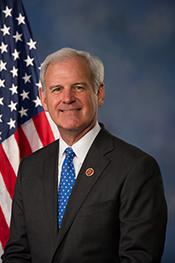
Mr. Speaker, I yield 2\1/2\ minutes to the gentleman from Alabama (Mr. Byrne).
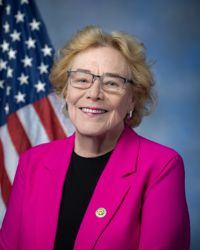
Mr. Speaker, I yield 2 minutes to the gentlewoman from Indiana (Mrs. Brooks), the chairwoman of the Ethics Committee.
Mr. Speaker, I yield an additional 30 seconds to the gentlewoman.
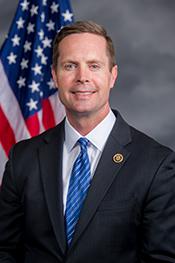
Mr. Speaker, I yield 2 minutes to the gentleman from Illinois (Mr. Rodney Davis), the vice chairman of the Committee on House Administration.
Mr. Speaker, I yield 3 minutes to the gentlewoman from Virginia (Mrs. Comstock), who continues to work tirelessly on this issue.
Mr. Speaker, may I inquire of the time remaining for debate.
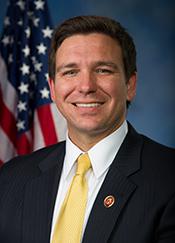
Mr. Speaker, I yield 1 minute to the gentleman from Florida (Mr. DeSantis).
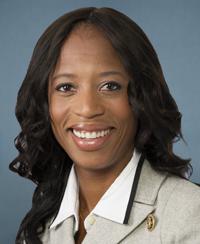
Mr. Speaker, I yield 1 minute to the gentlewoman from Utah (Mrs. Love).
Mr. Speaker, I yield 2\1/2\ minutes to the gentleman from New Jersey (Mr. Smith).
Mr. Speaker, I yield 1 minute to the gentleman from New Jersey (Mr. Lance).
Mr. Speaker, I yield myself such time as I may consume.
Mr. Speaker, this is a historic moment for the House of Representatives, and I, too, want to thank Kim Betz for her hard work on our staff; as well as Jamie Fleet, the staff director; and particularly I want to give a special thanks to Jackie Speier and Bradley Byrne for the many hours they have spent working through this process for us.
Mr. Speaker, this makes historic and important steps in the House of Representatives. It brings us a step closer to achieving our goal of creating effective and safe work environments--environments that are safe, productive, collegial, and, most importantly, responsive to the needs of our constituents and the public.
There is no place like the House of Representatives. This should be, for every employee, the most special place that they will ever work.
I urge my colleagues to support H.R. 4924.
Mr. Speaker, I yield back the balance of my time.
Mr. Speaker, I would like to discuss the background and need for this legislation.
Accounts of sexual harassment revealed in the private sector last fall prompted former and current Members of Congress as well as congressional staff to disclose accounts of sexual harassment in Congress. Moreover, current and former Members and staff were critical of Congress' policies and procedures responding to sexual harassment claims. Criticism included, but was not limited to, the lack of awareness regarding sexual harassment generally in Congressional offices, the lack of mandatory sexual harassment awareness training; the lack of support provided to victims of sexual harassment, and the ineffectiveness of certain aspects of the dispute resolution process set out under the Congressional Accountability Act of 1995 (CAA) as it related to sexual harassment. Reports about the use of taxpayer dollars to settle sexual harassment claims in the past raised additional concerns about the lack of transparency in the process. The accounts of sexual harassment and criticism of the process revealed that it was not only timely, but important Congress review the employment and workplace policies and processes included in the CAA as well as those policies internal to House offices.
To that end, on November 3, 2017, the Speaker of the House of Representatives tasked the Committee on House Administration (Committee) to conduct a review of the ``existing training, policies, and mechanisms to guard against and report sexual harassment.'' The Speaker further ``instructed the Committee to be as thorough as possible,'' and to incorporate Member ideas and feedback.
The Committee responded and its review was methodical. On November 14, 2017, the Committee held its first hearing titled ``Preventing Sexual Harassment in the Congressional Workplace.'' The hearing identified: (1) the gaps in the House's training, policies, and procedures; and (2) solutions to address the gaps. Testifying at the hearing were Representatives Jackie Speier and Bradley Byrne in addition to Barbara Childs Wallace, Chair, Board of Directors, Office of Compliance; and Gloria Lett, Counsel, Office of House Employment Counsel. The witnesses were unified in their recommendation the House should implement a mandatory training program.
On November 29, 2017, the House of Representatives responded to the calls for mandatory training by passing H. Res. 630. H. Res. 630 requires all House employees, including interns, fellows, and detailees, to participate in a mandatory annual training program. In addition, the resolution required all House offices to post a statement of employee rights and protections under the Congressional Accountability Act of 1995 (CAA). The resolution also required the Committee to promulgate regulations within 30 days to implement the House of Representatives' training and education program, which it did on December 19, 2017. Mandatory training will begin on April 2, 2018.
On December 7, 2017, the Committee held a second hearing focused on the CAA and the need to reform certain provisions to ensure the adjudication process contemplated by the CAA protects the rights of all parties to the proceedings. The Committee took testimony from four experts, including Victoria Lipnic, Acting Chair, Equal Employment Opportunity Commission; Susan Grundmann, Executive Director, Office of Compliance; Gloria Lett, Counsel, Office of House Counsel; and Dan Crowley, former General Counsel, Committee on House Administration.
The Committee also held a roundtable discussion with organizations reflecting the interests of both employees and employers to discuss best practices in preventing harassment and discrimination in the workplace. In addition, stakeholders discussed potential reforms to the CAA's dispute resolution process to protect employers and employees.
Congress passed the CAA in 1995 to bring Congress, the Architect of the Capitol, the U.S. Capitol Police, the Office of Congressional Accessibility Services, the Congressional Budget Office, the Office of Attending Physician, and the Office of Compliance under the same employment and workplace safety laws and standards as the federal government and the private sector. The CAA incorporates the prohibitions against discrimination contained in Title VII of the 1964 Civil Rights Act (42 U.S.C. 2000e et seq.). In addition to incorporating employment and safety laws, the CAA establishes the adjudication process for resolving claims filed under the CAA. For discrimination claims, the adjudication process includes counseling, mediation, and either an administrative hearing overseen by the OOC or proceeding to federal court.
In addition to the dispute resolution process, the CAA authorizes remedies for successful claims of discrimination, including sex discrimination and harassment. The remedies are similar to those available under Title VII, with the exception of punitive damages. Successful claims under the CAA are paid from an account within the Department of Treasury of the United States authorized for the payment of awards and settlements under the CAA. Rule X of House Rules specifies that employing offices of the House may only enter into settlements providing for the payment of claims filed under the CAA only after receiving the approval of the Chair and Ranking Member of the Committee.
The CAA established the Office of Compliance (OOC) as the independent non-partisan agency to implement the adjudication process for claims filed under the CAA. The OOC is responsible for, among other things, to compile and publish statistics ``on the use of the Office by covered employees, including the number and type of contact made with the Office, on the reason for such contacts, on the number of covered employees who initiated proceedings with the Office under this chapter and the result of such proceedings and on the number of covered employees who filed a complaint, the basis for the complaint, and the action taken on the complaint.''
The CAA has not been comprehensively examined since its passage in 1995. The Committee's review revealed frustration and criticism of the initial stages of adjudication process as it related to sexual harassment claims; concerns with OOC's management policies, including its record management, and the need for additional reporting by the OOC beyond its current statutory obligations. Relatedly, the Committee believes there should be greater transparency around the use of the Settlement and Award account authorized under section 1415 for section 201(a) and 207 claims for discrimination and retaliation. Furthermore, the Committee believes in cases of harassment and discrimination where a Member of Congress' conduct is intentional, reimbursement to the Treasury account should be
required. To that end, the Committee recommends the reforms contained in H.R. 4924 to ensure the CAA's future effectiveness in preventing discrimination and harassment in the Congressional Workplace and adjudicating claims in a fair and expeditious manner.
The Committee found the current requirements for counseling and mediation to be ineffective and burdensome. Specifically, the Committee took testimony revealing the ``counseling phase'' was not counseling but more akin to claim intake. The Committee further found the mandated 30-day counseling period to be unnecessary. The Committee recommends eliminating the counseling phase altogether and replacing it with a more simplistic process. Under H.R. 4924, proceedings set out under section 1401 are initiated as soon as a claim is filed. Relatedly, the Committee heard concerns about frivolous claims being filed under the CAA and potential abuses of the adjudication process. The Committee recommends strengthening the requirements for filing a claim under the CAA as well as imposing standards and responsibilities on all attorneys involved in a CAA proceeding similar to those found in Rule 11 of the Federal Rules of Civil Procedure. H.R. 4924 requires claims filed under the CAA to be in writing and under oath. Moreover, attorneys involved in a CAA proceeding must ensure all filings with the OOC are made in a manner consistent with their ethical obligations in federal court.
In addition to concerns about the counseling phase, the Committee heard testimony criticizing mandatory mediation. The Committee agrees the mandate only prolongs a proceeding--particularly in cases where one party does not want to settle. The Committee recommends making mediation available when both parties agree that it is in their joint interest.
Apart from the reforms to counseling and mediation, the Committee recommends granting investigative authority to the OOC General Counsel. The Committee supports incorporating a similar investigative process as is currently conducted by the Equal Employment Opportunity Commission (EEOC) in the private sector and executive branch. Given the OOC General Counsel already has investigative authority under the CAA in certain other claims, the Committee recommends extending limited investigative authority to claims, including those of discrimination and harassment. The Committee believes investigations early on will help facilitate the resolution of cases. The Committee further believes the OOC General Counsel should have limited subpoena authority during its investigation. However, this authority should not be construed to be any broader than the authority granted to hearing officers pursuant to section 1405(f). Further, as noted in the text of H.R. 4924, the Committee believes subpoenas should only be issued as a last resort and primarily to keep the investigation on schedule.
As noted above, during the Committee's review, reports surfaced of settlements of sexual harassment claims involving taxpayer dollars, including the use of the Member Representational Allowance (MRA). The Committee heard from Members, constituents and the public that taxpayer dollars should not be available to settle claims of sexual harassment. While the Committee agrees, it recognizes victims need to be made whole. Not victims a second time.
To that end, H.R. 4924 requires a Member of the House of Representatives (including a Delegate or Resident Commissioner to the Congress), a Senator, or a former Member of the House of Representatives or Senator to reimburse the Department of Treasury account authorized under section 1415 for certain settlements and awards. H.R. 4924 sets out a structure to compel reimbursement if voluntary reimbursement is not made.
The Committee is mindful that personal liability for employment law claims does not exist in federal law and has worked to strike a balance between protecting taxpayers from being responsible for bad actions conducted by elected officials, protecting the due process rights of those accused, and not making the provision so broad as to discourage the settlement of meritorious claims.
With this in mind, the Committee intends the reimbursement obligation to be triggered only when three conditions are met: (1) the claimant alleges (and, unless the claim is settled, ultimately proved to the trier of fact) that the Member or Senator personally engaged in an intentional act of harassment, discrimination, or retaliation with animus covered by section (d)(1)(B); (2) the alleged act resulted in a settlement or award for the claimant; and (3) payment is made from the section 1415 account to compensate the claimant for the specific claim requiring reimbursement under this section. If in contention, the trier of fact should make an express finding, separate from the underlying claim, that the Member or Senator engaged in an intentional act of harassment, discrimination, or retaliation covered by section (d)(1)(B) with animus.
A reimbursement obligation is not triggered if the claimant does not allege an intentional act of harassment or discrimination or retaliation committed by a Member or Senator with animus and covered by this section. For example, the Committee does not intend the reimbursement obligation to be triggered if an act of discrimination or harassment was alleged against a supervising employee of a congressional office, such as the chief of staff. The provision would also not apply in the case of an omission, such as a failure to properly supervise an employee with hiring authority. The provision would not apply in the case of a disparate impact or other theory of unintentional discrimination. The provision would not be triggered if the claimant alleges a violation occurred but does not name a Member or Senator as the individual who committed an act leading to the violation. In the case of a discrimination claim, the provision would not apply if there was no discriminatory animus on the part of the Member or Senator.
Concerned with its day-to-day management, Congress requested the Government Accountability Office (GAO) to audit OOC in 2004. The Committee has similar concerns today. H.R. 4924 directs the Government Accountability Office to update its 2004 review of OOC's management practices. In addition to its management operations, the Committee is also concerned with the lack of record retention policies adopted by OOC. H.R. 4924 requires OOC to establish a permanent record retention program to ensure that general questions about OOC case management may be answered in a timely manner.
Relatedly, the Committee's review brought to light the use of the Department of Treasury account established in Section 1415 to pay for the settlement of claims including claims of sexual harassment. In addition to settlements and awards constructed under the CAA, it was brought to the Committee's attention that the Member Representational Allowance (MRA) was used to settle claims of sexual harassment, including for claims filed under the CAA. While not specifically prohibited by statute or by the Committee's Member Handbook, the use of the MRA for these purposes is of concern and is addressed in separate legislation.
The Committee is concerned with the use of taxpayer dollars to settle claims, particularly for claims of discrimination and harassment. H.R. 4924 directs the OOC to report within 30 days on all settlements and awards under the CAA in which public funds were used over the last 20 years. This includes any House or Senate account. The OOC is directed to identify the claim, the award or settlement and the source of funding. In putting together its report, the OOC should take care not to disclose any identifying information about any party to a legally binding agreement or proceeding who has an expectation of privacy. The Committee understands there may be victims to agreements which may be unenforceable. To that end, the Committee recommends working with the new Office of Employee Advocacy authorized in separate legislation.
Notwithstanding OOC's responsibility to issue its comprehensive report looking backward, H.R. 4924 directs the OOC to report to Congress every six months on the payment of awards and settlements for claims filed under Part A, title II of the CAA, the name of the employing office, the amount of the award or settlement, and in cases where a Member or Senator is responsible for reimbursement--whether the Member is in compliance with the reimbursement obligation.
Notwithstanding its new reporting requirements, the Committee takes this opportunity to clarify its expectation of OOC's current reporting requirements. The Committee encourages the OOC to include in its existing reporting the following: (1) number of Complaints listed by their protected categories under the CAA (ie. race, sex, national origin, religion, disability, age) as opposed to title VII; (2) summary of general information requests listed by the groups of people contacting the OOC (ie. number of covered employees, number of public inquiries, media, union, employing offices); (3) the specific information requested by protected category for issues under section 201 and 207 (race/color, sex/gender, disability, age, national origin, retaliation, religion); (4) the number of requests for counseling and mediation broken down by their protected classes; and (5) workplace issues raised with the OOC (ADA, compensation, demotion, disparate treatment, equal pay, harassment/hostile work environment, promotion, overtime, etc).
Mr. Speaker, I include in the Record a section-by-section analysis of this legislation:
Section-by-Section of the Legislation
Title I--Reform of Dispute Resolution Procedures
Subtitle A--Reform of Procedures for Initiation, Investigations and
Resolution of Claims
Sec. 101 (a). Description of Procedures Available for
Consideration of Alleged Violations. Section 101 sets out the
procedures for initiating, investigating and resolving
alleged violation(s) of Part A, Title II of the Congressional
Accountability Act (CAA). The procedures require a covered
employee to file a claim with the Office of Compliance
(OOC). Once a claim is filed, an investigation is initiated
by the OOC General Counsel. The section specifies at the
conclusion of the investigation, the covered employee may
proceed to a hearing before the OOC hearing officer in two
instances: (1) the investigation results in a finding of
reasonable cause a violation occurred, or (2) the General
Counsel is unable to determine whether reasonable cause
exists on the merits of the claim. The procedures allow for a
covered employee to file in federal court within 45 days of
filing a claim. The decision to file in federal court stops
the investigation and any further ability to seek an
investigation. The section further authorizes a covered
employee to file in federal court within 90 days upon
receiving a right to sue letter from the OOC General Counsel.
Finally, the section specifies that any party may retain
counsel to protect their respective interests. The section
also imposes FRCP Rule 11 obligations on all parties to the
proceedings including OHEC, the new Office of Employee
Advocate and any party that intervenes on behalf of a party.
Sec. 101 (b). Conforming Amendments. The section makes
conforming amendments.
Sec. 102 (a). Reform of Process for Initiation of
Procedures. Section 102 specifies a claim must be filed with
the OOC to initiate the process. The claim must be in writing
and under oath or affirmation. (The bill eliminates mandatory
counseling and mediation). The employing office is notified
once a claim is filed. The section also sets out a special
notification requirement to Members whose conduct is the
focus of a section 201(a) or 207 allegation. The special
notification requirement specifies OOC must notify the Member
of the potential repayment obligation associated with claim
and the opportunity to intervene in the proceedings. The
section directs the OOC to establish an electronic reporting
and tracking system that will be used to report and track
claims. The system will be accessible by both parties, taking
into consideration the covered employee's need for
confidentiality. In addition, the section imposes a reporting
requirement on OOC to provide the Committees of jurisdiction
with semi-annual reports on the effectiveness of the system
to facilitate the resolution of cases. Under section 102, all
claims must be filed within 180 days of alleged violation.
The section reaffirms the ability of a covered employee to:
contact OOC or any other office (i.e. Office of Employee
Advocate) for information; refer a matter to the respective
Committees on Ethics; as well as to file in federal court.
Sec. 103 (a). Investigations of Claims by General Counsel.
Section 103 authorizes the OOC General Counsel to initiate an
investigation of a claim under Part A, Title II once a claim
is filed. The OOC General Counsel has subpoena authority to
compel production of documents and testimony from witnesses
during the pendency of the investigation. The subpoena
authority is consistent with existing subpoena authority held
by the hearing officers under Section 1405(f). Subpoenas may
be enforced in same manner as provided in Section 1405 (f).
The OOC General Counsel is required to make one of three
findings at the end of the investigation: (1) a finding of
reasonable cause that a violation of Part A, Title II
occurred; (2) a finding that there is no reasonable cause to
believe a violation of Part A, Title II occurred; or (3) a
finding indicating the General Counsel cannot determine cause
based on the facts. In the event there is a finding no
reasonable cause exists to believe a violation occurred, the
General Counsel will issue a letter to the covered employee
authorizing their right to sue in federal court. The section
authorizes the General Counsel to transmit the findings to
the parties. With respect to section 201(a) and/or 207 claims
involving Member conduct, the General Counsel is authorized
to transmit the report to the Committees on Ethics. The
section authorizes the General Counsel to recommend mediation
to the parties at any time. The General Counsel has 90 days
to investigate and issue findings. The General Counsel can
extend investigation for an additional 30 days with notice to
the parties.
Sec. 103 (b). Conforming Amendments. This section makes
conforming amendments.
Sec. 104. Availability of Mediation during Investigations.
Section 104 allows the parties to request mediation while the
investigation is proceeding. The request for mediation must
be made by both parties and may be for a period of 30 days.
The parties may jointly agree to extend for another 30 days.
The section allows the parties to be separated during
mediation if requested by the covered employee.
Part B--Other Reforms
Sec. 111. Requiring Members of Congress to Reimburse
Treasury for Amounts Paid as Settlements and Awards in Cases
of Acts Committed Personally by Members. The section requires
Members of Congress (including former Members who were in
office at the time of the allegation) to repay the Settlement
and Award Account authorized under section 1415 of the CAA.
Members are responsible for repayment in cases in which the
allegation of an act or violation under section 201(a)
(discrimination and harassment) and section 207 (retaliation
resulting from a 201(a) violation) involves a Member
personally. The section authorizes the appropriate Committees
to establish a plan to withhold compensation if the account
is not repaid within 90 days. If the account is not repaid
within 180 days, section 111 authorizes the transfer of funds
from the Member's Thrift Savings Plan. The section clarifies
that spouses' rights are not applicable when TSP is accessed.
In the event, the Member is no longer receiving compensation
(i.e. former Member), the section authorizes withholding
annuities and transferring amount to the account. The section
reiterates a Member's right to intervene in his or her
personal capacity during mediation, hearing or civil action
to protect the Member's interest. The section ensures the
covered employee is not unduly burdened in depositions
resulting from the intervention. The Committees on House
Administration and Senate Rules are charged with promulgating
regulations to implement this section.
Sec. 112. Automatic Referral to Congressional Ethics
Committees of allegations involving Members and Senior Staff.
Section 112 authorizes an automatic referral to the House
Committee on Ethics (and Senate Select Committee on Ethics)
with respect to claims filed under section 201(a) (harassment
and discrimination) and/or 207 involving Member and senior
staff conduct. The referral occurs when there is: an order to
pay an award or settlement (including agreements resulting
from mediation outlined in section 104); a final decision of
a hearing officer; a final decision by the Board under
Section 406(e); and a final decision in a civil action. The
section authorizes the Committees on Ethics to have access to
records and information relating to any investigation,
hearing, or settlement. The section prohibits the Committee
on Ethics from releasing the identity or position of an
individual making allegation.
Sec. 113. Availability of Remote Work Assignment or Paid
Leave of Absence during Pendency of Procedures. The section
allows a covered employee to work remotely if requested. If a
covered employee's responsibilities require on-site presence,
an employee may request paid leave. The section prohibits an
employing office from using requests as a method of
retaliation. The section protects any collective bargaining
agreements that are in place.
Sec. 114. Modification of Rules on Confidentiality. The
section makes technical changes to sections 1416(a) and (b)
regarding confidentiality as it relates to filing a claim and
the subsequent investigation as well as information relating
to mediation. The section includes a rule of construction
indicating nothing in the section precludes a covered
employee or employing office from disclosing information
related to a claim.
Sec. 115. Reimbursement by Other Employing Offices of the
Legislative Branch of Payments of Certain Awards and
Settlements. Section 115 requires the Legislative Branch
agencies under the CAA to repay the Settlement and Award
account as result of awards and settlements issued under
section 201(a). Repayment shall be made from the operating
expenses of agency within 180 days. The section directs the
OOC to establish procedures and timetables for repayment.
Title II--Improving Operations of Office of Compliance
Sec. 201. Semiannual Reporting on Allegations, Awards, and
Settlements. In addition to their current reporting
requirements, section 201 requires the OOC to report every
six months of a calendar year to Congress and to publish on
their website the awards and settlements from the previous
year. The report to Congress must include: the employing
office; the provision of Part A, Title II that was the
subject of the allegation or violation; and the amount of the
award or settlement resulting from an allegation or
violation. In cases where the Member is personally
responsible for repayment, the report will identify whether
the Member has complied with repayment obligations. In
addition, the section requires the OOC to submit a report
within 30 days of enactment on all payments made with public
funds, including MRAs, used to settle section 201(a) claims.
The report is to include the amount paid and the source of
funding.
Sec. 202. Workplace Climate Survey. The section directs the
OOC to conduct a climate survey of all employing offices
covered under the CAA regarding the workplace environment
each Congress. The survey will also collect data on sexual
harassment in congressional employment. The section requires
the OOC to ensure all responses to the survey are anonymous
and confidential and to consult with the respective House and
Senate Committees on the survey including collecting and
analyzing data. The section requires OOC to maintain
confidentiality during the process and with the results. The
section directs the survey results to be sent to the
Committees.
Sec. 203. Record Retention. The section requires the OOC to
establish and maintain a permanent recordkeeping program.
Sec. 204. GAO Study of Management Practices. The section
requires the GAO to update its review of the OOC's management
practices and effectiveness within 180 days. The last GAO
study was conducted in 2004.
Sec. 205. GAO Study of Cybersecurity. The section requires
GAO to conduct an audit of the OOC's cyber security systems
and practices within 180 days.
Title III--Miscellaneous Reforms to the CAA
Sec. 301. Extension to Unpaid Staff of Rights and
Protections against Employment Discrimination. The section
extends coverage of the rights and protections established
under the CAA to unpaid interns, fellows and detailees.
Sec. 302. Coverage for Purposes of Protections against
Workplace Discrimination. The
section extends coverage of Part A, Title II of the CAA to
the Library of Congress. The section acknowledges the
existing process utilized by covered employees of the Library
and gives those employees choice of whether to continue to
use the LOC internal grievance procedures if they choose.
Sec. 303. Clarification of Coverage of Employees of
Helsinki and China Commissions. The section extends covered
employee status to employees of the above Commissions. The
section establishes employing office status for the
Commissions, which is contingent on whether the House or
Senate maintains the Chairmanship. Section 303 also sets out
the process for approving the disposition of claims against
the Commissions as employing offices. The section also
extends coverage to the Office of Technology Assistance and
the John C. Stennis Public Service Training and Development
Center.
Sec. 304. Training and Education Programs of Other
Employing Offices. Section 304 directs the legislative branch
agencies to establish programs of training and education for
covered employees on the rights and protections under the