Mr. Speaker, I move to suspend the rules and pass the bill (H.R. 601) to enhance the transparency and accelerate the impact of assistance provided under the Foreign Assistance Act of 1961 to promote…
Mr. Speaker, I move to suspend the rules and pass the bill (H.R. 601) to enhance the transparency and accelerate the impact of assistance provided under the Foreign Assistance Act of 1961 to promote quality basic education in developing countries, to better enable such countries to achieve universal access to quality basic education and improved learning outcomes, to eliminate duplication and waste, and for other purposes.
Mr. Speaker, I ask unanimous consent that all Members may have 5 legislative days to revise and extend their remarks and to include any extraneous material in the Record.
Mr. Speaker, I yield myself such time as I may consume.
Mr. Speaker, I rise today in support of H.R. 601, the Reinforcing Education Accountability and Development Act, or the READ Act. This bill passed the House at the end of the last Congress in essentially the same form as H.R. 4481. I am pleased the House has moved to take it up again today.
We all recognize the importance of education as a driver of economic growth, social mobility, and overall stability. Education is what increases the productivity of the workforce. This is what empowers men and women to better care for themselves and their families. It increases civic participation.
Even 1 extra year of schooling significantly increases a worker's earnings over her or his lifespan. For women in particular, a primary school education is directly correlated very strongly with improved maternal-child health and improved survival rates.
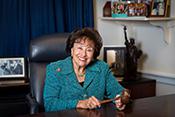
Yet, around the world, as we know here, there are 120 million children that are not in school. More than one-third of these children, as Nita Lowey can testify, come from countries that are embroiled in war, embroiled in conflict, and many of these recent conflicts have lasted for over a decade.
We are now seeing entire generations of these young children who are failing to receive even the most basic education.
You want to talk about a humanitarian crisis?
This is it. There are clear implications for global stability and for our security.
When children remain out of school, what do they face?
Well, certainly great increased risk of abuse at the hands of traffickers, forced marriage or marriage as a child bride, and recruitment by criminal or terrorist organizations.
Nowhere is this harsh reality more clear than in Syria, where 4 million Syrian children are currently out of school. We have had the opportunity to talk to many of these children on the border and see what their circumstances are like.
Inside Syria, these children are being shaped by violence and by a lack of alternatives that place them at high risk of exploitation and radicalization. As refugees--if you talk to our friends and allies in the region--they are placing tremendous strain on the education system in Lebanon, Jordan, and Turkey.
Despite these growing challenges, it has been decades since Congress reviewed and updated the authorities on which U.S. international basic education efforts are based.
This bill, the READ Act, introduces the new guidelines and the increased accountability for existing U.S. efforts to improve access to basic education in developing and conflict-torn countries. It requires strategic planning. It requires the prioritization of resources relative to needs on the ground in these countries and relative to the potential for impact. It requires alignment with U.S. diplomatic development and security interests.
Particular emphasis is given to those areas in crisis and those countries that are partners of the United States that face this critical challenge, whose populations are most in need, who have committed their own resources to ensure the success and sustainability of these efforts, but need our assistance.
It also requires increased attention to what is most important here, and that is to the specific barriers to education that are faced by women and girls.
The bill formalizes a senior coordinator position within USAID to oversee the development and implementation of a strategic plan across Federal agencies to ensure coordination and eliminate duplication and waste.
I thank Representative Lowey for her continued bipartisan leadership on this issue, as well as my committee's ranking member, Mr. Engel, and the chair of our Subcommittee on Africa, Global Health, Global Human Rights, and International Organizations, Mr. Smith, for their work on this legislation.
Mr. Speaker, I reserve the balance of my time.
Mr. Speaker, I continue to reserve the balance of my time.
Mr. Speaker, I yield myself such time as I may consume.
I concur with those arguments that Mr. Engel just made. Congresswoman Nita Lowey and I have talked about this, and if my colleagues will think on this for a minute, the reality today is that we face a situation where there are 65 million men, women, and children around the globe who have been displaced by conflict. I would just like the Members to think about the fact that this is more people than were displaced during World War II. This is the highest level, highest on record of human beings who have been displaced by conflict. Think about what that means to the children who are those most victimized.
The United States is doing important work around the world, trying to help our allies, trying to help organizations--and there are many good NGOs working on this--to address this massive education deficit that so many of these children face. But Congress, I think, has to demand a greater degree, yes, of transparency and accountability for these activities to ensure our investments are as effective as possible in line with our strategic interests.
There is one more thing that we have to ask of our partners in this, and that is equal access to every young girl for education. That has got to be up there at the top of that priority list.
This Reinforcing Education Accountability in Development Act outlines clear priorities for this work with that emphasis that I talked about and asking those partners to carry out their end of this bargain. This bill also requires aggressive monitoring and evaluation and an annual report that justifies the investment on a country-by-country basis, but holds with it the accountability for the education of girls and for the rest of this work.
I urge Members to support this measure. Again, I thank Representative Lowey. I thank the rest of the Members who worked on this for working on such a bipartisan basis on its provisions.
Mr. Speaker, I yield back the balance of my time.