



H.R. 460House115th Congress (2017-2019)Passed House

Improving Rural Call Quality and Reliability Act of 2017

Introduced January 11, 2017

AI-Generated Summary

Updated April 15, 2026 at 11:34 AM UTC

The Improving Rural Call Quality and Reliability Act of 2017 amends the Communications Act to make sure voice calls are delivered reliably across the United States, especially in rural areas. It requires companies that route calls for others (called intermediate providers) to register with the FCC and meet federally set quality standards. Phone service providers (covered providers) may only use registered intermediates, and the FCC must create a public registry and quality rules within set time limits.

Key Provisions

  • Intermediate providers that charge for transmitting voice calls must register with the FCC and follow service‑quality standards the FCC will set.
  • Covered phone providers cannot use an intermediate provider unless it is registered under the new rules.
  • The FCC must publish a registry of registered intermediates within 180 days and adopt quality‑standard rules within one year.
  • The rules must protect call integrity for all U.S. customers and prevent unreasonable discrimination among geographic areas.
  • A public version of the registry must be posted on the FCC website.
  • Providers certified as “Safe Harbor” under existing FCC regulations are exempt from the new quality‑standard requirement for one year after the law takes effect.

Legislative Activity

Stay on top of the latest movement without scrolling through every action

8 earlier actions
SenateIntro Referral Latest Action

Received in the Senate and Read twice and referred to the Committee on Commerce, Science, and Transportation.

January 24, 2017

View full timeline
HouseIntro Referral

Introduced in House

January 11, 2017

HouseIntro Referral

Referred to the House Committee on Energy and Commerce.

January 11, 2017

HouseFloor

Mr. Lance moved to suspend the rules and pass the bill.

January 23, 2017 • 5:01 PM

HouseFloor

Considered under suspension of the rules. (consideration: CR H582-586; H583-586)

January 23, 2017 • 5:01 PM

HouseFloor

DEBATE - The House proceeded with forty minutes of debate on H.R. 460.

January 23, 2017 • 5:01 PM

HouseFloor

Passed/agreed to in House: On motion to suspend the rules and pass the bill Agreed to by voice vote.(text of measure as passed: CR H582-583; H583-584)

January 23, 2017 • 5:15 PM

HouseFloor

On motion to suspend the rules and pass the bill Agreed to by voice vote. (text of measure as passed: CR H582-583; H583-584)

January 23, 2017 • 5:15 PM

HouseFloor

Motion to reconsider laid on the table Agreed to without objection.

January 23, 2017 • 5:15 PM

SenateIntro Referral

Received in the Senate and Read twice and referred to the Committee on Commerce, Science, and Transportation.

January 24, 2017

Floor Debate

7 members

What members said about H.R. 460 on the floor

4 Republicans3 Democrats
Leonard Lance
Rep. Leonard LanceR-NJ-7 · Jan 23, 2017

Mr. Speaker, I move to suspend the rules and pass the bill (H.R. 460) to amend the Communications Act of 1934 to ensure the integrity of voice communications and to prevent unjust or unreasonable…

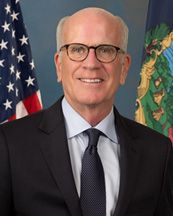
Peter Welch
Rep. Peter WelchD-VT · Jan 23, 2017

Mr. Speaker, I thank Mr. Young for being a great partner in the presentation of this bill. Many of us worked together on rural telecommunications issues, from getting broadband to all Vermonters and…

David Young
Rep. David YoungR-IA-3 · Jan 23, 2017

Mr. Speaker, I rise in support of H.R. 460, the bipartisan Improving Rural Call Quality and Reliability Act, legislation I introduced with my colleague from Vermont, Congressman Welch. This bill…

David Young
Rep. David YoungR-IA-3 · Feb 8, 2018

Mr. Speaker, I rise today in strong support of the Improving Rural Call Quality and Reliability Act. This is a bill that I introduced in a bipartisan fashion with my colleagues here on both sides of…

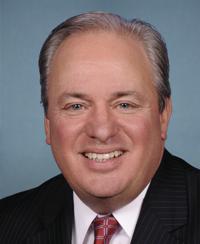
Michael F. Doyle
Rep. Michael F. DoyleD-PA-14 · Feb 8, 2018

Mr. Speaker, I yield myself such time as I may consume. Mr. Speaker, I also rise to support S. 96, the Improving Rural Call Quality and Reliability Act. It is a bipartisan bill championed by…

Show 6 more
Leonard Lance
Rep. Leonard LanceR-NJ-7 · Feb 8, 2018

Mr. Speaker, I move to suspend the rules and pass the bill (S. 96) to amend the Communications Act of 1934 to ensure the integrity of voice communications and to prevent unjust or unreasonable…

Michael F. Doyle
Rep. Michael F. DoyleD-PA-14 · Jan 23, 2017

Mr. Speaker, I yield myself such time as I may consume. Mr. Speaker, I also rise to support H.R. 460, Improving Rural Call Quality and Reliability Act, the bipartisan bill introduced by…

Sheila Jackson Lee
Rep. Sheila Jackson LeeD-TX-18 · Jan 23, 2017

Mr. Speaker, I rise in support of H.R. 460, the ``Improving Rural Call Quality and Reliability Act of 2017'', which amends the Communications Act of 1934 to require voice communications that charge…

Sheila Jackson Lee
Rep. Sheila Jackson LeeD-TX-18 · Feb 6, 2017

Mr. Speaker, I rise in support of H.R. 460, the Improving Rural Call Quality and Reliability Act of 2017, which amends the Communications Act of 1934 to require voice communications that charge users…

Marsha Blackburn
Rep. Marsha BlackburnR-TN-7 · Feb 8, 2018

Mr. Speaker, I thank the vice chairman, Mr. Lance, for the work that he has done on this issue and the ranking member, Mr. Doyle, for his work on this. As Mr. Doyle mentioned, many of these issues…

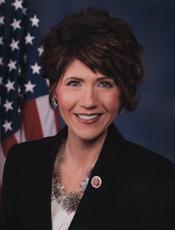
Kristi L. Noem
Rep. Kristi L. NoemR-SD · Feb 8, 2018

Mr. Speaker, I rise today to support the Improving Rural Call Quality and Reliability Act. Most Americans can rely on their phone service to keep in touch with loved ones. They can respond to urgent…

Bill Text

3 versions available

Reading Mode
Latest
Referred in SenateIssued January 24, 2017

IIB

115th CONGRESS

1st Session

H. R. 460

IN THE SENATE OF THE UNITED STATES

January 24, 2017

Received; read twice and referred to the Committee on Commerce, Science, and Transportation

AN ACT

To amend the Communications Act of 1934 to ensure the integrity of voice communications and to prevent unjust or unreasonable discrimination among areas of the United States in the delivery of such communications.

1.

Short title

This Act may be cited as the Improving Rural Call Quality and Reliability Act of 2017.

2.

Ensuring the integrity of voice communications

Part II of title II of the Communications Act of 1934 (47 U.S.C. 251 et seq.) is amended by adding at the end the following:

262.

Ensuring the integrity of voice communications

(a)

Registration and compliance by intermediate providers

An intermediate provider that offers or holds itself out as offering the capability to transmit covered voice communications from one destination to another and that charges any rate to any other entity (including an affiliated entity) for the transmission shall—

(1)

register with the Commission; and

(2)

comply with the service quality standards for such transmission to be established by the Commission under subsection (c)(1)(B).

(b)

Required use of registered intermediate providers

A covered provider may not use an intermediate provider to transmit covered voice communications unless such intermediate provider is registered under subsection (a)(1).

(c)

Commission rules

(1)

In general

(A)

Registry

Not later than 180 days after the date of enactment of this section, the Commission shall promulgate rules to establish a registry to record registrations under subsection (a)(1).

(B)

Service quality standards

Not later than 1 year after the date of enactment of this section, the Commission shall promulgate rules to establish service quality standards for the transmission of covered voice communications by intermediate providers.

(2)

Requirements

In promulgating the rules required by paragraph (1), the Commission shall—

(A)

ensure the integrity of the transmission of covered voice communications to all customers in the United States; and

(B)

prevent unjust or unreasonable discrimination among areas of the United States in the delivery of covered voice communications.

(d)

Public availability of registry

The Commission shall make the registry established under subsection (c)(1)(A) publicly available on the website of the Commission.

(e)

Scope of application

The requirements of this section shall apply regardless of the format by which any communication or service is provided, the protocol or format by which the transmission of such communication or service is achieved, or the regulatory classification of such communication or service.

(f)

Rule of construction

Nothing in this section shall be construed to affect the regulatory classification of any communication or service.

(g)

Effect on other laws

Nothing in this section shall be construed to preempt or expand the authority of a State public utility commission or other relevant State agency to collect data, or investigate and enforce State law and regulations, regarding the completion of intrastate voice communications, regardless of the format by which any communication or service is provided, the protocol or format by which the transmission of such communication or service is achieved, or the regulatory classification of such communication or service.

(h)

Exception

The requirement under subsection (a)(2) to comply with the service quality standards established under subsection (c)(1)(B) shall not apply to a covered provider that—

(1)

on or before the date that is 1 year after the date of enactment of this section, has certified as a Safe Harbor provider under section 64.2107(a) of title 47, Code of Federal Regulations, or any successor regulation; and

(2)

continues to meet the requirements under such section 64.2107(a).

(i)

Definitions

In this section:

(1)

Covered provider

The term covered provider has the meaning given the term in section 64.2101 of title 47, Code of Federal Regulations, or any successor thereto.

(2)

Covered voice communication

The term covered voice communication means a voice communication (including any related signaling information) that is generated—

(A)

from the placement of a call from a connection using a North American Numbering Plan resource or a call placed to a connection using such a numbering resource; and

(B)

through any service provided by a covered provider.

(3)

Intermediate provider

The term intermediate provider means any entity that—

(A)

enters into a business arrangement with a covered provider or other intermediate provider for the specific purpose of carrying, routing, or transmitting voice traffic that is generated from the placement of a call placed—

(i)

from an end user connection using a North American Numbering Plan resource; or

(ii)

to an end user connection using such a numbering resource; and

(B)

does not itself, either directly or in conjunction with an affiliate, serve as a covered provider in the context of originating or terminating a given call.

.

Passed the House of Representatives January 23, 2017.

Karen L. Haas,

Clerk