Mr. Speaker, pursuant to House Resolution 725, I call up the bill (H.R. 4771) to raise the consolidated assets threshold under the small bank holding company policy statement, and for other purposes,…
Mr. Speaker, pursuant to House Resolution 725, I call up the bill (H.R. 4771) to raise the consolidated assets threshold under the small bank holding company policy statement, and for other purposes, and ask for its immediate consideration in the House.
Mr. Speaker, I ask unanimous consent that all Members may have 5 legislative days within which to revise and extend their remarks and submit extraneous materials on the bill under consideration.
Mr. Speaker, I yield myself as much time as I may consume.
Mr. Speaker, I rise today in very strong support of H.R. 4771, the Small Bank Holding Company Relief Act of 2018. It is a bipartisan bill which passed our committee with a strong bipartisan vote of 41-14.
Mr. Speaker, this exact same provision came out of the Senate Banking Committee also with a very strong bipartisan vote of 16-7.
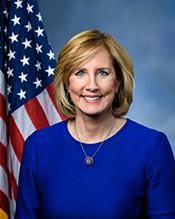
First, I want to thank the gentlewoman from Utah (Mrs. Love) who is a very hardworking member of the Financial Services Committee. I want to thank her for introducing this legislation and helping lead our congressional efforts to provide regulatory relief to our Nation's community banks. She is a great asset to our committee and widely respected.
The Federal Reserve Small Bank Holding Company Policy Statement is a regulation that allows certain bank holding companies that have less than $1 billion in assets to hold more debt at the holding company level than would otherwise be permitted by current capital requirements. They do this as long as they meet a number of ongoing requirements and restrictions.
H.R. 4771 would raise that threshold for qualifying institutions from $1 billion to $3 billion, thus allowing more community banks to raise more capital by the issuance of debt. By increasing this threshold, H.R. 4771 provides much needed relief for bank holding companies from overly burdensome capital and leverage requirements that were truly intended, Mr. Speaker, for the largest and most complex global financial institutions.
It is a reoccurring problem, Mr. Speaker. Again, over and over, the regulatory burden on our community financial institutions is causing us to lose one approximately every other day in America. These are rules that have made it, again, more difficult for small banks to raise capital. And while the bank holding companies will no longer have to abide by these rules under this bill, again, there are plenty of safeguards that continue to be in place to protect the safety and soundness of the institution and its customers. But these institutions present no threat to the safety and soundness of our financial system.
First and foremost, the Federal Reserve retains the right to impose capital standards on a holding company if they determine it is needed. In other words, this is a ``may'' bill and not a ``shall'' bill. The $3 billion threshold remains totally within the discretion of the Federal Reserve. It is permissive.
Next, capital rules and regulations will continue to apply to the subsidiary banks of the holding company level. Again, let me repeat, the capital rules and regulations continue to apply to subsidiary banks.
All institutions must continue to meet certain qualitative requirements, including those pertaining to non-banking activities, off-balance-sheet activities, and publicly registered debt and equity. These requirements ensure that the higher leverage the policy statement allows does not pose any undue burden on subsidiary depository institutions.
So the Small Bank Holding Company Relief Act will indeed make it easier for small, hometown community banks to raise capital. And as they raise more capital, they can turn it into more Main Street jobs, more economic growth, and more home ownership opportunities for our constituents.
In fact, passing this bill will immediately benefit community banks all across America. Not the big banks, not Wall Street banks, as I have no doubt the ranking member will say in her remarks, but again, it will be community banks that will benefit.
If you don't believe me, ask them. Ask the Independent Community Bankers of America and its 5,700 community bank members.
As a matter of fact, the passage of this bill, Mrs. Love's bill, has been an important, longstanding goal of the Independent Community Bankers of America because they have been suffering and suffocated by an avalanche of red tape with massive increases in regulatory burdens, which has caused consolidation with much, much larger competitors. Because of increased regulation and compliance costs, again, many of them have found it difficult to access and raise capital. This is the capital that is needed to capitalize our small businesses.
Small businesses are struggling for access to credit, and the incredible regulatory burden placed on home buyers has simply complicated the buying process.
These higher costs are being felt at the same time that paychecks are only now beginning to grow for working families thanks to the Tax Cuts and Jobs Act.
Just don't take my word for it, Mr. Speaker. Let's listen to just one community banker who happens to be from West Virginia. They wrote in and said:
What no one in a position of power seems to realize is that
many customers in our
country prefer to deal with a smaller, hometown institution,
with people they know and trust. If a customer has a question
about their loan or their deposit, they simply pick up the
phone and call or drop by. If we don't know the answer, we
find out and let them know as soon as possible. But it
appears that Congress and the administration are attempting
to get rid of smaller institutions, so there are a lot fewer
institutions to deal with, and those are the large ones who
are too big to fail.
Mr. Speaker, that is exactly what happened under the Dodd-Frank Act.
Continuing:
Please just try to remember that small financial
institutions and small businesses are the heart of America.
The American Dream is to work hard, learn, and make a good
life for yourself and your family. In the meantime, it
includes working in your community or neighborhood to help
others out. Even as a small institution as ours, we sponsor
Little League Baseball teams, soccer teams, the county junior
fair, and many other activities. We realize if we don't
support local small businesses, they soon won't be here.
Those words could have been written by almost any community financial institution in America, Mr. Speaker, and they ring so true. In order to keep our small communities alive, we have to keep their small businesses alive and we must keep their small banks alive.
So, again, it is so important that we enact H.R. 4771 and that we reduce this red tape on our community financial institutions.
Mr. Speaker, I thank the gentlewoman from Utah for introducing the legislation, and I reserve the balance of my time.
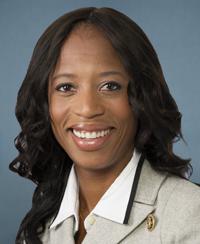
Mr. Speaker, I yield 5 minutes to the gentlewoman from Utah (Mrs. Love), the sponsor of this legislation.
Mr. Speaker, I yield an additional 30 seconds to the gentlewoman from Utah.
Mr. Speaker, I yield myself 10 seconds to say that, as the ranking member appears to be vexed at where the $3 billion number came from, it is the product of bipartisan compromise, something I invite her to engage in more often, and this particular bill is supported by almost half the Democrats on the committee.
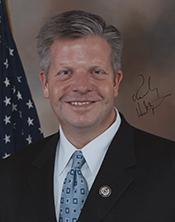
Mr. Speaker, I yield 3 minutes to the gentleman from Missouri (Mr. Luetkemeyer), the chairman of the Financial Institutions and Consumer Credit Subcommittee.
Mr. Speaker, I yield myself 10 seconds just to say that I am shocked that anybody would come here and say that they want to support community banks and they supported Dodd-Frank--the very reason these community banks are being gobbled up. The whole idea of this legislation is to allow them to come together and protect themselves and not be gobbled up by the big banks they vilify in the first place.
Mr. Speaker, I am now pleased to yield 3 minutes to the gentleman from Michigan (Mr. Huizenga), the chairman of the Subcommittee on Capital Markets, Securities, and Investments.
Mr. Speaker, I yield an additional 30 seconds to the gentleman from Michigan.
Mr. Speaker, I yield myself 10 seconds to simply use a term popularized on the other side of the aisle. These are crumbs, deregulatory crumbs, offered by the ranking member when, in fact, she and others on the other side of the aisle have their handprints all over Dodd-Frank, which 90 percent of community bankers will tell you is the number one reason they are going out of business, which is why we have to enact this bill.
Mr. Speaker, I am now pleased to yield 2 minutes to the gentleman from Pennsylvania (Mr. Rothfus), the vice chairman of our Subcommittee on Financial Institutions and Consumer Credit.
Mr. Speaker, I am now pleased to yield 2 minutes to the gentleman from Florida (Mr. Ross), vice chairman of the Housing and Insurance Subcommittee.
Mr. Speaker, I yield myself 10 seconds just to request of the ranking member, on her time, if she will begin to name the community banks that were responsible for the 2008 financial crisis, ostensibly, that was supposed to be answered by Dodd-Frank. She will have some time to think about that.
Mr. Speaker, I yield 1 minute to the gentleman from New York (Mr. Zeldin).
I yield the gentleman from New York an additional 30 seconds.
Mr. Speaker, I yield 2 minutes to the gentleman from Ohio (Mr. Davidson), a hardworking member of the Financial Services Committee.
I yield the gentleman from Ohio an additional 30 seconds.
Mr. Speaker, may I inquire how much time is remaining.
Mr. Speaker, I yield myself the balance of my time.
Mr. Speaker, our community financial institutions play a vital role in our local communities, particularly in rural areas like the Fifth District of Texas, our east Texas counties, and yet they are being crushed, crushed by the sheer weight, volume, complexity, and expense of regulation brought about by Dodd-Frank.
I hear so much from the ranking member about how much her side of the aisle cares about community banks, but their words are belied by their actions in supporting Dodd-Frank, supposedly meant for Wall Street, but it is hurting Main Street.
We have a bill before us today, Mr. Speaker, H.R. 4771, that will give a little bit of ability for community banks to protect themselves from the onslaught of this regulatory burden. The whole idea, again, Mr. Speaker, is to ensure that community banks can at least gather and merge amongst themselves so they are not gobbled up by the big banks that are vilified by the other side of the aisle in the first place.
Again, Mr. Speaker, this is actually--you wouldn't know it from the ranking member--a bipartisan proposal, supported by almost half--half-- of the Democrats on the Financial Services Committee. And again, there is great bipartisan work on our committee. Almost three-quarters of our bills are bipartisan; it is just few of them that are supported by our ranking member.
Let's do one small thing today. Let's have the House do one small thing today, Mr. Speaker, that will help them survive a day more so that they can lend money to a hardworking family to buy that first home, so that they can lend money to somebody to realize their American Dream of perhaps starting their own small business. After having to get that paycheck at the local factory for so many years, now they can finally go out and start their own small business. Maybe it is a matter of sending the first kid to college.
But all of this, all of this disappears. These hopes and dreams disappear with our community banks who are still failing, unfortunately, at the rate of one approximately every other day. This is unacceptable. This is totally unacceptable.
So we have one deregulatory measure here--one--to help our community banks survive. And we hear from so many of them, Mr. Speaker.
Here is one from Indiana that says:
Regulations have significantly reduced our ability to make
judgment calls on credit decisions. When I first came to
First Savings Bank, I had a number of people tell me that the
First Savings Bank gave them their first loan, probably when
they didn't deserve it. Today, they are business and civic
leaders. And I guess we made the right call then. However,
today we cannot make that call. Washington has made that
call, and the answer is no.
One reason, one voice of one banker telling us why we need the bill from the gentlewoman from Utah.
Here is another from a banker in Texas, who said:
When I started banking, the community bank business model
was built around bankers helping their communities to thrive.
Today, customers are confused when they have to sign so many
papers to open a deposit account or borrow money. I can only
think of one explanation, and that is our government thinks
our customers are too stupid to come into the bank and
negotiate a private transaction with their banker, the
community banker that they go to church with, the community
banker whose kids go to school with the customers' kids, and
the community banker whose wife is in the local charity with
the wives of the banker's customers' wives.
Here is another one from Nevada:
I have been a banker for over 30 years, and I have never
been more discouraged than I am now. Good bankers are fleeing
the industry. The days of making a commonsense decision for
the benefit of a customer are gone. For me, retirement can't
come soon enough.
I have got binders and binders full of these testimonies, Mr. Speaker. As the local community banks leave, so leave the credit opportunities of so many low-and moderate-income Americans. It has got to stop.
Mr. Speaker, it is time for the House to enact H.R. 4771. Let's stop the carnage, let's encourage community bank living, and I yield back the balance of my time.
Mr. Speaker, on that I demand the yeas and nays.