Madam Speaker, it is my honor to be recognized to address you here on the floor of the House of Representatives, and I have a couple of topics that I intend to take up for the folks here watching and…
Madam Speaker, it is my honor to be recognized to address you here on the floor of the House of Representatives, and I have a couple of topics that I intend to take up for the folks here watching and listening.
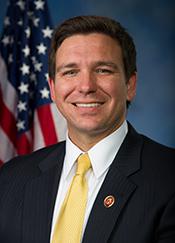
Madam Speaker, I want to talk about the Heartbeat bill and I want to talk about the immigration bill and the tax policy all together. But there is an important issue before this Congress that I want to hear about before I take up these issues. And for that purpose, I would be happy to yield to the gentleman from Florida (Mr. DeSantis) to get this off of his heart.
Mr. Speaker, I thank the gentleman from Florida for his presentation and certainly support and endorse every word that I have heard here.
I think about the leadership that George Washington provided, and a couple of things come to mind. One of them is, in my six trips into Egypt, I have met with President el-Sisi each of those times. He finds himself in a position in Egypt very similar to where Washington was in his first term, Madam Speaker, and that is now with a constitution that has a limitation of two 4-year terms for the President of Egypt. He was elected under that constitution, committed to accepting civilian leadership of the military--and that has been taking place--rebuilding the Christian churches in Egypt, establishing a parliament that reflects women as well as men, and religious diversity in allowing for a lot more religious freedom in Egypt. He has followed through on all of that.
The real test will be if President el-Sisi is re-elected in Egypt when he is up for that re-election, if that should happen, and I hope it does, then I am also listening very closely to what would be his second inaugural address. In that second inaugural address, I am calling upon him to announce that the second term will be his last term in keeping with the standards that are set by George Washington. That is how you transition into a republican form of government that is a representative form of government, a government of we the people.
I would also reflect, as I listened to Mr. DeSantis speak about the greatness of George Washington--and we understand that there has been, I think, an erroneous reading of history and a misinterpretation of history--that there is an effort to purge from and to revise our American history to conform with what contemporary values are. So now if we disparage and expunge from history the statues, the faces, the words, and the leadership of people--some of whom were slaveowners back in that time: Washington, Jefferson, and a list of others all the way up the line--then we fall prey to this weakness of wanting to judge our Founding Fathers and the people who went before us in each generation by the standards of this generation.
Yet we admire people like William Wilberforce and John Adams who stood for years to defend the battle against slavery. They made the moral arguments against slavery. We had people who were against slavery who owned slaves. If you were in Virginia, and if you owed taxes, then you couldn't free
your slaves. That was true for some of our Founding Fathers who found themselves in that position. They couldn't legally free their slaves. They opposed slavery anyway, but they just couldn't pay their taxes. That is a piece of history that isn't often discussed, Madam Speaker.
We need to judge Washington for what he did as the Father of our Country and judge him within the context of the values that they had then. We should remember that they tried to eliminate slavery in the founding documents of this country. They were not able to do so because they had enough representation in the South that prevented it.
So we were, then, less than a century later swept into a giant Civil War which was still the bloodiest war that we have been involved in in our 200-plus years of our history, and that was a bloody war of brother fighting brother, North versus South. 600,000 Americans--mostly White, male Christians--went to their graves to put an end to slavery. That is how huge that contest was.
That argument needed to be won here. It was debated here in the U.S. House of Representatives and in the United States Senate. It went through the Supreme Court.
I listened to the testimony of Star Parker who testified this past Wednesday morning on the Heartbeat Bill, H.R. 490. Star Parker is a magnificent witness. I count her as a real leader in this country and a good friend. She is also an African American who has had several abortions before she came to the conviction that she understood that life begins at the moment of conception and that human life is sacred in all of its forms. So now her voice is being heard--heard in this Congress and heard across the land.
As an African American, she compared slavery to the abortion issue today. I look back in the slavery era, the first half of the 19th century building up to the Civil War, and I ask myself, in looking back at my heritage and my predecessors and the things that they believed in and passed on down to me: Where would I have been? Where would I have been, Madam Speaker, if I had been, say, born in 1800?
Would I have had enough vision to step forward and oppose slavery in the same fashion that I oppose abortion today? I would hope I would have. I pray I would have. I would think that those same principles would apply as Star Parker drew that comparison and that juxtaposition in her testimony last Wednesday before the Constitution and Civil Justice Subcommittee.
Yet here we are today with a similar debate and a similar argument before us. Slavery was morally wrong. Today, I have never in my lifetime met someone who defended slavery, but there were many of them who defended slavery right here where I stand, Madam Speaker, and across the rotunda in the United States Senate where they stand. They defended it because it was the legacy of the culture and the civilization of their times that was included within every civilization throughout the world. Every nation had to figure out how to throw off that yoke of slavery and give all creatures created in God's image an equal opportunity and equal freedom. It cost a lot of blood to put an end to that--600,000 lives.
As a matter of fact, not that long ago, I was standing in the Lincoln Memorial. They call it the temple area there around where the huge statue of Lincoln is seated in his chair up in the Lincoln Memorial. Every time I have walked up those steps, I have walked over to Lincoln's left--it is my right as I face him--I read Lincoln's second inaugural address. I don't have the text of it precisely in front of me, but I will get the gist of it, Madam Speaker.
There in his second inaugural address--remember, the Civil War is not over yet, so we don't know how it is going to end. He said:
Until every drop of blood drawn with the lash shall be paid
by another drawn with the sword, as was said, so it is
written that the Word of the Lord is true and righteous
altogether.
Now, I stood there some time back and read that. Sometimes you can read things four, five, six, ten, or twenty times before you see the wisdom in it, but it hit me as I stood there, a drop of blood drawn with the lash shall be paid by a drop of blood drawn by the sword; how many Americans died in the Civil War? 600,000. Lincoln could not have known that.
I thought I knew how many Black Africans had been brought to what is now the United States to be slaves and to be enslaved here; I thought I knew that number. I looked it up. It is without much contention, there is a consensus number out there, Madam Speaker--600,000. 600,000 Americans died to put an end to slavery, and 600,000 Africans were brought to what is now America to be slaves.
Lincoln could not have known either number. He could not have known those killed in action and those who died in the Civil War. He could not have known that 600,000. He could not have known how many were brought to what is now America to be slaves. A drop of blood drawn with the lash shall be paid by another drawn with the sword, so it is written, the Word of the Lord is true and right and just altogether.
It turns out to be 600,000 versus 600,000. Those are prophetic words that came from the mouth of Abraham Lincoln in his second inaugural address, Madam Speaker. It is chilling to think about how prescient they were. It is impossible for Lincoln to have known, but the instinct that the hand of God that guided him, the guidance of providence that put those words in his mouth that day, turned out to be true this day.
I think of all that this Nation went through to put an end to slavery and all that we are going through to put an end to abortion. I look at the cases of Roe v. Wade, Doe v. Bolton, and a Supreme Court that one might say was leaning very strongly to it as an activist court and the string of decisions that brought them to Roe v. Wade and Doe v. Bolton.
I would take us back through that, Madam Speaker. In about--I have got to guess at the years here again--about 1964 or 1965, there was a case that came before the Supreme Court called Griswold v. Connecticut. There, the State of Connecticut, being a strong Catholic State, had outlawed contraceptives in Connecticut because that was also the position of the Catholic Church. There was a couple that decided to sue to be able to purchase contraceptives. So it made its way all the way to the Supreme Court. The Supreme Court looked into it and decided, well, there is a right to privacy, and the State of Connecticut has no business interfering with the constitutional right to privacy that a married couple has in Connecticut to purchase contraceptives.
So they created this new right--this right to privacy--that didn't exist in the Constitution. It still doesn't exist in the Constitution. Now there are those who will argue that it exists in precedent and exists in case law, and, according to stare decisis--respect for previous decisions--it cannot be changed. We are stuck with this idea that the Constitution includes a right to privacy, a right to privacy that is applied to married couples who wanted to buy contraceptives in the State of Connecticut.
That was when the Supreme Court reached well beyond their bounds, and they needed to stay within the guidelines of the Constitution itself, hence this right to privacy.
Then there was the Eisenstadt case where the decision was that unmarried people had the same right to privacy as married people. So they extended that right to privacy to unmarried people as well, and now everybody could buy contraceptives everywhere at any time, and many other things were included underneath that definition.
So Roe v. Wade came together, and they decided that, yes, these rights existed, this right to privacy could be extrapolated into a right to abortion because this was all written in the emanations and the penumbras that are up there. To explain that, emanations and penumbras are like this: they are in the shadows of. So if you look up at the clouds during, let's say, a semi-cloudy day, then you will see that little shadow along the edge of the cloud. You can't quite see the other side of the cloud, but you see that fringe along the edge.
Someplace in there, those black-robed jurists could see constitutional rights that they couldn't actually find in the text of the Constitution, that they couldn't quite find in Griswold,
that they couldn't quite find in Eisenstadt, but they wrote it into Roe v. Wade and Doe v. Bolton and decided: Okay, we are going to guarantee this constitutional right to have an abortion as long as the baby is not viable.
The viability, of course, is a pretty mushy definition. The Court has thrown some of our pro-life legislation back at us because they thought our definitions were a little too mushy, but they write some mushy ones themselves.
Then you have the Doe v. Bolton case settled at the same time, simultaneous with Roe v. Wade. There they write in the exceptions, which would be anything that might affect the life or health of the mother. The health of the mother can be determined to be the physical health, the mental health, or even the familial health of the mother. So what it means is any reason whatsoever.
When you couple those two cases together--and if you respect the Supreme Court decisions, which America did--it said abortion on demand for any reason whatsoever, whether it is a physical reason, whether it is a mental health reason, or whether it is a family issue, anything that is an inconvenience. We ended up with abortion as birth control and abortion on demand for everyone.
At that time, the Court could not have seen that we would be having partial-birth abortions conducted across this country in significant numbers to the 24th week and beyond.
That is such a ghastly process. This Congress did deal with that through legislation and wrote legislation to ban partial-birth abortion. It was defined. It was outlawed by this Congress. It was litigated all the way to the Supreme Court, as we would know.
When I arrived here, the Supreme Court had found that it was unconstitutional for Congress to ban this ghastly process of partial- birth abortion, of bringing a baby to birth through breach, feet first, and one inch before that baby could fill its lungs full of American air and scream for its own mercy. They would kill the baby while it struggled and squirmed, and they would collapse the skull by withdrawing from it the contents. That is the ghastly process. It went on over and over again.
The Court found it to be unconstitutional for Congress to ban--or any State, for that matter--that ghastly process. So we went back to work here in this Congress in the Judiciary Committee.
Under the leadership especially of Steve Chabot of Ohio, we held hearing after hearing after hearing, and we established and first wrote a definition for partial-birth abortion that was precise so that the Court couldn't argue that it was too mushy, too vague, not precise enough. We wrote a precise definition.
Then we held hearings that determined that a partial-birth abortion is never medically necessary to save the life of the mother. We outlawed partial-birth abortion again. Then it went through the litigation process.
Our statute that banned partial-birth abortion, that came from we the people, was shot down in three circuits around the country but appealed to the Supreme Court, and it finally survived on that final analysis of the Supreme Court. Even they couldn't bear the thought of what was going on in this country. It was too stark. It was too ghastly. It was too gruesome.
So here we are today, with this House of Representatives having passed legislation that bans abortion if the baby can feel pain at 20 weeks. It was a true and right and just thing for this Congress, this House of Representatives to do altogether, Madam Speaker.
We have sent that bill over to the United States Senate. The bill has a little bit of vagueness in it because we are saying 20 weeks. We would like to precisely identify the exact time that the baby can feel pain. But it screams at our conscience that a baby who is struggling for its own survival can be killed in the womb. If it could fill its own lungs, it would scream for its own mercy. It fights to get away from the abortionist's tools.
That is the bill that bans that, the Pain-Capable Unborn Child Protection Act, which we sent to the United States Senate and now sits on Mitch McConnell's desk and probably doesn't move unless there is a Democrat who also agrees with us over in the House of Representatives.
It was bipartisan here in the House of Representatives, and I thank the Democrats who have joined us in the pro-life movement; but it has diminished significantly among Democrats in my time here, Madam Speaker.
I won't use the name of the Member. I will just say that a Democratic Member who is a pro-life Member whom I have served with for roughly a decade, but I went to him and said: Can you sign onto my Heartbeat bill, H.R. 490? Are you ready to do that?
He said: Not yet.
That left the door open for: Well, maybe.
I said: How many Democrats do you think we can get to sign onto the Heartbeat bill that bans abortion from the time a heartbeat can be detected, the baby is protected?
He said, without hesitation: Two. We can get two--which meant, I think, him and one other.
I said: How many pro-life votes were there in the House of Representatives among Democrats when you came here roughly 10 years ago, how many pro-life votes among Democrats?
His answer, without hesitation, was 60. Sixty Democrats would put up a pro-life vote. Ten years later, today, two, maybe three. I hope and pray it is more than that. I will work for all the votes that we can get.
But that, I think, tells us something about how polarized the political arena here is in this House of Representatives, in the United States Senate, and explains why Tom Perez, head of the DNC, can say there is no room for pro-life people in the Democratic Party. If you can't be a Republican, then transform the Democratic Party so we can save the lives of these innocent unborn.
That is what the Heartbeat bill is, H.R. 490, the Heartbeat Protection Act, which we held a hearing on last Wednesday. The testimony, I think, was stellar that came out of the panelists who were there.
David Forte delivered the constitutional arguments even more so in the Q&A than he did so in his presentation.
We heard from Dr. Kathi Aultman, who has been an abortionist and committed an uncounted number of abortions, and she has also had an abortion herself. She has delivered a baby girl vaginally herself. So she is a mother and an abortionist.
She said in her testimony: I realize that when I meet the young people whom I delivered--an OB/GYN who had a dual purpose of bringing babies forth in the world, protecting their lives with all the medical technology and skill set that can be developed on this hand, but over on this hand, kill them, and the dichotomy of that hit her after she delivered her own daughter.
She went back to work and her hands were still doing what they had been doing, but her conscience screamed at her, and she had to put the tools down and stop this ghastly practice of abortion. Now she has committed a significant portion of her life to putting an end to this.
But she said she realized, when she met young people, the joy that she had helped bring them into the world if she delivered them; but at the same time, she understood that there were a lot of young people who are not here because she aborted them. So it always tore at her conscience that way.
Another thing that I had not heard from anyone in this movement in the past, in all of our discussions, was this. She said: If I was going to abort the baby, I always referred to it, when I spoke with the mother, as a fetus. But if we were going to deliver the baby and give this baby a chance at life, I always referred to it as a baby.
I think that explains to us the difference in the disagreements we have here in the House of Representatives. Almost universally, over on this side, people support abortion in every form they can, with those exceptions whom I tip my hat to and those who will be converted, hopefully, by their conscience over time like Cathy Aultman was.
They say ``fetus''; we say ``baby.'' God knows it is a baby. God knows that it is a unique human being from the moment of conception. What we can't yet do, medically, is precisely tell the mother the moment of conception. We don't have a medical way to determine that moment, or I would be focusing our legislation on that moment. But what we do have now, with ultrasound,
is the ability to identify that heartbeat in that baby.
The legislation in H.R. 490, the Heartbeat Protection Act, says this. We require the would-be abortionist to check for a heartbeat before that abortionist would continue with an abortion. They have to maintain records on this: check for a heartbeat, and then if a heartbeat can be detected, the baby is protected. We know that is life. If an abortionist stops that beating heart, we know that has ended the life of that innocent baby.
As we brought this legislation forward, we found out that there is something about that heartbeat that speaks to the conscience and the hearts of America, Madam Speaker. We know that billboard after billboard--there must be thousands of them around America, many of them put up by the Knights of Columbus--saying: Abortion stops a beating heart.
When we see that billboard, maybe it only registers a little bit, but many of us have seen it hundreds and hundreds of times, and we associate the heartbeat with life. If there is a beating heart, we know there is life. If you stop that beating heart, you know that you ended a human life.
On the argument that a baby isn't viable, in the Roe v. Wade era back in 1973, the Supreme Court said maybe that is at 28 weeks. But now we have babies that survive at 22 weeks. That is a month and a half less than before.
I recall a circumstance in 1992 where I had an individual who was part of the administrative oversight on a construction project that I was on that fall. He was gone for 2 weeks, and I knew why. His wife had gone into labor and delivered a little baby boy prematurely.
This little baby boy was in the early part of 20-some weeks. And I am not certain, but I am just guessing earlier than 24 weeks, but certainly not 28.
They went to the city and stayed in that hospital with this little boy for 2 weeks and didn't leave. They stayed at his side and prayed for him and they did all they could. He was hooked up to all kinds of tubes.
When he came back to me after 2 weeks, he was relatively assured that this little boy would survive. He walked up to me and handed me a cigar that said, ``It's a boy.'' He wasn't handing out those cigars the first 2 weeks because he wasn't confident this little boy was going to live.
But he handed me that cigar--and I knew where he stood politically-- and I said to him: We would do anything to save the life of any little baby. Any little boy or girl, we would do anything to save their life. There is no amount of expense we wouldn't go to. There is no amount of medical effort we wouldn't go to to save the life of a baby, no matter how small their chance was to survive. We will do everything. We will spend $100,000, $200,000, $500,000 to save that innocent little life. We do everything we can do with all the medical technology that we have. We spare no effort from doctors or nurses. We will spare no effort on our knees praying to God this little baby can be born and grow into a full human being.
He agreed with me 100 percent. He said: I agree with you, and I am so glad that my little boy looks like he is going to be okay.
I said: Then are you going to go into the polls of next month--this is October of 1992--and vote for the man for President who will appoint Justices to the Supreme Court who are going to continue to enable abortion in America?
He looked at me and called me a name that we can refer to by the first letter of those three words, but he said it in such a way that it wasn't insulting to me. It said instead: You have drilled a point home.
After these 30-some years, I ran into him in the grocery store here several Sundays ago after mass. We are both Catholic. I hadn't talked to him in a long time. I asked him how that little boy was doing, and he told me.
He said: You straightened me out back then, didn't you? Do you remember that?
He asked me if I remembered it. Of course I did. I said: Yes, I remembered it, but I didn't want to bring it up. I did want to know how he is.
So that is a composite of the conscience of the Nation, Madam Speaker. I think it tells us that we all haven't come to the realization of the immorality of abortion yet, but America came to the realization of the immorality of slavery. We will get to the realization of the immorality of abortion. We are making progress.
Looking at this legislation, H.R. 490, we have a number of 69 percent of Americans supporting protecting any baby with a heartbeat.
That is, 55 percent of Democrats support protecting a baby with a heartbeat, and this legislation would save the lives of at least 90 percent of the babies that are otherwise being aborted.
So I want to thank all the people who have done so much work on this that brought us to this point. We are at 170 cosponsors. We have had a hearing. Next step, hopefully, is to get the markup before the Judiciary Committee. My goal is to bring the Heartbeat bill to this floor of the House of Representatives January 19 of 2018. That is the date of the March for Life here in this town, and that is the date we need to bring that legislation to this floor. If we can do so and send it over to the Senate, if the Senate can take it up and pass it, I am confident our President will sign it, and we can begin to put an end to this carnage.
To speak of the magnitude of the carnage of abortion: 60 million babies aborted since 1973 in Roe v. Wade.
I had a lady, who is a Democrat, say to me just over here a couple of months ago: Steve, why are you so worried about this? We have abortions down to where they are almost, or maybe even are below, a million a year?
Only a million abortions a year? How can anyone quantify that and say that is anything other than a bloody carnage and a loss of human potential and a denial of the gifts from God?
Sixty million babies aborted since Roe v. Wade in 1973. And how many babies would be born to those who were aborted? How many of those little girls that were aborted in the 1970s, the 1980s, the 1990s, and even in the early part of this millennia--for a small part, the earliest part of this millennia--how many of those little girls would be having babies today? And how many would they have?
Just a back-of-the-envelope calculation tells me that there are another 60 million babies that are missing because of the 60 million that have been aborted. And here we are, America. I am listening to people argue, and they will say: Well, you know there is work that Americans won't do, and we have a shortage of labor, so we have to go to some other culture, some other civilization and bring in hundreds of thousands or millions of people to do work that Americans won't do.
I wonder, if you would ask those innocent little voices that are in Heaven today, if they wouldn't mind laying a few bricks or maybe cutting some grass or doing a little bit of landscaping around or maybe cutting a little bit of meat. These are all things I do, by the way, even today, if I get the chance. Ask them if they wouldn't have liked to have had a chance at the right to life, if they wouldn't have liked to have an opportunity to live, to love, to breathe air, to laugh, to have their own children, to enjoy the greatest country the world has ever seen, and it is all denied to them.
It is denied to 60 million of them, and it is denied to perhaps another 60 million who didn't even have the chance to be aborted because their future parents were killed in the womb. So 60 million plus 60 million is 120 million missing in this country today. No wonder we have a labor shortage.
Oh, here is another reason why we have a labor shortage, Madam Speaker. If you look at the numbers of--according to the Department of Labor statistics in their website, there are 94\1/2\ million Americans who are simply not in the workforce. They are old enough to work. They are not in the workforce, 94\1/2\ million.
If you add to that the 7-plus million who are on unemployment today, you get up to right at 102 million Americans who potentially could be in the workforce, they are not looking for work or they are on unemployment, and I am listening to employers scream for more labor, more labor, more labor.
By the way, they are screaming for more unskilled labor. I look on that same website, and I see--where are the highest levels of unemployment?
In the lowest skills we have. We don't have a shortage of low-skilled laborers. We have a shortage of employers who want to pay a competitive wage.
So call it 102 million Americans that could be in this workforce. Then we took that number and we started chopping it down.
How about those that are too old?
We can't ask them to work, so dial that down a little bit.
And then how about those that are physically disabled?
They can't work, so dial that down.
What would it be if we were going to mobilize our workforce on the levels of, say, World War II, where at the end of World War II, we had the lowest unemployment in history? And often this is misquoted and people want to point to some other number. 1.2 percent was our unemployment rating at the end of the Second World War.
Women went to work. My mother did. Of course, my father was deployed. But if we mobilized on that level, how many would be available to go into this workforce?
We think about 82 million Americans are sitting there today. Some of them on a couch in their front lawn, some of them are riding around in their Mercedes, but a lot of them could be going to work.
In fact, everybody I mentioned so far should be at work contributing to our GDP instead of just consuming. Eighty-two million or so out there out of the 102 million that are not in the workforce, and they say: Well, we have to bring in hundreds of thousands or millions or tens of millions of people to do this work in America.
Around our family, Marilyn and I raised three sons. I started a business in 1975. I started a family in 1975. Those three sons got an allowance. They got paid for the work they did. In addition, the allowance was younger, paid for the work they did came a little later. But of those three sons, they all knew what they had to do.
Now, if one of those three sons--by the way, I am talking about one- third of our workforce is not in the workforce. They are simply not in the workforce. But one-third of the people who could be are sitting back on the sidelines.
So let's just say, around our operation, there is work that has to be done. You got to scoop the tracks out of the dozer. Somebody has got to change their oil. Somebody has got to mow the lawn. Somebody has got to take care of the other chores. Somebody has got to trim the trees, all those things that need to be done. They all got their assignments and they did them.
But if one of those sons said, ``Well, I am not working. I am going to sit on the couch and watch the ball game or sit on the porch and watch the rest of you work. I want to eat with the rest of the family. I want to put my feet under the table. I want good food. I want my clothes all clean. I want them ironed. I want them ready to go. Somebody else can clean my room, too, but I still want my allowance,'' you all know, if you grew up in the family, how long that would last.
If one of the siblings, a brother or a sister, said, ``I am not doing my work, but give me my allowance, and I still want the keys to the car,'' it wouldn't last one day.
In our house, it goes completely the other way. It is: ``Oh, you think that? Now you get all the work, and they get your allowance until you change your mind.''
We fixed that really quick in my household, and I think it would be fixed a number of different ways, but really quickly in every household in America. We don't tolerate a slacker sitting there taking up a room in the house that is demanding all the benefits of the work of the rest of the family.
But we have got 102 million Americans sitting there. Many of them are being bribed not to work by welfare checks. We have over 70 different means-tested Federal welfare programs in the United States. Over 70. Some say 87 of them. No one has even memorized the list. So that should tell you that no one understands how they interrelate with each other. No one understands whether there are disincentives or incentives for people to do the right thing and step forward and carry their share of the load.
So why wouldn't we dial the welfare down in America until the labor force magically shows up in the workplace?
That is what happened with John Smith. His experiment early on in America worked exactly like that. He said that there were--of all the royalty that was there, they thought, because they had blue blood--and that is, of course, the expression of royalty--that they didn't have to work and those commoners needed to work for the rest of time.
He said: I am not going to burn up the labor of these common people here so that a bunch of royalty can sit around with their feet up.
That is a summarization of the statement.
Everybody had to work, and they had the ``no work, no eat'' policy. Well, when you get to that policy, a lot of people decide that working is better than going hungry, but it doesn't mean we don't take care of the people who are needy. It doesn't mean we eliminate these programs. It just means, as I said, maybe we need 10 million more American workers. We can dial this welfare system down, ratchet it down.
It is now a hammock. It used to be a safety net, and this Congress with special interests has cranked up the level of the safety net to the level of the hammock, and now 102 million Americans, a good share of them, are in that hammock.
We just crank it back down. We could dial it down in proportion to the amount of labor that we need. Everybody that gets off the hammock and goes to work becomes a contributor. They grow our GDP--our gross domestic product--and they pay taxes and they take themselves off the welfare rolls.
So why wouldn't you do the twofer, instead of go to some other country and bring people here to do the work who don't speak our language, who don't understand our culture, and who don't embrace the American civilization in many cases, and who run down people in bike paths in New York, and who attack us at Fort Hood--the list goes on and on--Orlando, Florida; San Bernardino, on and on, the people who hate us?
As Louie Gohmert often says, ``We don't have to pay people to hate us. They will hate us for free.'' He was talking about foreign policy. We have got people on welfare who hate us. We don't have to pay them either. We need more people working. We need more people back in the rolls.
So I want to applaud Kevin Brady, the chairman of the Ways and Means Committee, and I thank him for the very diligent work that he has done in order to bring this tax policy as far as it is today, and to roll it out with the coordination that they have, with the support from the leadership within the House, the Senate, and the White House, and that message has been clear.
Also, Kevin McCarthy, our majority leader, stood here today and defended it and explained it, I think, very well. He is an articulate voice for our entire conference and he does an excellent job, along with our Speaker and our whip.
By the way, our whip, Steve Scalise, maybe he doesn't have all of his moves back yet, but his heart and his head are back as strong as ever. His voice is as strong as ever. Steve Scalise has his mojo back, Madam Speaker, and I am awfully glad to see that. We need that. It is a gift to us to have him.
So what do we do with this need for labor?
I asked the question a little earlier in a tax conference downstairs: Of this tax policy, the bill now that was dropped yesterday, does it allow an employer to deduct as a business expense the wages and benefits that are paid to illegals who are in his employment?
The answer that I got was: We didn't address that in the bill, so whatever it is today is what it is.
What it is today, Madam Speaker, is every employer--let me put it this way: I will say virtually every employer who deducts the wages that are paid of them is often--if they have illegals working for them, they go on the schedule C, like any other employer.
So let's just say, if there is an employer there who pays $1 million out to illegals, that shows up in his schedule C as a business expense, wages. And those wages then are deducted as a business expense. Of course, you don't pay taxes on business expenses.
I don't pay taxes on fuel. I don't pay taxes on parts. I don't pay taxes on the wages our company pays in 42 years in the construction business or on the benefit packages that we have there. And--but--so employers are deducting wages and benefits paid to illegals, and that is supposed to be against the law.
But they don't address that in this tax bill. And the way the IRS has addressed it is that--it says this--according to section 162(e) of the Internal Revenue Code, it denies a deduction for ``illegal payments.''
But even though it denies a deduction, under the statute for illegal payments, the IRS has interpreted this a little bit differently. So it says here in this document: even though it is illegal to employ unauthorized alien workers, the IRS has ruled that section 162(e) does not apply to the wages paid to those aliens--and I would call them aliens--even if the employer knowingly broke the law.
Well, there is a problem with IRS interpretation, but I also know they are not very likely to change that interpretation, unless Congress should crack them over the knuckles with some legislation.
I have, for a number of Congresses, introduced legislation known as the New IDEA Act. Today, the New IDEA Act is H.R. 176. It does this: it clarifies. It amends 162(e) of the Code, and it clarifies that wages and benefits paid to illegals are not tax deductible for Federal income tax purposes. It gives the employer safe harbor if he uses E-Verify to verify his employees.
In other words, if you hire people, you have got people on your payroll, you run them through E-Verify. We know all about this program. The Judiciary Committee passed a mandatory E-Verify bill out of the committee here a couple of weeks ago. But you run them through E- Verify. If you are the employer and they have qualified to be legal to work in the United States through the E-Verify program, then the IRS cannot touch you with regard to hiring illegals. So it is a safe harbor that we build into the bill.
So tax, wages, and benefits paid to employers are not tax deductible. The employer gets safe harbor if he uses E-Verify.
We also require the IRS to exchange information and build a working committee with the Social Security Administration and the Department of Homeland Security so that the right hand, the left hand, and the middle hand know what each other is doing.
This is the Federal Government, after all. And how can we have departments within this government working at cross purposes with each other?
So the IRS' job should be to collect taxes. They should not be allowing the deductions of wages and benefits paid to illegals. They are not legal to work in America.
If you are buying illegal drugs, do you get to deduct your illegal drugs?
If you pay off somebody to commit an illegal activity, do you get to deduct that?
No. In none of those cases, we don't allow deductions for illegal activity. That is partly what the legislation said. But the IRS has their practice.
By the way, before I wrote this bill, I was looking around for what department within any branch of government do the people respect fear the most. As one who has been audited thoroughly a number of times, I notice that the IRS is the one that we respect the most--probably fear the most--and the last organization that we want to show up at our door that is going to check to see if we are hiring illegals.
So what would happen under this bill is the IRS would show up--we don't accelerate any audits. The IRS would show up to do a normal audit under normal terms of identifying businesses that they would normally audit, and, in the course of that audit, they would run the Social Security numbers and the identifying information of the employees off of the I-9 forms that have been required since 1986 and punch them into E-Verify.
If they could verify that all of the employees could work legally in America, then, fine, no problem, and that employer only has his other tax issues to worry about. But if E-Verify kicks any of those employees out--one or more--then the employer has 72 hours' notice to cure, like they would under any other circumstance, to correct any records that might need to be corrected. Otherwise, the IRS could look at that and say: Okay, this million dollars that you wrote off as a business expense is not a business expense. That goes back into the gross receipts and shows up at the bottom as net taxable income.
If we do the math on this and break it down, what is the impact? Well, the impact works out to be this:
If you have a $10-an-hour illegal and the audit comes in and says you can't deduct that $10 an hour, then the impact of it is that the employer then would be billed for interest and penalty and the tax liability that we calculated, I think, at around 35\1/2\ or 36 percent. That turns your $10-an-hour illegal into about a $16-an-hour illegal.
Now, if you are going to have to pay $16 an hour, maybe you could actually hire an American to do that work. You wouldn't have to hire somebody that is sneaking around and that snuck into America. That is one way to look at this is it raises the cost.
There is also a 6-year statute of limitations. Nothing goes backwards. There is no ex post facto in this. It would only be from the day of enactment. From that point forward, there could be a 6-year cumulative liability.
So the first year that the bill would pass--hopefully, in this tax package that we have in front of us that is coming to us next week-- from the first year the bill would pass, you have 1 year of liability.
And say the IRS doesn't audit you the first year. The second year, now you have 2 years of liability. That risk accumulates then for the period of 6 years, that statute of limitations. So, each year, the employer would see that they had a contingent liability: the IRS. If the IRS shows up and audits, they are going to go back at least 4 years, I am going to guess, maybe longer.
That means that they are going to work to clean up their workforce. They can do it incrementally or they can do it all at once. But nobody is going to want to sit there with a 6-year statute of limitations hanging over their head.
Madam Speaker, I include in the Record an article that is written by the Center for Immigration Studies, dated August 31, 2017, titled: ``Raise More than a Quarter Trillion Dollars of Tax Revenue by Ending Tax Subsidies for Unauthorized Employment of Illegal Aliens.''
[From the Center for Immigration Studies, August 31, 2017]
Raise More than a Quarter Trillion Dollars of Tax Revenue by Ending Tax
Subsidies for Unauthorized Employment of Illegal Aliens
(By CIS)
Aliens enter the United States without authorization for
many reasons, but for most of them the goal is to secure
employment at much higher wages than are available in their
native countries. While breaking the law provides very
significant economic benefits to these illegal workers and to
the businesses that hire them, it comes at a cost to American
workers. According to Harvard economist George Borjas, recent
empirical research indicates that American workers suffer a
reduction of $99 billion to $118 billion in annual wages
because of illegal immigration.
The economic rewards of unauthorized employment of aliens
are not limited to the higher wages of the illegal workers
and the lower labor costs of their employers. Unauthorized
alien workers and their employers also enjoy multi-billion
dollar tax deductions and tax credits that were enacted into
law for the benefit of law-abiding workers and businesses.
When Congress returns from summer recess on September 5, it
is expected to focus attention on a major reform of the
federal income tax system, including a combination of lower
rates and other tax incentives to families and to businesses.
The largest challenge facing tax reformers is finding
sufficient additional revenue to pay for the tax cuts and tax
incentives they promised to the people who elected them. In
fairness to the American families and businesses to whom
these tax cuts have been promised, and in particular to the
American families whose household incomes have been
diminished by illegal immigration, Congress should consider
eliminating unwarranted tax breaks to unauthorized alien
workers and their employers.
Each of the following reforms--one that eliminates a tax
subsidy for employers of unauthorized aliens and the other
that eliminates a tax subsidy for the unauthorized workers--
comes with an estimate of the additional revenues that would
be raised by the reform Together they could raise $296
billion over 10 years--more than a quarter-trillion dollars.
1. No Deduction for Wages Paid to Illegal Aliens. Section
162(e) of the Internal Revenue Code denies a deduction for
``illegal
payments''. Even though it is illegal to employ unauthorized
alien workers, the IRS has ruled that section 162(e) does not
apply to the wages paid to those aliens, even if the employer
knowingly broke the law. On January 3, 2017, Rep. Steve King
and eight other members of Congress introduced H.R. 176, the
New Illegal Deduction Elimination Act, Section 2 of which
would amend section 162(e) to clarify that no deduction is
allowed for wages paid to unauthorized alien workers. H.R.
176 provides employers a ``safe harbor'', allowing a
deduction to employers that used the Department of Homeland
Security's free, online E-Verify system to confirm the
employee's eligibility to work.
The amount of wages paid to unauthorized alien workers
cannot be known with certainty. One of the most extensive
studies of unauthorized immigrants in the United States was
conducted by the Pew Hispanic Center in 2009. According to
that study, there were approximately 8.3 million undocumented
immigrants in the U.S. labor force, a figure that Pew more
recently estimated had fallen to 8.0 million. Pew estimated
the median household income of unauthorized worker families
to be approximately $36,000 and that there were approximately
1.75 workers per household, implying median per-worker
earnings of $20,571. Multiplying Pew's estimated number of
unauthorized alien workers by the earnings-per-worker
estimate yields an estimated total of wages paid to
unauthorized alien workers of approximately $165 billion.
Many unauthorized workers are employed in the ``underground
economy'', i.e., by households and other employers that are
not reporting or paying payroll taxes and presumably are not
deducting the wages. A 2013 report by the Social Security
Administration estimated that, of approximately seven million
alien workers in various irregular work statuses in 2010,
approximately 3.1 million (44 percent) had Social Security
numbers (mostly false or fraudulently secured), while
approximately 3.9 million (56 percent) were working in the
``underground economy.'' On the assumption that employers
reported payroll taxes and claimed wage expense deductions
only for the 44 percent of unauthorized workers who could
produce an SSN, and that most employers deducted wages at or
near the corporate tax rate of 35 percent, we estimate that
disallowing a deduction for wages paid to unauthorized alien
workers would increase federal tax revenues by approximately
$25.4 billion per year (35 percent x 44 percent x $165
billion), or $254 billion over 10 years.
2. Deny Refundable Tax Credits to Illegal Aliens. Section
24(a) of the Internal Revenue Code allows a $1,000 per-child
tax credit for taxpayer's whose earnings fall below a
specified threshold. The Child Tax Credit is refundable to
the extent it exceeds the taxpayer's tax liability, in which
case it is referred to as the Additional Chad Tax Credit or
ACTC. A 2011 report by the U S. Treasury Inspector General
for Tax Administration explained that aliens authorized to
work in the United States are required to obtain a Social
Security number (SSN). For aliens who need to file U.S.
federal tax returns for other reasons, such as to claim
refunds of withholding tax on dividends, the IRS issues
Individual Tax Identification Numbers (ITINs). Unfortunately,
according to the inspector general, the IRS had been
permitting aliens to claim ACTCs on returns that reported an
ITIN rather than a Social Security number.
The payment of ACTCs to illegal aliens is arguably a direct
violation of the Personal Responsibility and Work Opportunity
Act of 1996 (``PRWOA''), which expressly provides that an
illegal alien ``is not eligible for any Federal public
benefit.'' The IRS has applied the PRWOA rule to prohibit
payments of Earned Income Tax Credits to ITIN filers, but
based on a questionable interpretation of the law has allowed
ITIN filers refunds of ACTCs.
According to the Inspector General, ``[b]ased on claims
made in Processing Year 2010, disallowance of the ACTC to
filers without a valid SSN would reduce Federal outlays by
approximately $8.4 billion over 2 years,'' i.e., $4.2 billion
per year. Although the inspector general's figures are based
on 2010 fiscal data, Treasury Department tax expenditure
estimates indicate that the total child tax credit
expenditure was virtually unchanged between 2010 and 2017.
Accordingly, based on the inspector general's report, we
estimate that limiting the Child Tax Credit to taxpayers with
Social Security numbers would increase federal tax revenues
by approximately $4.2 billion per year, or $42 billion over
10 years.
The bulk of this article addresses my bill, H.R. 176, the New IDEA Act, the New Illegal Deduction Elimination Act. They go through the calculations here, and I will just touch on some of them.
This is data from a Harvard economist, George Borjas. It is his empirical research. He shows that the workers in America, because wages have been suppressed by an oversupply of unskilled and illegal laborers, that American workers are suffering somewhere between a $99 billion and $118 billion loss in annual wages because they haven't gotten a raise in a long time. Nobody gets a raise as long as there is cheaper labor there that keeps that down--no effective raise. So between $99 billion and $118 billion. That is the Harvard economist, George Borjas. That is the annual wages loss because of illegal immigration.
If we go to the next page on this, it lays out the conditions, and we are seeing this. This is a number from the Pew Hispanic Center in 2009. It says that there are 8.3 million undocumented immigrants in the U.S. labor force. They recently estimated that number is actually ratcheted down to about 8 million. It doesn't say why. But if they estimated the median household income of unauthorized worker families to be approximately $36,000 at 1-\3/4\ average workers per household, that is roughly--let's see. It says, ``implying median per-worker earnings of $20,571,'' they estimated that the earnings-per-worker estimate yields $165 billion a year. This is some of the magnitude of the money that is going out of our economy. Also, added to that, roughly $60 billion is being wired out of America.
So those who say, ``Well, we really need these illegal workers because they stimulate our economy, they grow our economy,'' they are siphoning this off. They are holding down the wages for the working people in America to the tune of $100 billion or more a year. They are earning something like $165 billion a year, and they are sending at least $60 billion of that south of the border, about half to Mexico and the other half to Central America, South America, and the Caribbean.
So all of these are economic impacts.
But the CIS, the Center for Immigration Studies, drew this estimate that, should my bill, the New IDEA Act, H.R. 176, become law--and the perfect place for it is in this tax policy--they estimate that it would score at, the number would be, $25.4 billion a year. If we do a 10-year estimate, that means a $254 billion score, a quarter of $1 trillion poured into our budget at a time that we are cutting taxes and we have a red ink tax policy--which I want to see passed, by the way. We have got some solutions here, and I want to see those solutions become law.
H.R. 176 is one of the unique tools that has been here for some time. It is thoroughly vetted. It has had a good number of cosponsors on it over the past years. I knew Barack Obama would never sign it, but Donald Trump will. It was on his website.
Early on, when he first launched his Presidency, the support for the New IDEA Act was on his immigration policy that was posted then. I haven't checked it now in quite some time, but I don't have any doubt that, if we send a tax bill to Donald Trump's desk with H.R. 176 in it, it will score better, to the tune of probably a quarter of $1 trillion.
It will put an end to the illegal workforce in America, or at least an end to the deductibility of wages and benefits paid to illegals, and it brings together the Social Security Administration, Department of Homeland Security, and the IRS to exchange information so that, if there is a Social Security number that is overused, they need to tell the DHS and they need to tell the IRS. If the IRS comes up with employers that are hiring illegals--and they will--they need to tell the Department of Homeland Security so ICE can come in and enforce the law.
So each one of these agencies needs to cooperate with each other. This way, we open up jobs for American workers, and we give the American workers a raise.
Now, what could be better than giving the American workers a raise and giving the American workers a tax cut all at the same time, while we nearly guarantee an economic growth cycle for the next decade of an average of over 3 percent per quarter? We can do that. It is all sitting here in front of us. And my hope, my prayer, and my effort is that we can all work together to reach all of those goals.
Madam Speaker, I yield back the balance of my time.