Mr. Speaker, I move to suspend the rules and pass the bill (H.R. 4910) to amend title 38, United States Code, to provide outer burial receptacles for remains buried in National Parks, and for other…
Mr. Speaker, I move to suspend the rules and pass the bill (H.R. 4910) to amend title 38, United States Code, to provide outer burial receptacles for remains buried in National Parks, and for other purposes, as amended.
Mr. Speaker, I ask unanimous consent that all Members have 5 legislative days in which to revise and extend their remarks and to include extraneous material on H.R. 4910, as amended.
Mr. Speaker, I yield myself such time as I may consume.
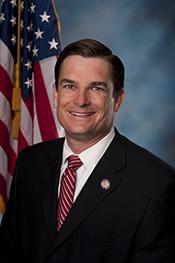
I am pleased that we are considering H.R. 4910, the Veterans Cemetery Benefit Correction Act, which was introduced by Representative Scott of Georgia.
Current law requires VA to provide an outer burial receptacle for each new grave in a cemetery under the control of the National Cemetery Administration. H.R. 4910 would extend this benefit to veterans who will be interred in cemeteries under the control of the National Park Service.
This bill only impacts two cemeteries within the National Park Service that are open to new interments. One of these cemeteries, the Andrew
Johnson National Cemetery, is in my home district in Tennessee and has a fascinating story.
Andrew Johnson served Tennessee as a Congressman, a Governor, and a Senator. He was also Abraham Lincoln's Vice President in 1865 and was sworn in as President after Lincoln's assassination. When he died in 1857, he was buried on the land that is now the Andrew Johnson National Cemetery.
The land remained in his family until the War Department acquired it in 1906. Finally, the jurisdiction of the cemetery was transferred to the National Park Service in 1942. Now the cemetery provides a final resting place for veterans who served our Nation since the Civil War, and it is still accepting new burials.
Veterans and their family members who choose to be buried in Andrew Johnson National Cemetery, or any other National Park Service cemetery, should receive the same benefits as those who are buried in VA cemeteries.
The manager's amendment incorporates some technical changes suggested by the National Park Service and is identical to S. 2372, which was introduced by the Senate Veterans' Affairs Committee Chairman Isakson, and passed the Senate by unanimous consent on March 1, 2018.
Mr. Speaker, I thank the gentleman from Utah (Mr. Bishop), chairman of the Committee on Natural Resources, for helping to expedite the consideration of the bill today.
I urge my colleagues to support H.R. 4910, as amended, and I reserve the balance of my time.
House of Representatives,
Committee on Natural Resources,
Washington, DC, March 27, 2018.
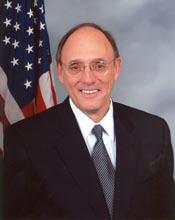
Hon. David P. Roe,
Chairman, Committee on Veterans' Affairs,
Washington, DC.
Dear Mr. Chairman: I write regarding H.R. 4910, the
Veterans Cemetery Benefit Correction Act, authored by
Congressman Austin Scott. This bill contains provisions under
the jurisdiction of the Committee on Natural Resources.
I recognize and appreciate your desire to bring this bill
before the House of Representatives in an expeditious manner,
and accordingly, I will agree that the Committee on Natural
Resources be discharged from further consideration of the
bill. I do so with the understanding that this action does
not affect the jurisdiction of the Committee on Natural
Resources, and that the Committee reserves its authority to
seek conferees on any provision within its jurisdiction
during any House-Senate conference that may be convened on
this, or any similar legislation. I ask that you support any
such request.
I also ask that a copy of this letter and your response be
included in the report for the bill and in the Congressional
Record during consideration of the bill on the House floor.
Thank you for your work on this important issue.
Sincerely,
Rob Bishop,
Chairman.
Mr. Speaker, I yield 4 minutes to the gentleman from Georgia (Mr. Austin Scott), the sponsor of this bill.
Mr. Speaker, I have no further speakers. I am prepared to close. I reserve the balance of my time.
Mr. Speaker, I encourage my colleagues to support this commonsense legislation of Mr. Scott and Mr. Bishop, and I yield back the balance of my time.
Mr. Speaker, on that I demand the yeas and nays.