Mr. Speaker, I move to suspend the rules and pass the bill (H.R. 4986) to amend the Communications Act of 1934 to reauthorize appropriations for the Federal Communications Commission, to provide for…
Mr. Speaker, I move to suspend the rules and pass the bill (H.R. 4986) to amend the Communications Act of 1934 to reauthorize appropriations for the Federal Communications Commission, to provide for certain procedural changes to the rules of the Commission to maximize opportunities for public participation and efficient decisionmaking, and for other purposes, as amended.
Mr. Speaker, I ask unanimous consent that all Members may have 5 legislative days within which to revise and extend their remarks and include extraneous material on the bill.
Mr. Speaker, I yield myself such time as I may consume.
Mr. Speaker, I am pleased today that the House of Representatives is taking up an important bill from the House Energy and Commerce Committee. It is titled the Repack Airwaves Yielding Better Access for Users of Modern Services Act of 2018, or RAY BAUM'S Act.
I thank our subcommittee chairman, Marsha Blackburn, for her hard work in introducing and moving this legislation forward.
Before I get into the policy side, I want to touch on the meaning behind this bill's title.
H.R. 4986 is a nod to our dear friend, and mine of 30 years, the former staff director of our Energy and Commerce Committee, who recently lost his battle with cancer.
It is a testament of not just Ray's dedication to telecom policy--as you know, he served as public utility commissioner, he chaired the Joint Board with the FCC on communications issues, and was such a policy brain for our committee--but also his ability to work across the aisle and with all levels of government officials. He got good things done for America.
Years ago, when I became chairman of what was then called the Subcommittee on Telecommunications and the Internet, Ray, at my invitation, finally agreed to come back to Washington and work on the committee.
He had served as a State representative and as majority leader of the Oregon House. He had been chairman of the public utility commission in Oregon and brought a lot to our process as senior policy adviser.
In the years that followed, these issues remained both a priority and a passion for Ray, and I believe and I hope our bipartisan work today reflects admirably the kind of commitment he wanted all of us to share in making good public policy.
By the way, that is Ray right there, for those who didn't know.
The RAY BAUM'S Act reauthorizes the Federal Communications Commission. It includes efficiency and transparency reforms for the FCC, and it spurs the development of next generation 5G technologies.
It is good for consumers, and it is good for our Nation's critical telecommunications services.
Importantly, the bill before us today is the product of a bipartisan and bicameral agreement, House and Senate, Republicans and Democrats, including my friend from New Jersey (Mr. Pallone), Senate Commerce Committee chairman Mr. Thune, and the ranking member in the Senate, Bill Nelson.
Mr. Speaker, we bring you a good product today of sound policy named for a wonderful individual, and I reserve the balance of my time.
Committee on Transportation and Infrastructure, House of
Representatives,
Washington, DC, March 6, 2018.
Hon. Greg Walden,
Chairman, Committee on Energy and Commerce, Washington, DC.
Dear Chairman Walden: I write concerning H.R. 4986, RAY
BAUM'S Act of 2018. This legislation includes matters that
fall within the Rule X jurisdiction of the Committee on
Transportation and Infrastructure.
I recognize and appreciate your desire to bring this
legislation before the House of Representatives in an
expeditious manner, and accordingly, the Committee on
Transportation and Infrastructure will forego action on the
bill. However, this is conditional on our mutual
understanding that foregoing consideration of the bill does
not prejudice the Committee with respect to the appointment
of conferees or to any future jurisdictional claim over the
subject matters contained in the bill or similar legislation
that fall within the Committee's Rule X jurisdiction.
Further, this is conditional on our understanding that
mutually agreed upon changes to the legislation will be
incorporated into the bill prior to floor consideration.
Lastly, should a conference on the bill be necessary, I
request your support for the appointment of conferees from
the Committee on Transportation and Infrastructure during any
House-Senate conference convened on this or related
legislation.
I would ask that a copy of this letter and your response
acknowledging our jurisdictional interest as well as the
mutually agreed upon changes to be incorporated into the bill
be included in the Congressional Record during consideration
of the measure on the House floor, to memorialize our
understanding.
I look forward to working with the Committee on Energy and
Commerce as the bill moves through the legislative process.
Sincerely,
Bill Shuster,
Chairman.
Mr. Speaker, I yield 3 minutes to the gentlewoman from Tennessee (Mrs. Blackburn), the chair of the subcommittee, who has been an incredible leader on our communications issues on the Energy and Commerce Committee for some time.
Mr. Speaker, I yield 1 minute to the gentleman from New Jersey (Mr. Lance), who is a talented member of our committee.
Mr. Speaker, I yield 1 minute to the gentleman from Illinois (Mr. Kinzinger), who is a great member of our committee.
Mr. Speaker, I yield 1 minute to the gentleman from Florida (Mr. Bilirakis) to speak on this important legislation.
Mr. Speaker, I yield 1 minute to the gentleman from Ohio (Mr. Johnson), who has been a real leader on telecommunications issues.
Mr. Speaker, I yield 1 minute to the gentleman from Pennsylvania (Mr. Costello), a very important member of our committee.
Mr. Speaker, I would concur with my friend's comments. I am happy to work on these issues involving spectrum. I know there are multiple uses around, and we want to make sure that those using these frequencies are not disadvantaged. I look forward to working with the gentleman on that.
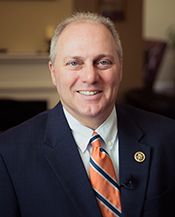
Mr. Speaker, I yield 2 minutes to the gentleman from Louisiana (Mr. Scalise), a distinguished member of the Energy and Commerce Committee. He also happens to have a pretty important title around here as the whip of the House. He has been very involved in telecommunications policies since he first came on the Energy and Commerce Committee.
Mr. Speaker, I yield the gentleman from Louisiana an additional 1 minute.
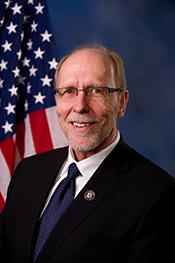
Mr. Speaker, I yield 1 minute to the gentleman from Michigan (Mr. Walberg), who has been a very important member of our committee and active on these issues, and he had a provision in this legislation as well.
Mr. Speaker, I yield an additional 30 seconds to the gentleman from Michigan.
Mr. Speaker, I yield myself such time as I may consume.
Mr. Speaker, I want to thank my friend from New Jersey for his good work on this legislation and his kind words in memory of our mutual friend, Ray Baum.
I think it would be appropriate, as well, to thank the staff who put so much work into this, including Robin Colwell, Tim Kurth, Sean Farrell, Lauren McCarty, Evan Viau, and Elena Hernandez on the Republican side, and David Goldman, Gerald Leverich, and Dan Miller on the minority side. We thank all of them for working both here and on the Senate side.
Mr. Speaker, I just want to quickly go through the provisions again, because this really is important.
For more than a quarter of a century, the FCC has not been reauthorized. We do that here, thanks to Chairwoman Blackburn's legislation.
Second, we take care of our broadcasters, both public and private, and their translators, including FM translators as well as public broadcasting.
Mr. Pallone has been a long champion of the repack effort and, of course, his SANDy legislation.
You heard from Mr. Scalise on the legislation to consolidate redundant and outdated FCC reports: get rid of the ones we don't need, streamline the rest, and bring efficiency.
Mr. Johnson's legislation to establish an independent inspector general at the FCC, this is just good government we can all embrace.
Congresswoman Mimi Walters' legislation gives the chief information officer of the FCC the authority to play a significant role in planning, budgeting, and programming.
Congresswoman Grace Meng's bill to prohibit spoofing calls or texts originating outside the U.S., plus an 18-month shot clock, is put on the FCC to
conduct rulemaking in this matter. I think we are all kind of getting tired of those spoofs we get on our phones. It looks like they are coming from our hometowns, and it turns out they are not. We are going to try to get to the bottom of this and have the FCC work to do that.
Congressman Guthrie and Congresswoman Matsui's bill to include a spectrum auction deposit fix, this will actually allow future actions to go forward legally. They couldn't do that under existing law because of an interpretation, and so we fixed that. That was very, very important.
Congressmen McNerney and Kinzinger's legislation to require the FCC to report to Congress on promoting internet excess for veterans, we all know how important that is, especially those low-income veterans in our rural communities.
Congressman Loebsack's legislation to improve mapping methodology for mobile coverage, we need to know where we have service in America and where we don't and have numbers we can trust.
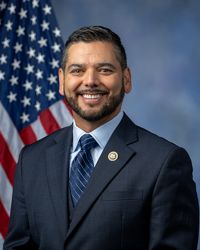
Representative Ruiz's legislation is very, very important, dealing with broadband in Tribal areas and carrying out rulemaking to address unserved Tribal areas. We have lots of Tribal areas in our country that lack service.
Anna Eshoo's legislation to provide further improvements on 911 caller information that builds on Kari's Law that we have already approved, that is really, really important.
And, again, Eliot Engel's legislation requires the National Telecommunications and Information Administration, the NTIA, to study and consider how the agency can best coordinate the interagency process following cybersecurity incidents.
It just goes on and on, including Senator Thune's MOBILE NOW Act that will help us move forward on 5G.
So, as you can see, this is comprehensive, thoughtful, well-written legislation on telecommunications, moves our country forward, reauthorizes the FCC, and is a fitting tribute to my friend and our policy leader, Mr. Ray Baum from Oregon.
Mr. Speaker, I encourage my colleagues to support this legislation, and I yield back the balance of my time.