
I
115th CONGRESS
2d Session
H. R. 5227
IN THE HOUSE OF REPRESENTATIVES
March 8, 2018
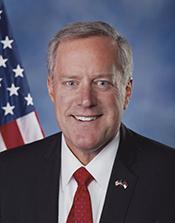
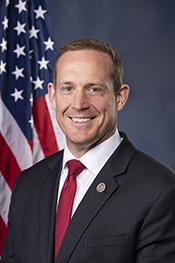
Mr. Meadows (for himself and Mr. Zeldin) introduced the following bill; which was referred to the Committee on Financial Services
A BILL
To require a report and strategy with respect to virtual currencies and other related emerging technologies being used to evade sanctions, finance terrorism, and launder monetary instruments, and threaten United States national security, and for other purposes.
Short title
This Act may be cited as the Preventing Rogue and Foreign Actors From Evading Sanctions Act
.
Report and strategy with respect to virtual currencies and other related emerging technologies
In general
Not later than 180 days after the date of the enactment of this Act, the President, acting through the Secretary of Treasury and in consultation with the Attorney General, the Secretary of State, the Secretary of Homeland Security, the Director of National Intelligence, the Director of the Office of Management and Budget, and the appropriate Federal banking agencies and Federal functional regulators, shall—
submit to the appropriate congressional committees a report that identifies and describes the potential uses of virtual currencies and other related emerging technologies by states, non-state actors, and foreign terrorist organizations to evade sanctions, finance terrorism, or launder monetary instruments, and threaten United States national security; and
develop and submit to the appropriate congressional committees a strategy to mitigate and prevent such illicit use of virtual currencies and other related emerging technologies.
Form; public availability
Form
The report and strategy required under subsection (a) shall be submitted in unclassified form, but may contain a classified annex.
Public availability
The unclassified portion of such report and strategy shall be made available to the public and posted on the internet website of the Department of Treasury—
in pre-compressed, easily downloadable versions that are made available in all appropriate formats; and
in machine-readable format, if applicable.
Sources of information
In preparing the report and strategy required under subsection (a), the President may utilize any credible publication, database, web-based resource, and any credible information compiled by any government agency, nongovernmental organization, or other entity that is made available to the President.
Briefing
Not later than 2 years after the date of the enactment of this Act, the Secretary of the Treasury shall brief the appropriate congressional committees on the implementation of the strategy required under section 2.
Definitions
In this Act:
Appropriate congressional committees
The term appropriate congressional committees
means—
the Committee on Financial Services, the Committee on the Judiciary, the Permanent Select Committee on Intelligence, and the Committee on Foreign Affairs of the House of Representatives; and
the Committee on Banking, Housing, and Urban Affairs, the Committee on Homeland Security and Governmental Affairs, the Committee on the Judiciary, the Select Committee on Intelligence, and the Committee on Foreign Relations of the Senate.
Appropriate Federal banking agencies
The term appropriate Federal banking agencies
has the meaning given the term in section 3 of the Federal Deposit Insurance Act (12 U.S.C. 1813).
Virtual currency
The term virtual currency
means a currency that—
is a digital representation of value that can be digitally traded;
is used as a medium of exchange, unit of account, or store, of value; and
is not used to be a legal tender, whether or not denominated in legal tender.
Federal functional regulator
The term Federal functional regulator
has the meaning given that term in section 509 of the Gramm-Leach-Bliley Act (15 U.S.C. 6809).
Foreign terrorist organization
The term foreign terrorist organization
means an organization that is designated as a foreign terrorist organization under section 219 of the Immigration and Nationality Act (8 U.S.C. 1189).