Mr. Speaker, pursuant to House Resolution 658, I call up the bill (H.R. 4324) to require the Secretary of the Treasury to make certifications with respect to United States and foreign financial…
Mr. Speaker, pursuant to House Resolution 658, I call up the bill (H.R. 4324) to require the Secretary of the Treasury to make certifications with respect to United States and foreign financial institutions' aircraft-related transactions involving Iran, and for other purposes, and ask for its immediate consideration in the House.
Mr. Speaker, I ask unanimous consent that all Members may have 5 legislative days in which to revise and extend their remarks and submit extraneous material on the bill under consideration.
Mr. Speaker, I yield myself such time as I may consume.
Mr. Speaker, I am pleased to support H.R. 4324, which is a commonsense piece of legislation sponsored by my good friend and fellow Texan, Mr. Williams. His work as a member of the Financial Services Committee and as vice chairman of the Monetary Policy and Trade Subcommittee has been invaluable.
Mr. Speaker, as our colleagues know, under the Iran nuclear bill, also known as the Joint Comprehensive Plan of Action, or JCPOA, the Obama administration committed the U.S. to license the sale of aircraft to Iran.
In addition to authorizing the sales, these licenses have authorized banks to engage in financing, even though Iran remains classified by the Treasury Department as a jurisdiction of primary money laundering concern. On top of that, the State Department continues to label Iran as the world's foremost state sponsor of terrorism.
The recipient of these aircraft would be Iran Air, the state-owned airline that was sanctioned as recently as 2011 for supporting the Islamic Revolutionary Guard Corps, which itself has been designated by the Trump administration as a terrorist organization. So, Mr. Speaker, so far, so bad.
And yet, while I and many of my colleagues from both sides of the aisle find these aircraft sales and their financing deeply disturbing, Mr. Williams' bill is about something far, far simpler. All
his bill would do is bring about the implications of the aircraft finance for Iran out into the sunlight. In other words, Mr. Speaker, it is a reporting requirement--nothing more, nothing less.
It would simply require Treasury to help Congress understand who is involved in these transactions. If it is an airline, has that airline stopped supporting terrorists or other sanctioned persons. If it is a bank, does that bank have the due diligence in place to guard against the immense illicit finance risk endemic to Iran.
All this legislation does is have Treasury certify this information for Congress. And, if Treasury can't make those certifications, it simply has to notify us what plans it has in response, even if it has no plans in response.
So, when we hear today from the other side of the aisle how this bill may impose new conditions on Iran or somehow stand in the way of commitments under the JCPOA, I suggest, again, everyone read the bill. It is simple. It is common sense. In fact, we should be considering this under the expedited process of the suspension calendar.
This legislation provides, again, for a simple reporting requirement, Mr. Speaker; that is it, a reporting requirement.
If my friends who oppose this bill don't care enough to even request the information from the executive branch, especially information that may reveal the use of their constituents' bank deposits for the benefit of enablers of terrorism, well, Mr. Speaker, that is a sad, sad day for congressional oversight and a sad day for the United States Congress.
But there are people who have read the bill, if everybody in this institution hasn't, people, for example, associated with the Foundation for Defense of Democracies, who wrote recently in a November 22 policy brief for the Foundation's Center on Sanctions and Illicit Finance: ``The proposed bill supports Treasury's robust licensing approval process by codifying steps that are likely already central to the Department's evaluation process.''
They go on to write, Mr. Speaker: ``While not imposing any new standards for the approval of sales to Iran, codifying the existing standards in law through this bill makes the licensing process more transparent and gives the American people--through their elected representatives--a clear picture of a significant component of the sanctions relief provided to Iran under the nuclear agreement.''
Mr. Speaker, I include this report in the Record.
[From the Foundation for Defense of Democracies, Nov. 22, 2017]
Congress Supports Financial Transparency for Iranian Transactions
(By Annie Fixler, Tyler Stapleton)
The House Financial Services Committee approved last week
the Strengthening Oversight of Iran's Access to Finance Act,
which codifies in law a set of conditions that the U.S.
Treasury must use to evaluate licenses for the sale of
commercial aircraft to Iran.
The bill requires the secretary of the Treasury to report
within 30 days whether transactions related to the export and
re-export of aircraft to Iran pose a ``significant money
laundering or terrorism financing risk to the United States
financial system.'' The secretary must also determine whether
the transactions benefit any Iranian person that has
knowingly transported or otherwise supported the
proliferation of weapons of mass destruction or provided
material support to persons included on Treasury's sanctions
lists. If the secretary cannot certify that the transaction
meets these conditions, he must explain whether the licenses
authorizing the transaction will be revoked, modified, or
remain valid despite the potential for illicit transactions
or benefits going to sanctioned persons.
Under the July 2015 nuclear agreement known as the Joint
Comprehensive Plan of Action, or JCPOA, the United States
committed to allowing the sale of commercial aircraft to Iran
provided the planes are used ``exclusively for commercial
passenger aviation.'' The JCPOA specifically states that if
aircraft are either used for a prohibited purpose or
transferred or re-sold to individuals or entities on
Washington's sanctions lists, the U.S. would view this as
grounds to cease its approval of aircraft sales--but, by
implication, not abrogate the nuclear deal in full.
Upon the implementation of the JCPOA in January 2016,
Treasury issued a Statement of Licensing Policy (SLP) and
additional guidance reiterating and expanding on the relevant
language from the nuclear deal. The SLP and related guidance
indicate that Treasury would view license applications
favorably but would review applications on a case-by-case
basis and ``include appropriate conditions to ensure'' that
no sanctioned persons were involved in the transaction.
The SLP and related guidance are clearly consistent with
the JCPOA, which does not require the United States to issue
licenses for aircraft sales without conditions. Accordingly,
the SLP does not guarantee that all applications will be
approved. If Washington determines that certain criteria are
necessary in order to ensure that commercial aircraft are
used appropriately, it is permitted to reject an application
that does not meet those criteria.
The proposed bill supports Treasury's robust licensing
approval process by codifying steps that are likely already
central to the department's evaluation process. First, for
more than two decades, Treasury has been at the forefront of
efforts to implement global anti-money laundering and
counter-terrorism financing standards. The bill emphasizes
that these standards should be a critical component in the
evaluation of licenses vis-a-vis Iranian aircraft
transactions. Second, the bill's requirement that no persons
knowingly supporting proliferation benefit from the deal
mirrors Treasury's statement that no persons on sanctions
lists be involved in the transactions.
While not imposing any new standards for the approval of
sales to Iran, codifying the existing standards in law
through this bill makes the licensing process more
transparent and gives the American people--through their
elected representatives--a clearer picture of a significant
component of the sanctions relief provided to Iran under the
nuclear agreement.
The most novel component of the bill is that it requires
the secretary of the Treasury to issue a report listing all
U.S. or foreign financial institutions that have conducted
authorized transactions in connection with the export or re-
export of commercial aircraft to Iran. While not classified,
this information is not currently part of the public record.
Objections to the publication of a list of companies and
banks involved in aircraft sales revolve around exposing
businesses to reputational risks for transacting with Iran.
Yet it is unavoidable for there to be reputational risk for
doing business--even legal business--with the world's leading
state sponsor of terrorism.
In closing, Mr. Speaker, the gentleman, my fellow Texan, has given all Members an opportunity, no matter what their views on the JCPOA, the Iran nuclear deal, to simply support transparency and Congress' right to basic information. I hope that my colleagues will seize that opportunity.
And, again, I thank Mr. Williams from Texas for his leadership and his excellent work.
Mr. Speaker, I reserve the balance of my time.
Mr. Speaker, I yield 5 minutes to the gentleman from Texas (Mr. Williams), my friend, the sponsor of this legislation, and a great member of the Financial Services Committee.
Mr. Speaker, I yield an additional 30 seconds to the gentleman from Texas.
Mr. Speaker, I yield 4 minutes to the gentleman from Kentucky (Mr. Barr), the chairman of the Financial Services Subcommittee on Monetary Policy and Trade.
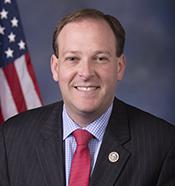
Mr. Speaker, I yield 3 minutes to the gentleman from New York (Mr. Zeldin), a member of the Financial Services Committee.
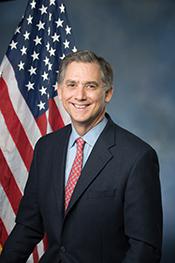
Mr. Speaker, I yield 3 minutes to the gentleman from Arkansas (Mr. Hill), an outstanding member of the Financial Services Committee.
Mr. Speaker, I yield 3 minutes to the gentleman from North Carolina (Mr. Budd), a hardworking member of the Financial Services Committee.
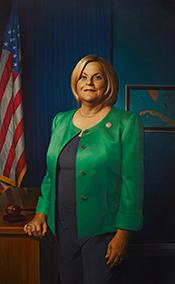
Mr. Speaker, I yield 2 minutes to the gentlewoman from Florida (Ms. Ros-Lehtinen), the chairman emeritus of the House Foreign Affairs Committee and chairman of its Subcommittee on the Middle East and North Africa.
Mr. Speaker, I yield an additional 1 minute to the gentlewoman from Florida.
Mr. Speaker, I am pleased to yield 1\1/2\ minutes to the gentleman from South Carolina (Mr. Norman), a member of the Small Business Committee.
Mr. Speaker, may I inquire how much time I have remaining.
Mr. Speaker, I yield myself the balance of my time.
Mr. Speaker, from time to time in my Congressional career I come to the House floor, and I have a surreal moment. Iran is the world's foremost state sponsor of terror, and we have Members on the other side of the aisle saying: Well, we shouldn't learn anything about them. We shouldn't learn about who is financing their aircraft. We shouldn't learn whether or not aircraft will be converted for military purposes.
Iran is a regime where every day the leadership wakes up shouting: ``Death to Israel, Death to America.'' Yet I have friends on the other side of the aisle who say: Well, we shouldn't have any reporting on Iran because it might hurt their feelings.
This is a surreal moment, Mr. Speaker, an absolute surreal moment. We have been told over and over that somehow this stops the JCPOA, the nuclear deal with Iran. I wish it did, but it doesn't. I would suggest to my friends on the other side of the aisle, if they actually read the bill, it is 10 pages long, 6 pages of findings. You can put the findings aside and read the 4 pages. It is a reporting bill.
It has certifications. And guess what the implications are if the administration can't give the proper certifications? Nothing. The deal continues to go on. It is perhaps the single worst foreign policy agreement in the history of America that legitimizes Iran's nuclear program and, on its best day, slows up their nuclear weapons by maybe a few years, at best, on its best day.
When the JCPOA was sold to us by the previous administration, we were told: This would be for civilian aircraft use only. Don't worry about it. This is not going to exacerbate terrorism in any way. But we know Boeing itself says their aircraft, which are being sold to Iran, can be used for combat purposes, and, in fact, have been. Iran Air was cited in 2011. It was sanctioned for supporting the Islamic Revolutionary Guard Corps, which has been designated as a terrorist organization.
This isn't just theory, Mr. Speaker. It is a fact. Then we had my colleague, the gentleman from Washington, say: Well, it is important that we sell aircraft to Iran so companies can make profits. Well, using his logic, maybe we ought to sell weapons to North Korea if some company can make a profit. I think not, Mr. Speaker.
There are some things that are more important. Our security is even more important than the profit of any one particular company. So, again, this is a simple reporting requirement.
I want to thank the gentleman from Texas (Mr. Williams) for his leadership here. It is incredibly important that we understand from those who sold us this terrible Iranian deal, they need to make good on their promises.
We need to make sure that civilian aircraft are being used for civilian purposes. We need to make sure that the banks who are financing these deals are not financing terrorism. Yet those on the other side of the aisle say: No, let's put our heads in the sand. Let's just trust--let's trust the world's foremost state sponsor of terrorism. They will do the right thing. Let's just ignore this terrorism thing.
No. No, Mr. Speaker. That is why it is so important that we enact H.R. 4324, and I urge all my colleagues to vote for it. It is important to America.
Mr. Speaker, I yield back the balance of my time.
Mr. Speaker, I claim the time in opposition.
Mr. Speaker, my friends on the other side of the aisle seem to be schizophrenic. They can't seem to figure out whether they want to coddle Iran or to ``stand up to'' Iran. We were also told that H.R. 4324 was designed to ``blame and shame'' financial institutions, and now they offer a motion to recommit to blame and shame financial institutions.
So here is what is going on, Mr. Speaker: What we have is a regime that wakes up every morning shouting ``Death to America; death to Israel,'' and yet we have a motion to recommit trying to relitigate the 2016 Presidential election.
We have a regime which has been certified as the world's foremost state sponsor of terrorism whom we are trying to hold accountable and from whom we are trying to get information, and our friends on the other side of the aisle are trying to relitigate the 2016 Presidential election.
We know that the Iranian Revolutionary Guard Corps supports the Assad regime in Syria. According to the U.N., the Assad government, with the help of Iran, has now carried out 27 chemical weapon attacks since the start of the Syrian conflict, including an April 2017 sarin gas attack that killed more than 80 people, including scores of women and children, and my friends on the other side of the aisle want to relitigate the 2016 Presidential election.
Mr. Speaker, Iran continues to imprison foreign nationals, including Americans--including Americans--including 81-year-old Baquer Namazi, who has lost his teeth in prison due to malnutrition. We have had another American prisoner, a student at Princeton, who has suffered health problems, and yet my friends on the other side of the aisle, with their motion to recommit, want to relitigate the 2016 Presidential election.
This is a serious moment, Mr. Speaker. H.R. 4324 by the gentleman from Texas is an important piece of legislation to ensure that civilian aircraft sales to Iran remain civilian aircraft and that our financial institutions are not unwittingly helping to finance this rogue terrorist regime, and it is no time to relitigate an election that my friends on the other side of the aisle lost.
We need to reject the motion to recommit, and we need to enact H.R. 4324.
Mr. Speaker, I yield back the balance of my time.