First of all, Mr. Speaker, I want to thank Representative Collins for holding this tonight, for organizing this, also for his advocacy, and for what he has done to bring about attention to this very…
First of all, Mr. Speaker, I want to thank Representative Collins for holding this tonight, for organizing this, also for his advocacy, and for what he has done to bring about attention to this very important subject. This, of course, is something that is very dear to my heart. As the only pharmacist currently serving in Congress, I take this very seriously. I take that responsibility very seriously.
But it is more than that because, you see, in my professional life, for over 30 years, I had the honor of practicing pharmacy. I have built up relationships over that time, relationships with families and with patients. When I see what is happening in pharmacy now, it is an affront. It is an affront to me, and it should be an affront to all Americans. My heart is in this, truly in this.
In over 30 years of practice, I have built up relationships with patients and with families. I have served grandparents, I have served parents, I have served children, and total families. You can only imagine the hurt that it brings whenever I see these people suffering because of what has been mentioned here tonight.
Right now, in our country, prescription drug prices are something that is in the forefront, in the news. There is a problem, a real big problem, and that problem--yes, the pharmaceutical manufacturers have a concern here, and they have responsibility. But there is a bigger problem. It is what I refer to as the man behind the curtain. I wrote an op-ed about this and talked about the man behind the curtain. That is the PBMs, the pharmacy benefit managers. I am going to call them out tonight.
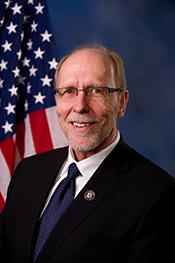
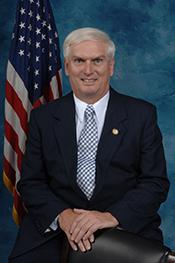
Before I do that, I want to just say something about community pharmacists because they play such an important and vital role in our communities. They directly interface and build relationships with neighbors and friends. I have been there, I have done that, and I understand how important it is. Representative Collins has spoken about it, and Representative Loebsack, a friend of pharmacy, has spoken so many times. He has spoken about it as well. Representative Babin and Representative Duncan understand how important the community pharmacies are and how important they are to the healthcare system.
But beneficiaries are facing increased costs for prescription drugs without much of a basis or notification on why these costs are skyrocketing. So, very quickly, I want to talk about why these costs are skyrocketing. Yes, as I said earlier, some of the pharmaceutical manufacturers need to be held accountable. They do.
I say that, but I also say that I am a big fan of the pharmaceutical manufacturers. You see, in my over 30 years of practicing pharmacy, I have seen nothing short of miracles. I can remember when I started practicing in 1980. I can remember that people would come in to get an antibiotic and that we would have to dispense 40 capsules and have them take four a day for 10 days. Now I can give them one capsule, and they can take it and be done with it. People were going into the hospital back then to be treated for infections. Now we can treat then. The advances that we have seen are phenomenal.
We talk about the price of some of these drugs, for instance, the drug that is used for hepatitis C. Yes, it is too expensive, and that price has come down significantly. It is only as good as it is affordable. If it is not accessible, if it is not affordable, then it is no good. But stop for just one minute, and think about it. We cured a deadly disease through research and development. The pharmaceutical manufacturers put some of their profits back into research and development, which I applaud.
We cured a deadly disease, hepatitis C, that was killing people. Again, that price needs to come down so that it is more accessible to people. But, again, we cured it. So I am going to cut the pharmaceutical manufacturers a little bit of leeway there.
I think it is interesting that the President, in his first month in office, called the pharmaceutical manufacturers to the White House. He told them: You got to do something about these escalating drug prices.
He also talked about those people who are on the other side of R&D, who are on the other side of research and development. He put a notice out, and he said: You better beware because we're going to be watching you.
The next day, the stocks of two of the major pharmacy benefit managers went down. They went down significantly, almost 2 percent, because they knew what was coming, and they know what is coming now.
First of all, let's talk about the profits of the PBMs. A quick history, PBMs came about kind of in the mid 1960s, and all they were was a processor. Their goal and their charge was just to keep up and to process insurance claims as insurance came about and became more and more popular to pay for medications. That is all they did.
But over time, they have evolved into more than that. If you look at what has happened over the past decade, the profits of the three major PBMs--and Representative Collins alluded to this earlier--you have got three companies who control almost 80 percent of the market. That is not good. That is not competition, and that is what we have to have in health care in order to decrease healthcare costs. It is competition. When you have three companies that account for almost 80 percent of the market, that is never good.
But if you look at those three companies and you look at their profits over the last decade, you will see that they have increased some 600 percent--billions of dollars. Now, you can make the argument, well, the pharmaceutical manufacturers, their profits have increased, too. Yes, they have; and, yes, they should be accountable for that. However, at least they are bringing value to the system by investing into research and development.
PBMs bring no value to the healthcare system at all. They put no money into research and development. All they do is skim it off the top. As medications go up in price, they make more. Representative Collins alluded to spread pricing. That is exactly what he is talking about, and that is exactly how they are making their money. The more expensive a drug, the more money the PBM is going to make. That's all there is to it.
I served on the Oversight and Government Reform Committee for the past session in the 114th Congress. We had a problem with Mylan Pharmaceuticals and a drug that they had, EpiPen. It went up to $600. Unbelievable. Here was a drug that is a lifesaving drug that people have to have for anaphylactic shock. We in Congress actually passed legislation that required that drug to be on hand in gyms and in schools in case there was a problem. Yet, they went up to $600.
It was really interesting because, during the time that we were asking questions of the CEO, she mentioned, well, when it leaves us, it is this price right here--I am just going to use round figures--it is $150. By the time it gets to the pharmacist and by the time it is dispensed to the patient, it is $600.
I asked her: What is that difference there? Where is that coming from?
I don't know.
I don't know either.
Now, there is the beginning and the end. The beginning is the pharmaceutical manufacturer. She doesn't know. The end is me, the dispensing pharmacist, and I don't know.
That is what I'm referring to when I talk about the man behind the curtain. That is where the PBMs come in.
Now, they will tell you: Well, we are taking that money, and we are giving it back to the companies, to the insurance.
Well, if they are, and they're not keeping any of it, then why are their profits going up so much? Why have their profits gone up over 600 percent? It's because they're keeping it. They're keeping it, and they're adding no value whatsoever to the system.
Now, they will argue the fact, they will say: Well, we are keeping drug prices down.
Oh, yeah? Well, how is that working out for you? It ain't working out very well at all because drug prices are going up.
I mentioned the competition, the fact that we have got three companies that control over 80 percent of the market. That decreases choices.
We are talking about community pharmacies, and I know that is what Representative Collins is really wanting to focus on here tonight, and it is so very important because we have to have community pharmacies. They are vital to the healthcare system. In many areas, the most accessible healthcare professional is the pharmacist, particularly in rural areas. As they go, and as they are eliminated, we are losing a vital part of the healthcare system.
But PBMs are shutting out a lot of these community pharmacies. I alluded earlier to the fact that I have served grandparents, parents, and grandchildren. I've built up those relationships. One of the toughest things that I have ever faced is for a family member to come in to me literally in tears and say: I have got to change pharmacies.
I say: Why?
Because my insurance company, because my PBM says that I have to get it from them through mail order.
Well, why would you have to get it through them through mail order?
Because they own the pharmacy.
Representative Collins alluded earlier about vertical integration, and that is what we see. The PBM owns the pharmacy that they are requiring the patient to go to. Well, guess what? That means they are padding their pocket even more. That is the kind of thing that we should be protected from.
I will give you a quick story, a true story. Back when I was still practicing pharmacy and owned my pharmacy, my wife had insurance through her employer. She had a different insurance plan than I had. She got her insurance, and she got a prescription filled at my pharmacy--at my pharmacy. Now, this is the pharmacy benefit manager who owns the pharmacy. That night when I got home, I got a phone call from the insurance company saying: Well, your wife got a prescription filled here at this pharmacy, but if she gets it filled at our pharmacy, we can give her a lower copay. We can give her a discount.
Now, supposedly there is a firewall in between the PBM and the pharmacy. Well, guess what? There wasn't that firewall there that night, not when I got that phone call.
Can you imagine? What is that doing? That is taking patients away from the community pharmacist. That is unfair business practices. So, that is what we talk about. Ultimately, who suffers?
I don't want to give the impression I am just here to try to make sure that community pharmacies stay profitable and make sure that they stay in business, although it is important. If they don't stay in business, who is going to suffer? It is going to be the patient. It is going to be the healthcare system.
Folks, the only thing that is going to bring down costs in our healthcare system is more competition and free market principles. That is what we are trying to do now in Congress, through the repeal and the replacement of the Affordable Care Act.
We understand that we have got to get free market principles back into the healthcare system. We have got to get competition in order to drive healthcare costs down. We understand that. This is a big problem, a big problem.
Very quickly, I want to talk about three bills that are being proposed. First of all, I want to talk about Representative Collins' MAC Transparency bill.
Transparency, that means give us an opportunity to see exactly what is going on. If you mention transparency to a PBM, they go berserk: My gosh, no, we can't have that. We can't have transparency.
But Representative Collins' bill, the MAC Transparency bill, which I am proud to be an original cosponsor of, brings about greater transparency in generic pricing--drug pricing, in general, but particularly generic.
Many of the recipients don't understand the cost structure. They don't understand how that works, where the original fees are originating from, which are often a direct result of the fees that are leveraged by the PBMs, the prescription drug plan sponsors.
Congressman Collins' bill addresses this issue, and it addresses more. Under his legislation, a process would be established to help mediate disputes in drug pricing. It would establish new criteria for PBMs to adhere to when managing the costs of prescription drug coverage.
This MAC Transparency bill is a step forward not only for the industry, but for the beneficiary, and that is what is so very, very important. It is no surprise that costs are going up. No surprise at all. With the lack of transparency, that is what is going to happen.
We have got to have greater transparency in the drug pricing system. And, yes, that includes pharmacy. Yes, that includes the pharmacy; yes, it includes the pharmaceutical manufacturer; but mostly, it has got to be with the PBMs.
If we have a CEO of a medication--a pharmaceutical company like Mylan which we had come up and testify before us here in Congress, and I ask her about that gap there and where that money is going, if she doesn't know and I don't know, there is a problem. That means we need more transparency. And that is exactly what happened.
Now I want to talk about another problem that is called DIR fees, direct and indirect remuneration. Let me tell you, this will be the death of community pharmacies.
DIR fees are what they refer to as clawback fees. What happens is, when you go into a pharmacy, you get a prescription filled, the pharmacy's computer calls the insurance company's computer, the PBM's computer, and it tells us how much to charge the patient in a copay and tells us how much we are going to get paid. However, with these DIR fees, months later, after we have already been promised how much we are going to be paid, pharmacists are getting bills from these PBMs that are saying: Well, we didn't make quite as much that quarter as we should have, so we are going to have to claw back this much.
I met with pharmacists from the New York State pharmacy association and they were telling me, literally, horror stories about getting bills for $85,000, $110,000 in clawback fees. Folks, that is not a sustainable business model. When you are trying to run a business, a community pharmacy, and you get a bill months later in the hundreds of thousands of dollars, that is not sustainable. You can't stay in business that way.
We have got to do something about DIR fees. Thankfully, Representative Morgan Griffith from Virginia has a bill addressing this. I am supporting him on that bill.
In fact, in a recent survey, nearly 70 percent of community pharmacists indicated that they don't receive any information about when those fees will be collected or how large they will be. Again, ultimately, who ends up being penalized? Who ends up being penalized is the patient. The patient ends up being penalized.
Understand, this is not a partisan issue. These PBMs don't care whether you are Republican or Democrat. They care about one thing, and that is profit. That is all.
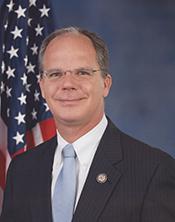
Now, let's talk about one other. Let's talk about a bill that Representative Brett Guthrie from Kentucky has, H.R. 592, Pharmacies and Medically Underserved Areas Enhancement Act. Under this bill, many of the individuals who seek consultation, especially seniors, can continue to receive that quality input and expertise.
This bill is known as the pharmacy provider status. Simply, what this will do is make sure that the pharmacists who give consultations are being reimbursed for that. That is vitally important.
Pharmacies are the front line in health care. There are so many diseases. The pharmacists who are graduating today are so clinically superior to when I graduated. Their expertise is beyond anything that I ever imagined it would be. We need to make sure that we are utilizing that. That is going to be a key in helping us control healthcare costs: utilizing all these allied health fields and making sure we are using them to their fullest potential. This bill will help us do that.
So there are just three bills that are being introduced right now with community pharmacists that impact pharmacy but, more importantly, that impact health care and that are going to help us have a great healthcare system and to continue to have a great healthcare system.
There are a couple other things that I wanted to mention. I am going to hold off on those because, again, I want to make sure that everybody understands the point that I am trying to make, and that is just how important, how vital the community pharmacies are and just how bad the PBMs are and how they are ripping off the public. They are ripping off the public. Look at their balance sheets. Look at the profits. Again, they want to argue, and they want to say: We are holding down drug prices.
Again, how is that working for you? It is not working. It is not working because they are pocketing the profits. If they were truly doing what they said they set out to do, we wouldn't see escalating drug prices like we are seeing.
Yes, there are some bad actors out there, as there are in every profession. Yes, we had Turing Pharmaceuticals and Martin Shkreli, the ``pharma bro.'' This guy was a crook, no question about it. We had Valeant Pharmaceuticals and what they did with Isuprel and Nitropress.
Just recently, Marathon Pharmaceuticals bought a drug that was available over in Europe. They brought it over here and got it approved in America. It is a very important drug for muscular dystrophy. Now they want to increase the price to an enormous amount that won't be affordable for patients.
Those are bad actors. As my daddy used to say, you are going to have that, and we understand that. We have Valeant and Turing and Marathon. We are calling them out, too. They need to be called out.
But we also need to focus on what one of the biggest problems is in escalating prescription drug prices, and that is the PBMs. They bring no value whatsoever to the system. They put no profit back into research and development.
Communities' pharmacists play an important role in our healthcare system. I am proud to support our community pharmacists. I am proud to have been able to practice in a profession for over 30 years that I know brings a great deal of value to patients and to their families.
Again, I want to thank Representative Collins, and I want to commend him for his hard work.
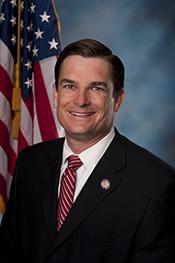
Representative Austin Scott is here, also. He has been a champion of this as well. They understand. They get it. I appreciate their efforts on that, and I appreciate everyone who has been here tonight. I thank Representative Collins for hosting us here tonight. I appreciate his support.