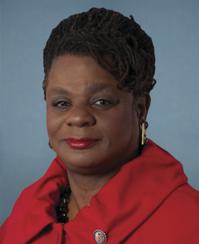
Mr. Speaker, I thank the chairman. I brought with me today a picture of Master Sergeant Abraham. Now, I never knew him when he looked like this. I knew him when he was much older. I have got to tell…
Mr. Speaker, I thank the chairman. I brought with me today a picture of Master Sergeant Abraham. Now, I never knew him when he looked like this. I knew him when he was much older. I have got to tell you that to know Master Sergeant Abraham, you would never have known what he had gone through in his life because all of these folks from that time period just did what they had to do. When you ask them, ``Why did you do it?'' they said, ``It wasn't an option. It wasn't an option. We had to do it.'' There is just certain times in our history that people rise up and they do things that are incredible, ordinary people doing extraordinary things.
Just being around Mr. Abraham for a long time--I never called him Abie, by the way. I did not call him Abie. I always called him sergeant or Mr. Abraham--I was just always so impressed with him. It is such an honor and a privilege to be able to stand here in the people's House to talk about a true American hero, somebody who was not just a patriot, but was compassionate, somebody who never stopped serving his country in so many different ways.
When I first read ``The Ghost of Bataan,'' I went back and I talked to Mr. Abraham. I said: You never told me about these things.
He said: Oh, don't worry about that. Those were just things we had to do.
I said: No, but what you did was incredible: to survive the Bataan Death March, to be in a Japanese prison camp for 3\1/2\ years, to be stabbed, to be shot, to be beaten, to survive malaria and starvation. Did you ever think of trying to get away?
He said: Yeah, Mike, I did, but here was the thing: if one of us were to escape, the Japanese soldiers would shoot 10 of the prisoners who were still in the camp; so we didn't want to do that to any of our colleagues. I watched them die. I held them as they died. We tried to get them through the darkest times that we could.
I said: How did you endure?
He said: My faith. My faith.
That is how we all get through the darkest time, on both knees, believing that God is there for us no matter what. But when you read his books and you understand who this man was--and
I think the second book was the one that was incredible. Let me read this because I just thought if there was anything that somebody did out of love, it was Mr. Abraham.
His second book was ``Oh, God, Where Are You?'' I want you to think of this as a prisoner of war who survived the Bataan Death March, who watched his colleagues killed along the way, and if they fell down, they got shot. Toward the end, when they fell down and they couldn't move anymore, they were put into open graves, and they were told to go ahead and cover the graves. He refused to do it. He said: They are still moving.
So we come to today and we think about what it is that we as Americans can do. What is it we can do? What is in our hearts? What is in our memory? What about all those who came before us and what they went through?
Mr. Abraham, as a child, went to school barefoot. His family didn't have money to even buy him shoes, but he had a love for our Nation. He had a love for his fellow man. He had a love for veterans that was just incredible. But imagine the despair of being in that prison camp and not knowing what was going on in the outside war.
I asked him: What did you do? How did you keep people's spirits up?
He said: I made up stories. I would tell them that I just heard there was a rumor going through camp that our armies are close and they are going to rescue us.
Think about that. They were clinging to a made-up story from this man because he knew that is how he could keep their spirits up in the darkest of times. He kind of smiled about it.
I said: That is incredible.
He said: Well, sometimes you have to do things a little different just to get people's spirits up.
I want you to fast forward to who this man was. I watched him walk with a cane as he got into his later years, in his eighties and nineties, going to VA Butler Healthcare Center every single day to help fellow veterans. His sole purpose in life was to help other American citizens, to help other veterans, to bring a little light into their life, to bring a little happiness into their life; 40,000 hours of service in a VA center. He could have spent his time doing other things, but he didn't. He chose to stay with those he loved. He chose to serve those he loved. He chose to continue to serve even in his retirement this Nation that he loved so much.
I can't tell you how much it means to be able to look at that new health center going up and knowing that Mr. Abraham, from his new post, is looking down and is so thankful to a grateful nation that we are taking time to take care of those who have given everything they can to make sure our Nation remains free.
This is an incredible time in our history. This has nothing to do with parties. It has nothing to do with who you vote for. It has to do with who we are, the fact that every single one of us has a role. I would just ask people to please look into Abie Abraham. Go online and see about Mr. Abraham. Go and see what Master Sergeant Abraham did, and say: If I could just be a little bit like Abie Abraham, the world would be a better place. For all those who have died in the service of our country, they will rest easier.