






IB
Union Calendar No. 653
115th CONGRESS
2d Session
H. R. 6305
[Report No. 115–844]
IN THE HOUSE OF REPRESENTATIVES
July 3, 2018
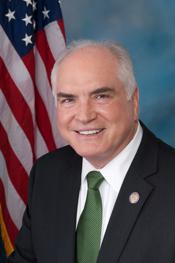
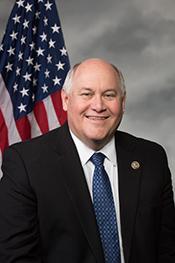
Mr. Kelly of Pennsylvania (for himself and Mr. Blumenauer) introduced the following bill; which was referred to the Committee on Ways and Means
July 19, 2018
Reported with an amendment, committed to the Committee of the Whole House on the State of the Union, and ordered to be printed
Strike out all after the enacting clause and insert the part printed in italic
For text of introduced bill, see copy of bill as introduced on July 3, 2018
A BILL
To amend the Internal Revenue Code of 1986 to improve access to health care through modernized health savings accounts.
Short title
This Act may be cited as the Bipartisan HSA Improvement Act of 2018
.
Certain employment related services not treated as disqualifying coverage for purposes of health savings accounts
In general
Section 223(c)(1) of the Internal Revenue Code of 1986 is amended by adding at the end the following new subparagraph:
Special rule for qualified items and services
In general
An individual shall not be treated as covered under a health plan for purposes of subparagraph (A)(ii) merely because the individual, in connection with the employment of the individual or the individual’s spouse, receives (or is eligible to receive) qualified items and services at—
a healthcare facility located at a facility owned or leased by the employer of the individual (or of the individual’s spouse), or operated primarily for the benefit of such employer’s employees, or
a healthcare facility located within a supermarket, pharmacy, or similar retail establishment.
Qualified items and services defined
For purposes of this subparagraph, the term qualified items and services means the following:
Physical examinations.
Immunizations, including injections of antigens provided by employees.
Drugs other than a prescribed drug (as such term is defined in section 213(d)(3)).
Treatment for injuries occurring in the course of employment.
Drug testing, if required as a condition of employment.
Hearing or vision screenings.
Other similar items and services that do not provide significant benefits in the nature of medical care.
Aggregation
For purposes of clause (i)(I), all persons treated as a single employer under subsection (b), (c), (m), or (o) of section 414 shall be treated as a single employer.
.
Effective date
The amendments made by this section shall apply to months beginning after December 31, 2018, in taxable years ending after such date.
Contributions permitted if spouse has a health flexible spending account
Contributions permitted if spouse has a health flexible spending account
Section 223(c)(1)(B) of the Internal Revenue Code of 1986 is amended by striking and
at the end of clause (ii), by striking the period at the end of clause (iii) and inserting , and
, and by inserting after clause (iii) the following new clause:
coverage under a health flexible spending arrangement of the spouse of the individual for any plan year of such arrangement if the aggregate reimbursements under such arrangement for such year do not exceed the aggregate expenses which would be eligible for reimbursement under such arrangement if such expenses were determined without regard to any expenses paid or incurred with respect to such individual.
.
Effective date
The amendment made by this section shall apply to plan years beginning after December 31, 2018.
FSA and HRA terminations or conversions to fund HSAs
In general
Section 106(e)(2) of the Internal Revenue Code of 1986 is amended to read as follows:
Qualified HSA distribution
For purposes of this subsection—
In general
The term qualified HSA distribution means, with respect to any employee, a distribution from a health flexible spending arrangement or health reimbursement arrangement of such employee directly to a health savings account of such employee if—
such distribution is made in connection with such employee establishing coverage under a high deductible health plan (as defined in section 223(c)(2)) after a significant period of not having such coverage, and
such arrangement is described in section 223(c)(1)(B)(iii) with respect to the portion of the plan year after such distribution is made.
Dollar limitation
The aggregate amount of distributions from health flexible spending arrangements and health reimbursement arrangements of any employee which may be treated as qualified HSA distributions in connection with an establishment of coverage described in subparagraph (A)(i) shall not exceed the dollar amount in effect under section 125(i)(1) (twice such amount in the case of coverage which is described in section 223(b)(2)(B)).
.
Partial reduction of limitation on deductible HSA contributions
Section 223(b)(4) of such Code is amended by striking and
at the end of subparagraph (B), by striking the period at the end of subparagraph (C) and inserting , and
, and by inserting after subparagraph (C) the following new subparagraph:
so much of any qualified HSA distribution (as defined in section 106(e)(2)) made to a health savings account of such individual during the taxable year as does not exceed the aggregate increases in the balance of the arrangement from which such distribution is made which occur during the portion of the plan year which precedes such distribution (other than any balance carried over to such plan year and determined without regard to any decrease in such balance during such portion of the plan year).
.
Conversion to HSA-compatible arrangement for remainder of plan year
Section 223(c)(1)(B)(iii) of such Code, as amended by the preceding provisions of this Act, is amended to read as follows:
coverage under a health flexible spending arrangement or health reimbursement arrangement for the portion of the plan year after a qualified HSA distribution (as defined in section 106(e)(2) determined without regard to subparagraph (A)(ii) thereof) is made, if the terms of such arrangement which apply for such portion of the plan year are such that, if such terms applied for the entire plan year, then such arrangement would not be taken into account under subparagraph (A)(ii) of this paragraph for such plan year, and
.
Inclusion of qualified HSA distributions on W–2
In general
Section 6051(a) of such Code is amended by striking and
at the end of paragraph (16), by striking the period at the end of paragraph (17) and inserting , and
, and by inserting after paragraph (17) the following new paragraph:
the amount of any qualified HSA distribution (as defined in section 106(e)(2)) with respect to such employee.
.
Conforming amendment
Section 6051(a)(12) of such Code is amended by inserting (other than any qualified HSA distribution, as defined in section 106(e)(2))
before the comma at the end.
Effective date
The amendments made by this section shall apply to distributions made after December 31, 2018, in taxable years ending after such date.
July 19, 2018
Reported with an amendment, committed to the Committee of the Whole House on the State of the Union, and ordered to be printed