Mr. Speaker, I yield myself such time as I may consume. Mr. Speaker, I rise in opposition to H.R. 1699 which would undermine the Dodd-Frank Wall Street Reform and Consumer Protection Act and…
Mr. Speaker, I yield myself such time as I may consume.
Mr. Speaker, I rise in opposition to H.R. 1699 which would undermine the Dodd-Frank Wall Street Reform and Consumer Protection Act and eliminate consumer protections for some of the country's most vulnerable borrowers.
Mr. Speaker, the title of this bill paints it as a measure that purports to preserve access to manufactured housing. So I want to be very clear about what this bill is and what it is not about, and who will win and who will be harmed if this bill is signed into law.
This isn't about regulatory burdens, reducing access to credit. The lending volume in the manufactured housing industry has gotten back to where it was before the Consumer Financial Protection Bureau put new regulations in place.
This isn't about credit unions and community banks not being able to enter the manufactured housing market. Many credit unions already underwrite mortgage loans and chattel loans for manufactured housing. But what H.R. 1699 is about is one-stop-shop megainstitutions like Clayton Homes, owned by billionaire Warren Buffett, which has almost half of the market share for manufactured housing lending.
His manufactured housing empire profits in every imaginable way in this sector from producing housing, to selling housing, to originating the loans that take advantage of vulnerable customers and leave them with virtually no way to refinance.
This bill makes it easier for financial titans like billionaire Warren Buffett to earn even more profits at the expense of some of the most vulnerable consumers in this country.
I show this ad because they would have you believe that Clayton Homes is separate from all of the other entities that they have under Clayton Homes. One would think that, simply, Clayton Homes is the seller of these mortgages. But they are under different names. They are under Vanderbilt. They are under HomeFirst. They are under Benjamin Moore, and they are under Oakwood Homes.
So sometimes people think perhaps, if they are not getting the kind of service that they want when they are looking for a mortgage, that they will go to some other place other than Clayton. But they end up literally going to other entities owned by Clayton Homes.
This is a Warren Buffett bill. This is a Clayton bill. And to tell you the truth, this institution is not in the business of originating legislation for one particular business. This is what this is all about. And I will show you how they do it.
They have different names on their operations, but the ads all look the same. ``We will beat the match. We will beat the match.'' Same ads for Tru Value and the other entities owned by them, but they all belong to Warren Buffett and Clayton.
This bill, again, would harm manufactured housing consumers who are typically more vulnerable than the average homeowner. They are low- income buyers, rural buyers, minority buyers. And reports from the Consumer Financial Protection Bureau, the Manufactured Housing Institute, and the Center for Public Integrity have all shown us that this measure would not create access to affordable housing; but it would, instead, allow an incredibly profitable industry to make even more money at the expense of low-income and rural homeowners, even if the industry itself asserts that it has been growing and highly profitable, even in the years after Dodd-Frank, and the Consumer Bureau's mortgage protections have been in place.
So just take a look at this. If you take a look back what was happening in 2003, where they had 18 percent share in the market, now they have 39 percent. This is all Clayton, 39 percent. And their portfolio includes about $12.5 billion in customers.
So I would like to just reiterate again that this is about Warren Buffett and this is about Clayton. Let me just share with you that Berkshire Hathaway chairman Warren Buffett has also been touting its post-Dodd-Frank Act profitability of manufactured housing.
Clayton Homes is Berkshire's highly profitable manufactured housing subsidy, and it earned a total of $744 million in 2016, a 33 percent increase over 2014. Yes, that is a 33 percent increase after the Dodd- Frank Act rules were in place. Unfortunately, this is the same Clayton Homes that was the subject of a multipart Seattle Times and Center for Public Integrity joint investigation.
Mr. Speaker, The Seattle Times did a scathing series on Clayton. I include in the Record these articles that were done by The Seattle Times. Everyone should avail themselves of this damaging information.
[From the Seattle Times]
The Mobile-Home Trap: How a Warren Buffett Empire Preys on the Poor
(By Mike Baker and Daniel Wagner)
First of a series
Ephrata, Grant County.--After years of living in a 1963
travel trailer, Kirk and Patricia Ackley found a permanent
house with enough space to host grandkids and care for her
aging father suffering from dementia.
So, as the pilot cars prepared to guide the factory-built
home up from Oregon in May 2006, the Ackleys were elated to
finalize paperwork waiting for them at their loan broker's
kitchen table.
But the closing documents he set before them held a
surprise: The promised 7 percent interest rate was now 12.5
percent, with monthly payments of $1,100, up from $700.
The terms were too extreme for the Ackleys. But they'd
already spent $11,000, at the dealer's urging, for a concrete
foundation to accommodate this specific home. They could look
for other financing but desperately needed a space to care
for her father.
Kirk's construction job and Patricia's Wal-Mart job
together weren't enough to afford the new monthly payment.
But, they said, the broker was willing to inflate their
income in order to qualify them for the loan.
``You just need to remember,'' they recalled him saying,
``you can refinance as soon as you can.''
To their regret, the Ackleys signed.
The disastrous deal ruined their finances and nearly their
marriage. But until informed recently by a reporter, they
didn't realize that the homebuilder (Golden West), the dealer
(Oakwood Homes) and the lender (21st Mortgage) were all part
of a single company: Clayton Homes, the nation's biggest
homebuilder, which is controlled by its second-richest man--
Warren Buffett.
Buffett's mobile-home empire promises low-income Americans
the dream of homeownership. But Clayton relies on predatory
sales practices, exorbitant fees, and interest rates that can
exceed 15 percent, trapping many buyers in loans they can't
afford and in homes that are almost impossible to sell or
refinance, an investigation by The Seattle Times and Center
for Public Integrity has found.
Berkshire Hathaway, the investment conglomerate Buffett
leads, bought Clayton in 2003 and spent billions building it
into the mobile-home industry's biggest manufacturer and
lender. Today, Clayton is a many-headed hydra with companies
operating under at least 18 names, constructing nearly half
of the industry's new homes and selling them through its own
retailers. It finances more mobile-home purchases than any
other lender by a factor of six. It also sells property
insurance on them and repossesses them when borrowers fail to
pay.
Berkshire extracts value at every stage of the process.
Clayton even builds the homes with materials--such as paint
and carpeting--supplied by other Berkshire subsidiaries.
Clayton always profits
More than a dozen Clayton customers described a consistent
array of deceptive practices that locked them into ruinous
deals: loan terms that changed abruptly after they paid
deposits or prepared land for their new homes; surprise fees
tacked on to loans; and pressure to take on excessive
payments based on false promises that they could later
refinance.
Former dealers said the company encouraged them to steer
buyers to finance with Clayton's own high-interest lenders.
Under federal guidelines, most Clayton mobile-home loans
are considered ``higher-priced.'' Those loans averaged 7
percentage points higher than the typical home loan in 2013,
according to a Times/CPI analysis of federal data, compared
to just 3.8 percentage points for other lenders.
Buyers told of Clayton collection agents urging them to cut
back on food and medical care or seek handouts in order to
make house payments. And when homes got hauled off to be
resold, some consumers already had paid so much in fees and
interest that the company still came out ahead. Even through
the Great Recession and housing crisis, Clayton was
profitable every year, generating $558 million in pre-tax
earnings in 2014.
The company's tactics contrast with Buffett's public
profile as a financial sage who values responsible lending
and helping poor Americans keep their homes.
Berkshire Hathaway spokeswoman Carrie Sova and Clayton
spokeswoman Audrey Saunders ignored more than a dozen
requests by phone, email and in person to discuss Clayton's
policies and treatment of consumers. In an emailed statement,
Saunders said Clayton helps customers find homes within their
budgets and has a ``purpose of opening doors to a better
life, one home at a time.''
(Update: After publication, Berkshire Hathaway's Omaha
headquarters sent a statement on behalf of Clayton Homes to
the Omaha World-Herald, which is also owned by Berkshire.)
First, a dream
As Buffett tells it, his purchase of Clayton Homes came
from an ``unlikely source'': Visiting students from the
University of Tennessee gave him a copy of founder Jim
Clayton's self-published memoir, ``First a Dream,'' in early
2003. Buffett enjoyed reading the book and admired Jim
Clayton's record, he has said, and soon called CEO Kevin
Clayton, offering to buy the company.
``A few phone calls later, we had a deal,'' Buffett said at
his 2003 shareholders meeting, according to notes taken at
the meeting by hedge-fund manager Whitney Tilson.
The tale of serendipitous dealmaking paints Buffett and the
Claytons as sharing down-to-earth values, antipathy for Wall
Street and an old-fashioned belief in treating people fairly.
But, in fact, the man who brought the students to Omaha said
Clayton's book wasn't the genesis of the deal.
``The Claytons really initiated this contact,'' said Al
Auxier, the Tennessee professor, since retired, who
chaperoned the student trip after fostering a relationship
with the billionaire.
CEO Kevin Clayton, the founder's son, reached out to
Buffett through Auxier, the professor said in a recent
interview, and asked whether Buffett might explore ``a
business relationship'' with Clayton Homes.
At the time, mobile-home loans had been defaulting at
alarming rates, and investors had grown wary of them. Kevin
Clayton was seeking a new source of cash to relend to
homebuyers. He knew that Berkshire Hathaway, with its perfect
bond rating, could provide it as cheaply as anyone. Later
that year, Berkshire Hathaway paid $1.7 billion in cash to
buy Clayton Homes.
Berkshire Hathaway quickly bought up failed competitors'
stores, factories and billions in troubled loans, building
Clayton Homes into the industry's dominant force. In 2013,
Clayton provided 39 percent of new mobile-home loans,
according to a Times/CPI analysis of federal data that 7,000
home lenders are required to submit. The next biggest lender
was Wells Fargo, with just 6 percent of the loans.
Clayton provided more than half of new mobile-home loans in
eight states. In Texas, the number exceeds 70 percent.
Clayton has more than 90 percent of the market in Odessa, one
of the most expensive places in the country to finance a
mobile home.
To maintain its down-to-earth image, Clayton has hired the
stars of the reality-TV show ``Duck Dynasty'' to appear in
ads.
The company's headquarters is a hulking structure of metal
sheeting surrounded by acres of parking lots and a beach
volleyball court for employees, located a few miles south of
Knoxville, Tenn. Next to the front door, there is a slot for
borrowers to deposit payments.
Near the headquarters, two Clayton sales lots sit three
miles from each other. Clayton Homes' banners promise ``$0
CASH DOWN.'' TruValue Homes, also owned by Clayton,
advertises ``REPOS FOR SALE.'' Other nearby Clayton lots
operate as Luv Homes and Oakwood Homes. With all the
different names, many customers believe that they're shopping
around.
House-sized banners at dealerships reinforce that
impression, proclaiming they will ``BEAT ANY DEAL.'' In some
parts of the country, buyers would have to drive many miles
past several Clayton-owned lots, to reach a true competitor.
Guided into costly loans
Soon after Buffett bought Clayton Homes, he declared a new
dawn for the moribund mobile-home industry, which provides
housing for some 20 million Americans. Lenders should require
``significant down payments and shorter-term loans,'' Buffett
wrote.
He called 30-year loans on mobile homes ``a mistake,''
according to notes Tilson took during Berkshire Hathaway's
2003 shareholders meeting.
``Home purchases should involve an honest-to-God down
payment of at least 10% and monthly payments that can be
comfortably handled by the borrower's income,'' Buffett later
wrote. ``That income should be carefully verified.''
But in examining more than 100 Clayton home sales through
interviews and reviews of loan documents from 41 states,
reporters found that the company's loans routinely violated
the lending standards laid out by Buffett.
Clayton dealers often sold homes with no cash down payment.
Numerous borrowers said they were persuaded to take on
outsized payments by dealers promising that they could later
refinance. And the average loan term actually increased from
21 years in 2007 to more than 23 years in 2009, the last time
Berkshire disclosed that detail.
Clayton's loan to Dorothy Mansfield, a disabled Army
veteran who lost her previous North Carolina home to a
tornado in 2011, includes key features that Buffett
condemned.
Mansfield had a lousy credit score of 474, court records
show. Although she had seasonal and part-time jobs, her
monthly income often consisted of less than $700 in
disability benefits. She had no money for a down payment when
she visited Clayton Homes in Fayetteville, N.C.
Vanderbilt, one of Clayton's lenders, approved her for a
$60,000, 20-year loan to buy a Clayton home at 10.13 percent
annual interest. She secured the loan with two parcels of
land that her family already owned free and clear.
The dealer didn't request any documents to verify
Mansfield's income or employment, records show.
Mansfield's monthly payment of $673 consumed almost all of
her guaranteed income. Within 18 months, she was behind on
payments and Clayton was trying to foreclose on the home and
land.
Many borrowers interviewed for this investigation described
being steered by Clayton dealers into Clayton financing
without realizing the companies were one and the same.
Sometimes, buyers said, the dealer described the financing as
the best deal available. Other times, the Clayton dealer said
it was the only financing option.
Kevin Carroll, former owner of a Clayton-affiliated
dealership in Indiana, said in an interview that he used
business loans from a Clayton lender to finance inventory for
his lot. If he also guided homebuyers to work
with the same lender, 21st Mortgage, the company would give
him a discount on his business loans--a ``kickback,'' in his
words.
Doug Farley, who was a general manager at several Clayton-
owned dealerships, also used the term ``kickback'' to
describe the profit-share he received on Clayton loans until
around 2008. After that, the company changed its incentives
to instead provide ``kickbacks'' on sales of Clayton's
insurance to borrowers, he said.
Ed Atherton, a former lot manager in Arkansas, said his
regional supervisor was pressuring lot managers to put at
least 80 percent of buyers into Clayton financing. Atherton
left the company in 2013.
During the most recent four-year period, 93 percent of
Clayton's mobile-home loans had such costly terms that they
required extra disclosure under federal rules. Among all
other mobile-home lenders, fewer than half of their loans met
that threshold.
Customers said in interviews that dealers misled them to
take on unaffordable loans, with tactics including last-
minute changes to loan terms and unexplained fees that
inflate loan balances. Such loans are, by definition,
predatory.
``They're going to assume the client is unsophisticated,
and they're right,'' said Felix Harris, a housing counselor
with the nonprofit Knoxville Area Urban League.
Some borrowers felt trapped because they put up a deposit
before the dealer explained the loan terms or, like the
Ackleys, felt compelled to swallow bait-and-switch deals
because they had spent thousands to prepare their land.
Promise denied
A couple of years after moving into their new mobile home,
Kirk Ackley was injured in a backhoe rollover. Unable to
work, he and his wife urgently needed to refinance the costly
21st Mortgage loan they regretted signing.
They pleaded with the lender several times for the better
terms that they originally were promised, but were denied,
they said. The Ackleys tried to explain the options to a 21st
supervisor: If they refinanced to lower payments, they could
stay in the home and 21st would get years of steady returns.
Otherwise, the company would have to come out to their rural
property, pull the house from its foundation and haul it
away, possibly damaging it during the repossession.
They both recall being baffled by his reply: ``We don't
care. We'll come take a chainsaw to it--cut it up and haul it
out in boxes.''
Nine Clayton consumers interviewed for this story said they
were promised a chance to refinance. In reality, Clayton
almost never refinances loans and accounts for well under 1
percent of mobile-home refinancings reported in government
data from 2010 to 2013. It made more than one-third of the
purchase loans during that period.
Of Washington's 25 largest mobile-home lenders, Clayton's
subsidiaries ranked No. 1 and No. 2 for the highest interest
rates in 2013. Together, they ranked eighth in loans
originated.
``If you have a decrease in income and can't afford the
mortgage, at least a lot of the big companies will do
modifications,'' said Harris, the Knoxville housing
counselor. ``Vanderbilt won't even entertain that.''
In general, owners have difficulty refinancing or selling
their mobile homes because few lenders offer such loans. One
big reason: Homes are overpriced or depreciate so quickly
that they generally are worth less than what the borrower
owes, even after years of monthly payments.
Ellie Carosa, of Napavine, Lewis County, found this out the
hard way in 2010 after she put down some $40,000 from an
inheritance to buy a used home from Clayton priced at about
$65,000.
Clayton sales reps steered Carosa, who is 67 years old and
disabled, to finance the unpaid amount through Vanderbilt at
9 percent interest over 20 years.
One year later, Carosa was already having problems--peeling
paint and failing carpets--so she decided to have a market
expert assess the value of her home. She hoped to eventually
sell the house so the money could help her granddaughter,
whom she adopted as her daughter at age 8, attend a local
college to study music.
Carosa was stunned to learn that the home was worth only
$35,000, far less than her original down payment.
"I've lost everything," Carosa said.
`Rudest, most condescending' agents
Berkshire's borrowers who fall behind on their payments
face harassing, potentially illegal phone calls from a
company rarely willing to offer relief.
Carol Carroll, a nurse living near Bug Tussle, Ala., began
looking for a new home in 2003 after her husband had died,
leaving her with a 6-year-old daughter. Instead of a down
payment, she said, the salesman assured her she could simply
put up two acres of her family land as collateral.
In December 2005, Carroll was permanently disabled in a
catastrophic car accident in which two people were killed.
Knowing it would take a few months for her disability
benefits to be approved, Carroll said, she called Vanderbilt
and asked for a temporary reprieve. The company's answer: "We
don't do that."
However, Clayton ratcheted up her property-insurance
premiums, eventually costing her $803 more per year than when
she started, she said. Carroll was one of several Clayton
borrowers who felt trapped in the company's insurance, often
because they were told they had no other options. Some had as
many as five years' worth of expensive premiums included
in their loans, inflating the total balance to be repaid
with interest. Others said they were misled into signing
up even though they already had other insurance.
Carroll has since sold belongings, borrowed money from
relatives and cut back on groceries to make payments. When
she was late, she spoke frequently to Clayton's phone agents,
whom she described as ``the rudest, most condescending people
I have ever dealt with.'' It's a characterization echoed by
almost every borrower interviewed for this story.
Consumers say the company's response to pleas for help is
an invasive interrogation about their family budgets,
including how much they spend on food, toiletries and
utilities.
Denise Pitts, of Knoxville, Tenn., said Vanderbilt
collectors have called her multiple times a day, with one
suggesting that she cancel her Internet service, even though
she home-schools her son. They have called her relatives and
neighbors, a tactic other borrowers reported.
After Pitts' husband, Kirk, was diagnosed with aggressive
cancer, she said, a Vanderbilt agent told her she should make
the house payment her ``first priority'' and let medical
bills go unpaid. She said the company has threatened to seize
her property immediately, even though the legal process to do
so would take at least several months.
Practices like contacting neighbors, calling repeatedly and
making false threats can violate consumer-protection laws in
Washington, Tennessee and other states.
Last year, frequent complaints about Clayton's aggressive
collection practices led Tennessee state officials to contact
local housing counselors seeking information about their
experiences with the company, according to two people with
knowledge of the conversations.
treated like car owners
Mobile-home buyers who own their land sites may be able to
finance their home purchases with real-estate mortgages,
which give them more federal and state consumer protections
than the other major financing option, a personal-property
loan. With conventional home mortgages, companies must wait
120 days before starting foreclosure. In some states, the
foreclosure process can take more than a year, giving
consumers a chance to save their homes.
Despite these protections, two-thirds of mobile-home buyers
who own their land end up in personal-property loans,
according to a federal study. These loans may close more
quickly and have fewer upfront costs, but their rates are
generally much higher. And if borrowers fall behind on
payments, their homes can be seized with little or no
warning.
Those buyers are more vulnerable because they end up being
treated like car owners instead of homeowners, said Bruce
Neas, an attorney who has worked for years on foreclosure and
manufactured-housing issues in Washington state.
Tiffany Galler was a single mother living in Crestview,
Fla., in 2005 when she bought a mobile home for $37,195 with
a loan from 21st Mortgage. She later rented out the home.
After making payments over eight years totaling more than
the sticker price of the home, Galler lost her tenant in
November 2013 and fell behind on her payments. She arranged
to show the home to a prospective renter two months later.
But when she arrived at her homesite, Galler found barren
dirt with PVC pipe sticking up from the ground.
She called 911, thinking someone had stolen her home.
Hours later, Galler tracked her repossessed house to a
sales lot 30 miles away that was affiliated with 21st. It was
listed for $25,900.
Clayton wins concessions
The government has known for years about concerns that
mobile-home buyers are treated unfairly. Little has been
done.
Fifteen years ago, Congress directed the Department of
Housing and Urban Development to examine issues such as loan
terms and regulations in order to find ways to make mobile
homes affordable. That's still on HUD's to-do list.
The industry, however, has protected its interests
vigorously. Clayton Homes is represented in Washington, D.C.,
by the Manufactured Housing Institute (MHI), a trade group
that has a Clayton executive as its vice chairman and another
as its secretary. CEO Kevin Clayton has represented MHI
before Congress.
MHI spent $4.5 million since 2003 lobbying the federal
government. Those efforts have helped the company escape much
scrutiny, as has Buffett's persona as a man of the people,
analysts say.
``There is a Teflon aspect to Warren Buffett,'' said James
McRitchie, who runs a widely read blog, Corporate Governance.
Still, after the housing crisis, lawmakers tightened
protections for mortgage borrowers with a sweeping overhaul
known as the Dodd-Frank Act, creating regulatory headaches
for the mobile-home industry. Kevin Clayton complained to
lawmakers in 2011 that the new rules would lump in some of
his company's loans with ``subprime, predatory'' mortgages,
making it harder for mobile-home buyers ``to obtain
affordable financing.''
Although the rules had yet to take effect that year, 99
percent of Clayton's mobile-
home loans were so expensive that they met the federal
government's ``higher-priced'' threshold.
Dodd-Frank also tasked federal financial regulators with
creating appraisal requirements for risky loans. Appraisals
are common for conventional home sales, protecting both the
lender and the consumer from a bad deal.
Clayton's own data suggest that its mobile homes may be
overpriced from the start, according to comments it filed
with federal regulators. When Vanderbilt was required to
obtain appraisals before finalizing a loan, company officials
wrote, the home was determined to be worth less than the
sales price about 3o percent of the time.
But when federal agencies jointly proposed appraisal rules
in September 2012, industry objections led them to exempt
loans secured solely by a manufactured home.
Then Clayton pushed for more concessions, arguing that
manufactured-home loans tied to land should also be exempt.
Paul Nichols, then-president of Clayton's Vanderbilt
Mortgage, told regulators that the appraisal requirement
would be costly and onerous, significantly reducing ``the
availability of affordable housing in the United States.''
In 2013, regulators conceded. They will not require a
complete appraisal for new manufactured homes.
Mr. Speaker, the investigation found that Clayton locked one disabled veteran in Tennessee, Ms. Dorothy Mansfield, into an expensive loan even though the required monthly payment would leave her with only $27 a month to cover the rest of her living costs.
Worst, it was a no-documentation loan, meaning that no one even bothered to verify Dorothy's income. The investigation also found that Clayton Homes' in-house lender, Vanderbilt Mortgage, charged minority borrowers substantially higher rates, on average, than their White counterparts.
Unfortunately, this appears not to have been an isolated incident as Federal data reveals that Vanderbilt Mortgage typically has charged African-American borrowers who make more than $75,000 a year more than White people who make only $35,000 a year.
Other Clayton Homes borrowers were quoted inexpensive loan terms only to see interest and fees rocket once they had put down a nonrefundable deposit or paid out large amounts of money to prepare their land for installation of the manufactured home.
Just like subprime mortgage loan borrowers who were preyed on before the financial crisis, many consumers who purchased manufactured housing were convinced to take out high-cost loans based on false promises that they would be able to refinance to lower rates in the future.
Former Clayton Homes salespeople have confirmed that they have pressured customers to use Clayton-affiliated financing even if it wasn't the best deal, and some even received kickbacks for putting customers into more expensive loans.
Under this bill, some of our most important consumer protection laws that prevent this kind of steering, like the Truth in Lending Act, the Secure and Fair Enforcement for Mortgage Licensing Act, and the Home Ownership and Equity Protection Act, would no longer apply to manufactured housing retailers and salespeople that offer credit to borrowers, even if those salespeople do the same things traditional loan originators do, like referring customers to a creditor or assisting them in applying for credit.
So, if enacted, H.R. 1699 would allow abusive lenders to charge over 14 percent interest before consumer protections are triggered--more than four times what the average borrower is paying on a home loan.
In the coming years, this number could very well grow to 16, 17, and likely 18 percent as interest rates rise back to normal. Even worse, the bill also makes it legal for Clayton Homes sales personnel to steer borrowers toward high-cost loans, loans from other parts of the Clayton conglomerate that are not in their best interests, a practice that Congress banned for all loan originators after the financial crisis.
Mr. Speaker, when it comes to manufactured housing, consumers are already exposed to significant risks, high interest rates, the inability to refinance and, in many cases, depreciation that starts as soon as the manufactured home is sold. Nevertheless, the House is considering a bill that rolls back key protections for these already financially vulnerable consumers.
It would do away with a number of protections current law attaches to many high-cost loans, such as stiffer penalties for bad-acting lenders, additional disclosures for investors and consumers who purchase high- cost mortgages, mandatory counseling so that borrowers know what they are getting into, and even the ability for borrowers to have their loan rescinded if lenders don't follow the law. It would do away with all of this.
As the Consumer Bureau noted in its study of the manufactured housing industry, individuals who apply for manufactured housing loans ``include customers that may be considered more financially vulnerable and thus may particularly stand to benefit from strong consumer protections.''
Now, in addition to the Consumer Bureau's report, investigative reporting has provided names and stories of individuals who have fallen victim to the market practices and policies described by the Consumer Bureau.
Finally, when a nearly identical measure was considered by the House last term as H.R. 650, the Obama administration issued a veto threat and said they ``strongly oppose'' the bill because it would ``put low- income and economically vulnerable consumers at significant risk of being subjected to predatory lending and being steered into more expensive loans even when they qualify for lower cost alternatives.''
This bill rolls back consumer protections amidst evidence that the manufactured housing industry needs more oversight and is, at its heart, a dangerous giveaway to a sector that already profits handsomely at the expense of vulnerable borrowers.
Mr. Speaker, I urge my colleagues to oppose this rip-off bill, and I reserve the balance of my time.
Mr. Speaker, what you just heard was a description of what some who represent some of these rural communities are doing for them or not doing for them. They say: Vulnerable consumer, you can have a loan at 18 percent. We know you can't afford it, and we will just come and repossess your manufactured housing when you can't pay.
For the chairman, I will take all the time that he would yield to me to continue this discussion and let people know exactly what is going on.
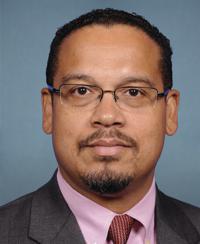
Mr. Speaker, I yield 5 minutes to the gentleman from Minnesota (Mr. Ellison), who is a true Congressional Progressive Caucus champion and a senior member of the Financial Services Committee.
Mr. Speaker, I yield the gentleman from Minnesota an additional 30 seconds.
Mr. Speaker, I yield 2 minutes to the gentlewoman from Ohio (Mrs. Beatty), a member of the Financial Services Committee.
Mr. Speaker, I yield 2 minutes to the gentleman from Georgia (Mr. David Scott), a senior member of the Financial Services Committee.
Mr. Speaker, I yield the gentleman an additional 30 seconds.
Mr. Speaker, I yield 2 minutes to the gentlewoman from Illinois (Ms. Schakowsky), a member of the Progressive Caucus who is always on the side of consumers.
Mr. Speaker, I yield myself such time as I may consume.
First, let me just say that I recognize some of the issues in the way that have been described by the gentleman from New Mexico (Mr. Pearce), and I think that he is on the right track in how we can deal with giving assistance to those who want to own manufactured housing and assistance to those who want to own more than one manufactured house and are looking toward their retirement, and I support that. He has given a new definition to me for balloon payments and how it works in this industry, and I want to work with him to get something done.
What I want to do is separate out the fact that these owners of manufactured housing need some protections in law. We don't want to strip out all these protections for them. They deserve to be treated fairly. If they are going to be charged high interest rates, they deserve to have the protections that everybody else has. I mean, it is not fair that some of us can buy homes at market rate, at 4.25 percent or whatever, and they have to pay 18 percent because they are considered a high risk, and they can't even refinance these homes.
I want to show you some of the advertising from Clayton where they talk about ``Repos Available.'' They have got plenty of them because they repossess these homes. And I just want to say that, in addition to this monopoly of Clayton's, the way that they treat people when they fall behind in their payments, they don't want to do loan modifications--they don't do them, really.
As a matter of fact, they hire these people off the street, basically, who come and harass these homeowners and treat them extremely bad, and they talk to them about the fact that they want this mortgage, they want this money paid, and they will tell them--we have got documentation where they tell them: Don't pay your medical bills. You pay, or we are going to come and repossess this.
I want to tell you, I have the greatest respect for the least of these. Whether you are in the urban area, whether you are in the rural area, you deserve the respect and support from your government. And I want you to know, for those who represent these areas, let's stop being on the side of the people who exploit them, and let's get on the side of the consumers.
In this last election, we heard a lot about the fact that people in small towns and rural areas were upset with their government and felt nobody cared about them. I want them to ask the people who represent them: Whose side are they on?
Mr. Speaker, I reserve the balance of my time.
Mr. Speaker, I reserve the balance of my time.
Mr. Speaker, I yield 2 minutes to the gentleman from New York (Mr. Crowley), the chair of the Democratic Caucus.
Mr. Speaker, will Mr. Hensarling yield that time he promised to yield me so I may yield it to Mr. Crowley?
Mr. Speaker, may I inquire as to how much time I have remaining?
Mr. Speaker, you have heard the debate on this bill, and I think everyone can easily recognize that we, on this side of the aisle, are trying to protect our most vulnerable consumers. People who live in manufactured housing and mobile homes in trailer parks need to be respected and given the same protections as anybody else with a mortgage.
I would say to those who are here supporting a bill that would allow interest rates on these mobile homes and on this manufactured housing to increase with no protections are putting their constituents at risk.
Mr. Speaker, I ask for a big ``no'' vote on this bill, and I yield back the balance of my time.
Mr. Speaker, I have a motion to recommit at the desk.
In its current form, I am.
Mr. Speaker, my amendment is simple. It would prevent bad actors from being able to use the exemptions in the underlying bill and evade the consumer protections in the Truth in Lending Act.
If a lender has committed or engaged in an unfair, deceptive, or abusive act or practice under Federal law in connection with any transaction with a
consumer for a consumer financial product or service; or if they have been convicted of fraud under Federal or State law in connection with a residential mortgage loan or the extension of any loan in connection with a manufactured or modular home, they cannot avail themselves of the bill's decreased scrutiny.
As I have already mentioned, Clayton Homes has nearly a monopolistic grip on manufactured housing lending. In 2010, Vanderbilt Mortgage-- Clayton's lending arm--paid a $2.8 million settlement to home buyers in North Carolina, after the State attorney general and commissioner of banks accused them of fraud for utilizing inaccurate information to obtain loans for consumers and for inflating the prices of manufactured homes.
This is the type of abuse that my amendment seeks to address. Making sure that lenders who have engaged in abusive practices abide by the rules set forth in Dodd-Frank and carried out by the Consumer Bureau is especially important now that the Trump administration is attempting to undermine the independence of the agency.
After the illegal move to install Mick Mulvaney as acting Director and then his quick move to freeze all the hiring, the supervision, and new regulations at the Consumer Bureau, it is clear that abusive financial institutions that simply rip off consumers will have free rein to continue harming them. That includes not only conglomerates like Clayton Homes, but repeat offenders, such as Wells Fargo, an institution that has illegally modified mortgages, charged fraudulent mortgage rates, and steered borrowers into predatory mortgage loans.
American families deserve better.
At an absolute minimum, a lender who has already proven that they cannot be trusted to originate responsible loans should not be awarded with diminished standards, particularly in an industry like manufactured housing, which is typically the only affordable option for many financially vulnerable consumers.
Mr. Speaker, time and time again, my colleagues on the opposite side of the aisle talk about how they are for Main Street America and for the rural communities that Democrats have forgotten. So why is it that they want to allow bad actors to prey upon rural families?
According to the Housing Assistance Council, while manufactured housing only makes up 6 percent of all housing nationally, it makes up 14 to 15 percent in rural and small town communities. We need to be doing more to help rural families, not making it easier for bad actors to just rip them off.
Mr. Speaker, I urge adoption of my amendment, and I yield back the balance of my time.
Mr. Speaker, on that I demand the yeas and nays.
Mr. Speaker, I demand a recorded vote.