Mr. Speaker, I ask unanimous consent that all Members may have 5 legislative days in which to revise and extend their remarks and include extraneous material on the topic of this Special Order. Mr.…
Mr. Speaker, I ask unanimous consent that all Members may have 5 legislative days in which to revise and extend their remarks and include extraneous material on the topic of this Special Order.
Mr. Speaker, I appreciate the opportunity to recognize several distinguished Members of the House for the next hour.
When our constituents show up on the first Tuesday in November to exercise their right of self-governance, they carry with them the dreams of a better Republic.
In 2016, the American people commissioned us with a task. They asked us to fight for jobs. They asked us to fight to fix healthcare. They asked us to roll back regulations. They asked us to secure the free world. They asked us to secure our own borders.
The House of Representatives heard them. We have been busy developing and passing legislation that meaningfully improves the lives of Americans. I commend the Speaker and his leadership in moving these bills through the House.
Unfortunately, much of the House's important work is stalled in the U.S. Senate. It is time the Senate pass important legislation and restore trust in our Republic, because before this week, the House had sent 308 bills to the Senate that are still stalled in that Chamber. This is more than any of the previous four Presidential administrations had stalled at this same time in their first year.
For the record, the House of Representatives in the 115th Congress has also passed more total bills than Houses in any of the last four Presidential administrations at this point. We are at 394 total bills passed.
The dreams of this great Republic cannot be realized by the House alone. The Senate must hear the people and come together around the often bipartisan measures we have been sending to them.
As a way of reminding the Senate, I would like to spend the next hour recognizing Members to discuss some of the important bills passed by the House of Representatives that now sit motionless in the U.S. Senate.
I am thankful for my colleagues who are joining me this evening to talk about the House's successful legislative efforts.
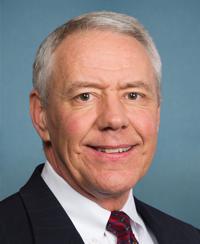
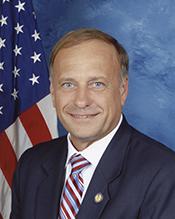
Mr. Speaker, I yield to the gentleman from Iowa (Mr. King) to talk about the No Sanctuary for Criminals Act, H.R. 3003.
Mr. Speaker, I thank the gentleman from Iowa for his thoughts.
Mr. Speaker, when we learned that Planned Parenthood was selling the tissue of unborn children, America was outraged. Since then, the House has redoubled its effort to pass legislation to protect the unborn.
H.R. 7 and H.R. 36 are two important pro-life measures that have passed the House.
H.R. 36, which would prevent the killing of unborn children who are developed enough to feel pain, passed the House by 237 votes. This legislation has been sitting in the Senate for 31 days.
H.R. 7, which prohibits taxpayer funding for abortion, passed the House by 238 votes. This legislation has been sitting in the Senate for 283 days.
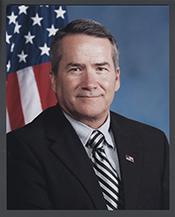
I would like to welcome my friend and colleague from Georgia, Representative Jody Hice, to talk about these two important bills and protecting unborn children. I yield to the gentleman from Georgia.
Mr. Speaker, I thank my friend from Georgia for his passionate defense of life.
Mr. Speaker, Americans should be able to go about their daily lives without the fear of nuclear or radiological attack.
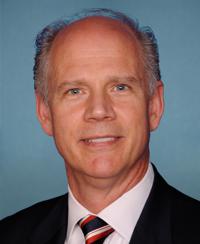
Representative Dan Donovan's Securing the Cities Act helps equip our cities to deal with these dangerous weapons, providing training and detection resources.
On January 31, the House agreed by voice vote to this commonsense legislation. For some reason, the Senate has failed in the last 276 days to move this bill.
I am proud to have the bill's sponsor, as well as m friend and colleague, Dan Donovan, here to share more about this important legislation.
Mr. Speaker, I yield to the gentleman from New York, Mr. Donovan.
Mr. Speaker, I thank the gentleman, a fellow prosecutor and a passionate advocate for these issues, for his remarks.
Mr. Speaker, in the summer of 2015, 32-year-old Kate Steinle was gunned down by an illegal immigrant who had been deported five times already.
Kate's Law, introduced by Chairman Bob Goodlatte, would enhance the penalties on illegal immigrant felons who are deported and then returned unlawfully to the United States.
This legislation passed the House with 257 votes, a bipartisan coalition of Members who simply want to keep violent felons out of the United States. This bill has been stuck in the Senate for 127 days.
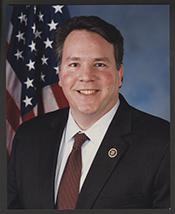
Mr. Speaker, I yield to my friend and colleague, Representative Andy Biggs, to talk about H.R. 3004, Kate's Law, and the importance of securing our Nation from violent illegal felons.
Mr. Speaker, I thank my friend from Arizona for his insight, and I appreciate his comments here tonight.
Mr. Speaker, in 2010, President Obama and Congress passed the Dodd- Frank legislation that attempted to reform Wall Street and end the too- big-to-fail problem. But instead of fixing the financial industry, Dodd-Frank was mainly served to excessively regulate local community banks, making it harder for individuals on Main Street to gain access to credit.
The Financial CHOICE Act, sponsored by Chairman Jeb Hensarling from the Financial Services Committee, replaced Dodd-Frank with a system that holds Wall Street accountable, while also making credit more accessible for Main Street America. The bill passed the House with 233 votes. It has been stuck in the Senate for 148 days.
I yield to the gentleman from West Virginia (Mr. Mooney), my friend and colleague, who sits on the Financial Services Committee, to talk about H.R. 10, the Financial CHOICE Act.
Mr. Speaker, I thank the gentleman from West Virginia for his services on the Financial Services Committee, a demanding committee and a committee that he has certainly shown his brilliance on. So we appreciate his work very much.
Mr. Speaker, with rising premiums and sky-high deductibles, Americans are hurting under ObamaCare. Republicans talk a lot about increasing competition in the healthcare market, and this next bill actually makes that talk a reality.
H.R. 372, the Competitive Health Insurance Reform Act restores Federal antitrust laws to the health insurance industry, ensuring that the market for health insurance remains competitive and affordable for Americans.
On March 22, the House passed this legislation in an overwhelmingly bipartisan fashion, and 416 Members voted for it. It is 226 days later, and the Senate can still not move that legislation through its Chamber.
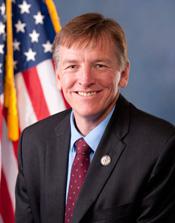
I yield to my friend and colleague, the gentleman from Arizona (Mr. Gosar), to say a few words about this bill that he sponsored.
Mr. Speaker, I thank my friend from Arizona, especially with his healthcare background. I know he has said on many occasions that he is a dentist impersonating a Congressman. Right now I feel the same way as a prosecutor impersonating a Congressman, and I appreciate his friendship and great insight.
Mr. Speaker, I would like to now invite my friend and colleague, Representative Ted Poe, to speak about the Email Privacy Act. This legislation clears up a loophole in the Electronic Communications Privacy Act, or ECPA, that allows the government, after a certain amount of time, to search someone's email if it is held on a third- party server.
The ECPA was passed in 1986. For the past 30 years, our technology has drastically advanced, but our electronic communications policy has been stuck in the 1980s. The Email Privacy Act allows the law to catch up with the tech. This bill simply requires the government to have a warrant if they are going to search your email.
This legislation passed on voice vote. After 269 days, the bill still sits in the Senate Judiciary Committee.
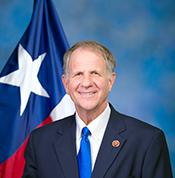
I yield to my friend and colleague, the gentleman from Texas (Mr. Poe), to speak about this important legislation.
Mr. Speaker, I thank the gentleman for his hard work and persistence on this very important issue.
Mr. Speaker, this year, the House completed all 12 appropriations bills. It is the first time in decades that that has happened. I am proud that our Chamber worked hard to return to a regular appropriations process, and I can tell you that there were many late nights spent looking through amendment after amendment both in the Rules Committee hearing room and on the House floor. We thoughtfully considered these bills and offered them for votes on the House floor.
But the Senate hasn't approved any of these 12 bills. Not one. Republicans, month by month, crisis to crisis, were appropriating of the Obama administration era. But now Republicans are in charge, and without Senate action, we are staring down the barrel of another omnibus or continuing resolution. This isn't fair to the American public.
The Founders gave to Congress the power of the purse so that 435 men and women in this Chamber and 100 men and women in the Senate Chamber can spend weeks at a time thoughtfully discerning how to spend taxpayer dollars. That is our job. The House has finished its work for this year, and now we beg the Senate to finish theirs.
The House has done good work. We have listened to our constituents, worked with our stakeholders, and met each other in the middle on many bills. Now we are left just talking about these great bills because they are all stuck in the Senate.
I want to take a minute in closing to remind the Senate why we are here and why the voters offered the Republican Party control of both Chambers and the House.
We are here because Americans want fewer regulations. We are here because Americans want lower healthcare premiums and costs. We are here because Americans want a stronger stance against the world's bullies. We are here because Americans want a respect for the rule of law. We are here because Americans want our veterans to have the best care. We are here because Americans want better access to credit. They want to protect unborn life. We are here because Americans expect us to improve their lives, to work on meaningful legislation that limits government, that stewards taxpayer dollars effectively, and that guards family values.
Americans should know that the House of Representatives has heard them. We have passed bills to address these concerns. Now we turn to the Senate and ask them to do the same.
Mr. Speaker, I yield back the balance of my time.