Mr. Speaker, I yield myself such time as I may consume, and I thank the gentleman from Washington (Mr. Newhouse), my friend, for yielding the customary 30 minutes. (Mr. McGOVERN asked and was given…
Mr. Speaker, I yield myself such time as I may consume, and I thank the gentleman from Washington (Mr. Newhouse), my friend, for yielding the customary 30 minutes.
(Mr. McGOVERN asked and was given permission to revise and extend his remarks.)
Mr. Speaker, I will be submitting a longer statement for the Record, so I will be keeping my floor remarks today fairly brief.
Mr. Speaker, I intend to support this farm bill. This farm bill is not perfect. It is not the bill that I would have written. But this conference report, unlike the farm bill that the House produced, is a good, bipartisan product.
I want to thank Chairman Roberts and Ranking Member Stabenow for their tireless efforts to protect SNAP benefits throughout this process. Because of their work, hungry people across this country will have access to the modest benefits they need to feed their families. I thank as well Chairman Conaway, who recognized the importance of getting a farm bill over the finish line this year.
I especially want to recognize the efforts of Ranking Member Peterson. He is truly an amazing guy who presides over a committee that is very diverse with rural, suburban, and urban Members of Congress. It has conservatives, moderates, and liberals like me. Yet, he has managed to bring us together and not let the perfect be the enemy of the good. Farmers, consumers, and hungry people all across the country owe him a debt of gratitude.
I also want to thank the staff of the minority and the majority who put in endless hours trying to negotiate a compromise. I want to thank Kaitlin Hodgkins, who was my point person on these ag issues, for all of her work.
Mr. Speaker, the issue of hunger and food insecurity has been my primary cause in Congress. I have been proud to work on these issues as a member of the Agriculture Committee and to oversee the SNAP program as ranking member of the Subcommittee on Nutrition.
As members of this House well know, I have been very critical of the legislation that the Republican majority in this House initially produced. It included more than $20 billion in SNAP cuts that would have disproportionately harmed the most vulnerable among us--kids, disabled, and the elderly--the very people who are often left to wonder where they will get their next meal. Many would have been cut off from assistance altogether if the House version actually prevailed.
The Senate, however, took a much different course. Their Agriculture Committee chairman, Senator Roberts, actually consulted with Ranking Member Stabenow. There were no disastrous work requirements, no partisan policies cooked up in some extreme conservative think tank somewhere. It largely continued proven policies that both sides have traditionally agreed on.
Thankfully, the conference committee took the same course. This final bill does not include any SNAP benefits cuts. No one is getting kicked off the rolls, there are no changes to categorical eligibility or severing of the link between SNAP and LIHEAP. And importantly, there are no additional burdensome work requirements.
In fact, this conference report makes a number of administrative improvement and efficiencies, saving $1 billion. These are reinvested into nutrition programs. As a result, more Americans will have access to healthy food and SNAP employment and training programs will be strengthened.
Mr. Speaker, I hope the Secretary of Agriculture and the President are tuning in to this debate. Right now, we have heard rumors that they are trying to work behind the scenes to circumvent the will of this Congress by
instituting more onerous work requirements administratively. Such a move, I believe, will likely lead to legal action.
In the next Congress, when Democrats are in the majority, we will use every legislative tool available to block such a move at every turn. We will not tolerate more of their disrespect and callousness toward the most vulnerable in this country. No more beating up on poor people, period. We will be watching them very closely, and if they do anything--and I mean anything--to increase hunger in America, we will fight them. And that is a promise.
When a Congress as polarized as the 115th can negotiate and arrive at a bipartisan agreement, we should be celebrating it. It is mind- boggling to think there are some on the other end of Pennsylvania Avenue working to overturn it even before it is signed into law.
Lastly, Mr. Speaker, I wanted to be able to vote for this rule today, since I said I was going to support the underlying legislation. But my Republican friends screwed it up again. Tucked inside this rule is language that turns off fast track procedures for all Yemen resolutions through the end of this Congress. That is right. The Republican leadership has declared that the worst humanitarian conflict in the world, where the U.N. has just announced famine is taking place due to the war, is not worth the time and attention of the people's House. This is an offensive abdication of our responsibility. We should not be sitting idly by, waiting for the start of the next Congress, as this conflict rages on. We should be doing something today.
Mr. Speaker, it is because of this Yemen language that I strongly urge my colleagues to vote ``no'' on this rule.
Mr. Speaker, this Farm Bill isn't perfect. It's not the bill that I would have written. But very rarely do we get the chance to vote on professionalism in this body. And this conference report is the product of a professional process that was made better by deliberative, bipartisan debate.
The issue of food insecurity has been my primary cause. As members of the House know well, I have been very critical of the Farm Bill that House Republicans initially produced. It included more than $20 billion in SNAP cuts that would have disproportionately harmed the most vulnerable among us. Kids. The disabled. And the elderly. The very people who are often left to wonder where they'll get their next meal. Many would have been cut off from assistance altogether.
These cuts were put forward to try and hoist an unproved and drastically underfunded state-based workforce bureaucracy experiment on the entire nation. Without any evidence or any study proving its effectiveness, House Republicans wanted to disadvantage poor parents.
The Senate, however, took a much different course. Their Ag Committee chairman, Senator Roberts, actually consulted with their ranking member, Senator Stabenow. There were no disastrous work requirements. No partisan policies cooked up in some extreme conservative think tank somewhere. It largely continued proven policies that both sides have traditionally agreed on.
Thankfully, the conference committee took this same course. This final bill doesn't include devastating SNAP benefit cuts. No one is getting kicked off the rolls. There are no changes to categorical eligibility or severing of the link between SNAP and LIHEAP.
The conference committee rejected the House's onerous child support enforcement proposal, and instead required a study of the current child support option. This study will only be useful in improving policy if USDA includes the experiences of grandparents, victims of domestic violence, and others who may avoid participating in SNAP out of fear that the provision.
This conference report rejects many provisions of the House bill including the state option to privatize SNAP operation. Current law and the administration's standards around merit systems personnel was the appropriate course.
And importantly, there are no additional work requirements.
That's because the existing flexibility that states have to respond to local labor conditions works. And as the conference report notes, we expect states to continue to be able to identify the areas that they wish to include in their areas and to be able to use the labor surplus definition of unemployment for the area having to be twenty percent above the national average for a two-year period. This has worked well for over twenty years. While the flexibly to waive this harsh and unfair rule does not go far enough, we do not wish to make it more restrictive or limiting for states.
While the Farm Bill does clarify that state agency-drafted waivers need the governor's support, this does not require additional steps in the waiver process or interfere with the discretion and authority that a chief executive may have in place. The conference committee does not intend this provision to interfere with state operations by changing the waiver process that states have relied on for twenty years.
This conference report makes a number of administrative improvements and efficiencies, saving a billion dollars. One provision requires state participation in the National Accuracy Clearinghouse, which is a database that allows for checks of participation across state lines. Let me be clear: a data match does not mean an individual is committing fraud by intentionally seeking benefits in more than one state. A match can also mean that a participants first state of residence has failed to act on the individuals' reported move.
The National Accuracy Clearinghouse can play an important role in cleaning up state caseloads. This is important because even if a household requests a closure of the case due to a change in residency, the state may not act on it in a timely manner, and there's little a household can do to prove they tried to close their case. States have a duty to assist individuals in the application process and that means, to me, that a state must help individuals who have recently moved. Without evidence of an individual's intent to defraud the program, state agencies should assume dual enrollment is unintentional.
The conference report sets up a reasonable approach to dealing with matches from external data sources. This provision codifies recent USDA regulations that identify the limited number of circumstances in which a state must follow up with most households to verify information it obtains that is likely to impact eligibility or is not required to be reported by the household. There is no change to current policy.
The conference report also supports and codifies recent efforts by USDA to establish clearer and more consistent quality control measures. I expect USDA to develop clear and consistent review standards but not to change what is meant by an error, nor to change the essential quality control review process.
The conference report, as I mentioned earlier, saves a billion dollars. These savings are directly reinvested into nutrition programs. Because of this, more Americans will have access to healthy food. The investments also help to improve SNAP employment and training programs, reinforcing the requirement that states properly assess clients and assign them to programs appropriate to their needs and skills, and asking states to build programs with a demonstrated impact on improving outcomes.
We addressed a long-standing problem--when a SNAP participant is referred to a training program, and the program determines that the services they provide are not well-matched to the need of the participant. States have long been required to do meaningful assessments in order to properly assign clients. The expanded investment in case management should improve this capacity. And this bill emphasized that reassessment is important as well. If a client fails to be successful in a program it is often the result of an inability to comply versus a refusal to comply with what's needed.
The bill and report make clear that states must reassess and reassign the partisan if appropriate. Participants will no longer lose benefits because states are doing a poor job of assigning them to programs that don't work for them.
The conference report also includes an improvement to ensure all states use a standard homeless shelter allowance. When implemented, this provision must maintain the current flexibly that states have around documenting the household circumstances. People experiencing homelessness may now be able to obtain and track receipts or records of their expenses--that is why a standard allowance is such a useful policy. It allows states to deduct modest shelter costs for homeless individuals who have no way of documenting those costs. In addition, a homeless individual may have costs that exceed the standard allowance and they must be able to claim the higher deduction. The standard allowance does not preempt the individuals' rights to deduct actual costs.
I have long argued that we should be increasing SNAP benefits, which currently average a mere $1.40 per person, per meal, to help hungry Americans afford nutritious food. While the bill unfortunately does not provide any additional increase in SNAP benefits, it does require USDA to revise the Thrifty Food Plan on a regular basis. Prior revisions to the Thrifty Food Plan were done in a way that did not increase costs despite food prices increasing and decreasing time available to prepare many foods at home. This provision allows for
future revisions to increase the cost of the plan to more accurately reflect the reality of food purchasing for most Americans. If the cost of the plan goes up, we expect the Secretary to adjust the plan.
Mr. Speaker, I hope the Secretary of Agriculture and the president are tuning into this debate. Right now, they are reportedly working behind the scenes to circumvent the will of this Congress by instituting more onerous work requirements administratively. Such a move, I believe, will likely lead to legal action. And next Congress when Democrats are in the Majority, we will use every legislative tool available to block such a move at every turn.
Mr. Speaker, I reserve the balance of my time.
Mr. Speaker, I just want to say for the Record, in response to my colleague who just spoke, that the average SNAP recipient is on the benefit for less than a year, and the majority of SNAP recipients who can work, in fact, do work.
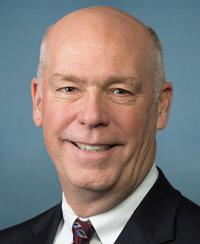
Mr. Speaker, I yield 3 minutes to the gentleman from Wisconsin (Mr. Kind).
Mr. Speaker, I yield the gentleman from Wisconsin an additional 30 seconds.
Mr. Speaker, as I said, some of us who support this farm bill wanted to support the rule as well. But, again, the Republicans thought it was important to basically tuck inside this rule language that turns off fast track for procedures for all Yemen resolutions through the end of this Congress.
This is the worst humanitarian crisis in the world right now, and we don't have time to talk about it. In fact, the Republican leadership takes the extraordinary step of doing everything they can to block debate. It is unconscionable.
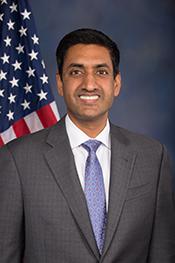
Mr. Speaker, I yield 2 minutes to the gentleman from California (Mr. Khanna), who has been a leader on this issue.
Mr. Speaker, I yield 2 minutes to the gentlewoman from Wisconsin (Ms. Moore), who has been one of the leaders in this Congress, fighting on behalf of the most vulnerable in our country.
Mr. Speaker, I yield myself such time as I may consume.
Mr. Speaker, again, for those of us who support the farm bill, we want to be able to support the rule for consideration of the farm bill; but, unfortunately, the Republican leadership decided to mess things up by inserting language that would prevent this Congress from debating the war in Yemen, one of the worst humanitarian crises in the world.
The gentleman from Washington states: Well, we are going to have a briefing tomorrow. It is not timely.
Well, the bottom line is, in this rule, it not only prohibits us from debating the war in Yemen with regard to the War Powers Resolution, it prohibits us from debating it for the rest of the Congress. What if we learn something tomorrow that prompts action on the other side of the aisle? You basically have said, ``No. No.''
This is ridiculous.
Mr. Speaker, I yield 2 minutes to the gentleman from Texas (Mr. Doggett), the distinguished ranking member of the Ways and Means Subcommittee on Tax Policy.
Mr. Speaker, I yield an additional 1 minute to the gentleman from the State of Texas.
Mr. Speaker, I yield 2 minutes to the gentleman from Vermont (Mr. Welch).
Mr. Speaker, I yield an additional 1 minute to the gentleman from the State of Vermont.
Mr. Speaker, I yield myself as much time as I may consume.
Mr. Speaker, again, I am here to support the farm bill. Unfortunately, my Republican friends made the rule controversial.
But another reason to support the farm bill, in addition to the strong nutrition title for those who are vulnerable here in the United States, the conference report also provides strong support for international food assistance programs, like Food for Peace, Food for Progress in McGovern-Dole, which is a program that I helped write several years ago, which provides food to some of the most vulnerable and poor children in the world in school settings.
So this farm bill, in addition to helping our farmers, in addition to providing food security for people here in the United States, I think, also contributes to our national security around the world. And I point that out so my colleagues understand that this farm bill covers a whole, wide range of areas.
Mr. Speaker, I yield 3 minutes to the gentleman from Oregon (Mr. Blumenauer).
Mr. Speaker, I yield 2 minutes to the gentleman from New York (Mr. Tonko).
I yield the gentleman an additional 30 seconds.
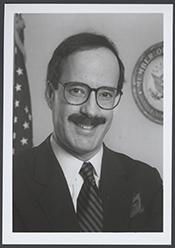
Mr. Speaker, I yield 1 minute to the distinguished gentleman from New York (Mr. Engel), the ranking member of the House Foreign Affairs Committee.
Mr. Speaker, may I inquire how much time is remaining on my side.
Mr. Speaker, I reserve the balance of my time. I think I am the final speaker here, so I will let the Republicans go ahead.
Mr. Speaker, if I can inquire of the gentleman from Washington whether he has any additional speakers.
Mr. Speaker, I know that the gentleman has additional speakers over there. Would it be appropriate to ask unanimous consent to give the gentleman an additional 2 minutes? I have 3\1/2\, but I am going to use that, but could we give them an additional 2 minutes?
Mr. Speaker, I don't want to yield 2 minutes. I ask unanimous consent for the gentleman from Washington (Mr. Newhouse) to have an additional 2 minutes. If there is no objection, is that----
Mr. Speaker, I yield 1 minute to the gentleman from Washington (Mr. Newhouse) to control.
Mr. Speaker, does the gentleman have any more speakers?
Mr. Speaker, do I have 2\1/2\ minutes remaining?
Mr. Speaker, I yield myself such time as I might consume.
Mr. Speaker, if we defeat the previous question, I will offer an amendment to the rule to bring up H.R. 7264, a continuing resolution to fund the remainder of the government and extend the National Flood Insurance Program, the Violence Against Women Act, and the Temporary Assistance for Needy Families Act until September 30.
I ask unanimous consent to insert the text of my amendment in the Record, along with extraneous material, immediately prior to the vote.
Mr. Speaker, I hope people will vote ``no'' on the previous question so we can debate this and vote on keeping our government open. But I would just close by again saying to my colleagues that this farm bill is not a great bill, but it is a good bill. It is the result of bipartisan negotiations at a conference committee that produced something that I think both Democrats and Republicans can come together and support.
I am supporting this bill because it is good on the nutrition title. As you know, I have spent a lot of time in this Chamber talking about the issues of hunger and food insecurity in this country.
There are 40 million Americans who don't have enough to eat, who are hungry, and this is in the richest and most powerful country in the world. I am ashamed of that fact. Every Member of this House should be ashamed of that fact.
Hunger is a political condition. We can fix it, if we had the political will.
This farm bill is not as robust as I would like it to be under the nutrition title, but it does no harm. It doesn't increase hunger. It doesn't throw people off of SNAP. It doesn't make hunger worse in this country. It is deserving of bipartisan support, so I hope all of my Democratic colleagues will vote in favor of this farm bill.
Mr. Speaker, again, I want to thank all those who came together to construct this compromise. It is a much, much better product than what came out of this House, and this is a vote that we can be proud of. I hope that everybody will support it.
Finally, I regretfully have to say I urge my colleagues to vote against the rule, because the Republicans couldn't help themselves and had to insert this Yemen issue into this rule.
This issue has been going on for years. This is not a new phenomenon, what is happening in Yemen. It is a tragedy that has gone on for years. We know it is happening. We know it is long time past since we should act.
Mr. Speaker, we should defeat the rule, have another rule that is just on the farm bill, and we ought to be debating this issue of Yemen.
Mr. Speaker, vote ``no'' on the previous question, vote ``no'' on the rule, and vote ``yes'' on the farm bill.
Mr. Speaker, I yield back the balance of my time.
Mr. Speaker, on that I demand the yeas and nays.
Mr. Speaker, I demand a recorded vote.