Mr. Speaker, I yield myself such time as I may consume, and I thank the gentleman for yielding me the customary 30 minutes. Mr. Speaker, I rise in opposition to the rule and the underlying…
Mr. Speaker, I yield myself such time as I may consume, and I thank the gentleman for yielding me the customary 30 minutes.
Mr. Speaker, I rise in opposition to the rule and the underlying legislation. First, when the gentleman from Georgia said there were no amendments brought forward on this in the Rules Committee, that is partial truth but not the entire truth.
The entire truth is, when we have a process whereby Members believe that there might be an amendment process, there is something called a call for amendments which is issued. Often our chair, Mr. Sessions, and my friend from Georgia has heard Mr. Sessions come down to the floor and say: We are calling for amendments on this bill. Submit them. The Rules Committee will consider them and allow some of them to advance to the floor. At least you know you have a fair shot.
In this particular case, there was no call for amendments issued, which means, yes, Members could have spun their wheels, and sometimes you feel like a hamster doing that, just running around and not moving anywhere in one of those circles. And if we thought there was any realistic hope that amendments could be included, I, myself, would have been happy to submit one, as would many of my colleagues.
Chairman Smith actually requested a closed rule on this. So, again, the chairman of the committee and the Rules Committee gave every indication that we are not allowing any amendments to this bill; and that is what discourages Members from going through the work of submitting an amendment if they have a good idea what the outcome is already going to be.
So this is a closed rule. This is an antiscience bill. It is another example of how we go around the ability of Members to improve bills and, instead, work in a partisan, smoky, backroom manner where this bill emerges fully formed. The chair of the committee of jurisdiction himself didn't want any amendments or any changes to this rule, and the Rules Committee never called for those amendments.
Now, if the goal of this bill is somehow to increase government transparency, why don't we start with the lawmaking process and have an open rule that allows Democrats and Republicans to improve a bill and offer their best ideas forward? And if they are good ideas, they will be incorporated into the bill. If they are bad ideas and can't command a majority of this body, they will be defeated.
But, unfortunately, these partisan tactics that were seen trying to ram through legislation last week that failed when the Speaker and the President refused to work across the aisle with us on healthcare reform and now on improving the process at the EPA, instead of working with us to improve science, they are seeking to undermine the integrity of the important scientific work done at the Environmental Protection Agency and bury the Environmental Protection Agency in red tape.
The underlying legislation that this rule talks about has a lot of problems, Mr. Speaker, and so many problems, in fact, I won't even be able to talk about them all during my limited time for debate here. Hopefully they will be able to cover some more during the debate on the bill.
The first issue I want to address that is highly problematic with this bill, and it is something that is so important to the American people--liberal, conservative, and moderate--and that is the issue of privacy.
This bill would undermine the privacy of American families in a number of ways. What it would do is prohibit the Environmental Protection Agency, an agency that exists to protect our health, from taking any action unless it is based on data that is fully available to the public. Now, that sounds good, ``fully available to the public.'' But what does that mean?
You see, normally the EPA has relied on peer-reviewed, scientifically valid research to inform its actions. Now that is something that the process of science across the world informs. It is a very important, well-founded process that respects the efforts of scientists everywhere and the diligence of a peer-reviewed process.
Much of these bodies of work utilize personal health information and confidential data which, currently, are legally protected from public disclosure. The EPA identifies the academic papers that it uses in the Federal Register so we have that transparency, but it doesn't release the legally protected private data--participants in studies, health of people--to the general public nor is there any scientific value to that personal information.
The value is in the studies, which are done scientifically and are already made public. This bill would force the EPA to either ignore these valuable studies because they utilize private
data or violate Federal law by sharing confidential patient information with the general public. We are talking about everything ranging from Social Security numbers, to whether you got cancer from something you were drinking as a child, to our most intimate health or lifestyle issues that are researched by the agency.
The majority here, the Republicans, are trying to include a provision in the bill that allows personally identifiable information to be redacted prior to the EPA making the information available. I am sure my colleague from Georgia will cite that, but that is woefully inefficient because it has a loophole in that very provision that basically negates that provision in another section by allowing the EPA administrator to allow any person who signs a confidentiality agreement to have access to all the redacted data.
So, again, basically, at the whim of the administrator, they can allow companies and people in there--the information can be put in front of people who have access to it, to use it in any way they want, and that is highly personal information.
Again, whether it is under the coverage of a confidentiality agreement or not, it is shown with unknown partners. This is not the Federal agency itself. This is perhaps even the company that caused the pollution that wants to come in and look at it or just various Americans with prurient interests who want to know intimate health details, and there is effectively no protection for that. It is entirely at the whim of the administrator of the Environmental Protection Agency.
So that is an enormous setback for the privacy of American families and a woefully insufficient privacy protection with a loophole that is big enough to drive a truck through. There is not even a numerical limit on the amount of people or corporations that would be allowed access of that data. There could be a blanket permission from the administrator allowing thousands, tens of thousands of people, again, to see the individually identifiable data, including your Social Security Number, including your health details or medical records, including things that affect property value and affect health.
Another major issue with this bill, major fault, is it actually undermines the goal of the Agency itself. The Environmental Protection Agency, which has the congressional mandate to keep our air and water clean, to protect our health, this bill actually does the opposite by burying the Agency under a mountain of red tape and bureaucracy.
This bill removes sound, scientific, objective decisionmaking and replaces it with ridiculous amounts of red tape, adding to the process of regulations, adding to the process of rules, requiring the Environmental Protection Agency to jump through additional bureaucratic hoops to use certain information, and making their entire goal of fulfilling their mission less efficient than if this bill were not the law.
The Environmental Protection Agency already uses a peer-reviewed scientific process. They publish in the Federal Register the reference of the works that they are basing their opinions on, just as the rest of America's scientific community does. This bill undermines the scientific process, is unscientific, and is opposed by so many scientific advocacy organizations, including opposed by the Union of Concerned Scientists who are strongly opposed to this legislation.
Now, on top of the red tape and antiscience aspects of the bill, this would also cost the government $1 billion of EPA funds; that is according to analysis of a very similar bill last Congress. These are funds that would be diverted away from protecting our health and safety, which is what they are doing now, toward creating more red tape and bureaucracy for the very agency that the American people entrust with the goal of keeping our air and water clean and the American people healthy.
Look, we all know what this bill is. It is a thinly veiled attack on science, part of the antiscience agenda that we are seeing from the Republican Party.
The budget that the President offered earlier this month cuts science funding to the bone. Enormous setbacks in the very research into lifesaving science in the future that would help improve our quality of life and duration of life and help our economy boom are being devastated under the President's budgets.
Scientific research creates billions of dollars of economic impact and innovation in States like mine, Colorado, and every other State. Science helps keep us healthy. It keeps crops alive and productive. It keeps our businesses open and keeps America as a global leader in innovation.
I also want to take a moment to highlight that, while this bill is being heard on the floor today, President Trump is signing an executive order that effectively repeals all of the work that the Environmental Protection Agency and other Federal agencies have done in the last 8 years to protect our planet from the impacts of climate change.
Unfortunately, while we focus on a bill that forces scientists to not use the best science available, the President has signed an executive order that will essentially begin the repeal process of the Clean Power Plan. The Clean Power Plan is a basic requirement for States to bring their emissions down to a sustainable level to protect Americans' health, to reduce the amount of pollution in our air and water, and to reduce the human impact on climate change.
The executive order also, unfortunately, undermines some of the commonsense protections we have with regard to fracking, something that is near and dear to my constituents and people in Colorado, as an area that is impacted by extraction activities.
This repeal, for example, would allow oil and gas companies to hide the chemicals that they use when producing oil and natural gas. Picture that: fracking wells near homes and schools who would no longer have to report what chemicals could potentially be leaking into drinking water or groundwater. How can that possibly further our goal to protect the health and welfare of the American people?
So, at the same time, we have this legislation undermining the scientific process of the Environmental Protection Agency and burying the Environmental Protection Agency under red tape, coordinated the same week with the President's disastrous executive order that will hurt the health of the American people and, ultimately, cost lives.
These are just another step in the undermining of science and the work to improve and protect the health of the people of our country. The Environmental Protection Agency relies on the best science available when developing new standards, and they are fully transparent about posting those scientific studies.
However, because many of the studies that this bill requires would impact legally protected private data, like personal medical records, to reach their findings, the Environmental Protection Agency could even be prohibited from considering that research.
This ridiculous restriction would force the EPA to ignore a lot of relevant information because of the desire of the researchers and the legal imperative of the researchers to protect the private data of the participants, ultimately leading to policies that are ineffective and are not based on sound facts or science.
Mr. Speaker, facts exist. Science and the pursuit of truth is an incredibly important human endeavor, and we can't afford to disregard that quest for truth in the name of a fiction-based reality that we increasingly seem to be headed toward as a nation.
Without sound and strong science, America will fall behind in the world. Americans will--our lifespans will be of lower quality and lower duration, and our economy will be hurt as we cede our leadership role to more forward-looking countries willing to invest in the future.
If this bill had been in place over the last few decades, I am pretty sure that the cloud of smog over Denver, Colorado, would probably still be there. Rivers and lakes across this country would suffer from pollution in a significantly worse way, and that is not the future that the American people want.
If the EPA is prevented from using the best available peer-reviewed research data on air quality, asthma will be causing more attacks and, yes, even deaths of children across our country.
Let's see this legislation for what it is--an attack on science, a giveaway to corporations who benefit from pollution, who don't like the fact that the EPA is using sound silence, who want to create and live in their own fictional
reality, where the externalities of their actions somehow don't matter.
We need the truth. The American people deserve the truth. We deserve the benefit of the outcome of the process of objective science, and this bill undermines that by burying the Environmental Protection Agency under immense red tape, while preventing them from using some of the very peer-reviewed studies that would lead to the very best decisionmaking possible to protect the health of the American people.
Mr. Speaker, I reserve the balance of my time.
Mr. Speaker, I yield myself such time as I may consume.
Mr. Speaker, I have some scoring from the Congressional Budget Office, dated March 11, 2015, that I include into the Record.
H.R. 1030--Secret Science Reform Act of 2015
As ordered reported by the House Committee on Science, Space, and
Technology on March 3, 2015
This is based on H.R. 1030 from last session, the Secret Science Reform Act of 2015, effectively the same operating provisions as this new bill. If there are any cost-saving elements in this new bill that weren't in H.R. 1030, I would encourage my colleague from Georgia to let us know because we are voting without scoring or costs on the newest version of this legislation. The previous version of this legislation, as I mentioned earlier, would cost $250 million annually over the next several years, $1 billion to implement, and that is the scoring from the nonpartisan Congressional Budget Office whose director was appointed by the Republicans on a substantially similar bill.
Mr. Speaker, we are deeply concerned by reports from our intelligence community regarding Russian interference in last year's election. Even more troubling is FBI Director Comey's sworn testimony that the FBI is now investigating the possibility of collusion between members of President Trump's campaign team and Russia.
Mr. Speaker, the legitimacy of our electoral system is at stake; and, frankly, it is time that we rise above partisanship and that we get our job done and get to the bottom of this.
Unfortunately, recent actions by the House Intelligence Committee chairman have left many Members of both sides of the aisle convinced and the American public convinced that the committee is unable to conduct an impartial investigation of this critical matter of national security.
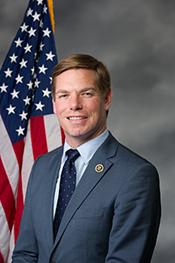
Mr. Speaker, if we defeat the previous question, I will offer up an amendment to the rule to bring up Representative Swalwell's and Representative Cummings' bill which would create a bipartisan commission to investigate Russian interference in the 2016 election.
Mr. Speaker, I ask unanimous consent to insert the text of my amendment in the Record, along with extraneous material, immediately prior to the vote on the previous question.
Mr. Speaker, I yield 5 minutes to the gentleman from California (Mr. Swalwell), a member of the Intelligence Committee, to discuss our proposal.
Mr. Speaker, I yield an additional 1 minute to the gentleman from California.
Mr. Speaker, I yield myself such time as I may consume.
Mr. Speaker, the EPA protecting our quality of life, our air, and our water has nothing to do with Heaven or God. It is based on science. Individual Americans like Mr. Gohmert and myself have our own faith traditions. I don't think there is anybody in the country whose faith tradition is to worship the EPA.
We have created the EPA for a purpose: to protect the health of the American people and protect our air and water. There are people alive today and people who are healthier today because of the work of the EPA. The converse of that, without the Environmental Protection Agency, some of us wouldn't even be here and others of us would be sickly.
It really doesn't make any sense to talk about people worshipping the EPA. We respect the scientific work of the EPA, and maybe this confusion between faith and science is what is leading to the undermining of the scientific aspects that the EPA reaches their conclusions on.
Mr. Speaker, I include in the Record a letter that shows the strong opposition from those who advocate for our health against this bill. Alliance of Nurses, American Lung Association, American Public Health Association, National Medical Association, Asthma and Allergy Foundation of America, and others have all signed a letter in opposition to this bill because this bill threatens the health of the American people.
March 27, 2017.
Dear Representative: The undersigned health and medical
organizations are writing to express our opposition to the
EPA Science Advisory Board Reform Act of 2017 and the Honest
and Open New EPA Science Treatment Act of 2017. Our
organizations are dedicated to saving lives and improving
public health.
Science is the bedrock of sound medical and public health
decision-making. The best science undergirds everything our
organizations do to improve health. Under the Clean Air Act,
EPA has long implemented a transparent and open process for
seeking advice from the medical and scientific community on
standards and measures to meet those standards. Both of these
bills would restrict the input of scientific experts in the
review of complex issues and add undue industry influence
into EPA's decision-making process.
As written, the EPA Science Advisory Board Reform Act would
make unneeded and unproductive changes that would:
Restrict the ability of scientists to speak on issues that
include their own expertise;
Block scientists who receive any EPA grants from serving on
the EPA Scientific Advisory Board, despite their having the
expertise and conducted relevant research that earned them
these highly competitive grants;
Prevent the EPA Scientific Advisory Board from making
policy recommendations, even though EPA administrators have
regularly sought their advice in the past;
Add a notice and comment component to all parts of the EPA
Scientific Advisory Board actions, a burdensome and
unnecessary requirement since their reviews of major issues
already include public notice and comment; and
Reallocate membership requirements to increase the
influence of industry representatives on the scientific
advisory panels.
In short, EPA Science Advisory Board Reform Act would limit
the voice of scientists, restrict the ability of the Board to
respond to important questions, and increase the influence of
industry in shaping EPA policy. This is not in the best
interest of the American public.
We also have concerns with the HONEST Act. This legislation
would limit the kinds of scientific data EPA can use as it
develops policy to protect the American public from
environmental exposures and permit violation of patient
confidentiality. If enacted, the legislation would:
Allow the EPA administrator to release confidential patient
information to third parties, including industry;
Bolster industry's flawed arguments to discredit research
that documents the adverse health effects of environmental
pollution; and
Impose new standards for the publication and distribution
of scientific research that go beyond the robust, existing
requirements of many scientific journals.
Science, developed by the respected men and women
scientists at colleges and universities across the United
States, has always been the foundation of the nation's
environmental policy. EPA's science-based decision-making
process has saved lives and led to dramatic improvements in
the quality of the air we breathe, the water we drink and the
earth we share. All Americans have benefited from the
research-based scientific advice that scientists have
provided to EPA.
Congress should adopt policy that fortifies our scientists,
not bills that undermine the scientific integrity of EPA's
decision-making or give polluters a disproportionate voice in
EPA's policy-setting process.
We strongly urge you to oppose these bills.
Sincerely,
Katie Huffling, RN, CNM,
Director, Alliance of Nurses for Healthy Environments.
Harold P. Wimmer,
National President and CEO, American Lung Association.
Georges C. Benjamin, MD,
Executive Director, American Public Health Association.
Stephen C. Crane, Ph.D., MPH,
Executive Director, American Thoracic Society.
Cary Sennett, MD, Ph.D.,
Last Congress, we considered a bill called the Secret Science Act, which was nearly identical to this bill. That was a bill that I submitted was at a cost of billion dollars. If the gentleman from Georgia has any evidence that this bill will cost less, I encourage him to bring it forward.
This bill, frankly, would force the EPA to be dishonest, to not use the best available science, and threaten the privacy of the American people.
Our goal should be to help the agencies that we charge with protecting our health to use the best possible science to do the best possible job that they can. We should not be throwing up roadblocks and red tape and bureaucratic mazes that hurt the quality of work and the science that we base our protections on.
We need to protect American lives from things like dirty air, dirty water, and pollution. We should protect the privacy of all Americans, but this bill doesn't protect the privacy of Americans. It undermines the goal of the Environmental Protection Agency.
My colleague, Mr. Swalwell, brought forward a very important motion. When we defeat the previous question, we have a motion to create a bipartisan commission to investigate Russian interference in the 2016 election.
That is what I hear about from my constituents. I haven't heard from any constituents that say: We want our personal data to be revealed by the Environmental Protection Agency or we want to stop them from citing scientific papers.
That is simply not on the minds of the American people.
What is on the minds of the American people is that we need a full accounting for the Russian interference in the 2016 election, which is why we have a bill to create a bipartisan commission to investigate that Russian interference in a manner that has credibility with the American people, that can end this increasingly bizarre spy novel that seems to be unfolding in this city that we are meeting in now, and replace it with investigations and facts and a full accounting for the American people as to what happened and who was involved.
Mr. Speaker, I reserve the balance of my time.
Mr. Speaker, I yield myself the balance of my time.
Mr. Speaker, I want to inquire if the gentleman from Georgia has any information as to why the new bill would cost any different amount than the prior version of the bill from the last Congress that was scored?
I yield to the gentleman from Georgia.
Reclaiming my time, what the bill essentially does is two things in this regard. One, it will foist an unfunded mandate onto those who are conducting the research to go through the effort themselves of releasing the data. But more perniciously, it will prevent data and scientific studies that there are legal protections from even being looked at by the Environmental Protection Agency. They won't even be able to consider that data.
I think it is important that we get back to the topics that the American people care about. I hope that we can move forward with Representatives Swalwell's and Cummings' bill to create a bipartisan commission to investigate the Russian influence in the 2016 election rather than attack and undermine science, attack and undermine privacy, and attack and undermine the American people.
This bill undermines our privacy protections and opens the door for more Americans to get sick and hurt by pollution in our air and water. I hope that we can stand up against that.
Mr. Speaker, I ask Members to vote ``no'' on this bill and vote ``no'' on this rule.
Mr. Speaker, I yield back the balance of my time.
Mr. Speaker, on that I demand the yeas and nays.