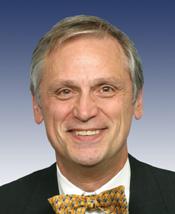
Mr. Speaker, I want to thank the gentleman from Oklahoma (Mr. Cole) for yielding me the customary 30 minutes, and I yield myself such time as I may consume. (Mr. McGOVERN asked and was given…
Mr. Speaker, I want to thank the gentleman from Oklahoma (Mr. Cole) for yielding me the customary 30 minutes, and I yield myself such time as I may consume.
(Mr. McGOVERN asked and was given permission to revise and extend his remarks.)
Mr. Speaker, it is hard to know where to begin, because this process is so lousy, but I want to rise today in opposition to this rule and the so-called underlying bill, H.R. 3219, the GOP fiscal year 2018 so-called security minibus appropriations bill.
This rule makes in order 72 amendments for debate on the House floor, blocking 100 amendments. It continues the terrible closed process that this Republican majority has used since they took control of the House in 2011.
When Speaker Ryan took the gavel, he promised a fair and open process with regular order where both the majority and the minority would have the opportunity to have their voices heard, and I am happy to provide the full text of that speech to my Republican friends.
I guess we were misinformed, because our collective voices are repeatedly silenced in this Chamber, not just Democrats, but Republicans as well.
Speaker Ryan's broken promise was clearly on display last week when he waited until the dead of night to strip out of the Defense Appropriations bill a provision requiring Congress to debate the issue of the 2001 AUMF. That provision was adopted by the full House Appropriations Committee on a bipartisan basis as an amendment offered by our respected colleague, Representative Barbara Lee. The bipartisan Lee amendment would sunset the outdated 2001 AUMF and give Congress 8 months to enact a new one, ensuring that Congress finally debate and vote on the many wars in which the United States is engaged.
If the Republican leadership doesn't like the lead provision, then the Rules Committee could have made in order an amendment to strike it from the bill. That would have given Members the chance to vote up or down either to keep or remove the provision. That would have been regular order, that would have been fair, that would have been open, but, instead, House Republican leadership took it upon themselves to replace Ms. Lee's provision with alternative language calling upon the administration to produce a report.
Republicans on the Rules Committee defended this action, saying that the Lee amendment legislated on an appropriations bill. The trouble with that logic, Mr. Speaker, is that the language that replaced Ms. Lee's amendment also legislates on an appropriations bill. That is right. House Republicans put in an amendment that violates the same rule.
If this leadership is going to silence Members on flimsy procedural grounds, they probably shouldn't break those same rules on the same day.
Even more shameful, the Republican leadership's continued actions to block every effort and refuse to allow Congress to debate and vote on these wars, I believe, is an insult to the men and women in uniform, who put their lives on the line every day to protect our country, and to their families.
Americans deserve better, and the bipartisan voices calling for action will not be silenced, but this is just one example of regular order being abandoned in order to advance an extreme agenda.
Tomorrow, House Republicans will use another legislative trick, the self-executing rule, to stick taxpayers with a $1.6 billion bill for President Trump's reckless and ineffective border wall with Mexico.
Now, instead of bringing that measure to the floor for an up-or-down vote in an open process where all voices could be heard, the Republican leadership is sticking this provision into the rule so that as soon as the rule is approved, the measure will automatically become part of the bill.
President Trump, as you may recall, promised the American people that he would make Mexico pay for this wall. He repeated it over and over and over again during the campaign. But now, House Republicans want to take $1.6 billion of hard-earned tax dollars from millions of Americans to fund it.
Let me point out, Mr. Speaker, this $1.6 billion is only targeted at 74 miles of the border: two small tracts in Texas and one small tract in California.
And how did this provision on the border wall make its way into this minibus of appropriations bills? It was literally lifted out of the Homeland Security appropriations bill and its few sentences air-dropped into this package.
Where is the rest of the Homeland Security bill, Mr. Speaker? Sitting in limbo, that is where it is.
I guess there weren't any other national security priorities in the Homeland Security Appropriations bill that merited the very special treatment that the 74 miles of this lousy wall seem to be getting. I see that the only priority that matters for my Republican friends when it comes to the security of our Nation is 74 miles of wall costing $1.6 billion.
Mr. Speaker, this is a disgrace. This is just a disgrace.
And then, because it will be part of a self-executing rule, Republicans won't even have to vote on this Republican priority. They will just vote on the rule and, bingo, it is all taken care of. There will be no separate vote on this. You get the funding for the wall, but nothing on record that says you voted to waste $1.6 billion on 74 miles of border wall. Republicans can go home and say they delivered on the wall. I guess they better hope that their constituents don't ask them to show them the vote.
But as I said, Mr. Speaker, this is a disgrace on funding. It is a disgrace on funding priorities, and it is a real disgrace on process. I mean, we should be ashamed of the process in which this bill is being brought to the floor.
I wish I could say that I am surprised by all of this, but the fact is that House Republicans have been doing this kind of thing for quite some time now. This week, you may have read about this: Kellyanne Conway claimed that even if President Trump says something that isn't true, it is not a lie if he believes it.
Well, you can't make this stuff up. Well, I take that back. I guess you can make everything up.
It seems clear that this warped logic has infected this Chamber, with the House Republican leadership employing this same kind of thinking and underhanded methods on a regular basis. They defend a process that is indefensible, plain and simple.
This is a rigged process. Let's be honest. This is a rigged process.
Is this really how we want Congress and this House to conduct the business of the American people? Is this how we will conduct the appropriations process not only now, but in the future: no debate for individual appropriations bills and severely limiting amendments overall? no regular order and a subversion the committee process?
Soon, maybe there will be no amendments on appropriations bills at all. This is a slippery slope, and I urge my Republican colleagues to carefully consider the dangerous road that we are going down.
Americans deserve better from their leaders in Congress, especially when it comes to deciding how the American people's hard-earned tax dollars will be spent. Republicans talk about fiscal responsibility, but what I see here today is another reckless and bloated budget proposal that empties the Treasury vaults for wasteful military spending when we have so many critical priorities here at home that are in desperate need of funding.
Now, apparently, House Republicans have no problem with spending $1.6 billion on President Trump's border wall with Mexico, but when it comes to investing in our own communities here at home, they can't be bothered.
How about investing in our kids' schools? Why aren't we doing more to ensure that our young people have the resources and the support they need to get additional education? Make college more affordable, for example. Wouldn't that be a radical idea?
Republicans love to talk about personal responsibility and the need for Americans to work. Why aren't we investing $1.6 billion more in job training programs and finding ways to increase wages?
We should be making sure that more families have access to good jobs and that no one in America who works full-time has to raise their family in poverty.
President Trump had what feels like countless infrastructure weeks, but we have yet to see Republicans propose any legislation to make good on their promise to finally invest in America's infrastructure and finally fix our Nation's crumbling roads and bridges.
Instead of making any of these policies the top priorities that they should be in this Congress, Republicans are just offering more of the same: empty rhetoric and broken promises.
Now, to be clear, the legislation that we will consider today, H.R. 3219, does fund some important priorities. Our national security must be our number one priority with policies that are both strong and smart. I strongly support our men and women in uniform and believe that Congress should provide our troops everything that they need. Yet Republicans have deliberately created a security bill that raises serious concerns.
Let's recap for a second, Mr. Speaker. The final version of this bill will include $1.6 billion for the President's useless and immoral border wall. It strips out the bipartisan Lee amendment that would have ensured Congress finally grapples with the wars that we are sending our troops to fight instead of continuing to write the White House a series of blank checks. And to top it all off, Mr. Speaker, the four bills contained in H.R. 3219 blow through the Budget Control Act cap on defense spending by $72 billion, threatening a 13 percent sequester cut to all defense accounts.
While obliterating the defense spending cap, House Republicans have proposed reducing nondefense spending to $5 billion below its cap. It is legislative malpractice that Republicans have ignored this reality and have done nothing to work with Democrats to write a new bipartisan budget agreement to raise the Budget Control Act caps for both defense and nondefense spending. Republicans are setting us up for a train wreck, a government shutdown, or worse.
This is not good, Mr. Speaker. This should concern every single Member of this Chamber, both Democrat and Republican. And so I urge my colleagues to reject this rule and finally take a stand against this process, which is rigged and closed and restrictive, and to oppose the underlying bill.
I reserve the balance of my time.
Mr. Speaker, I yield myself such time as I may consume.
Let me just remind my colleagues here that we are debating the rule, and this is about process.
The gentleman from Oklahoma earlier talked about waivers and that the Lee AUMF language would be subject to a point of order. Well, the language that my Republican friends replaced the Lee amendment with is protected by a waiver of all points of order because it was also legislating on an appropriations bill. As I pointed out last night in the Rules Committee, you made in order amendment No. 19 by Mr. Griffith, which violates section 306 of the Congressional Budget Act, and you provided a waiver for that.
My Republican friends routinely grant waivers in bills that come before the Rules Committee. The problem is that the waivers are only granted for your amendments and never for our amendments, and that is just not fair and that is not right.
So if your policy is going to be we are going to grant no waivers, then it ought to apply not just to Democrats; it ought to apply to Republicans, too. But there is this double standard here, and voices that you disagree with always seem to end up being cut off.
So, Mr. Speaker, I just point that out because this process and the reason why so many of us are angry about this process is it is so blatantly unfair.
The gentleman from Alabama talked about how we all want to commit to upholding the national security of this Nation. I agree with him, but I would say we are not doing our jobs if this floor is not a place where we can have a free-flowing debate, where Members can offer different ideas and be able to have a vote on them. I would just say, with all due respect to my Republican colleagues, you do not have a monopoly on all good ideas.
You know, we have a couple of good ideas, too, and maybe some of your Members agree with that as well.
The other thing we are going to object to is, again, the way my Republican friends self-execute controversial measures like this border wall at $1.6 billion, basically denying an up-or-down vote. Maybe it is to protect your Members in swing districts; I have no idea. Maybe you don't think you have the votes to do it. But if you don't have the votes to do it, it ought not to be in this bill. That is just, to me, a sound way to approach legislating. All the normal rules seem to be thrown out the window here.
Mr. Speaker, I yield 2 minutes to the gentlewoman from Minnesota (Ms.
McCollum), the distinguished ranking member of the Appropriations Subcommittee on Interior, Environment, and Related Agencies.
Mr. Speaker, I yield 3 minutes to the gentleman from Oregon (Mr. Blumenauer).
Mr. Speaker, I yield 30 seconds to the gentleman from Oregon (Mr. Blumenauer) so he may respond.
Mr. Speaker, I yield myself such time as I may consume.
Mr. Speaker, when Speaker Ryan took the gavel, he promised to have ``a process that is more open, more inclusive, more deliberative, and more participatory.''
My friends like to highlight a number of amendments made in order today as if this is a good process. I would remind you, Mr. Speaker, that, rather than taking up one issue at a time, this is a rule for three appropriations bills. I say to my friends, you guys are worse than you used to be.
There are 10 amendments allowed for the Legislative Branch. Last year you made in order 13. We have fewer amendments this year.
For the Military Construction and Veterans Affairs bill, there are 16 amendments. Just a short time ago, in fiscal year 2016, we had a modified open rule. This rule is clearly much worse.
We have the same situation with the Energy and Water bill. We have a structured rule this year, while we had a modified open rule just 2 years ago. The process in the House is getting worse.
For the first time in history, we have a Speaker of the House who has never allowed a truly open rule. Now, we were not perfect, Mr. Speaker, but Speaker Pelosi allowed the Rules Committee to report open rules. Speaker Boehner allowed open rules. Every Speaker in modern history allowed some open rules, but we don't even get modified open rules anymore.
Mr. Speaker, we are seeing an alarming rise in the number of self- executing rules, what Republicans used to call ``deem and pass rules.'' Now, let me explain what that is.
In his book, ``Young Guns: A New Generation of Conservative Leaders,'' our dear Speaker, Mr. Ryan, described the self-execution process. This is on page 98, if you are following along. But he called this process, ``legislative trickery to enact legislation that does not have majority backing.''
Now, sometime today we are going to go back up to the Rules Committee to do a little legislative trickery to fund the President's border wall.
News flash: Mexico is not paying for the wall. The language that the Speaker intends to deem passed without a vote uses good old-fashioned American greenbacks to pay for Trump's wall. The American taxpayers are going to be stuck with this bill for this ridiculous wall.
Mr. Speaker, this process is not good; it is not a better way; it is rotten; and the rule the majority will put on this floor tomorrow will be even worse. We are jamming through these important appropriation bills together, limiting debate, and moving further away from regular order.
We don't need this rule, and we don't need a self-executing rule tomorrow. Now, if we defeat the previous question on this rule, I will offer an amendment to open up this process and consider the Department of Defense, Military Construction and Veterans Affairs, and Energy and Water Appropriation bills each under an open rule.
Mr. Speaker, I ask unanimous consent to insert the text of my amendment in the Record, along with extraneous material, immediately prior to the vote on the previous question.
Mr. Speaker, I yield myself such time as I may consume.
Let me just conclude with this, Mr. Speaker: Members have a chance to vote for an open amendment process on these appropriations bills. That is what this PQ vote is about. Republicans will not control this House forever, and I hope that no Member who votes against this open rule amendment today will have the audacity to criticize any future Democratic majorities.
If they do, Mr. Speaker, I assure you, we will remind them of this vote.
To discuss our proposal, I yield 2 minutes to the gentlewoman from California (Ms. Lofgren).
Mr. Speaker, I include in the Record a letter signed by a number of civil rights groups, education groups, environmental groups, and women's groups in opposition to this minibus.
July 25, 2017.
Re Oppose H.R. 3219 Security Minibus--Vote No on Border wall.
House of Representatives,
Washington, DC.
Dear Representative: On behalf of our coalition of almost
90 environmental, faith, immigration, and civil rights
organizations, we are writing to strongly urge you to oppose
funding for the continued construction of a border wall along
the U.S.-Mexico border. The construction of a border wall
serves as a symbol of hostility towards immigrants, and
undermines the civil rights of communities living along our
southern border. It also imposes environmental costs and
natural disaster threats on border communities, especially
indigenous communities, harms native wildlife and wastes tens
of billions in taxpayer dollars.
As the House moves to consider the Fiscal Year 2018
Security Minibus, H.R. 3219, we are profoundly concerned
about the inclusion of $1.6 billion slated for border wall.
In addition to spending billions of taxpayer dollars, adding
funding for the border wall in this legislative package
undermines a fair and transparent legislative process.
Instead of allowing legislators and the public to fully
consider the impacts of funding wall construction, the
Majority is using rushed and underhanded legislative
maneuvers to circumvent the vast and legitimate opposition
that exists for this measure, even within their own party.
Including border wall funding in a Security Minibus is
based on the false premise that our borders are somehow
violent and insecure. This false premise has been used to
justify and advance anti-immigrant, anti-border, pro-
criminalization, and anti-environment legislation that has
negative economic and civil rights impacts on border
communities. The fact is that communities along the border
are some of the safest in the country. According to the FBI's
Uniformed Crime Reports, cities on the border are safer than
cities away from the border. Places like El Paso, Texas have
long topped the lists of safest cities for their low crime
and violence. Additionally, according to the American
Immigration Council, communities with more immigrants are
likely to be safer than places with fewer immigrants.
Border walls are an ineffective tool in curbing
undocumented migration between the United States and nations
south of the border. Rather than deter migration, the current
650-mile barrier along the U.S.-Mexico border has forced
vulnerable migrant populations to pursue more dangerous
routes of travel. The continued construction of a border wall
portrays an attitude of hatred and animosity towards our
neighboring nations. Additionally, construction of this wall
would undermine indigenous border communities, potentially
destroying elements of their history, archeology, and
culture. Border security measures must consider the historic
Tribal lands and families occupying the southern border.
Finally, the current proposal in Fiscal Year 2018 Security
Minibus calls for the construction of 60 miles of levee
border wall in the South Texas Rio Grande Valley; 28 miles
would be levee-border wall, with 2.9 miles slated to be built
in the Santa Ana Wildlife Refuge. This Refuge is home to
diverse wildlife species, ecotourism opportunities, and rich
natural beauty. When levee border walls are constructed, they
negatively impact wildlife migration, pose severe flooding
risks, destroy natural habitats, and lead to potential
increased extinction rates. In order to construct existing
border-walls, dozens of laws protecting our environment,
public health, and sacred natural lands were waived. Our
nation's natural habitats, vibrant wildlife, and healthy
ecosystems are an unacceptable sacrifice to make for
ineffective security measures.
For all of the above reasons, we strongly urge you to vote
NO on the Fiscal Year 2018 Security Minibus, and oppose
funding for border walls, levees, or additional
infrastructure along the southern border of the United
States.
Thank you for your consideration.
Sincerely,
Civil Rights
Mi Familia Vota, American-Arab Anti-Discrimination
Committee, Southeast Asia Resource Action Center (SEARAC),
HONOR PAC, UnidosUS (formerly NCLR), American Civil Liberties
Union, Asian Americans Advancing Justice Atlanta, The City
Project, National Council of Asian Pacific Americans (NCAPA),
League of United Latin American Citizens, EPCF.
Community Groups
Southern Border Communities Coalition, Indivisible, SER
Jobs for Progress National Inc., Junta for Progressive
Action, National Black Justice Coalition.
Education/Higher Education
National Education Association, Hispanic Association of
Colleges and Universities (HACU).
Environmental/Environmental Justice
Earthjustice, Wildlands Network, Sierra Club, International
League of Conservation Photographers, Students for a Just and
Stable Future, Earthworks, Friends of the Earth,
Environmental Protection Information Center, Turtle Island
Restoration Network, Center for Biological Diversity, Jesus
People Against Pollution, Food Empowerment Project.
San Juan Citizens Alliance, Ocean Futures Society,
SustainUS, Natural Resources Defense Council, Southwest
Environmental Center, Conservationist Wilderness Areas
Committee, Defenders of Wildlife, Clean Water Action, West
Berkeley Alliance for Clean Air and Safe Jobs, NextGen
America, La Union Hace La Fuerza, Comite Civico del Valle.
Religious/Faith Organizations
American Friends Service Committee, Frontera de Cristo,
Friends Committee on National Legislation, NETWORK Lobby for
Catholic Social Justice, Ajo Samaritans, Francscian Action
Network, Franciscan Peace Center, American Friends Service
Committee, Reformed Church of Highland Park, Cruzando
Fronteras, Southern Arizona Interfaith, Southside
Presbyterian Church, Church World Service.
School Sisters of Notre Dame, Mennonite Central Committee
U.S. Washington Office, Sisters of Mercy of the Americas--
Institute Justice Team, National Justice for Our Neighbors,
American Friends Service Committee (AFSC), Maryknoll Office
for Global Concerns, Leadership Conference of Women
Religious, Columban Center for Advocacy and Outreach, Latino
Commission on AIDS, Hispanic Health Network.
Human Rights/Women's Rights
National Latina Institute for Reproductive Health,
OneAmerica, Green Valley/Sahuarita Samaritans, Coalicion
Derechos Humanos, National Immigrant Justice Center, No More
Deaths, Architects, Designers, Planners For Social
Responsibility (ADPSR), Lidia' DelPiccolo--Morris, National
Asian Pacific American Women's Forum (NAPAWF), Tucson
Samaritans, People Helping People in
the Border Zone, Friends of Broward Detainees.
Immigrant Rights
Massachusetts Immigrant and Refugee Advocacy Coalition,
Detention Watch Network, Immigrant Legal Resource Center, End
Streamline Coalition.
Labor/Workers Rights
Asian Pacific American Labor Alliance, AFL-CIO (APALA),
Jobs With Justice, Arkansas United Community Coalition.
Latino Civil/Human rights/Latino Labor
Hispanic Federation, Labor Council for Latin American
Advancement, Latinos for a Secure Retirement.
LGBTQ Rights
National Center for Transgender Equality, Equality
California, Entre Hermanos.
Mr. Speaker, I include in the Record a letter signed by 18 environmental groups opposed to H.R. 3219.
July 26, 2017.
Dear Representative: On behalf of our millions of members,
the undersigned organizations urge you to oppose H.R. 3219,
the so-called Make American Secure Appropriations Act, 2018,
which includes the Defense, Military Construction and
Veterans Affairs, Legislative Branch, and Energy and Water
funding bills. This package includes provisions that are
harmful to water and ocean resources, cuts funding for clean
energy innovation, undermines safe nuclear waste storage, and
attacks border communities. Furthermore, this bill continues
the House Leadership's pattern of adding harmful policy
riders into spending bills in an attempt to avoid regular
order. Lastly, the inclusion of $1.6 billion for the
continued construction of a failed, divisive, and anti-
environmental wall along the southern border of the United
States would be the latest example of inserting harmful,
controversial and even radical policy proposals onto spending
bills, which undermines the legislative process and the
already complex budget process. This bill reflects a set of
values that is not shared by the American people--one of
clean air and clean water, one of equity and prosperity, one
of safety and security.
Border Wall Provisions
The border wall is a powerful symbol of hatred toward
immigrants and undermines the civil rights of communities
along our southern border, and it would increase the
environmental and natural disaster risks to border
communities, harm wildlife, and waste billions of taxpayer
dollars on an ineffective border security tool. The current
proposal would lead to the construction of 60 miles of new
border wall to be built in the Rio Grande Valley of Texas,
including levee-border walls and 2.9 miles built within the
Santa Ana National Wildlife Refuge. This refuge is home to
diverse wildlife species, ecotourism opportunities, and rich
natural beauty. When levee-border walls are constructed, they
negatively impact wildlife migration, pose severe flooding
risks, destroy natural habitats, and can increase the risk of
wildlife extinctions occurring. In order to construct
existing border walls, dozens of laws protecting our
environment, public health, and sacred natural lands were
waived. Our nation's natural habitats, vibrant wildlife, and
healthy ecosystems are an unacceptable sacrifice to make for
ineffective security measures.
Water Provisions
The Energy and Water Appropriations division includes
damaging policy riders and report language in contravention
of regular order. Specifically, Sec. 108(a) aims to allow the
Trump administration to disregard countless laws as it
carries out a scheme to undermine clean water safeguards. The
provision would authorize EPA and the Army Corps to repeal
the Clean Water Rule without following basic and longstanding
processes aimed at giving people a voice in their
government's actions. For instance, a repeal could ignore
Clean Water Act and Administrative Procedure Act requirements
to meaningfully consider public comment. It could also
interfere with the courts' ability to review if the
withdrawal is ``arbitrary or capricious.'' This fact reveals
the real motivation for the rider--its proponents want to
shield the Trump administration's repeal of carefully-
developed clean water protections from public scrutiny and
from independent judicial review. Without the Clean Water
Rule, the streams that help supply public drinking water
systems serving one in three Americans will remain at risk.
Additionally, Sec. 107 would exempt certain discharges of
dredged or fill material from Army Corps' permitting under
the Clean Water Act. The Act already exempts these kinds of
activities from such permits, but requires permitting when
the impacts to waterways would be more harmful. This rider
would have the effect of nullifying Congress's direction to
subject those nonexempt discharges to pollution control
officials' review. Another rider would undermine the
restoration of the San Joaquin River, the second longest
river in California. Sec. 203 would prohibit spending any
funds to implement the legal settlement between the United
States, fishing and conservation groups, and Friant water
users regarding the restoration of the river. The settlement
ended 20 years of litigation and continues to be supported by
water users, conservation and fishing groups, and state and
federal governments.
Finally, the bill also includes a provision to halt
implementation of the National Ocean Policy (Sec. 505), an
important planning tool to coordinate the work of dozens of
federal and state agencies with overlapping and sometimes
conflicting responsibilities for addressing ocean
development. These riders, and any further damaging policy
provisions that will be offered, undercut the public process
for determining how to implement the laws that Congress has
passed. They are bad policies that will put American's health
and safety at risk and they have no place on a funding bill.
Energy Provisions
The bill also dramatically cuts federal clean energy
spending, which has consistently proven its worth by
directing RD&D funds that drive job creation, economic growth
and reduce health and environmental costs. The committee bill
cuts funding for the Office of Energy Efficiency and
Renewable Energy by $1 billion (48% reduction) hurting
important programs that support the development and
deployment of wind energy, solar energy, advanced
manufacturing, sustainable transportation technologies, and
building technologies. Recklessly, the bill eliminates
funding for the Advanced Research Projects Agency--Energy
(ARPA-E) and the Title 17 loan guarantee program. Defunding
ARPA-E cripples our ability to commercialize new technologies
that will serve to meet our future clean energy needs.
Furthermore, the Title 17 loan guarantee program has a strong
track record of lowering the risks on deploying projects that
can make cleaner and cheaper energy a reality.
The bill also includes $120 million in a continued attempt
to push the unworkable, long ago rejected proposal to dispose
of nuclear waste in Yucca Mountain, Nevada. It also includes
a rider in Sec. 507 that prevents funds being used to close
the facility. Decades from now others will face the precise
predicament we find ourselves in today if Congress tries to
ram through unworkable nuclear waste solutions contentiously
opposed by States, lacking a sound legal structure of
science-based foundation, and devoid of public understanding
and consent. The current efforts to quickly open Yucca
Mountain and an interim storage facility simply will not
work.
This bill also rejects the sensible plan to cancel the
risky and enormously costly mixed oxide (MOX) program,
intended to dispose of excess plutonium from the U.S. nuclear
weapons program by turning it into nuclear reactor fuel.
Instead this bill mandates that the Department of Energy
waste an additional $340 million on construction of the MOX
fuel fabrication plant. Congress should reject the MOX
program and support an improved approach for disposing of
excess plutonium.
We strongly oppose this minibus package, which would put
our energy future at risk and would harm border communities,
and it includes poison pill riders that will harm our
nation's public health, air, water, lands, and wildlife. We
also urge opposition to any amendments that would harm health
and the environment.
Sincerely,
Alaska Wilderness League, Clean Water Action, Defenders of
Wildlife, Earthjustice, Environment America, Environmental
Protection Information Center, Klamath Forest Alliance,
League of Conservation Voters, Natural Resources Defense
Council, NextGen, Public Citizen, Restore America's
Estuaries, San Juan Citizens Alliance, Save EPA, Sierra Club,
Western Environmental Law Center, Western Watersheds Project,
Wildlands Network.
Mr. Speaker, I include in the Record a letter from the Coalition on Human Needs against this minibus.
Coalition on Human Needs,
Washington, DC, July 25, 2017.
Dear Representative: On behalf of the Coalition on Human
Needs, I strongly urge you to vote against the package of
military-related appropriations bills expected to come to the
House floor this week. These appropriations bills--including
those for Defense, Military Construction and Veterans'
Affairs, Legislative Branch, and Energy and Water--should not
be taken up until there is a bipartisan agreement to lift the
sequestration caps called for in the Budget Control Act in a
way that provides for increased funding for domestic and
international (non-defense discretionary, or NDD)
appropriations, not just for the military.
As you know, defense appropriations exceed the Budget
Control Act cap for FY 2018 by $72 billion. Without
legislation to raise the caps, sequestration will eliminate
that increase through across-the-board cuts to military
programs. Legislation to lift the caps requires bipartisan
support, and we expect that support will not be forthcoming
without an agreement to raise the caps for non-defense
discretionary spending as well.
The Coalition on Human Needs, which is made up of
organizations representing millions of human service
providers, faith organizations, policy experts, civil rights,
labor, and other advocates concerned with meeting the needs
of low-income and vulnerable people, strongly believes that
our national security depends on a balanced approach that
invests in our domestic needs. Our people gain economic
security from access to education and training, affordable
housing, a reliable and modern infrastructure, and child care
and other work supports. We need public health protections
from epidemics and environmental protections to ensure clean
air and water and to protect against climate disasters.
Stopping the erosion in domestic human needs programs is
necessary for our security and our future. NDD programs apart
from Veterans Affairs will be cut by $22 billion in FY 2018,
5 percent below the previous year and 17 percent below the
level in FY 2010, taking inflation into account. This harsh
cut abandons previous congressional commitments to provide
defense and non-defense programs with equal relief from
sequestration. We urge you to vote against this package of
defense-related bills because they should not be considered
without a comprehensive agreement to lift the caps for all
the programs that contribute to our security.
We also ask you to vote against this package of
appropriations bills because it includes wasteful funding for
the border wall that will not increase our security, and to
oppose extraneous and irresponsible policy riders such as
those restricting opportunities for young people in the
Deferred Action for Childhood Arrivals program to enter the
military or weakening the Congressional Budget Office.
Please vote no on this package of appropriations bills, and
instead make it a top priority to achieve a bipartisan
agreement to lift sequestration caps for non-defense
programs, not solely for the military.
Sincerely yours,
Deborah Weinstein,
Executive Director.
Mr. Speaker, I include in the Record a letter to my colleagues from AFSCME opposed to this bill.
Mr. Speaker, finally, I include in the Record a letter sent to my colleagues in opposition to this bill from American Federation of Teachers.
American Federation of Teachers,
Washington, DC, July 26, 2017.
House of Representatives,
Washington, DC.
Dear Representative: On behalf of the 1.6 million members
of the American Federation of Teachers, I write to express
our strong opposition to the Make America Secure
Appropriations Act, 2018 (H.R. 3219), the fiscal year 2018
appropriations ``minibus'' bill that bundles together the
appropriations bills for defense, energy and water
development, military construction, Veterans Affairs and the
legislative branch. We oppose this bill because it moves in
the wrong direction by failing to lift the sequester caps in
a manner that maintains parity between defense and nondefense
discretionary funding, and by including ideological poison
pill riders.
Our national security is critical, but it requires
investments that help working families seize the
opportunities they need and deserve, and appropriations bills
must invest in critical public services that enable these
opportunities. Sequester caps have unduly restricted these
kinds of foundational investments; without removing arbitrary
caps, crucial investments will suffer. Yet instead of working
toward a bipartisan deal to lift these punitive funding caps
in a way that treats nondefense discretionary funding
equitably, the speaker is moving forward with a minibus
package that promotes a strategy to drastically cut
nondefense programs as a means to increase defense funding.
This must not be an either-or choice: National security
requires strength at home and opportunities for our next
generation, not the elimination of the funding they need to
create those opportunities.
In addition, the well-being of the nation is further
undermined in this bill by the inclusion of ideological
poison pill policy riders. We particularly object to the
inclusion of funding for an ill-conceived and mean-spirited
border wall that is unrelated to any of the four
appropriations bills included in the minibus.
As the defense portion of this bill violates the Budget
Control Act, the increases in funding proposed by this bill
are imaginary. The cuts this bill proposes are not.
I urge you to reject this bill and work to raise the
sequester caps, to allow balanced funding bills--ones that
adequately invest in the health, safety and education of our
nation, and do not include ideological poison pill policy
riders--to move forward. Until this has been accomplished, we
urge you to oppose this bill.
Sincerely,
Randi Weingarten,
President.
Mr. Speaker, let me just say to my good friend from Oklahoma: The Republicans presided over the most closed Congress in history in the last session. In history. And this year you are on your way to beating that record.
The gentleman talks about exceptional speed in which we are moving these appropriations bills to the floor. I am not so much impressed with exceptional speed when it comes to the spending of billions of taxpayer dollars. I want to make sure we get it right. That is why we are asking for an open process.
The gentleman talked about poison pills. Let me go back to the Barbara Lee AUMF amendment. I hardly consider that a poison pill when it was unanimously approved in the Appropriations Committee, and the gentleman even voted for it.
Mr. Speaker, I yield 1 minute to the gentleman from California (Mr. Sherman).
Mr. Speaker, I yield myself such time as I may consume.
I include in the Record a letter from Amnesty International rejecting the border wall funding.
Amnesty International,
Washington, DC, July 26, 2017.
Amnesty International USA Urges House to Reject Southern Border Wall
Funding
Dear Representative: On behalf of Amnesty International USA
and our more than one million members and supporters
nationwide, we strongly urge you to reject any and all
requests included in H.R. 3219 (Department of Defense
Appropriations Act, 2018 AKA Make America Secure
Appropriations Act, 2018) for the funding of a southern
border wall. The construction of such a wall would pose
serious human rights consequences and would violate
international law and standards in two major ways.
First, Congress should not approve funding for a wall that
will cut through tribal land unless the U.S. government first
obtains the free, prior, and informed consent of affected
Nations, as prescribed by Article 19 of the United Nations
(``UN'') Declaration on the Rights of Indigenous Peoples. The
U.S. must consult in good faith with Native American Nations
who would be impacted by the construction of the proposed
wall. The National Congress of American Indians and the
Legislative Council of the Tohono O'odham, the second-largest
tribe in the United States by land holdings, have both passed
resolutions opposing the construction of the wall without
tribal consent. Without the free, prior, and informed consent
of affected Native American Nations, the House cannot approve
border wall funding without violating the UN Declaration on
the Rights of Indigenous Peoples.
Second, the construction of a border wall risks escalation
of the already serious violations experienced by asylum
seekers seeking to enter the U.S. In order to provide a fair
asylum process, the U.S. must ensure the existence of
sufficiently located, secure, regulated border crossing
points for asylum seekers. This is essential to ensure that
the U.S. government does not violate the principle of non-
refoulement, which is enshrined in the 1951 UN Convention
Relating to the Status of Refugees and binding on States
Party to the 1967 Protocol.
Amnesty International strongly urges you to reject funding
for a southern border wall, in order to uphold U.S.
obligations with respect to Native Americans and arriving
asylum seekers.
Sincerely,
Joanne Lin,
Senior Managing Director, Advocacy
and Government Relations.
Mr. Speaker, I include in the Record a letter opposing the funding for the wall from the League of United Latin American Citizens.
League of United Latin
American Citizens,
Washington, DC, July 19, 2017.
House of Representatives,
Washington, DC.
Dear Representative: On behalf of the League of United
Latin American Citizens (LULAC), the nation's oldest and
largest Latino civil rights organization, I write to oppose
any legislative attempts to keep funding the construction of
a wall on the U.S.-Mexico border, the expansion of a Trump
deportation force, and the increase of detention beds in
immigrant incarceration centers.
As the House moves to consider the Fiscal Year 18
Department of Homeland Security Appropriation bill, and other
security related bills, LULAC is deeply concerned about
language that would provide billions for the construction of
a costly and divisive wall along the Southern border, as well
as hundreds of millions to hire a deportation force and
expand immigrant incarceration.
The continued criminalization of immigrants, militarization
of the border, and rush to build a costly, ineffective, and
destructive wall on the U.S.-Mexico border are aims of
radical politicians seeking to advance a xenophobic, anti-
Latino agenda in this Congress. Unfortunately, this
administration has failed to focus on legitimate staffing
concerns at ports of entry, rebuilding port infrastructure,
and protecting the land, water, and environment of the
border. Instead, it is looking to seize the private property
of border residents, destroy the natural habitat and wildlife
in border communities, endanger border water supplies, and
turn immigrant neighbors, families, and children into
criminals who merit incarceration and deportation.
The House of Representatives should not enable these aims
and should oppose any language seeking to advance the radical
right-wing agenda of demonizing border communities and
scapegoating immigrants. LULAC opposes any DHS appropriation
bill, or any other appropriation vehicle, that funds border
walls/levees, the hiring of Trump's deportation force and the
continued expansion immigrant incarceration.
Sincerely,
Roger C. Rocha, Jr.,
LULAC National President.
I include in the Record a fact sheet by the Washington Office on Latin America entitled: ``Key points about the $1.6 billion border wall.''
July 24, 2017.
Please find below a rigorously sourced analysis of the $1.6
billion in funding for a wall along the U.S.-Mexico border.
The border wall funding is expected to be attached to the
appropriations ``minibus'' in the Rules Committee later this
week.
As a leading research and advocacy organization with years
of field research and experience working on migration and
border security issues, WOLA (the Washington Office on Latin
America) outlines a number of reasons why this proposal will
be costly, ineffective, and divisive.
WOLA believes that these are overwhelming reasons to oppose
President Trump's request for a border wall and to vote
against its inclusion in a bill claiming to fund national
security. Regardless of party, it is clear that $1.6 billion
spent to start building the wall is money wasted.
Please don't hesitate to reach out to me if you have any
questions or would like more information.
Best regards,
Adam Isacson.
[From the Washington Office on Latin America, July 24, 2017]
Key Points about the $1.6 Billion Border Wall
A Costly, Ineffective, and Divisive Border Wall Doesn't Belong in a
``National Security'' Appropriation
The House of Representatives is rushing to the floor four
Fiscal Year (FY) 2018 appropriations bills related to
national security, which will be combined into a so-called
``minibus.'' In addition, the House Republican leadership is
expected to carve out the most controversial part of the
Homeland Security appropriations bill--President Trump's full
request to fund the border wall--and use a procedural
maneuver in the Rules Committee to attach it to this week's
funding bill. Along with money for our military, veterans,
and other defense-related items, the House is expected to
consider $1.6 billion to start building President Trump's
proposed border wall.
The border wall would be costly
The bill would fund the Trump administration's full request
for $1.6 billion to build 60 miles of new border wall and
fortify 14 miles of existing wall. That comes out to $21.2
million per mile. This is more than four times the $4.84
million per mile cost of fencing built since 2011.
At the rate proposed by President Trump, building
additional fencing along the 1,317 border miles that lack it
would cost $28 billion. And that figure doesn't count the
cost of building in more difficult terrain, access roads,
maintenance, or acquiring land in Texas, where almost all
border landholdings are privately held.
Building the wall carries a huge opportunity cost. $1.6
billion could support many more important border security
priorities. These include upgrading and hiring more personnel
for ports of entry, the main vector for illegal drugs. The
ports have $5 billion in unmet infrastructure needs. They
could include more technology so that border-security
agencies have a better idea of what is happening along the
border. This would make continued National Guard deployments
unnecessary. They could include greatly increased investment
in moving costs and bonuses for Border Patrol agents who
agree to relocate from quieter border sectors to busier ones
in need of manpower.
The border wall would be ineffective
The proposed border wall will not stop drug trafficking. To
understand drug trafficking across the U.S.-Mexico border,
it's first necessary to understand the difference
between ``ports of entry''--the 44 official land border
crossings--and the vast spaces between them, where fencing
exists or where Trump's wall would be built. The ports of
entry are where U.S. border authorities seize the majority of
heroin and opioids, methamphetamine, and cocaine. ``The big
issue, really, right now on drugs coming into the United
States is the ports of entry,'' Homeland Security Secretary
John Kelly told a Senate committee in April. Building a wall
would have no effect on smuggling at ports of entry.
Meanwhile, in the rural border areas where the White House
proposes to build, a wall really isn't much of a barrier. It
slows individuals down for the 10 or 15 minutes it takes to
climb over. In a populated area, where authorities can
respond quickly, that 10 or 15 minutes makes a big
difference. But almost all of these areas already have high
fences, because of the hundreds of miles of building that
followed the Secure Fence Act of 2006. In emptier areas,
reducing a border crosser's head start by 10 to 15 minutes is
hardly a deterrent--and in Texas, the Rio Grande already
serves that purpose.
The border wall would be dangerous
More wall-building could have tragic consequences.
Violence, poverty, and family ties ensure that migrants will
continue attempting the risky journey through the border
region's inhospitable wilderness zones. Every year, U.S.
authorities find the remains of hundreds of migrants, dead of
dehydration and exposure in deserts and scrublands. With more
fencing, migrants may attempt the crossing in even more
remote areas, where the probability of death will be even
higher.
The border wall would be divisive
Building a wall sends a toxic message to one of our two
closest neighbors, a country on whose cooperation the United
States' national security and economic prosperity depends.
Mexico is the United States' third-largest trading partner.
Our common border is 1,970 miles long. Mexico collaborates on
efforts to guard against extra-regional terrorists
hypothetically using its territory to enter the United
States. After 12 years of steadily declining migration, more
Mexican citizens leave the United States than enter it each
year. In January, it extradited its most notorious drug lord
to the United States.
It makes no sense to undermine this relationship by
building a permanent barrier along our border with Mexico. It
makes no sense to jeopardize badly needed cooperation by
portraying Mexico as a sinister source of threats that should
foot the bill for the wall (which, the 2018 appropriation
makes clear, it will not have to do). Mexico certainly has
problems, particularly corruption and human rights abuse. But
these are aspects of the relationship the United States must
work on, rather than push Mexico away with an aggressive
construction project.
The border wall should be rejected
WOLA believes that these are overwhelming reasons to oppose
President Trump's request for a border wall and to vote
against its inclusion in a bill claiming to fund national
security. Regardless of party, it is clear that $1.6 billion
spent to start building the wall is money wasted. Let's stop
this now before it becomes even larger, more costly, more
counterproductive, and more divisive.
Mr. Speaker, I include in the Record an NBC News article on how the border wall is being planned to decimate the National Butterfly Center in the wildlife corridor of the lower Rio Grande Valley.
[From NBC News, July 26, 2017]
Border Wall Push Creates Flap in House--And at the National Butterfly
Center
(By Suzanne Gamboa)
Washington.--A national butterfly preserve is the latest
flashpoint in the border wall debate as Democrats accuse the
GOP of rigging the process to slip wall funding into a pack
of House spending bills possibly up for a vote this week.
While there are not specific details on exactly where $1.6
billion proposed for President Trump's border wall will be
spent, an amendment sponsored by Rep. John Carter, R-Texas,
calls for $498 million to go to 28 miles of ``new bollard
levee wall'' in Hidalgo County in Texas' Rio Grande Valley--
home to the National Butterfly Center.
The amendment also calls for $251 million to repair
secondary border fencing in the San Diego area and $38.2
million for planning future border wall construction. Another
$784 million is for 32 miles of ``border bollard fencing'' in
Starr County, Texas, also in the Rio Grande Valley.
The butterfly center's executive director Marianna Trevino
Wright said she found a work crew on the butterfly center's
property last week, and she worried that their efforts might
be related to construction of the proposed border wall. The
workers had chain saws and work trucks and had cut and shred
brush, trees and plants, she said. Trevino Wright said she
found surveyor stakes and ``X'' marks on the property. She
posted photos on the center's web site and Facebook page.
The 100-acre center is part of the wildlife corridor of the
lower Rio Grande Valley, which is a migratory flyway for
birds, butterflies and a host of other wildlife. The center's
property already is bisected by earthen levees. Two thirds of
the property is below the levee, Trevino Wright said.
``The property we have acquired here used to be a
commercial onion farm and we have spent the last 15 years
fundraising for our efforts and growing plants and purchasing
materials to revegetate this area, to plant native, host and
nectar plants and provide breeding and feeding areas to
support wildlife, especially butterflies,'' she said.
``We do have folks who come from around the state, nation,
world for the birds and butterflies and other things we have
here on the property. Sometimes people show up looking for
indigo snakes,'' Trevino Wright said.
In a previously issued statement, the Army Corps of
Engineers denied that its contractors cleared or removed
trees at the center, but acknowledged the crew placed X
markings on the ground for mapping and wooden stakes flagging
proposed locations to bore holes for possible construction.
The agency said its contractor collected two soil samples
from the levee but did so away from the butterfly center.
Neither U.S. Customs and Border Protection, the Army Corps
of Engineers, nor other agencies have outlined plans for the
proposed border wall on the center property.
Still, Trevino Wright and her supporters worry about what
the center called on Facebook the ``government secret
activity on our property.''
There also is angst over the possibility of border wall
construction in another refuge along the Rio Grande--the San
Ana Wildlife Refuge. It is considered the ``crown jewel'' of
wildlife refuges and one of the nation's top birding spots.
The Texas Observer first reported that crews were taking core
samples, setting off a reaction among birders who flock to
the spot that boasts 400 species of birds.
The American Birding Association put out a plea to its
members to write and call their members of Congress asking
that they stop construction of the wall.
Carlos Diaz, a spokesman for Customs and Border Protection,
told NBC News he did not have information on what plans or
hopes there are for putting fencing or a wall on the
butterfly center's property or the Santa Ana Refuge.
In a previously issued news release following a meeting
with Rio Grande Valley mayors last week, Customs and Border
Protection and the Army Corps of Engineers said in a news
release they are conducting research activities in areas
slated for construction of new or replacement border wall,
with $20 million in reprogrammed funds approved by Congress.
Also money provided for fiscal 2017 is being used to
replace pedestrian barriers in San Diego and El Centro,
California; replace vehicle barriers and pedestrian barriers
in El Paso, Texas and install 35 new gates at gaps in border
fencing built already in the Rio Grande Valley, according to
Army Corps of Engineers information provided by Diaz.
In a hearing Monday held by the U.S. House Rules Committee,
Rep. Jim McGovern, D-Mass., pointed out that American
taxpayers are footing the tab for the border wall work, not
Mexico as Trump had promised. That's a point that should be
debated and could be if the border wall funding was given
it's own vote, he said.
``This is a rigged process,'' McGovern said.
With Congress closing in on a summer recess, the House is
trying to push through a batch of four spending bills the GOP
has said are critical for security. But the GOP plan to
include $1.6 million for 74 miles of President Donald Trump's
border ``wall'' means those who oppose the border wall
funding have to vote against the military spending.
Rep. Pete Sessions, R-Texas, who chairs the Rules
Committee, said Monday he made the amendment providing the
border wall money ``self-executing,'' setting up the dilemma
for opponents of the wall funding.
``You are dadgum right I put it in there,'' Sessions said.
``We are going to comply with allowing the president to
have things he wants also,'' he said.
Rep. Ruben Gallego, D-Ariz., called the move ``sneaky'' and
said House Speaker Paul Ryan and GOP House members were doing
Trump's ``dirty work.''
``They want to make sure Trump can build his wall, but they
also want desperately to avoid a clean up or down vote on the
issue,'' Gallego told reporters in a call Monday.
Ashlee Strong, a spokeswoman for Ryan, said in an email
that House and Senate Republicans' agenda includes a
commitment to increased border security ``and we are
following through on that promise.''
Mr. Speaker, process matters. And I have come to the conclusion, after having served here for some time now, that a lousy process leads to a lousy product and lousy legislation.
I know many of my colleagues were moved, like I was yesterday, when Senator John McCain appeared on the Senate floor and not only engaged in Senate business, but actually gave a very eloquent, passionate speech.
I want to quote Senator McCain from yesterday. He said: ``Let's return to regular order. We've been spinning our wheels on too many important issues because we keep trying to find a way to win without help from across the aisle.
That's an approach that's been employed by both sides, mandating legislation from the top down, without any support from the other side, with all the parliamentary maneuvers that requires.
``We're getting nothing done.''
I agree with Senator McCain, and I believe that a majority in this House, Democrats and Republicans, agree with Senator McCain. But at some point we have to stop saying: ``Well, we will get better. We will get better. It will be better next time. It will be better next time.''
Because what is happening is, it is getting worse each time we bring legislations or appropriations to the floor. We are getting more and more restrictive. We are shutting out more and more voices, not just Democratic voices, but Republican voices as well.
This is a deliberative body. We ought to be able to deliberate a little bit. And both Democrats and Republicans have good ideas. Let us use this opportunity to change things, to go back to the regular order that Senator McCain talked so eloquently about yesterday.
There is an opportunity to do that. It doesn't stop us considering the appropriations bills, but what it says is that we will do so under an open rule. We will go back to the way we all say we want it to be, an open process.
If you like some of these amendments, you vote for them. You make this legislation better. If you don't like the amendments, then you vote against them. I mean, that is the way this body is supposed to operate; none of this underhanded, self-executing of controversial provisions that may not have the support of the majority in this House.
Let's go back to regular order. This is the moment. This is a defining moment.
Democrats and Republicans, if you really mean it when you say you want regular order, then you have to vote for regular order once in a while. You can't keep on making excuses. I think this is the moment that we have on these appropriations bills to send a message to the leadership that we want things done differently here. We want to open things up. I think that is what the majority on both sides really want. But the question is whether or not we all have the guts to vote for an open process. So we have an opportunity to do that.
Mr. Speaker, I urge my colleagues to defeat the previous question so we can bring this legislation up today under an open rule. Let everybody offer their amendments. Let's bring it up. Let's do this today. No more excuses.
If you mean what you say when you say you want regular order, this is the opportunity to vote for it. So please vote ``no'' on the previous question. And I oppose the underlying bill. Maybe I won't if we can fix it through regular order. Maybe we can add a number of amendments, and even I would support some of these amendments.
Let's give it a chance. Let's work in a bipartisan way. Let's go back to the days when we did have open rules on appropriations. This is the opportunity to do it. Vote ``no'' on the previous question.
Mr. Speaker, I yield back the balance of my time.
Mr. Speaker, on that I demand the yeas and nays.
Mr. Speaker, I demand a recorded vote.