Mr. Speaker, I yield myself such time as I may consume. (Mr. McGOVERN asked and was given permission to revise and extend his remarks.) Mr. Speaker, I want to thank the gentleman from Texas (Mr.…
Mr. Speaker, I yield myself such time as I may consume.
(Mr. McGOVERN asked and was given permission to revise and extend his remarks.)
Mr. Speaker, I want to thank the gentleman from Texas (Mr. Sessions), the chairman of the Rules Committee and my friend, for the customary 30 minutes.
Mr. Speaker, I first want to thank the distinguished chairman of the Rules Committee for his thoughtfulness in the aftermath of the passing of our dear friend, the former chairwoman of the Rules Committee, Louise Slaughter. We appreciate his support. We appreciate the support of all the Republican members on the Rules Committee, especially for the Democratic staff, but we are truly grateful for all of his consideration and for all of his remembrances of our friend. We want him to know it means a great deal to all of us, so we thank him.
I also want to take this opportunity to once again wish the chairman of the Rules Committee a happy birthday. I had the honor to be with him at 1:30 in the morning yesterday and to wish him happy birthday then. So we will wish him happy birthday again at 9:30 in the morning, and we wish him many, many more.
Mr. Speaker, you know, here we are, and I am kind of at a loss for words. There is really not a lot to say. We are here, yet again, facing another manufactured and totally avoidable crisis.
You know, what on Earth will it take for the Republican leadership of this Congress to actually step up to the plate and start governing?
Because this process that is bringing us this bill today, I don't think, represents good governing.
We have seen five continuing resolutions. We have seen two government shutdowns in less than 6 months. It is mind-boggling. It takes my breath away.
Mr. Speaker, Republicans control the House, they control the Senate, they control the White House; but the truth is that it turns out that they can't govern. Governing is hard work. It takes skill. It takes compromise. It is not all press conferences and it is not all tweets. It takes leadership.
So I would encourage our Republican colleagues to cut the nonsense and get down to business. We can't keep on embracing processes like the one that we are seeing unfold today. Give the American people the certainty they deserve, fund this government the right way. But this process that brings us this omnibus today, I think, is disappointing not just to Democrats, but to a lot of Republicans as well.
Now, as lousy as this process was to get here, there are some things in this agreement that we can be enthusiastic about. We are encouraged by increases in spending for domestic priorities, like infrastructure, education, medical research, and support for our veterans, among other things. These are things that are of great importance to Members on the Democratic side.
We are pleased that the negotiators on our side of the aisle worked diligently to remove poison pill riders, and they fought to limit the construction of the President's stupid border wall.
Our enthusiasm is tempered because of what else might be in the bill, what we might not know. It is over 2,200 pages long, and it was posted at 8 p.m. last night. I am not sure anyone in this Chamber has had the chance to actually read the entire text of this omnibus. I don't know how many inadvertent errors may be contained in this omnibus.
I worry what kind of provisions we could find tucked away in this bill in the days and the weeks to come.
This is no way to govern, Mr. Speaker. Our Republican colleague from Louisiana over in the Senate, Senator John Kennedy, said yesterday that he thinks this whole process is an embarrassment. He said: ``As bad as it looks to the American people from the outside, it is worse on the inside.''
I don't blame the Appropriations Committee. I have nothing but the highest respect for Chairman Frelinghuysen and Ranking Member Lowey. They did an incredible job, and they and their staffs deserve our gratitude. There were many sleepless nights to be able to produce a product so that we could actually move forward and not shut the government down. They did what everybody expected them to do, and I want to thank them for their work.
And to be honest with you, I don't really blame the Rules Committee. We were given this last night, and we had to come up with a process and a rule to bring it to the floor.
But I do blame the Speaker, and I do blame the Senate majority leader, and I do blame the President, because they are in charge and we shouldn't be at the brink of a government shutdown before we consider spending bills. This should have been done months and months ago.
Mr. Speaker, again, the American people deserve much better. They deserve a Congress that works for them, a Congress that is responsive to their calls for action, a Congress that listens to all voices, both Democrats and Republicans alike.
Mr. Speaker, I am hopeful that this omnibus legislation will ultimately work its way through Congress and to the President's desk to avert yet another Republican-manufactured shutdown.
But I would ask the Republican leadership of this Congress: Let's reform the way we do business around here. I don't believe that those of us in the minority expect to win all the time, but we expect to have our voices heard, and we want and we demand a fair process.
We want enough time to read bills before you bring them up for a vote. That is not too much to ask. Let's work together to bring a little bit more transparency, a little bit more sunshine, and yes, a little bit more democracy into the people's House.
This is supposed to be the greatest deliberative body in the world. I don't know why it is such a radical idea that we deliberate every once in a while. Instead, we are presented with a 2,200-page bill, and we have been given summaries, but, in all honesty, none of us know what is actually in this bill and whether or not there are some things here that, quite frankly, might be very, very troubling once we begin to read this bill over the days and weeks ahead.
Let's have an honest and open debate. Let's resolve that we are not going to ever go back to this process again where we fund government hour to hour. We need to get back to important issues facing our country and the American people.
Again, I want to express my gratitude to the appropriators and to those who were in these negotiations to try to get us a bill here today, but this is a lousy process, and I urge my colleagues to vote ``no'' on the rule. We can't sanction this process.
No matter what you think about the bill, this process is something that we have to stand up and say: This is unacceptable.
Mr. Speaker, I reserve the balance of my time.
Mr. Speaker, I yield myself such time as I may consume.
Mr. Speaker, the gentleman from Texas, the distinguished chairman of the Rules Committee, said that he appreciated the Speaker's listening to the different opinions of all Members here in the House.
I think the frustration here is not that we can't raise our voices, the frustration here is that we cannot bring things that we care about to the House floor for debate.
The gentleman just talked about the issue of guns. We are living in a country where we have massacres on a regular basis. The American people overwhelmingly want us to bring gun safety legislation to the floor. Things like universal background checks, for example. The leadership of this House will not let us bring those bills to the floor for debate or for a vote. They have shut us out.
So this process that has been endorsed by the Republican leadership is not open. It is very, very closed. In fact, we are on record to becoming the most closed Congress in the history of the United States of America. That is not something that I think the United States Congress should aspire to. Maybe that is something that the Russians might want to aspire to, but it is certainly not something that we here in this country want to aspire to.
Everybody in this Chamber has ideas. Everybody represents the same number of people. Everybody should be heard, and important legislation and important ideas ought to be brought to the floor for debate and for a vote.
If you do not want to vote for universal background checks, or if you do not want to vote to ban bump stocks, or if you do not want to vote for an assault weapons ban, then don't vote for it. But it is wrong and it undermines this institution when, on issues like that, we are told: You cannot deliberate on the House floor.
Another issue is DACA. The President of the United States single handedly ended the DACA program, and he threw the lives of hundreds of thousands of people into chaos. It was a cruel and rotten thing to do.
The President's arbitrary March 5 deadline ending this program has come and gone, and instead of leadership and compassion, all we have seen is partisan tweeting. It is maddening, and it betrays our values.
Earlier this month, President Trump tweeted: ``Total inaction of DACA by Dems. Where are you? A deal can be made.''
Well, to answer President Trump's question, the Democrats are right here, offering bipartisan solutions to protect these young Americans.
This is the 26th time that we have attempted to bring a bipartisan bill, the Dream Act, for a vote on the floor. And I am going to ask people to vote against the previous question so we can bring a solution to the floor and protect these incredible young people who have given so much to our country.
But this is the 26th time that we have attempted to do this.
And, by the way, this is not just a Democratic bill. There is bipartisan support for this. And what is particularly frustrating is that the Republican leadership of this House will not let us have that vote.
Why?
Because they know it will pass. They know it will pass. They don't want the majority to work its will in this Chamber. They have deliberately said: No. We are not allowing you to bring that to the floor.
If you want to help these people, you have to bring a bill to the floor. And if you don't want to help them, well, bring the bill to the floor and vote ``no.'' But this is ridiculous. There is bipartisan support to fix this problem, to help these people, to live up to our values in this country.
Again, if we defeat the previous question, I will offer an amendment to the rule to bring up H.R. 3440, the Dream Act, and this bipartisan, bicameral legislation would help hundreds of thousands of young people who are American in every way except on paper.
Mr. Speaker, I ask unanimous consent to insert the text of my amendment in the Record, along with extraneous material, immediately prior to the vote on the previous question.
Mr. Speaker, I would just say to my colleagues: Give us the vote. Give us this vote. If you don't like it, then vote ``no.'' But if we were to bring this bill to the floor, I guarantee you it would pass. I think every Democrat would vote for it, and a big chunk of Republicans, maybe even a majority, might vote for this.
I don't know what the gentleman is afraid of. I don't know why this is so hard. This is the Congress of the United States. This is the place where these issues are supposed to be resolved; and, instead, all we get from the leadership of this House is obstruction, obstruction, obstruction. They block everything--block everything. Everything is closed. It is my way or the highway. Enough. These people deserve better than this institution is providing. They deserve a vote.
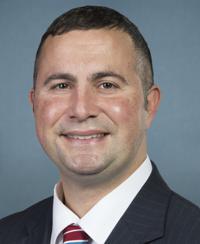
Mr. Speaker, I yield 3 minutes to the gentleman from Florida (Mr. Soto) to discuss our proposal.
Mr. Speaker, I yield the gentleman from Florida an additional 2 minutes.
Mr. Speaker, I yield myself such time as I may consume.
Mr. Speaker, I guess I would just say to my colleague from Oklahoma that I have no problem with the appropriators. I think that is what Ranking Member Lowey was talking about yesterday when she talked about the process. The appropriators have done their work. They work in a bipartisan way and it is not their fault that we are at this moment. As I said, it is not even the fault of the Rules Committee. It is the fault of the Republican leadership.
This bill that we are doing now could have been done last December, but the Republican leadership couldn't figure out a budget agreement until last month. Without top numbers, no one could move forward in the House or in the Senate.
It turned out that what was more important was a tax cut for billionaires. That was the priority. So they passed the tax cut for billionaires and we get five CRs and two government shutdowns as a result. This process cannot be explained away, cannot be justified, and cannot continue.
I probably should have had the bill in front of me here for dramatic effect, but it is 2,200 pages long. Again, it is not what I know is in the bill that I have a problem with. It is what I don't know is in the bill that concerns me. I know it concerns Democrats and Republicans alike.
I just want to go back to something the chairman of the Rules Committee referenced with regard to DACA and President Trump's, somehow, support for these incredible people.
Let's not forget there was no reason at all--none--for this President to end DACA. There was no deadline, there was no court case, there was no law that required that the program come to an end. It was just plain, old-fashioned cruelty and stupidity. That is what was at play here: red meat for the extreme rightwing base that can never get to ``yes'' on anything regarding immigration.
The way we are treating these young people is unbelievably cruel. The frustration level throughout the country is at an all-time high. Every poll I have seen, Democrats, Republicans, and Independents all overwhelmingly support us helping the DACA recipients. There are unbelievably high approval ratings for moving forward and passing a bill like the Dream Act, yet we can't even get it to the House floor for a vote.
We talk about a lousy process. That is what we are also talking about.
We talked earlier about guns. We have record-high levels of gun violence in this country and we have massacres that occur on a regular basis. I am so grateful that millions of young people are going to be out on the streets protesting on Saturday, demanding that their government do something. They are frustrated that this Chamber, supposedly the greatest deliberative body in the world, can't even find the time to bring something to the floor for a debate. All we do is have moments of silence in the aftermath of massacres.
It would give me hope for the future of these young people, because they are not going to take it anymore. They are sick of the indifference. They are sick of the lack of action. They are sick of Members in this Chamber not listening to their voices.
I feel hopeful that, ultimately, we will take action and do the right thing. I will tell you right now, for those who continue to turn their backs on the demands of these young people, I don't think they are coming back here after November.
But, again, the frustration that you are hearing on our side here today--and I know that a lot of my Republican friends feel the same way--is that this place is broken. This process stinks. There has to be a better way to do this. None of us want to shut the government down.
People are going to vote how they want to on the omnibus, but I would say: Don't endorse this lousy, broken process by voting for the rule. People should vote against this rule.
Mr. Speaker, I reserve the balance of my time.
Mr. Speaker, I would inquire if the gentleman has any other speakers.
Mr. Speaker, I yield 2 minutes to the gentleman from the great State of Maryland (Mr. Hoyer), the distinguished minority whip.
Mr. Speaker, I yield an additional 1 minute to the gentleman from Maryland.
Mr. Speaker, how much time do I have remaining?
Mr. Speaker, I yield myself such time as I may consume.
Mr. Speaker, let me close by echoing the words of our distinguished minority whip and by saying that we need a better process, and I hope my colleagues will vote against the rule.
I just want to say to my friends on the other side of the aisle, one of the reasons why I think there is so much polarization in this Chamber, why it is hard to kind of get things done, is because of the process. I think process matters. When people don't have the opportunity to read the bills, when people are routinely denied the opportunity to bring to the floor their ideas for debate and vote, it results in increased tensions and increased polarization; and, quite frankly, it undermines the integrity of this institution.
This is supposed to be the people's House. We all represent the same number of constituents, yet routinely the voices of the people are denied to be heard on this House floor.
So I would urge my colleagues to vote ``no'' on the rule, vote ``no'' on the previous question so we can bring the Dream Act to the floor, we can help the Dreamers, we can help those DACA recipients who everybody says publicly that they want to help, yet, when it comes to actually helping them, all we get is obstruction from the Republican leadership here. Let's bring that to the floor. This is our 26th time trying to do it. Let's do something that will make a real difference, that will help these people.
They deserve our help. They deserve our support. They are valued members of our community. They are American in every way except they weren't born here. And Democrats, Republicans, and Independents overwhelmingly believe we ought to help them. We ought to stop playing politics with the Dreamers.
I know the President is holding them hostage and wants a ransom that gets bigger and bigger, and bigger, and bigger. Enough. Let's do what is right for these people. So vote ``no'' on the rule. Make it clear that this process is something that we cannot endorse or embrace. We want a change in process. Vote against the previous question so we can bring up relief for the Dreamers.
Finally, I just, again, plead with the Republican leadership of this House, we need to have a better process here. If you want to end the polarization, if you want to end the partisanship, you have to open this place up. I don't think that is too much to ask.
With that, I yield back the balance of my time.
Mr. Speaker, on that I demand the yeas and nays.
Mr. Speaker, I demand a recorded vote.