Mr. Speaker, I ask unanimous consent that all Members may have 5 legislative days in which to revise and extend their remarks and include extraneous material on the topic of this Special Order. Mr.…
Mr. Speaker, I ask unanimous consent that all Members may have 5 legislative days in which to revise and extend their remarks and include extraneous material on the topic of this Special Order.
Mr. Speaker, we are here tonight to talk about a topic that is forefront on the minds of Americans of all ages. It is a topic at dinner tables across the country, and is finally becoming a leading national news story. We are here to talk about workforce development.
The American workforce has undergone a radical transformation in recent years. Right now, there are 6.6 million unfilled jobs in this country in a phenomenon known as the skills gap. Those jobs are unfilled because too many Americans are unskilled, despite the fact that we have record-high numbers of people attending postsecondary education.
At the Education and the Workforce Committee, workforce development is at the heart of what we do. All education is career education, and that means all education is workforce development.
Education, as most of us know, and many of us have experienced, is the sure path out of poverty for millions of Americans. For all of us, it should give us the tools we need to cultivate the talents God has given us. Whether through a baccalaureate degree, a professional certificate, or any of the new and innovative stackable credentials, Americans look to the educational system for options.
Mr. Speaker, I am joined here tonight by some of my colleagues from the Education and the Workforce Committee.
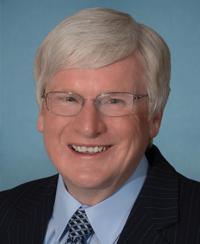
Mr. Speaker, I yield to the gentleman from Wisconsin (Mr. Grothman).
Mr. Speaker, I thank Mr. Grothman for his comments. I agree with Mr. Grothman that this is an issue every American needs to be made more aware of. Many are.
Every week, every day, I meet with people from my district and outside of my district who come in to see me who say that they have jobs in their companies, in their manufacturing plants, and in their restaurants that they cannot fill because they cannot find the people with the skills to fill those jobs. Everyone in this country has a stake in the future of our country, so we are hoping that everyone will wake up to the skills gap and see what part he or she can play in it.
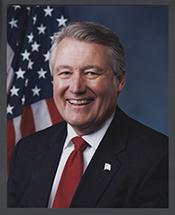
I know that members of the Education and the Workforce Committee have become very well aware of this from their own districts and from their own experiences, many of them as employers before they came to the United States Congress. One of the people that I know that is very attuned to the need in the workforce is our colleague, Mr. Ron Estes, from the great State of Kansas.
Mr. Speaker, I yield to the gentleman from Kansas (Mr. Estes).
Mr. Speaker, I thank Mr. Estes for being here tonight.
Mr. Speaker, I want to brag a little on Kansas, also. I had the opportunity last year to visit in Congressman Estes' district and see firsthand the cooperation going on there among the different levels of education--the high schools, community colleges, State universities-- and working with business and industry, particularly the aerospace industry.
Mr. Speaker, I ask Mr. Estes if he would like to add to his comments about the great program going on there because I, frankly, have gone all over the country and talked about that innovative program that is going on there.
I yield to the gentleman.
Mr. Speaker, I think, again, the program that Mr. Estes has there in Wichita is a good role model. It is an indication, again, that we are sort of going back to the future.
In the past, most of our education institutions paid attention to where the jobs were in this country and educated people to be prepared for the jobs. There are people who sometimes can be critical of us on the committee for saying that we spend too much time emphasizing people getting a job and perhaps not enough emphasizing a liberal education. Well, I am a huge fan of liberal education. My undergraduate degree is in English, but thank goodness I learned to type in high school because that typing skill is what helped me get through college as I worked my way through.
All of us need skills. English majors of today need skills: computer skills, graphic skills. We don't want to diminish the role of liberal education. We want to just make sure that students have a clear understanding of what their choices are going to be when they enter a postsecondary institution and what they might expect when they exit that institution.
Mr. Speaker, I yield to the gentleman from Michigan (Mr. Walberg), another
member of our committee who is very well versed in the issues related to workforce development and education, who has done yeoman's work on many issues related to the workforce and education.
Mr. Speaker, I thank Congressman Walberg for speaking on tonight's Special Order topic. I appreciate the comments that he has made, and I appreciate the leadership that he has brought to the Education and the Workforce Committee in so many ways.
The gentleman's comments about being with employers tonight mirror the experiences that I have had where, again, every employer that comes to see me says: You know, we love the tax cut bill. It is allowing us to hire more people. The only problem is we can't find people with the skills to take those jobs. So what are we going to do?
So this is an issue, again, that faces all of us. The Federal Government cannot solve this issue alone. It is going to take the local schools, K-12, as well as community colleges, as well as universities, as well as business and industry to come together to figure out ways to solve this problem.
Of course, what we are doing with the career and technical education bill as well as with the PROSPER Act is to provide the framework for those people to do what needs to be done out there. We are taking the heavy hand of the Federal Government away and saying: We want you to make many, many decisions at the local level, colleges and universities to make decisions.
I think we are on the right track. With the leadership of Mr. Walberg and other members of the committee, I think we are going to get there.
I yield to the gentleman from Michigan.
Mr. Speaker, I again thank Mr. Walberg for being here tonight.
Mr. Speaker, I now yield to the gentleman from Pennsylvania (Mr. Thompson), another stellar member of the Education and the Workforce Committee, who in the past has led the way in the area of career and technical education in particular, but is well versed in education in all areas.
Mr. Speaker, I thank Mr. Thompson for his time tonight. Again, I appreciate the work that he has done in this field session after session, and I appreciate the way he approaches his work on the Education and the Workforce Committee. We respect the gentleman greatly, and he is well respected by all of his colleagues here.
Mr. Speaker, we are all pushing to get the bill passed out of the Senate and are very, very hopeful. In addition, we keep our fingers crossed.
We pray, we keep our fingers crossed, and we hope.
Mr. Speaker, I yield to the gentleman from Georgia (Mr. Allen), another one of the great members of the Education and the Workforce Committee.
Mr. Speaker, I thank Mr. Allen. He and the other members of the committee who have been here tonight, as well as Members who serve on the committee, bring real-life experiences and help us better understand what it is that we need to be doing on the committee and in the Congress.
Again, this skills gap is something that is of concern to all Americans and should be of concern to all Americans. The Education and the Workforce Committee is doing its best to present good legislation to pass here so that the Federal Government can again give the structure that is needed for business and industry to do what it needs to do.
We are the greatest country in the world. We will continue to be the greatest country in the world as long as we respond to the needs of our culture and keep our country moving in the right direction.
Mr. Speaker, I thank my colleagues again and I yield back the balance of my time.