Mr. President, I ask unanimous consent to the engage in a colloquy with two of my colleagues. Mr. President, I am here on the floor to talk about legislation that helps our national parks, which is…
Mr. President, I ask unanimous consent to the engage in a colloquy with two of my colleagues.
Mr. President, I am here on the floor to talk about legislation that helps our national parks, which is something that everyone on this floor has been supportive of over the years.
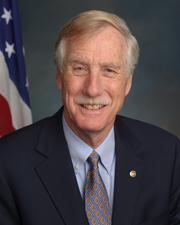
I am here with a couple of my colleagues who have spent a lot of time and effort being focused on that issue. One is Senator Angus King, who is an Independent, although he organizes over there with the Democrats. He and his colleague, Senator Mark Warner--a Democrat from Virginia-- have been very involved in this issue and have introduced legislation to address the unmet needs in our parks, which is a critical issue right now.
There is a $12 billion deferred maintenance backlog for our national parks. Many of our roads and bridges and water systems and railroads in my home State--where we have a railroad running through a national park--are crumbling, and we need to address it. So we are going to hear a little from Senator King about that.
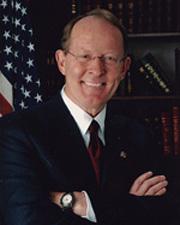
The other colleague I want to talk about is Senator Alexander. He has been a champion for the parks over the years. In fact, my recollection is that a few decades ago, President Ronald Reagan named him to a commission on the outdoors. It was probably when he was the Governor of Tennessee--one of the many jobs he has had, including being the Secretary of Education and the president of the University of Tennessee. Through all of his jobs and throughout his lifetime, he has been a huge supporter of the national parks and understands as well as anybody else--given that he is from Tennessee, where they have lots of unmet needs--the desperate need, right now, for us to figure out a way to address this maintenance backlog.
I mentioned $12 billion. That is a big price tag, and it is more than the funding that we give the parks every year could possibly accommodate. Again, it is about long-term capital costs. I think it was Senator Alexander and others who said it is almost like we have a debt unpaid, and that debt needs to be paid in order for us to continue to have our national parks be the shining example for our country and, really, for the rest of the world. There were 330 million visitors last year at our national parks. Think about that. Visitation is up; yet you have this crumbling infrastructure and huge issues that must be addressed.
We have come up with a creative way to deal with it by taking the revenue from the offshore and onshore Federal energy projects and saying, OK, if it is on Federal land, some of the royalties come to the Federal Government. Let's not take the money that is already going to the Land and Water Conservation Fund and other good purposes; let's take half of the part that has no other allocation currently and use it to address this issue. By doing so, we think we can address half of the backlog--about $6 billion over the next 5 years.
It so happens that the National Park Service has been asked to look at all of these projects and come up with which ones are of immediate concern, where there is a true crisis--when you have to address it now or the need is going to get much greater and when, by the way, the taxpayers' costs are going to increase dramatically because this is a compounding problem. If you don't fix the roof, then you end up having to repair and replace the entire building.
We believe there is a way to do this, a sensible way for us to use some of this funding. Guess what. So do a lot of other people all around the country. We have support from all kinds of groups that are supporting the parks around the country. There are conservation groups and groups that care a lot about what the experience is of the visitors at the parks.
We also have support from our colleagues in the House, as they have a companion bill that is bipartisan also. Republicans and Democrats alike are supporting it. It has gotten strong support in their committees over there, as this bill has gotten in our committee here. In fact, it got out of the Energy and Natural Resources Committee with a big bipartisan vote.
Finally--and in some respects, maybe most importantly--as a former Director of the Office of Management and Budget, the administration is supporting it. Sometimes the administration is careful about supporting proposals that have to do with this sort of spending--the mandatory spending, so-called--that comes from the revenues of these natural gas and oil resources that are on Federal lands, offshore and onshore.
So we have the Trump administration supporting it, and we have so many colleagues on both sides of the aisle supporting it, and we have so many outside groups supporting it. Why? It is just time to do it. It is a very sensible idea that will actually save taxpayer dollars over the long haul because, again, by fixing these crumbling projects and infrastructure, we will not have the huge additional costs that will be borne otherwise. Let's face it--these parks are our treasures and our legacy, and we need to protect them.
With that, I ask my colleague from Tennessee to say a few words and my colleague from Maine to say a few words in whatever order they would like to speak.
Let me finally say--and this is on a sad note--that on Monday, I learned that my colleague from Tennessee, who is about to speak, has decided that at age 78, it is time for him to enjoy a more peaceful and enjoyable lifestyle outside the Senate. He will not be running for reelection in 2 years. Yet 2 years is a long time, and we are going to get a lot done together. This bill is one of them.
I am going to miss him a lot. He is the best legislator, I believe, in the Senate. He knows how to get things done, and that is saying a lot, as there are a lot of great legislators here. He can bring together disparate parties, not just Democrats and Republicans but sometimes those within our own party. Of the personalities and so on that are not easy to deal with, he manages to smooth all of the feathers and get things done, and this park bill has been an example of that.
He has been a leader on this issue, and I have had a great experience in working with him already. Again, I hope, in working together, this will be one of the many legacy items about which he will get to talk to his children, grandchildren, and great-grandchildren.
With that, I turn it over to Senator King from Maine and then to Senator Alexander from Tennessee.
Mr. President, I appreciate the comments of both of my colleagues from Maine and Tennessee. They are both absolutely right. This legislation is ready to be passed. We have done the hard work and the research. We have looked at a number of creative ways to handle this backlog that everybody wants to get at.
Everybody agrees that our national parks are the jewels of our country, and we need to address them. Everybody knows that if you don't fix the roof and the building ends up falling down, you have to pay a lot more. So if this is to the point where this is a debt unpaid, it is also a debt that grows because it compounds over time. These are two former Governors who just spoke, and they did this in their own States, capital budgeting; in other words, not just looking at your annual expenses--in this case, park rangers and naturalists--but actually looking at how to take a building that is about to fall down and put an enormous amount of expense into that to ensure that you save money over time.
I will say that I have been all around my State. We don't have parks that are quite as big as Acadia or the Smokies, but we do have a lot of new parks in Ohio. One is Cuyahoga Valley National Park, which is actually number 13 in the country now in visitation, between Akron and Cleveland, OH. It is a fantastic opportunity for young people--school kids--to come every year. By the way, there is lots of volunteer work going on at all of these parts, including in Cuyahoga Valley. So we are not talking about displacing the volunteer work that is being done. It is very effective at building the trails and ensuring that young people can be involved in helping our parks if they have an opportunity to do so.
There are also a lot of friends groups out there. The friends group at the Cuyahoga Valley National Park happens to be headed by the national president of the Association of Friends Group. All of these parks have great groups of private citizens who give their money, private foundations who give their money for our national parks. That is all needed, but they cannot afford the $12 billion maintenance backlog that is the responsibility of the Federal Government.
So $47 million is an example of what is needed at the Cuyahoga Valley National Park to fix that railroad I talked about, to fix the bridge I saw that is about to fall down, to fix the roof at a visitors center that is about to fall down.
It is also $47 million, roughly, for a monument off Lake Erie, the Perry Monument. Some of you know the story about how there is a seawall there to protect the Perry Monument and the interpretive center there. That seawall is crumbling, and it is a huge expense to repair a sea wall, as a coastal Governor like Governor King will tell you. So that is a maintenance backlog issue that has to be addressed in this kind of a capital bill.
So I am very excited about the opportunity to get this done. I think Senator Alexander is right. It is going to be difficult to get it done this week because we are up against the end of the year and we have so many other priorities. On the other hand, this one has not just bipartisan support, but I would say nonpartisan support and bicameral support. It is one of those bills--I think Senator Alexander is exactly right--we ought to put it at the top of the agenda. It will be a great win.
I think the American people are looking for wins right now. I think they are wondering, how can a divided government work? Here is an example of how it can work. We have Republicans and Democrats alike saying that this is a problem--long in the making, by the way. It didn't just happen recently; it has been years and years of our delaying these expenditures, these capital improvements that are needed--and wouldn't it be great.
So we are going to hit the ground running. Come January, we will reintroduce our legislation. Senator Alexander, Senator King, Senator Warner, and I are going to be out there getting cosponsors from staff who happen to be listening. We want to talk to you and your Member because you ought to be on this bill if you are not one of the more than one-third of the Senate who are already a part of it.
I just can't thank my colleagues enough for showing up today to talk about this. I know Senator Warner is busy with other meetings right now, but speaking for him, I will just say that he came up with this very creative idea. I want to thank him for his hard work on this. I know that in his home State, with the Blue Ridge and other great national parks, he has the same sense of urgency that all of us have, which is that if we don't address this now, we are going to see the visitor experience be diminished, and we are going to see a lot of higher costs for taxpayers.
This is the time that we have the organizations behind us. Senator Alexander talked about 100 conservation organizations. I didn't know there were 100 conservation organizations, but they are all on board, and they understand that this is the opportunity to do something very significant.
I think Senator Alexander is right; probably in the 100-year history of our national parks, there has never been a single bill that could make such a big difference--maybe not since Teddy Roosevelt started acquiring the land to protect our national treasures.
So we need to get this done. I thank my colleagues and I welcome them to make any final comments.
Mr. President, I want to talk today about the criminal justice reform legislation before the Senate. This is legislation that deals with two huge issues in our criminal justice system. One is important to sentencing reform.
A lot of this is to level the playing field--for instance, between crack cocaine and powder cocaine, what kind of sentencing ought to be used, something that has been talked about for many years. There is, in our view--many of us--an injustice with the levels of sentencing. That is important.
Second, this legislation deals with an issue that many States are finally figuring out, which is that we need to do something to keep people who are leaving our jails and prisons from coming right back into the criminal justice system again.
These numbers are just amazing. Ninety-five percent of those who are incarcerated will be released someday. We all know that. When people are released from prison or jail, over a 3-year period about two-thirds of them are rearrested. Some call it a revolving door. There is a fancier word for it. It is called recidivism, and it is a huge issue.
Think about it. If two-thirds of the people are back in the prison system or the criminal justice system, that means they have committed another crime. That means our communities are less safe. It also means that the taxpayer ends up picking up the tab--both the cost of prosecution again and, also, the cost of incarceration, which can go from $25,000 to $40,000 a year, depending on which system prisoners are in. It is a huge cost. Frankly, this is what has driven the push toward doing something about it in many of our States. State budgets have been overwhelmed with the cost of criminal justice.
We have committed ourselves here in Congress to deal with that, to try to reduce crimes, bring families back together, and help people be able to live out their purpose in life. God's purpose in life for all of us may be a little different, but it is certainly not to be someone in the revolving door of the criminal justice system.
One thing we have focused on is this: How do you give people the tools to be able to be more successful when they have left prison and reentered society? I have worked on this for the past 15 years. One thing we came up with was legislation called the Second Chance Act. The Second Chance Act was put into law about 11 years ago. It is an idea that George W. Bush talked about in his speech to a joint session of Congress about 14, 15 years ago. What he said was: Let's give people a second chance. We believe in redemption in this country. Many of us believe in it, as it is from its Biblical roots, but it is something that George W. Bush believed in.
He also said that it makes no sense because people are costing their communities more and more in crime, costing taxpayers more in prosecution and incarceration.
Let's do something about it. Let's not hold people back because of their mistakes in the past but, instead, give them the tools to be able to lead a better life, a more productive life.
The Second Chance Act has worked well over the years. It has provided this onramp to help ex-offenders reenter society appropriately. However, it needs to be reauthorized.
The criminal justice reform we have before us deals with this issue of rehabilitation and deals with this issue of giving people the tools to be able to succeed by job training, by mental health treatment, by drug treatment, and that is important. But once they get out of the system, that is where the Second Chance Act is so important.
The message is clear. It tells ex-offenders: If you want to turn your life around and become a productive member of society, we want to help you do that. Rather than incarcerating these repeat offenders, sometimes generation after generation, let's put our tax dollars to use in a more effective way to break this vicious cycle and turn these lives around.
Congress appropriated funding for the Second Chance Program this year at $85 million, up from $68 million in some years in the past. So we are actually putting more funding against it. But the program needs to be reauthorized to improve the program, to put more accountability measures into the program. That is what it does. Again, it is part of this broader criminal justice reform that we are voting on today.
I have spent a lot of time going around my State of Ohio, seeing how these Second Chance Act grants are working. One thing they have done in my State, and probably in your State, is create reentry coalitions. To get a coalition grant, it is easier to have a reentry coalition making application for it. You have these comprehensive coalitions--I had only a few in a few of our counties in Ohio; now we have them in over 60 of our counties. It is great. You have the business sector coming together--the private sector--along with the law enforcement folks, along with the treatment providers. I have seen it work all over our State. I have seen so many people who have successfully been able to make that transition from prison and a life of crime and this revolving door into a productive life.
I will tell you about one person who is always on my mind when I think about this. It is someone I met at something called Central Kitchen. Central Kitchen is a reentry program run by the Lutheran Ministry in Cleveland, OH.
Melvin is a gentleman I met there, and Melvin's story is classic. Melvin had been in and out of prison his whole life. For about a decade and a half, he was in prison, out of prison, in prison. He grew up in a rough neighborhood. He got involved in drugs and alcohol. He couldn't get out of the cycle. He couldn't get out of the revolving door. One day he heard about this program and said: I will check it out.
It is a faith-based program. They have been particularly effective, in my view. It is one that is supported by legislation like the Second Chance Act.
Sure enough, it has worked. Melvin learned how to cook. He worked at the Central Kitchen, and went on to work
full time at another restaurant. As he said: What better way to be rewarded and what better way to be forgiven?
He has started his own catering business now. He is no longer defined by his past. He is defined by his willingness to take advantage of the Second Chance Act. His eyes are now on the future.
By the way, there is one thing he told me that I will never forget: I finally got a place to live again. I got my apartment back. And most importantly to me, I got my child back.
After 15 years of being in and out of prison, paying some child support--sometimes not--he now has his little girl living with him. He is a role model for her.
I have seen these role models all over our State. I have seen them in factories. I have talked to supervisors in factories who tell me the ``second chance employees'' I just met with at a roundtable are the role models. They show up on time. They are grateful.
They realize they have been given a second chance, and they take it seriously. I support the underlying legislation of criminal justice reform law that we are now going to take up on the floor. I think it is the right thing to do for our country in so many respects. Our communities will be safer, our taxpayers will be able to spend their money more efficiently and effectively. For these individuals who are now given a chance, given the tools to be able to lift themselves up and lead productive lives, that is their purpose in life. God's purpose in life for them is being fulfilled by this legislation.
I am glad it is being reauthorized as part of this underlying legislation. I encourage my colleagues to support this legislation. I thank Senator Leahy, who is the coauthor of the Second Chance Act on the other side of the aisle, which has been bipartisan from the start. I thank the President and Jared Kushner for their support of this legislation.
I also thank those Members of the Senate who have been so involved in this, particularly my colleagues on the Judiciary Committee, Senator Durbin, Senator Lee--I just talked to Senator Lee about this legislation a moment ago, and he has been tenacious--Senator Grassley, Senator Feinstein, Senator Graham, Senator Booker, Senator Whitehouse, Senator Cornyn, and others. This legislation will make a difference in my State of Ohio and around the country. I encourage my colleagues to support it.
I yield back.
Mr. President, among the colleagues of ours who is not going to be rejoining us in January is Dean Heller. Senator Heller hails from Nevada. He is a good friend. He is also a valued Member of this body, and we are going to miss him.
Dean is a classic servant leader who has dedicated himself to public service. He has served in all kinds of roles in his community, his State, his country, and he has always done it with class and humility.
He grew up in Carson City, NV, with his five brothers and sisters. He says he started working at his dad's auto shop in middle school. Do you know what? I think he brought some of the skills he learned in middle school on the shop floor to the U.S. Senate. Like every good mechanic, he is optimistic. Every mechanic thinks they can fix whatever problem you have. That is Dean Heller. He rolls up his sleeves, he gets to work, and he has the determination to make things better. That is as true as when he is working on a car as when he is working on legislative solutions in the U.S. Congress.
He has been devoted to helping his community for a long time. He served for two terms in the Nevada Assembly, representing Carson City, and then he served for three terms as Nevada secretary of state before being elected to represent the State's Second Congressional District in the House of Representatives, across the way there.
Later, he was appointed to the U.S. Senate, and then he won his election to the U.S. Senate in 2012. I have had the privilege of working with Dean Heller a lot on issues. We both serve on the Senate Finance Committee. We have jurisdiction over a lot of things, including tax reform.
During the tax reform process over the last year, we worked hard together, and I saw the hard work and determination he first developed working at his dad's auto body shop. I saw someone who was solutions- driven, someone who wanted to create a better future for the people he represents.
He was effective in a number of ways, with regard to helping others, helping with opportunity. One that he worked with the Presiding Officer on is doubling the child tax credit. It is a provision in the new tax law that puts more money back in the pockets of hard-working families in America.
He also served on the Senate Banking Committee, the Committee on Veterans' Affairs, and the Commerce Committee. He has been involved in a lot of the issues this body takes up. In fact, more than 100 of his bills have become law during his time in the U.S. Senate. That means he has reached across the aisle to help his fellow Nevadans.
His presence is going to be missed, but I know he will keep trying to make things better. I know he will stay busy back home, too, doing some of the things he loves: bailing hay on his ranch, repairing his stock cars--he grew up racing--horse packing, hunting, fishing, and spending time with his great family.
He and his wife, Lynne, have been married for more than 30 years, have four kids and three grandkids. I know he is looking forward to spending more time with them this holiday season. In fact, he told me for one of his holiday traditions he gets out his trombone, and his kids and their spouses all grab instruments and they play music. The Heller band performs some famous well-known Christmas holiday songs. I would love to see that. I am not sure I would like to hear it, but I would love to see it--Dean with his trombone.
Let me say, it has been an honor to serve with Dean Heller. He is a great guy. It is a privilege to work with him. I know he has a bright future outside of this place. I look forward to continuing to stay in touch. We will miss him. Knowing his work is not done, we hope to continue to work with him.
I yield back my time.