





S. 2174Senate115th Congress (2017-2019)In Committee

Veterans Crisis Line Study Act of 2017

Sponsored by Todd YoungSen. Todd Young (R-IN)
Introduced November 30, 2017

AI-Generated Summary

Updated April 15, 2026 at 7:18 PM UTC

The Veterans Crisis Line Study Act of 2017 requires the Secretary of Veterans Affairs to conduct a comprehensive study of the Veterans Crisis Line’s outcomes and effectiveness over a five‑year period starting January 1, 2014. The study will analyze national suicide data and the line’s own records to see how well the service connects veterans to ongoing mental‑health care and prevents suicide. Results must be reported to the Senate and House Veterans’ Affairs committees by March 1, 2020.

Key Provisions

  • The VA must examine how many veterans who call the Crisis Line and are referred to a suicide‑prevention specialist start and continue VA mental‑health treatment, versus those who do not continue or never start care.
  • The study will assess the visibility of the Crisis Line by comparing callers who have and have not previously received VA hospital or medical services.
  • It will evaluate the role of the Crisis Line within the VA health system, including how many callers are already under VA mental‑health care at the time of contact.
  • The analysis will determine whether sustained mental‑health care reduces suicidality and how timing of care relates to Crisis Line use.
  • The effectiveness of the line when non‑veterans call to seek help for a veteran will be measured.
  • Overall efficacy will be measured by tracking suicides or attempts among callers and whether multiple contacts affect outcomes.
  • Long‑term efficacy will be examined by looking at repeat calls and subsequent suicide attempts within six months.
  • The impact of referrals (or lack thereof) on suicide risk will be compared.
  • The study will also look at whether the line helps high‑risk veterans who avoid suicide to stay in continued mental‑health treatment.
  • Data collection methods must remain unchanged, and the final report is due to both Senate and House Veterans’ Affairs committees by March 1, 2020.

Legislative Activity

Stay on top of the latest movement without scrolling through every action

1 earlier action
SenateIntro Referral Latest Action

Read twice and referred to the Committee on Veterans' Affairs.

November 30, 2017

View full timeline
SenateIntro Referral

Introduced in Senate

November 30, 2017

SenateIntro Referral

Read twice and referred to the Committee on Veterans' Affairs.

November 30, 2017

Floor Debate

16 members

What members said about S. 2174 on the floor

9 Republicans7 Democrats
John Cornyn
Sen. John CornynR-TX · Jun 20, 2018

Mr. President, I ask unanimous consent that the order for the quorum call be rescinded. Mr. President, we have been focused on the U.S.-Mexico border, where the prospect of children being separated…

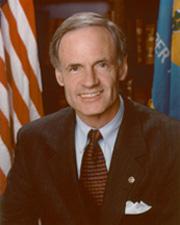
Thomas R. Carper
Sen. Thomas R. CarperD-DE · Jun 20, 2018

Mr. President, I come to the floor today to talk about the 74th anniversary of the GI bill, which we will be celebrating later this week. Before the Senator from Connecticut leaves the floor, I want…

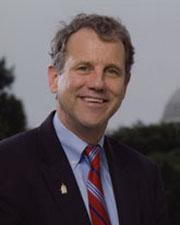
Sherrod Brown
Sen. Sherrod BrownD-OH · Jun 20, 2018

Mr. President, the images that we have seen from our own country over the past few days are shocking and heartbreaking. They don't reflect our values as a nation. I am glad the President is reversing…

Kirsten E. Gillibrand
Sen. Kirsten E. GillibrandD-NY · Jun 20, 2018

Mr. President, I rise to speak about the humanitarian crisis that is at our southern border right now. We are living through a moment in history when we are literally sending babies and toddlers into…

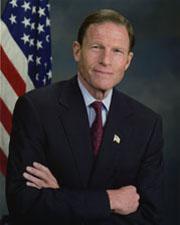
Richard Blumenthal
Sen. Richard BlumenthalD-CT · Jun 20, 2018

Mr. President, as we await the details of the President's Executive order today, we know enough already to have serious and significant concerns about the continuing policy of this administration in…

Show 8 more
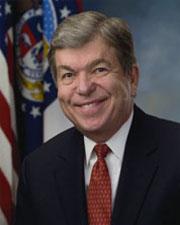
Roy Blunt
Sen. Roy BluntR-MO · Jun 20, 2018

Mr. President, I want to join my friend, the Senator from Iowa, Senator Grassley, and talk about what has happened with the tax bill--the Tax Cuts and Jobs Act, as the President insisted it be called…

Chuck Grassley
Sen. Chuck GrassleyR-IA · Jun 20, 2018

Mr. President, 6 months ago, Congress passed historic tax legislation that fundamentally reformed our Tax Code and provided tax relief to middle-income Americans and also to small business job…

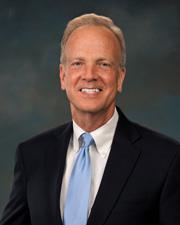
Jerry Moran
Sen. Jerry MoranR-KS · Jun 20, 2018

Mr. President, first of all, I want to associate myself with the remarks of the Senator from Montana, Mr. Tester, on his amendment in support of the VA's inspector general position. I believe it is…

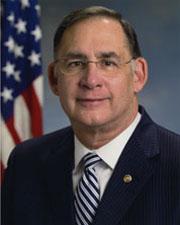
John Barrasso
Sen. John BarrassoR-WY · Jun 20, 2018

Mr. President, as we know, last week President Trump took what I believe is a historic first step in making America and the whole world more safe, more stable, and more secure. I believe his efforts…

John Boozman
Sen. John BoozmanR-AR · Jun 20, 2018

Mr. President, I ask unanimous consent that the order for the quorum call be rescinded. Mr. President, as some of my colleagues mentioned already, today marks 6 months since Congress passed the Tax…

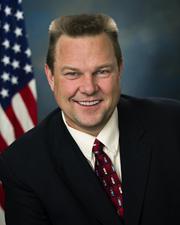
Jon Tester
Sen. Jon TesterD-MT · Jun 20, 2018

Mr. President, I would like to thank the Senator from Indiana for this amendment. It is a good amendment and is an amendment we need to pass in this body. As Senator Young pointed out, issues around…

Todd Young
Sen. Todd YoungR-IN · Jun 20, 2018

Mr. President, I thank the distinguished Senator from Delaware for his naval service and for his concern for veterans. It is a pleasure to serve with him. Amendment No. 2926 Mr. President, as…

Mitch McConnell
Sen. Mitch McConnellR-KY · Jun 20, 2018

Mr. President, I send a cloture motion to the desk for amendment No. 2910. Mr. President, I send a cloture motion to the desk for the bill H.R. 5895. I ask unanimous consent that the mandatory quorum…

Show 3 more
Richard J. Durbin
Sen. Richard J. DurbinD-IL · Jun 20, 2018

I announce that the Senator from Illinois (Ms. Duckworth) and the Senator from New Hampshire (Mrs. Shaheen) are necessarily absent. I announce that the Senator from Illinois (Ms. Duckworth), and the…

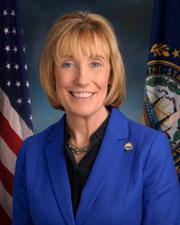
Margaret Wood Hassan
Sen. Margaret Wood HassanD-NH · Jun 20, 2018

Mr. President, I have submitted amendment No. 2955 to H.R. 5895 on behalf of Senator Jeanne Shaheen. I strongly support the provision's intent to ensure that veterans in New Hampshire receive the…

Lamar Alexander
Sen. Lamar AlexanderR-TN · Jun 20, 2018

I ask for the yeas and nays.

Bill Text

Latest available legislative text

Reading Mode
Latest
Introduced in SenateIssued November 30, 2017

II

115th CONGRESS

1st Session

S. 2174

IN THE SENATE OF THE UNITED STATES

November 30, 2017

Mr. Young (for himself and Mr. Donnelly) introduced the following bill; which was read twice and referred to the Committee on Veterans' Affairs

A BILL

To direct the Secretary of Veterans Affairs to conduct a study on the Veterans Crisis Line.

1.

Short title

This Act may be cited as the Veterans Crisis Line Study Act of 2017.

2.

Study on efficacy of Veterans Crisis Line

(a)

Study

The Secretary of Veterans Affairs shall conduct a study on the outcomes and the efficacy of the Veterans Crisis Line during the five-year period beginning January 1, 2014, based on an analysis of national suicide data and data collected from the Veterans Crisis Line.

(b)

Matters included

The study under subsection (a) shall address the following:

(1)

The efficacy of the Veterans Crisis Line in leading veterans to sustained mental health regimens, by determining—

(A)

the number of veterans who, after contacting the Veterans Crisis Line and being referred to a suicide prevention specialist, begin and continue mental health care furnished by the Secretary of Veterans Affairs; and

(B)

the number of veterans who, after contacting the Veterans Crisis Line and being referred to a suicide prevention specialist, either—

(i)

begin mental health care furnished by the Secretary but do not continue such care; or

(ii)

do not begin such care.

(2)

The visibility of the Veterans Crisis Line, by determining—

(A)

the number of veterans who contact the Veterans Crisis Line and have not previously received hospital care or medical services furnished by the Secretary; and

(B)

the number of veterans who contact the Veterans Crisis Line and have previously received hospital care or medical services furnished by the Secretary.

(3)

The role of the Veterans Crisis Line as part of the mental health care services of the Department, by determining, of the veterans who are enrolled in the health care system established under section 1705(a) of title 38, United States Code, who contact the Veterans Crisis Line, the number who are under the care of a mental health care provider of the Department at the time of such contact.

(4)

Whether receiving sustained mental health care affects suicidality and whether veterans previously receiving mental health care furnished by the Secretary use the Veterans Crisis Line in times of crisis, with respect to the veterans described in paragraph (3), by determining the time frame between receiving such care and the time of such contact.

(5)

The effectiveness of the Veterans Crisis Line in assisting veterans at risk for suicide when the Veterans Crisis Line is contacted by a non-veteran, by determining, of the number of non-veterans who contact the Veterans Crisis Line looking for support in assisting a veteran, how many of such individuals receive support in having a veteran begin to receive mental health care furnished by the Secretary.

(6)

The overall efficacy of the Veterans Crisis Line in preventing suicides and whether the number of contacts affects the efficacy, by determining—

(A)

the number of veterans who contact the Veterans Crisis Line who ultimately commit or attempt suicide; and

(B)

of such veterans, how many times did a veteran contact the Veterans Crisis Line prior to committing or attempting suicide.

(7)

The long-term efficacy of the Veterans Crisis Line in preventing repeated suicide attempts and whether the efficacy is temporary, by determining, of the number of veterans who contacted the Veterans Crisis Line and did not commit or attempt suicide during the following six-month period, the number who contacted the Veterans Crisis Line in crisis at a later time and thereafter did commit or attempt suicide.

(8)

Whether referral to mental health care affects the risk of suicide, by determining—

(A)

the number of veterans who contact the Veterans Crisis Line who are not referred to, or do not continue receiving, mental health care who commit suicide; and

(B)

the number of veterans described in paragraph (1)(A) who commit or attempt suicide.

(9)

The efficacy of the Veterans Crisis Line to promote continued mental health care in those veterans who are at high risk for suicide whose suicide was prevented, by determining, of the number of veterans who contacted the Veterans Crisis Line and did not commit or attempt suicide soon thereafter, the number that begin and continue to receive mental health care furnished by the Secretary.

(c)

Data collection practices

During the portion of the five-year period of study under subsection (a) after the date of the enactment of this Act, data shall be collected in the same manner that it had been collected during the portion of the period of the study before such date of enactment. Data collection shall not be construed as being extended, contracted, or modified in any way due to the enactment of this Act.

(d)

Submission

Not later than March 1, 2020, the Secretary shall submit to the Committee on Veterans’ Affairs of the Senate and the Committee on Veterans’ Affairs of the House of Representatives the study conducted under subsection (a).

(e)

Veterans crisis line defined

In this section, the term Veterans Crisis Line means the toll-free hotline for veterans established under section 1720F(h) of title 38, United States Code.