Mr. Speaker, I yield myself 3 minutes. Mr. Speaker, under current law, if an employee wants to work overtime, put the money in the bank where it can earn interest, and use it to cover the cost of…
Mr. Speaker, I yield myself 3 minutes.
Mr. Speaker, under current law, if an employee wants to work overtime, put the money in the bank where it can earn interest, and use it to cover the cost of taking some time off later with the permission of the employer, he can do that today without this bill.
But under H.R. 1180, instead of getting paid for overtime work in the next scheduled paycheck, the employee might not get paid until as much as a year later, when his employer decides to let him take that comp time.
This legislation simply weakens the protections available in the Fair Labor Standards Act--the original family-friendly workplace law--at the very moment that we really ought to be strengthening the law.
Under H.R. 1180, it would be legal to withhold workers' overtime pay for a long time. This would be otherwise a violation of the Fair Labor Standards Act.
The bill would allow you to undermine the 40-hour workweek by creating a mechanism that allows employees to earn time off to be with their families only if they spend extra time at work beyond a 40-hour workweek.
It undermines a worker's ability to earn overtime pay, which many workers rely on to send their children to college, save for retirement, or make a down payment on a house.
Because the legislation makes it cheaper for employers to assign overtime to employees who agree to accept comp time instead of actual cash wages, this legislation makes it extremely likely that the only employees who will be asked to work overtime are those who agree to get comp time instead of actual time and a half paid cash.
Furthermore, the legislation creates significant uncertainty for workers. An employer could decide that an employee cannot take comp time on the dates requested because the employer said it would be an undue disruption to business operations.
My Democratic colleagues and I are working on a Working Families Agenda with real solutions that would boost wages for working people and help them balance work and family life. An employee should be able to earn time off without sacrificing overtime pay. This is exactly what the Healthy Families Act would do. It would allow workers to earn up to 7 paid sick days.
Finally, Mr. Speaker, 92 groups that actually represent working people sent a letter urging the Committee on Education and the Workforce to oppose the legislation.
Mr. Speaker, I include in the Record a letter which is led by the National Partnership for Women & Families. It points out that we should be taking up real solutions, such as legislation, to raise the minimum wage, Schedules That Work Act, family and medical leave, and other responsible solutions. These solutions would truly help working families, yet the majority has refused to support any of these initiatives.
May 1, 2017.
Dear Member of Congress: We, the undersigned organizations,
urge you to oppose the so-called Working Families Flexibility
Act (H.R. 1180/S. 801), a smoke-and-mirrors bill that would
offer working people a pay cut without any guaranteed
flexibility or time off. As members of Congress on both sides
of the aisle acknowledge, people today are struggling to
manage the demands of job and family, and to make ends meet
and plan for the future. We urgently need lawmakers to update
our nation's workplace policies to meet 21st century
realities, but the Working Families Flexibility Act would be
a grievous step in the wrong direction. It is, at best, an
empty promise that would cause considerably more harm than
good.
The Working Families Flexibility Act would offer a false
choice between time and pay. Supporters claim the bill would
give hourly workers more flexibility and time with their
loved ones by allowing them to choose paid time off, rather
than time-and-a-half wages, as compensation for working more
than 40 hours in one week (``comp time''). But people would
only get more time with their families after spending extra
hours away from them at work, and the bill does not guarantee
that workers could use the time they earn when they need it.
Moreover, the bill would do nothing to address the need all
working people--not just those who work overtime--have for
guaranteed access to paid sick days and paid family and
medical leave. Too few employers provide these protections
now, especially to their hourly workers.
The Fair Labor Standards Act currently allows employers to
provide flexibility and
time off without compromising workers' right to be paid
fairly for the hours they work. The types of flexibility
allowed under the FLSA include alternative start and end
times, compressed or variable work hours within a week, split
shifts, work at multiple locations, and paid or unpaid time
off. Proponents of the Working Families Flexibility Act set
up a false dichotomy that would force workers to choose
between flexibility and overtime pay when, in reality, the
FLSA does nothing currently to prevent employers from
offering both.
The ``worker flexibility'' offered by the Working Families
Flexibility Act would magnify the power imbalance between
employees and employers. The proposal would give the
employer, not the employee, the ``flexibility'' to decide
when, and even if, comp time could be used. The bill would
allow employers to deny requests if an employee's use of comp
time would ``unduly disrupt'' operations, or grant leave on a
day other than the one requested. This means the Working
Families Flexibility Act would provide no guarantee that
workers could use their earned time to care for a sick child,
attend a parent-teacher conference, or help an aging parent.
Employers could veto an employee's request to use their time
even in cases of urgent need. The bill would also allow
employers to ``cash out'' an employee's comp time in excess
of 80 hours, or discontinue the comp time program altogether,
with just 30 days' notice. This means an employee's carefully
crafted plan to bank time for a child's birth or surgery
could be thwarted by an employer's decision to cash out the
employee's time.
The Working Families Flexibility Act would put workers'
economic security at risk and provide an interest-free loan
to employers. An employee who does not participate in an
employer's comp time program could be penalized with fewer
hours, bad shifts and lost overtime hours. The bill would
permit employers to defer compensation for unused comp time
for as long as 13 months, creating an interest-free loan for
employers and hardship for workers. It also would not provide
any protections for employees when firms collapse or go
bankrupt, meaning workers could lose the value of their
unused comp time altogether.
The Working Families Flexibility Act would provide few
protections for workers and no additional resources to the
U.S. Department of Labor for education, investigation and
enforcement. The U.S. Department of Labor's (DOL's) Wage and
Hour Division already struggles to enforce the Fair Labor
Standards Act (FLSA) with too few investigators and a small
budget--and DOL is facing a draconian reduction in funding
that threatens its ability to maintain current operations,
let alone engage in robust enforcement. This bill would add
significant new provisions to the FLSA, but it would not
provide additional funds for education and enforcement
efforts the new provisions would require. Workers would have
few remedies in cases of employer misconduct pursuant to the
bill, and would not be able to rely on an under-resourced
Wage and Hour Division for assistance. Wage theft (nonpayment
or underpayment of wages for hours worked) would be
exacerbated because it would be easier for employers to avoid
overtime compensation obligations without consequences.
Instead of wasting time on smoke and mirrors, Congress
should focus on policies that would meaningfully improve
people's economic security and provide the time they need. We
urge Congress to adopt:
The Healthy Families Act (H.R. 1516/S. 636), which would
make earned paid sick days available to millions of workers
and build on the success of paid sick days laws that have
been, or will soon be, implemented in seven states and 32
localities;
The Family And Medical Insurance Leave (FAMILY) Act (H.R.
947/S. 337), which would create a national paid leave
insurance program--modeled on successful state programs in
California, New. Jersey, Rhode Island and, soon, New York and
the District of Columbia--that would allow workers to take
paid time to care for a new child; care for a seriously ill
family member; address their own serious health condition; or
manage certain military caregiving responsibilities;
The Schedules That Work Act, which would give workers more
control over their schedules and incentivize predictability
and stability in shifts and work hours; and
An increase in the minimum wage, including the elimination
of the sub-minimum ``tipped'' wage, which would lift millions
of families out of poverty.
People simply should not have to work more than 40 hours in
a week and forgo pay to earn time to care for themselves or
their loved ones. We urge Congress to reject the Working
Families Flexibility Act and instead adopt family friendly
workplace policies that provide true flexibility--not an
empty promise that would make life appreciably more difficult
for people who are already struggling
Sincerely,
1,000 Days, 9to5, National Association of Working Women,
9to5 California, 9to5 Colorado, 9to5 Georgia, 9to5 Wisconsin,
A Better Balance, American Federation of Labor and Congress
of Industrial Organizations (AFL-CIO), American Association
of University Women (AAUW), American Federation of Government
Employees, American Federation of Teachers, (AFL-CIO),
California Work & Family Coalition, Center for Law and Social
Policy (CLASP), Center for Popular Democracy, Coalition for
Social Justice, Coalition of Labor Union Women, Coalition on
Human Needs, Communications Workers of America (CWA),
Connecticut Working Families Party, Connecticut Women's
Education and Legal Fund (CWEALF), Daily Kos, Demos, Economic
Policy Institute Policy Center, Economic Progress Institute,
Faith in Public Life, Family Forward Oregon, Family Values @
Work, Feminist Majority.
Indiana Institute for Working Families, Innovation Ohio,
Institute for Science and Human Values, Inc., Interfaith
Worker Justice, International Brotherhood of Teamsters,
International Union, United Automobile, Aerospace &
Agricultural Implement Workers of America (UAW), Jewish Women
International (JWI), Jews United for Justice, Jobs With
Justice, Labor Project for Working Families, The Leadership
Conference on Civil and Human Rights, Legal Aid at Work, Los
Angeles Alliance for a New Economy (LAANE), Main Street
Alliance, Maine Women's Lobby, Make it Work, McKenna Pihlaja,
MomsRising.org, Mothering Justice.
National Asian Pacific American Women's Forum (NAPAWF),
National Association of Social Workers (NASW), National
Center for Lesbian Rights, National Coalition 100 Black Women
Central Ohio Chapter, National Council of Jewish Women
(NCJW), National Education Association (NEA), National
Employment Law Project, National Employment Lawyers
Association, National Institute for Reproductive Health,
National Network to End Domestic Violence, National
Partnership for Women & Families, National Women's Law
Center, NC Justice Center, NETWORK Lobby for Catholic Social
Justice, New Jersey Citizen Action, New Jersey Time to Care
Coalition, New York Paid Leave Coalition, Ohio Domestic
Violence Network, Ohio Women's Public Policy Network, OUR
Walmart.
PathWays PA, People For the American Way, People's Action,
PL+US Paid Leave for the U.S., Progress For All, Project
IRENE, Restaurant Opportunities Center of Pennsylvania (ROC-
PA), Restaurant Opportunities Centers United (ROC), Sargent
Shriver National Center on Poverty Law, Service Employees
International Union (SEIU), Southwest PA National
Organization for Women, The Body Is Not An Apology (TBINAA,
Inc.), Texas Organizing Project, The Voter Participation
Center, UltraViolet, Unitarian Universalist Women's
Federation, Voices for Progress, Women Employed, Women's
Foundation of Florida, Women's Law Project, Women's Voices
Women Vote Action Fund, Working America, Working Partnerships
USA, Young Invincibles, YWCA USA.
Mr. Speaker, I urge my colleagues to vote ``no'' on this legislation, and I reserve the balance of my time.
Mr. Speaker, I yield 2 minutes to the gentlewoman from Oregon (Ms. Bonamici), the vice ranking member on the Committee on Education and the Workforce.
Mr. Speaker, I yield 2 minutes to the gentlewoman from Connecticut (Ms. DeLauro), the ranking member of the Labor, Health and Human Services, and Education Subcommittee of the Appropriations Committee.
Mr. Speaker, I yield 4 minutes to the gentleman from Maryland (Mr. Hoyer), the Democratic whip.
(Mr. HOYER asked and was given permission to revise and extend his remarks.)
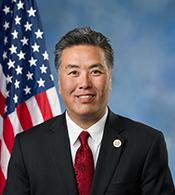
Mr. Speaker, I yield 2 minutes to the gentleman from California (Mr. Takano), the ranking member of the Workforce Protections Subcommittee of the Education and the Workforce Committee.
Mr. Speaker, I yield 1 minute to the gentlewoman from Florida (Ms. Frankel).
Mr. Speaker, I yield 2 minutes to the gentlewoman from Washington (Ms. Jayapal).
Mr. Speaker, I yield myself 30 seconds.
Mr. Speaker, there was mention about the legislative history back in the 1980s. The fact is there was no mention in legislative history that Congress passed the comp time legislation to be family friendly or to provide flexibility. The legislation was passed purely to respond to States' and localities' concerns about fiscal pressures created by the Supreme Court case Garcia v. San Antonio Metropolitan Transportation Authority. So I think it ought to be clear that these are entirely different issues.
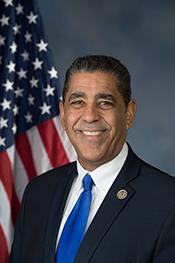
Mr. Speaker, I yield 2 minutes to the gentleman from New York (Mr. Espaillat).
Mr. Speaker, I yield an additional 1 minute to the gentleman from New York.
Mr. Speaker, I would like to ask the gentlewoman to show where in the bill the penalties are actually more than they are today?
I yield to the gentlewoman from North Carolina.
And how is that different from what the Federal law is now?
Mr. Speaker, in the meanwhile, I yield 2 minutes to the gentlewoman from Illinois (Ms. Schakowsky).
Mr. Speaker, I yield 30 seconds to the gentlewoman from Alabama (Mrs. Roby).
Mr. Speaker, I yield myself 15 seconds just to include in the Record section 216 of the Fair Labor Standards Act, which says essentially the same penalties are available in the present law as in the bill.
Sec. 216. Penalties
(a) Fines and imprisonment
Any person who willfully violates any of the provisions of
section 215 of this title shall upon conviction thereof be
subject to a fine of not more than $10,000, or to
imprisonment for not more than six months, or both. No person
shall be imprisoned under this subsection except for an
offense committed after the conviction of such person for a
prior offense under this subsection.
(b) Damages; right of action; attorney's fees and costs;
termination of right of action
Any employer who violates the provisions of section 206 or
section 207 of this title shall be liable to the employee or
employees affected in the amount of their unpaid minimum
wages, or their unpaid overtime compensation, as the case may
be, and in an additional equal amount as liquidated damages.
Any employer who violates the provisions of section 215(a)(3)
of this title shall be liable for such legal or equitable
relief as may be appropriate to effectuate the purposes of
section 215(a)(3) of this title, including without limitation
employment, reinstatement, promotion, and the payment of
wages lost and an additional equal amount as liquidated
damages. An action to recover the liability prescribed in
either of the preceding sentences may be maintained against
any employer (including a public agency) in any Federal or
State court of competent jurisdiction by any one or more
employees for and in behalf of himself or themselves and
other employees similarly situated. No employee shall be a
party plaintiff to any such action unless he gives his
consent in writing to become such a party and such consent is
filed in the court in which such action is brought. The court
in such action shall, in addition to any judgment awarded to
the plaintiff or plaintiffs, allow a reasonable attorney's
fee to be paid by the defendant, and costs of the action. The
right provided by this subsection to bring an action by or on
behalf of any employee, and the right of any employee to
become a party plaintiff to any such action, shall terminate
upon the filing of a complaint by the Secretary of Labor in
an action under section 217 of this title in which (1)
restraint is sought of any further delay in the payment of
unpaid minimum wages, or the amount of unpaid overtime
compensation, as the case may be, owing to such employee
under section 206 or section 207 of this title by an employer
liable therefor under the provisions of this subsection or
(2) legal or equitable relief is sought as a result of
alleged violations of section 215(a)(3) of this title.
Mr. Speaker, I reserve the balance of my time.
Mr. Speaker, I yield myself 30 seconds.
I include in the Record letters from AFSCME and the National Education Association in opposition to the legislation.
Mr. Speaker, I want to point out that AFSCME, the NEA, ATU, and other public service unions have written letters in opposition.
One from AFSCME: ``Our experience in the public sector has revealed that employers' control over the use of compensatory time inflicts very real hardships on public employees entitled to compensatory time for their overtime work. Employees request specific dates for valid reasons. Employees need the earned time off for milestones such as children's birthdays, family and friends' weddings. . . .''
Mr. Speaker, I yield myself an additional 30 seconds.
``Giving the employer veto power has been burdensome and abused by employers in the public sector and it has been cause for litigation. In theory, employees may take compensatory time within a reasonable period after making the request. In practice, it creates problems for employees denied the time when they need it and the language of the law becomes a false promise.''
Mr. Speaker, I reserve the balance of my time.
Mr. Speaker, I yield 1\1/2\ minutes to the gentlewoman from Texas (Ms. Jackson Lee).
Mr. Speaker, how much time do I have remaining?
Mr. Speaker, I yield myself the balance of my time.
I include in the Record a letter from the Amalgamated Transit Union against the bill.
Amalgamated Transit Union,
Silver Spring, MD, May 1, 2017.
Dear Representative: On behalf of the Amalgamated Transit
Union (ATU), the largest labor organization representing
public transit workers in the United States, I am urging you
to oppose the Working Families Flexibility Act of 2017 (H.R.
1180). The title of the legislation is extremely misleading,
as the bill actually provides flexibility only to employers--
not workers--and hurts working families who are already
struggling to make ends meet.
In response to an epidemic of workers plagued by mandatory
excessive hours, Congress in 1938 made the wise decision to
pass the Fair Labor Standards Act (FLSA), establishing the
40-hour workweek that we all take for granted today. This
landmark legislation, requiring that employers pay a time-
and-a-half cash premium for overtime work, serves as the only
deterrent from employers demanding excessive hours by making
overtime work more expensive for them. H.R. 1180 would remove
this barrier.
Forced overtime is already a serious problem in the transit
industry, and many of ATU's bargaining units are increasingly
in the private sector and thus subject to FLSA rules. If
privatized transit operations were provided with the
``flexibility'' to offer workers comp time instead of being
paid time-and-a-half for overtime, we would see prolific
abuse of overtime. Intercity bus operators are already exempt
from FLSA overtime provisions, and as a result, there has
recently been one horrific crash after another on U.S.
Highways caused by driver fatigue. In fact, according to the
National Transportation Safety Board (NTSB), driver fatigue
is responsible for a staggering 36% of fatalities due to
intercity bus crashes. If H.R. 1180 is passed, it would lead
to widespread fatigue throughout the transit industry as
well. Quite simply, more buses will be involved in crashes
due to fatigued drivers, and innocent people will die.
Moreover, the so-called flexibility under this bill is one-
sided, putting management in total control. Private transit
companies, which generally cast safety concerns to the wind
and have no regard for anything other than the bottom line,
would be able to decide if a requested absence on a
particular day would ``unduly disrupt'' business operations
and specify an alternative date which is not at all
convenient for an employee.
The need to discourage working people to the brink of
exhaustion is as necessary today as it was nearly 80 years
ago. America needs to maintain the disincentive for employers
to force workers to spend more time away from their families.
If additional hiring is needed, then workforces should be
expanded. In the transportation industry, this is a matter of
life and death.
H.R. 1180 is bad for workers, dangerous for transit
passengers, and another example of a solution in search of a
problem. Please oppose and work to defeat this ill-advised
legislation.
Thank you for your consideration of our views.
Sincerely,
Lawrence J. Hanley,
International President.
Mr. Speaker, under this bill, there are no advantages to the employee. Without this bill, an employee can work overtime, make the money, and then have enough money to afford to be able to take subsequent time off without pay. That is about what this bill does.
But with the bill, it allows the employers to work people overtime and avoid paying the overtime wages. The employer just lets the people take their comp time when work is slow, so the employer never has to pay the overtime.
This bill allows the employer to decide when the comp time can be taken. The employee can request, but the employer has the final word because the bill says that the comp time can be denied if the time off unduly disrupts operations.
And guess who gets to decide that measure?
Those employees who want to work extra time to make extra pay will lose that opportunity to fellow employees who agree to ingratiate themselves to the employer by saving their employer money by accepting comp time instead of overtime pay. There is no coercion. Preference is just given to those who will accept the comp time and not the real wages.
Mr. Speaker, this bill offers nothing to the employees. It offers the employer the opportunity to avoid paying overtime. That is why all of the representatives of workers oppose the legislation, and I think we should, too.
Mr. Speaker, I yield back the balance of my time.
Mr. Speaker, I have a motion to recommit at the desk.
Yes, I am opposed.
Mr. Speaker, this is the final amendment to the bill, which will not kill the bill nor send it back to committee. If adopted, the bill will immediately proceed to final passage, as amended.
Mr. Speaker, the underlying bill would undermine workers' access to overtime pay and provide them with no real benefit in return, and that is why all of the groups representing workers oppose it. So, instead of undermining employment protections that boost wages for working Americans such as overtime pay, we should work towards ensuring that American workers can remain healthy while on the job.
Critical to that goal is guaranteeing true workplace flexibility by ensuring that workers do not have to choose between their health and their paycheck. So, if the majority is truly concerned about American workers, then the majority should work with us to provide workers the paid time off they need to care for themselves and their families. They could easily do that by supporting the Healthy Families Act, which would give workers the right to earn up to 7 paid sick days.
This motion to recommit would protect workers by ensuring that only employees who are subjected to this comp time arrangement would be those who have at least 7 paid sick days. Providing paid sick days is not only good for working families, it is also good for business, public health, and our overall economy. Providing paid sick days decreases employee turnover and prevents illness from being spread throughout the workplace.
If we are truly concerned about workers, we should not ask them to spend more time away from their families and forfeit their overtime pay in order to take the time off when they are sick or when they need to care for a sick child.
Mr. Speaker, while we are considering this bill, we are also considering healthcare legislation that Republicans are trying to pass which would rob American families of protection under the Affordable Care Act that requires coverage for preexisting conditions.
We know that President Trump has promised to repeal the ACA on day one, and Republicans have spent 7 years complaining about the law and voting time after time to repeal all or parts of the law, but they have never developed a comprehensive proposal to actually deliver on their promises of better care at lower costs.
If we are going to make changes to the Affordable Care Act, we should improve health care for working families, not make it worse. Incredibly, every proposal the Republicans have come up with actually makes things worse.
Under the recent Republican plan, 24 million fewer people would be covered, and everybody else will pay more and get less. While their plan inflicts pain on those most in need, the wealthiest 2 percent of Americans get massive tax cuts.
Under that plan, the typical working family would suffer an increase in healthcare coverage costs of about $2,000 a year, for the average family with a head of household age 55 to 64, the bill would increase costs by over $7,000.
Recent changes in the Republican health plan would unravel many of the protections that American families currently enjoy in their healthcare coverage, including ending current protections for people with preexisting conditions. The Republican health plan would return us to the days when health insurance coverage was unaffordable for many individuals with preexisting conditions. That bill directly violates the commitment made by President Trump and House Republicans to protect individuals with preexisting conditions.
Mr. Speaker, I urge my colleagues to drop their attempts to take away quality health insurance coverage for those with preexisting conditions. Instead, we should adopt this motion which takes a small step in ensuring that workers can access paid sick leave that allows them to remain healthy, including accessing medical treatment needed to treat or address preexisting conditions.
Mr. Speaker, I urge adoption of the motion, and I yield back the balance of my time.
Mr. Speaker, on that I demand the yeas and nays.
Mr. Speaker, I demand a recorded vote.