S. 867Senate115th Congress (2017-2019)Passed Senate

Law Enforcement Mental Health and Wellness Act of 2017

Introduced April 6, 2017

AI-Generated Summary

Updated April 15, 2026 at 2:40 PM UTC

The Law Enforcement Mental Health and Wellness Act of 2017 aims to improve the mental health and well‑being of police officers at the federal, state, local and tribal levels. It directs the Attorney General and other agencies to share best‑practice information, develop training resources, and evaluate support tools such as hotlines and peer‑mentoring programs. The bill focuses on helping law‑enforcement agencies, mental‑health providers, and officers themselves while safeguarding officers’ privacy.

Key Provisions

  • The Attorney General, in consultation with the Defense and Veterans Affairs departments, must submit a public report on mental‑health practices that law‑enforcement agencies could adopt.
  • The Office of Community Oriented Policing Services must submit a report with case studies of programs that address officer psychological health.
  • An amendment adds a new provision to create pilot peer‑mentoring mental‑health and wellness programs in state, tribal and local law‑enforcement agencies.
  • The Attorney General and HHS must develop resources to educate mental‑health providers about law‑enforcement culture and evidence‑based therapies for officers.
  • The Attorney General must review existing crisis hotlines for officers, recommend federal support or new hotlines, and study the value of an annual mental‑health check for officers.
  • The Attorney General, with Homeland Security and other federal agencies, must examine the mental‑health needs of federal officers and consider expanding peer‑mentoring programs.
  • All recommendations, resources, and programs must protect the privacy of participating officers.

Legislative Activity

Stay on top of the latest movement without scrolling through every action

7 earlier actions
HouseIntro Referral Latest Action

Referred to the House Committee on the Judiciary.

May 17, 2017

View full timeline
SenateIntro Referral

Introduced in Senate

April 6, 2017

SenateIntro Referral

Read twice and referred to the Committee on the Judiciary.

April 6, 2017

SenateCommittee

Senate Committee on the Judiciary discharged by Unanimous Consent.(consideration: CR S2955)

May 16, 2017

SenateDischarge

Senate Committee on the Judiciary discharged by Unanimous Consent. (consideration: CR S2955)

May 16, 2017

SenateFloor

Passed Senate without amendment by Unanimous Consent. (text: CR S2955)

May 16, 2017

SenateFloor

Message on Senate action sent to the House.

May 17, 2017

HouseFloor

Received in the House.

May 17, 2017 • 12:38 PM

HouseIntro Referral

Referred to the House Committee on the Judiciary.

May 17, 2017

Floor Debate

1 member

What members said about S. 867 on the floor

1 Republican
Lamar Alexander
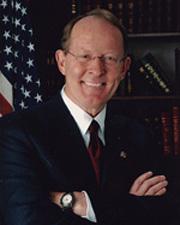
Sen. Lamar AlexanderR-TN · May 16, 2017

Mr. President, as in legislative session, I ask unanimous consent that the Committee on the Judiciary be discharged from further consideration of S. 867 and the Senate proceed to its immediate…

Bill Text

3 versions available

Reading Mode
Latest
Referred in HouseIssued May 17, 2017

IC

115th CONGRESS

1st Session

S. 867

IN THE HOUSE OF REPRESENTATIVES

May 17, 2017

Referred to the Committee on the Judiciary

AN ACT

To provide support for law enforcement agency efforts to protect the mental health and well-being of law enforcement officers, and for other purposes.

1.

Short title

This Act may be cited as the Law Enforcement Mental Health and Wellness Act of 2017.

2.

Support for law enforcement agencies

(a)

Interagency collaboration

The Attorney General shall consult with the Secretary of Defense and the Secretary of Veterans Affairs to submit to Congress a report, which shall be made publicly available, on Department of Defense and Department of Veterans Affairs mental health practices and services that could be adopted by Federal, State, local, or tribal law enforcement agencies.

(b)

Case studies

The Director of the Office of Community Oriented Policing Services shall submit to Congress a report—

(1)

that is similar to the report entitled Health, Safety, and Wellness Program Case Studies in Law Enforcement published by the Office of Community Oriented Policing Services in 2015; and

(2)

that focuses on case studies of programs designed primarily to address officer psychological health and well-being.

(c)

Peer mentoring pilot program

Section 1701(b) of the Omnibus Crime Control and Safe Streets Act of 1968 (42 U.S.C. 3796dd(b)) is amended—

(1)

in paragraph (21), by striking ; and and inserting a semicolon;

(2)

in paragraph (22), by striking the period at the end and inserting ; and; and

(3)

by adding at the end the following:

(23)

to establish peer mentoring mental health and wellness pilot programs within State, tribal, and local law enforcement agencies.

.

3.

Support for mental health providers

The Attorney General, in coordination with the Secretary of Health and Human Services, shall develop resources to educate mental health providers about the culture of Federal, State, tribal, and local law enforcement agencies and evidence-based therapies for mental health issues common to Federal, State, local, and tribal law enforcement officers.

4.

Support for officers

The Attorney General shall—

(1)

in consultation with Federal, State, local, and tribal law enforcement agencies—

(A)

identify and review the effectiveness of any existing crisis hotlines for law enforcement officers;

(B)

provide recommendations to Congress on whether Federal support for existing crisis hotlines or the creation of an alternative hotline would improve the effectiveness or use of the hotline; and

(C)

conduct research into the efficacy of an annual mental health check for law enforcement officers;

(2)

in consultation with the Secretary of Homeland Security and the head of other Federal agencies that employ law enforcement officers, examine the mental health and wellness needs of Federal law enforcement officers, including the efficacy of expanding peer mentoring programs for law enforcement officers at each Federal agency; and

(3)

ensure that any recommendations, resources, or programs provided under this Act protect the privacy of participating law enforcement officers.

Passed the Senate May 16, 2017.

Julie E. Adams,

Secretary