Madam Speaker, I ask unanimous consent that all Members have 5 legislative days to revise and extend their remarks and include extraneous material on the subject of my Special Order. Madam Speaker, I…
Madam Speaker, I ask unanimous consent that all Members have 5 legislative days to revise and extend their remarks and include extraneous material on the subject of my Special Order.
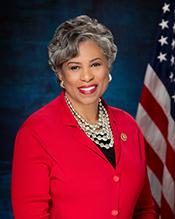
Madam Speaker, I rise today as the founder and co-chair of the Black Maternal Health Caucus. I want to take this time to briefly speak about the importance of Black maternal health.
Our country is in the midst of a national public crisis. Black mothers are dying.
Across the country, Black women from all walks of life are dying from preventable pregnancy-related complications at three to four times the rate of non-Hispanic White women. Sixty percent of maternal deaths are preventable. Their infants are twice as likely to die by their first birthday as infants born to White mothers.
Black women are 50 percent more likely than non-Hispanic White women to give birth preterm, accounting for more than half of the disparity in infant mortality rates among Black and non-Hispanic White women.
Reducing this gap through interventions like better medical care and increased social support can improve maternal outcomes for African American women, while also reducing racial disparities in infant mortality.
Research suggests that the cumulative stress of racism and sexism undermines Black women's health, making them more vulnerable to complications that endanger their lives and the lives of their infants. Unfortunately, current healthcare practices are inadequate in addressing the health consequences of living with the stress.
As a Black mother and as a grandmother, this issue is very personal to me. That is why Representative Lauren Underwood and I founded the Black Maternal Health Caucus, with
the goal of closing the racial disparities gap.
The caucus aims to raise awareness about this crisis, to educate Members of Congress, and to find meaningful legislative solutions to improve maternal health outcomes. We intend to amplify the voices and needs of mothers and families all across this Nation.
I have been working closely with healthcare providers and with stakeholders and policymakers to begin identifying a comprehensive path forward for eliminating these disparities.
On average, African American women receive lower quality healthcare than their non-Hispanic White peers. This disparity in care quality starts as early as birth, with African American infants in neonatal intensive care units receiving lower quality care than non-Hispanic White infants.
This continues throughout adulthood with three out of four Black women giving birth at low-quality hospitals where their risk of poor maternal health outcomes is the highest.
More than a third of Black women undergo cesarean sections, C- sections, even for low-risk pregnancies. This is 4 percent higher than the U.S. average, higher than any other racial or ethnic group.
Although a C-section can save lives when a pregnancy is high risk, it is, nevertheless, a major surgical procedure accompanied by risks, including surgical injury to either the mother or infant, infection, and heavy bleeding.
Here we have a few areas that we need to focus on. We must improve access to critical services. We must improve the quality of care provided to pregnant women. And we must address maternal and infant mental health.
May is Mental Health Month. Too often, however, maternal and infant mental health problems go unrecognized or unaddressed, particularly for women and infants of color, with devastating consequences.
We should also enhance supportive services for families before and after birth. All families need support to thrive, but not all have the support that they need.
Adjusting to parenthood can be especially difficult for families experiencing economic insecurity. As a consequence of structural racism, many families experiencing this insecurity are in lower-income communities of color.
Programs that help families meet their basic needs--including nutrition assistance, housing assistance, and other social supports-- are underfunded, and the application and enrollment process can be difficult and time-consuming.
We must also improve data collection and oversight. Collecting and sharing reliable, consistent data on maternal and infant mortality is essential to developing solutions.
Although some progress has been made, such as H.R. 1318, which helped to provide States with resources for maternal mortality review committees, there is still more work we need to do.
To address these problems, Federal policymakers should help States standardize and improve the quality of the data being collected and ensure diversity among stakeholders who serve on mortality review committees.
There is no easy fix for this issue. It is going to require many steps to begin closing the gaps.
I look forward to working with my colleagues to begin implementing some of these important strategies to save our mothers.
Madam Speaker, I yield to the gentlewoman from Michigan (Mrs. Lawrence), my good friend who is co-chair of the Democratic Women's Caucus.
Madam Speaker, I thank the congresswoman from Michigan, not only for her work with the Women's Caucus but all of her work in this area.
Of course, when we can improve the quality of health for women, we are going to make our families much more sustainable.
Madam Speaker, it is my pleasure to welcome someone who has been a leader on the issue of health, who chairs the CBC Health Braintrust, and who has continued to lift her voice in the area of health.
She is a member, as well, of the Energy and Commerce Committee. She is also the founder of the Black Women and Girls Caucus.
I am pleased to have my colleague from the State of Illinois, Robin Kelly, join us this evening to speak on this issue.
Madam Speaker, I yield to the gentlewoman from Illinois (Ms. Kelly).
Madam Speaker, I thank my colleague from Illinois, not only for her comments tonight but for all the work that she has done in this area.
It is a preventable issue and something that we can do something about. That is why we are here tonight to shed some more light on this, Madam Speaker, and to try to make sure that we are all educated so that we will know.
This comes right on the heels of Mother's Day. As we think about our mothers, our grandmothers, and all of those who have been mentors to us, this is an issue that we want to try to make right.
Madam Speaker, I am pleased to welcome the congresswoman from California, who is a senior member on the Appropriations Committee, has been a champion of reproductive rights, and sits on the Budget Committee.
Madam Speaker, I yield to the gentlewoman from California (Ms. Lee), my colleague.
Madam Speaker, I thank Congresswoman Lee. Black lives matter, and Black mamas' lives matter.
As you talked about your mother giving birth to you and the story that she told, I thought--I was reminded of 13 years ago, my daughter giving birth to her daughter who, they both almost didn't make it. She had a very difficult pregnancy, right at the end. She had to have a Cesarean, what we call a C-section, and she had to give blood. All kinds of things started going wrong at the last minute.
And once she did return home--because the baby was premature, 2 months early, once she did go home, probably less than 10 days, she had to go back, she was having complications.
So the problems that our women have don't always occur while you are in the hospital, so they need to have that support, not only before the baby is born, but even after.
I thought about that, and it was a very difficult time for us. But now you wouldn't believe my granddaughter is taller than I am, and she is a really healthy young lady, a beautiful young lady.
But you have to think about that, that it does not matter. I think I may have heard the gentlewoman or one of our other speakers say, even your socioeconomic status, all those things really don't matter. Sometimes doctors don't really listen to women.
Madam Speaker, I thank the gentlewoman for her leadership and for all that she continues to do. I appreciate that very, very much; and thank her for being here as we kick off this Mother's Day. I am missing my mom. I know the gentlewoman is missing hers because they passed away very close to each other.
Madam Speaker, I thank the gentlewoman for being here and for her support of what we are trying to do collectively here in Congress.
Madam Speaker, it is my pleasure at this point to introduce another warrior, a champion here in the U.S. House, a member of the Judiciary Committee, Homeland Security Committee, who has continued to lift her voice over and over and over again.
Madam Speaker, how much time do I have remaining?
Madam Speaker, I yield to the gentlewoman from Texas (Ms. Jackson Lee).
Madam Speaker, I want to thank all of my colleagues for being here, and I yield back.