Mr. Speaker, I ask unanimous consent that all Members have 5 legislative days to revise and extend their remarks and introduce extraneous material into the Record on the topic of this Special Order.…
Mr. Speaker, I ask unanimous consent that all Members have 5 legislative days to revise and extend their remarks and introduce extraneous material into the Record on the topic of this Special Order.
Mr. Speaker, there has been a great deal of talk in the last few months on border security, what it takes to secure our border and what it takes to protect the safety and the security of the American people.
Today, we are taking a few minutes with different Members to share very powerful but very impactful stories from their districts. This is not hyperbole or set up for histrionics, but sometimes the message of actually what is going on in our country doesn't always cut through with our media outlets.
So today, the different Members, many of them have special relationships with these folks they will be referencing and talking about today in this Special Order.
Mr. Speaker, I yield to the gentleman from Indiana (Mr. Pence), our first speaker, who represents Indiana's Sixth District and serves on the Transportation and Infrastructure and Foreign Affairs Committees. But even more impressive to me is that Mr. Greg Pence is a veteran of our Marine Corps, and he is a successful businessman.
Mr. Speaker, I appreciate Mr. Pence's words today and the powerful expression of how it is impacting the State of Indiana.
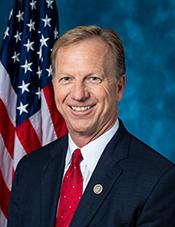
One of our new Members, a very accomplished gentleman himself, an aerospace engineer representing the First District of Oklahoma, has also worked within the McDonald's system and owns multiple restaurants throughout the different portions of Oklahoma and is actually on the national leadership team.
Mr. Speaker, I yield to the gentleman from Oklahoma (Mr. Kevin Hern), to share a little bit about his State of Oklahoma.
Mr. Speaker, I thank Mr. Hern for coming, and I appreciate his time.
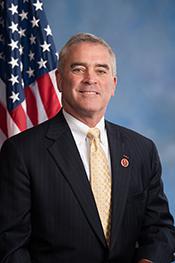
Our next speaker today is Representative Brad Wenstrup. In some circles, he is called Colonel Wenstrup. He is a great man and my classmate. He has been awarded the Bronze Star, as well as the Combat Action Badge, for his service.
In fact, it was on a baseball field a year and a half ago that that Combat Action Badge showed itself off again when he was the only one equipped to be able to put a tourniquet on Steve Scalise and save his life.
Mr. Speaker, I yield to the gentleman from Ohio (Mr. Wenstrup), my fellow classmate from Ohio's Second District.
Mr. Speaker, I thank the gentleman for his comments. It is my belief that that kind of common sense will prevail with the majority of the American people, knowing our job and continuing to work to keep the safety and security of the American people as a high priority.
Our next speaker tonight is a Member in his sophomore term but who already has many accomplishments in the political arena.
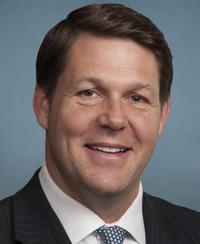
Mr. Speaker, I yield to the gentleman from Texas, Mr. Jodey Arrington, who
served under President George W. Bush and as chief of staff to the FDIC Chairman, representing Texas' 19th Congressional District.
Mr. Speaker, I thank Representative Arrington for coming, and I appreciate his kind remarks, and sobering ones, at the same time. We do have a problem at the border with drugs. We do have a problem with violence of illegal aliens. That is why we continue to message through this.
Just 2 nights ago, sitting right about there was my sister-in-law whose brother was a United States Army veteran and a good friend of mine who one day messed up his knee. He had surgery, and the next thing you know, he was addicted to pain killers, opioids. Opioids led to heroin, and then, unable to come off heroin, it led to him committing suicide 3 years ago.
This is a real problem. If we were able to cut down only a small percentage of the drugs, and if we were able to reduce only a small percentage of the murders, the sexual assaults, and the human trafficking, my question is: Would a border structure still not be worth it?
To me, that is a very commonsense question. How much does it need to be reduced before it is relevant to all of us?
Mr. Speaker, I yield to the gentleman from Mississippi (Mr. Guest), our next speaker this afternoon who is a solid new Member, a former district attorney from the State of Mississippi who is already serving on the Foreign Affairs Committee and Homeland Security Committee.
MR. GUEST. Mr. Speaker, I thank the gentleman for yielding.
As a former district attorney, I have seen firsthand how damaging narcotics and synthetic drugs can be to individuals, families, and our communities.
In 2017, drug overdoses killed 72,000 Americans, more than car crashes and gun violence combined. The most dangerous of these drugs, fentanyl, is 50 times more potent than heroin and accounted for almost twice the number of fatal overdoses in 2017.
Last year, law enforcement officers in Mississippi seized more than 800,000 dosage units of fentanyl. The fentanyl seized was enough to kill nearly 14 percent of the population of Mississippi.
This lethal narcotic is smuggled into our country by transnational criminal organizations or drug cartels. Just last month, Federal law enforcement officials seized more than 250 pounds of fentanyl at the Nogales port of entry on the United States-Mexico border.
As we continue to aggressively police our points of entry, drug cartels will attempt to gain access through the areas of the border that are not secured, forcing us to devote manpower to police these unsecured sections of our border.
It is apparent that drug cartels want to profit from the addiction and the destruction that these drugs have on American lives. This Congress has not only the opportunity but also the duty to act, to help limit the flow of drugs into the country and to protect our citizens by securing our southwest border.
Mr. Speaker, I thank Representative Guest for his comments. I appreciate his passion in sharing some of the firsthand experiences that he is seeing in the great State of Mississippi.
Our next two speakers are from border States that certainly have a perspective on what is going on as we see even right now.
One is an accomplished medical doctor who served and practiced there in the State of Texas for nearly three decades. He is not one of the louder Members, but he is often considered one of our more effective Members.
It is my privilege to yield to the gentleman from Texas, Representative Michael Burgess.
Mr. Speaker, I will not soon forget those lines: I did my job putting on my uniform every day. Congressman, if you had been doing your job, my daughter would be here today.
I hope that message resonates in all 434 Members who are currently in the House.
Mr. Speaker, if Congressmen and Congresswomen would do their job, these children, these daughters, these sons, these mothers, and these wives and husbands would still be here today.
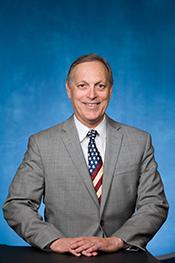
Mr. Speaker, I yield to the gentleman from Arizona (Mr. Biggs). Andy Biggs is one of the truth tellers in this House. He is from Arizona's Fifth District. He is a retired attorney who also served in the Arizona legislature for 14 years, and he is a bold voice in the United States House.
Mr. Speaker, we acknowledge there are problems with ports of entry. We have no problem in increasing training or border agents. We are not opposed to that at all. What we don't understand is why there is not an all-of-the-above approach, a commonsense approach that would allow us to continue to reduce and sometimes eliminate some of the issues that we are seeing.
My next speaker is a classmate of mine serving faithfully on the Agriculture and the Education and Labor
Committees. He is a business owner who is responsible for creating thousands of jobs from the land that he comes from, Augusta, Georgia, representing Georgia's 12th District.
Mr. Speaker, I yield to the gentleman from Georgia (Mr. Allen).
Mr. Speaker, I appreciate the gentleman's sincere words.
Mr. Speaker, one of my friends is another Member from Georgia who serves on the Committee on Energy and Commerce, actually owns Carter's Pharmacy, a pharmacist by nature, and actually became a mayor and was a general assembly member. He is one of the hardest working guys in this House. It is my privilege to acknowledge Representative Buddy Carter from Georgia's First.
Mr. Speaker, I yield to the gentleman from Georgia (Mr. Carter).
I appreciate Representative Carter's passion on this issue and laying out, really, a heartfelt case why border security is so important.
So many times we hear the argument that there are as many and, in some places, even a higher percentage of assaults or crimes, murders, et cetera, in communities with American citizens as there are with some of the illegal immigrants.
My question is: Does that make it okay? See, that is the thing that we have to take a look at from a commonsense perspective is that, when we do begin to reduce this, it allows us to have the resources to be able to concentrate on some of the areas as well.
A class member from Arkansas has quite a distinguished history. Prior to his congressional service, Mr. Hill was a commercial banker and an investment manager for two decades. But, not only that, President George H.W. Bush appointed Mr. Hill to be Executive Secretary to the President's Economic Policy Council, where he coordinated all White House economic policy. He does a great job and works hard on our Financial Services Committee as well.
Mr. Speaker, I yield to the gentleman from Arkansas (Mr. Hill), my friend from Arkansas' Second District.
Mr. Speaker, I appreciate the gentleman's work and his friendship in this House as well.
A new Member from Texas, someone who represents the southwest Texas area, I believe, represents portions of Austin, Texas, as well, someone who is new but no less experienced, a former first assistant attorney general and a former Federal prosecutor, Mr. Speaker, I yield to the gentleman from Texas (Mr. Roy).
Mr. Speaker, this evening, we have heard from Members across the country about the devastating toll illegal immigration has had on American families and American workers. The Democrats' divisive and disconnected immigration agenda has real consequences and leads to real victims.
What makes this such a calamity is not only the cost to Americans that we have talked about tonight, but the fact that these tragedies are completely avoidable if Congress, as we heard earlier, would do its job and secure the border.
I want to tell you about Miss Sharon Gross from my district in North Carolina. Just over a year ago, Sharon had finished a 5-mile bike ride with her 18-year-old daughter in Creekside Park, where I have been, in Archdale, North Carolina. They began their trip home in ``Roxie,'' the vehicle her daughter received for her 16th birthday.
As her daughter was driving home, she saw a white SUV heading the opposite direction and beginning to swerve from the outer lane. The vehicle hit them head-on. Sharon described the next moment: ``The next thing I remember was the sound of the metal crashing and twisting in front of us. I vaguely remember everyone running to us and telling us to get out because the car was about to explode. I couldn't get out and could barely breathe.''
Sharon thanks God that her daughter was largely unharmed, but Sharon suffered five broken bones in her back and a severely broken sternum, leaving a large hole in her chest. She now has chronic pain that impacts her daily life.
The driver of the white SUV was a man by the name of Mr. Rodriguez. He had a blood alcohol concentration of .20, 2\1/2\ times the legal limit in North Carolina.
Mr. Rodriguez is in our country illegally. He did not own the vehicle he was driving, nor did he even have a driver's license, and this was his third drunk driving charge. He then served only 11 months in prison and has now been released.
Mr. Rodriguez's time in prison may have come to an end, but the physical, mental, and emotional scars that Sharon has, well, they will never fade. Making matters worse, Mr. Rodriguez was uninsured, leaving thousands of dollars in medical bills, adding to the emotional and physical and now financial pain for Sharon and her family.
Sharon stated: ``It is very difficult for me to have all this constant pain and then deal with all the emotions I am feeling about someone who comes into our country illegally and gets a little pat on the hand when he breaks all our laws.'' She said: ``To say my life was shattered is an understatement.''
You see, we can do better. We must do better for Sharon and for all Americans who have been impacted by illegal immigration. That means an all-of-the-above approach to border security, including construction of additional physical structures and barriers. Border security not only helps keep our families safe, but it also continues the American tradition of being a welcoming Nation.
Many of us are proud of our legal immigrant heritage. Though it goes underreported, America has the most generous legal system in the world. Think about it. We proudly welcome 1 million legal immigrants into our country every single year.
In fact, just last year, the first full year of the Trump administration in 2017, the number was 1,127,167 new citizens whom we welcomed. These are people from all over the world who have raised their right hand, promising to obey the laws of our land and contribute to our blessed Nation.
As President Trump said on this very floor just 2 days ago: ``Legal immigrants enrich our Nation and strengthen our society in countless ways. I want people to come into our country . . . but they have to come in legally.''
You see, in America, we can do both. We can continue to be the beacon of hope throughout the world, and we can do much better in protecting the American people. After all, it is the first oath we take.
But the clock is ticking. We face another impasse this week. Will our Democratic colleagues support commonsense policies to end this crisis, or will they continue to disengage on solutions, suggesting ideas like abolishing ICE and stopping additional funding for the Department of Homeland Security?
It is time to put productivity over personality and people over politics. Anything less would be immoral.
Mr. Speaker, I yield back the balance of my time.