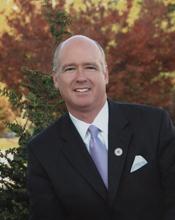
Mr. Speaker, by direction of the Committee on Rules, I call up House Resolution 61 and ask for its immediate consideration. Mr. Speaker, for the purpose of debate only, I yield the customary 30…
Mr. Speaker, by direction of the Committee on Rules, I call up House Resolution 61 and ask for its immediate consideration.
Mr. Speaker, for the purpose of debate only, I yield the customary 30 minutes to the gentleman from Georgia (Mr. Woodall), pending which time I yield myself such time as I may consume. During consideration of this resolution, all time yielded is for the purpose of debate only.
General Leave
Mr. Speaker, I ask unanimous consent that all Members have 5 legislative days to revise and extend their remarks.
Mr. Speaker, on Tuesday, the Rules Committee met and reported a rule, House Resolution 61, providing for consideration of H.R. 648, the Consolidated Appropriations Act of 2019, under a closed rule.
The rule provides 1 hour of debate equally divided and controlled by the chair and ranking member of the Committee on Appropriations. It also provides for consideration of H.J. Res. 31, which makes further continuing appropriations for the Department of Homeland Security for fiscal year 2019 under a closed rule. The rule provides 1 hour of debate equally divided and controlled by the chair and ranking member of the Appropriations Committee.
Additionally, it extends same-day authority for appropriations measures through January 30 and suspension authority through February 1.
Mr. Speaker, we are on day 33 of the Trump shutdown, the longest government shutdown in American history. Hundreds of thousands of Federal workers will miss a paycheck for the second time since the President plunged us into this mess.
The very people who keep our Nation safe are struggling to put food on the table, people like men and women in the Coast Guard, FBI agents, Border Patrol officers, and TSA agents.
Makeshift food banks are being opened across the country to help these workers and their families get by. Right outside our Nation's Capital, in Northern Virginia, some Federal workers waited more than an hour recently at a local food bank. Demand was so high that a tenth of the food was gone in the first 5 minutes.
Because of the President's shutdown, 15 million households could see a gap in their monthly SNAP benefits that lasts more than 40 days. Four million low-income households could see a gap that lasts more than 50 days.
This program is their lifeline, Mr. Speaker. These families don't have a plan B.
I have given weekly end-hunger-now speeches on this floor since February of 2013, and I have made it clear time and time again that hunger is not only unacceptable in this country, the richest country in the history of the world, but it is a political condition.
We have the resources. We have what it takes. What we need to muster is the political will to do something about it. But here we are, and as I said, it is embarrassing enough that the wealthiest nation on the planet has an ongoing hunger crisis, but I never, ever imagined that a President of the United States would exacerbate it like this.
This is disgusting. This is unacceptable. This is unconscionable.
Let us be clear: It is the President's bruised ego that keeps a quarter of our government closed today.
Now, his latest so-called compromise proposal isn't really a compromise at all. In fact, it brings new meaning to the word ``cruel.''
Not only does it fail to provide a permanent solution for the Dreamers or TPS recipients, it only covers a fraction of eligible Dreamers, it excludes TPS holders from Asia and Africa, and it rewrites the law for future DACA recipients, TPS holders, and asylum seekers that will make it all but impossible for anyone to qualify.
These are the same old, tired, and extremist ideas the President and his advisers floated last year. They were rejected by both the Republican-controlled House and the Republican-controlled Senate. This is not a compromise. This is called backwards.
Now, if this administration wants to target refugees, people fleeing persecution, people fleeing for their life, if that is what he wants to do, then at least he should have the guts to do it in an open hearing for the world to see.
Now, President Trump is treating this like some reality show. He doesn't want to look bad in the right-wing press despite the fact that Members of both parties are refusing to fund his ineffective wall. If the President really wants to reach a real compromise, then he should log off Twitter and actually sit down with us and be willing to actually negotiate; no more storming out of the Situation Room and no more of his my-way-or-the-highway approach. Work with us for a change.
For whatever reason, Mr. Speaker, he has been unwilling to do that. President Trump may not have the fortitude to get us out of this mess that he created, but this majority does. So instead of following the President who got us into this mess, we have an opportunity to lead. Passing these bipartisan, bicameral bills is what leadership looks like.
Now, many of my Republican friends have asked to consider a plan that doesn't cede the House's will by considering a Senate bill. Well, today is their day because we are considering a bipartisan, bicameral compromise. This six-bill package is the result of real negotiations between the Appropriations Committees in the House and Senate. It is a true compromise that would reopen the entire government apart from the Department of Homeland Security. In fact, these negotiated bills are exactly what my good friends on the other side of the aisle have been asking us over the past week to take up. Again, this is all last year's work in the last session.
I recognize that we don't have a similar agreement on the Homeland Security measure included here, but this short-term CR will get our TSA agents paid while all other parties get back to the negotiating table.
The minibus includes $328 million in new dollars for border security that we know will actually work. The funding will increase infrastructure investments at our ports of entry; install new technology that will scan for drugs, weapons, and contraband; put in place technology to detect unauthorized crossings; and fund more immigration judges. This is what smart security looks like in the 21st century, Mr. Speaker, not some medieval wall.
Now, these details have already been agreed to by Democrats and Republicans on both sides of the Capitol. The majority is standing by our word. I urge my Republican friends: Take yes for an answer.
The President may be proud to have shut down this government, but this is nothing to be proud of.
How can anybody be proud that 800,000 Federal workers are about to miss a second paycheck, that our TSA workers are calling in sick so they can work another job that actually helps them pay the bills, or the economy is losing growth at twice the speed originally estimated?
I could go on and on and on and on, Mr. Speaker, but I know each of us has heard from people in our districts. Our offices are getting these calls every day, in fact, every hour and every minute now. We are all hearing from struggling constituents. Their message is the same: End this shutdown. End this shutdown.
This doesn't seem, unfortunately, to be a priority for President Trump. He is out there tweeting about which player should be in the Baseball Hall of Fame. Give me a break. Maybe he doesn't know what it is like in the real world. After all, the President got his start through what he has called a small loan from his dad that reports now estimate could have totaled more than $60 million. That is the world he lives in.
But families are struggling and left to wonder how they are going to afford to put food on the table or how they are going to pay for medicine without a paycheck.
Enough of the games. Congress has the power to end this shutdown.
Mr. Speaker, I urge all my colleagues to vote ``yes'' on this rule and give the underlying legislation the strong veto-proof vote it deserves. Let's finally turn the lights back on. Listen to your constituents, I say to my friends on the other side of the aisle. Listen to what they are saying. Turn the lights back on.
Mr. Speaker, I reserve the balance of my time.
Mr. Speaker, I yield myself such time as I may consume.
Let me just remind my colleague that the bills that we are taking up here today were the result of a robust amendment process and robust debate in the last Congress. This is all last year's work.
I also remind the gentleman he is right about one thing, that we haven't sent the President a bill from both Chambers, but we almost did. If he remembers correctly, in December, when the Republicans controlled the House and the Republicans controlled the Senate and they, obviously, controlled the White House, we actually came together and the Senate passed a bill that would keep the government running and open, unanimously.
I even supported the gentleman's martial law rule to be able to bring up that legislation expeditiously so we could do our work and so that nobody would have to be anxious over the holidays as to whether or not they were going to get paid.
We were about to vote on it, and it was agreed on by Democrats and Republicans. There was no controversy. And then the President turned on rightwing TV or was listening to rightwing radio, and Ann Coulter and some of these other rightwing extremists said: No, you can't do that.
And he changed his mind, and everything came to a standstill. So all this bipartisan work was for naught.
What we are bringing up here today is all the bipartisan work that many of my Republican colleagues on the Appropriations Committee, Democrats and Republicans, worked hard on to come up with a compromise that is good. It is good. Yet my friends say: Well, no. Let's start all over again.
The bottom line is the other side left us with a mess. When they controlled everything, they weren't able to get the job done.
Let me just say, here are some facts:
This is the longest shutdown in history, but it is historic for another reason. This is the first time in history that a Congress has ended in a government shutdown. Never before has a Congress left it to the next Congress to reopen the government. With all due respect to my friends, that is what my friends left us with.
On top of that, Republicans had control of the White House, the Senate, and the House last year, and they couldn't keep the lights on. Then Republicans went home for Christmas and New Year's and every day in between. I know because I was on the floor multiple times begging to be recognized to offer solutions, and I was denied even the ability to offer a solution.
Since we took charge, we have nonstop offered options. Now some Members want to complain about how we are cleaning up the mess that was left to us.
Imagine this. Imagine if someone dumped a bunch of garbage on your lawn and then started complaining about how you weren't cleaning it up. That is what is happening here.
I would suggest that my friends kind of save their criticisms for a time when we aren't cleaning up after all of them.
I just want to make one other point. The gentleman said that we have martial law, same-day authority in this rule to bring up anything we want. No, that is not the case.
When my friends were in charge, they did. They had martial law to bring up anything they wanted to, and they were trying to bring up a cheese bill, if I remember correctly, instead of a bill to keep the government open in the last days of December.
No. We limit it to appropriations matters, and we want to be able to, if we can come to a deal, if we come to some sort of solution, to be able to bring something up immediately to be able to get everybody the paychecks to which they are entitled.
I know the gentleman was home over the holiday weekend, and I was, too. My constituents asked me the question over and over: I get it that there is a disagreement over the President's border wall, but why do you have to shut the entire government down over that issue? Why can't you just continue in negotiation? Why do you have to deny TSA workers a paycheck? Why is that okay? Why is that acceptable? Why are they pawns in this? Or men and women who serve in our Coast Guard, why is that okay to say: You don't get paid because the President is having a temper tantrum and he is not getting his way? All of a sudden, we have to deny them a paycheck?
People don't understand why my Republican friends think this is acceptable. The gentleman from Georgia knows that the reason why a bill is not on the President's desk is because the Senate majority leader, Mr. McConnell, is basically doing the President's bidding. He said: I am not going to bring anything to the floor that the President doesn't want to sign.
We have another option here, too: We can actually pass bipartisan bills that should win overwhelming support. We should pass them with veto-proof margins and basically say to the President: We don't believe in government by blackmail. That is not the way we do things around here. That is not the way this government is supposed to work.
We ought to reopen the government, and we ought to engage in serious discussions about how we improve our border security. We have some great ideas on how to do that. We have some ideas that I mentioned in my opening speech on ways we can improve our border security.
We think a border wall is a ridiculous idea. But if you want to talk about a wall, fine, but don't--don't--hold hundreds of thousands of workers hostage.
We have an opportunity now to set these hostages that the President has taken free. Let's do it.
Mr. Speaker, I reserve the balance of my time.
Mr. Speaker, I yield myself such time as I may consume.
Let me say, I think we have agreement here. We all want to open the government. We all want to reopen the government. I think the difference here is that we have no preconditions on reopening the government. My Republican friends do have preconditions, and it is whatever the President decides he wants to tack on at the last minute.
So there is a difference here. We have no preconditions. Open the government up, start paying all of our Federal workers, let's get our country back to normal here in terms of the Federal workforce, but my Republican friends have all these strings that they want to attach to it.
The gentleman from Michigan said, you know, he refers to one of the ``gotcha'' amendments that the Republicans offered on backpay for Federal workers. I should remind him that we actually passed a law here, S. 24, which created an entitlement to backpay for
Federal workers who aren't getting paid during the shutdown. So we actually dealt with that here. We actually passed a law, and, that, he may not have known that.
I should also say to my Republican friends, understand that the American people are not on your side on this. There is a recent ``CBS News'' poll--7 in 10 Americans do not think the issue of a border wall is worth a government shutdown--7 in 10.
Now, I know there is this--you know, the President is worried about that 25, 30 percent of his base, but the vast majority of the people in this country aren't with him on this. They are not with you on this by not stepping up and saying we ought to reopen our government.
You want to have a negotiation on border security, we have lots of ideas to enhance border security, and that is based on conversations with people on the border who talk about increased technology, who talk about better infrastructure, who talk about more personnel, you know, more asylum judges. I can go on and on and on. We are all for that. Let's continue that conversation.
But why in the world does this President insist on shutting the government down until he gets his way on this border wall? This is not the way you do a negotiation. And, again, if you want to reopen the government, and we do, we have no conditions. Reopen the government. It is that simple.
And the bills--the gentleman from Michigan talked about bills that the Senate would pass. Some of the bills that we are sending over to the Senate passed unanimously. Boy, I mean, if that is not a signal that they overwhelmingly agree with the substance of these bills, I don't know what is, but they did. They voted unanimously, in some cases, for some of these bills we are sending over here.
Mr. Speaker, I include in the Record an article from ``The Washington Post'' titled: ``Unacceptable: Coast Guard's top officer criticizes lack of payment in government shutdown.''
[From the Washington Post, Jan. 22, 2019]
`Unacceptable': Coast Guard's Top Officer Criticizes Lack of Payment in
Government Shutdown
(By Dan Lamothe)
The Coast Guard's top admiral said Tuesday that members of
the armed forces should not be expected to shoulder the
burden of the partial government shutdown, citing the
``anxiety and stress'' it is causing military families as
their pay is withheld.
Adm. Karl Schultz, the Coast Guard commandant, said he is
heartened by the outpouring of support Coast Guard personnel
have received across the country but expects more.
``Ultimately, I find it unacceptable that Coast Guard men
and women have to rely on food pantries and donations to get
through day-to-day life as service members,'' he said,
speaking on a video posted to his Twitter account.
The comments marked the admiral's most forceful remarks
about the shutdown since it began 32 days ago amid a dispute
over President Trump's demands for funding for a southern
border wall. While the majority of the U.S. military is part
of the Defense Department and has funding, the Department of
Homeland Security and is agencies, including the Coast Guard,
are affected by the shutdown.
About 41,000 active-duty service members and 2,100
civilians who are considered ``essential personnel'' are
working without a paycheck under the promise they will get
back pay when the shutdown is resolved, said Lt. Cmdr. Scott
McBride, a service spokesman. That situation grew more urgent
Jan. 15, when service members missed a paycheck. An
additional 6,000 civilians working for the service are
furloughed.
Overall, about 800,000 federal workers are not receiving
paychecks amid the shutdown, with nearly half furloughed.
Schultz, appearing alongside the service's top enlisted
man, Master Chief Petty Officer of the Coast Guard Jason M.
Vanderhaden, noted that civilian employees will miss another
paycheck Friday and called it a 'sobering'' situation.
Senior Coast Guard officials and the American public, he
said, ``stand in awe'' of the affected service members'
'continued dedication to duty and resilience'' and that of
their families.
The admiral, in keeping with the military's tradition of
not commenting directly on politics, did not blame anyone
specific for the shutdown. He and Homeland Security Secretary
Kirstjen Nielsen are making their case for the service on
Capitol Hill, Schultz said.
The Coast Guard has continued to carry out operations
across the globe during the shutdown.
On Sunday, the Coast Guard Cutter Bertholf departed from
Alameda, Calif., with about 170 people aboard for a
deployment to the Pacific that will last up to six months.
The Defense Department will reimburse the service for the
deployment, but Coast Guard personnel still will not be paid
until the shutdown is resolved.
``The crew, like all other [Coast Guard] members, are
affected by the lapse of appropriations, and are not being
paid,'' said Lt. Cmdr. Steve Brickey, a service spokesman.
``It is always difficult to deploy for months and leave
behind family and loved ones. That stress is of course
magnified when you add on the uncertainly of the shutdown.''
Admiral Schultz, the Coast Guard's commandant said: ``Ultimately, I find it unacceptable that Coast Guard men and women have to rely on food pantries and donations to get through day-to-day life as servicemembers.''
In total, 41,000 Active Duty servicemembers and 2,100 civilians are essential personnel and working without pay and have been for 33 days now. An additional 6,000 are furloughed. As of this Friday, these brave men and women will have missed two paychecks. That is unacceptable.
Mr. Speaker, I include in the Record an article titled: ``America's veterans said to be disproportionately affected by government shutdown.''
[From ABC News, Jan. 9, 2019]
America's Veterans Said To Be Disproportionately Affected by Government
Shutdown
(By Elizabeth McLaughlin)
As the partial government shutdown continues for a third
week, veterans groups are sounding the alarm because of what
they say is the disproportionate impact on America's veterans
and a growing fear that financial uncertainty could lead to
self-harm.
An estimated one-third of the federal workforce is made up
of veterans, according to the Office of Personnel Management,
meaning that more than 250,000 veterans are not currently
receiving paychecks.
``This shutdown has consequences that go beyond loss of
pay,'' the Union Veterans Council said in a statement this
week. ``Financial instability is one of the main cause of
suicides among the veterans' community. These hard-working
men and women who sacrificed so much for their country should
not have their families held hostage by lawmakers that cannot
relate to living paycheck to paycheck.''
Edward M. Canales is a local union president with the
American Federation of Government Employees and a veteran
liaison officer who serves as a resource to veterans working
in the U.S. Bureau of Prisons west of the Mississippi River.
He told ABC News that he's received numerous calls from
veterans who aren't able to support their families during the
shutdown and express ``no positive outlook on the future.''
``If this shutdown does not stop, we are going to have
fatalities. We're going to have suicides,'' he said.
Canales, a U.S. Army veteran himself who deployed to Iraq
during Operation Desert Storm, said he is referring calls to
the Department of Veterans Affairs hotline out of concern
that a veteran will self-harm.
He called the shutdown ``shameful,'' saying its ``slapping
every veteran in the face who has served their country.''
As a special investigative service technician who worked in
the federal prison system for 26 years, Canales is currently
not receiving his retirement pay.
Toby Hauck, a six-year Air Force veteran, is an air traffic
controller in Aurora, Illinois, who has gone without a
paycheck since Dec. 31. He told ABC News that his father and
grandfather served in the U.S. military and now his son and
daughter-in-law are deploying overseas at the end of the
month.
Hauck and his wife, a neonatal intensive care unit nurse,
will be looking after their two-and-a-half-year-old
granddaughter during the ten-month deployment, and the
continued lack of pay causes added stress to their already
hectic jobs, he said.
``We are hardworking, proud American employees doing a job
for the American public that is essential as an air traffic
controller,'' said Hauck, who is also a representative for
the National Air Traffic Controllers Association. ``It's not
acceptable as a veteran, as a federal employee, as an air
traffic controller to use my profession and my livelihood as
a political football.''
``[Veterans] are very proud of our heritage and what we've
done for the country. And those of us who continue to serve
the federal government as a federal employee continue that
pride throughout their careers,'' he added.
The Union Veterans Council said in a statement this week, ``Financial instability is one of the main causes of suicide among the veterans' community. These hardworking men and women who sacrificed so much for their country should not have their families held hostage by lawmakers that cannot relate to living paycheck to paycheck.''
According to the Office of Personnel Management, one-third of the Federal workforce is made up of veterans. That means 250,000 veterans are not receiving paychecks right now during this
Trump shutdown. That is an absolute disgrace.
Mr. Speaker, as the Trump shutdown continues, hundreds of Internal Revenue Service employees have received permission to skip work due to financial hardships, and absences are only expected to grow.
I would like to share a story about Marissa Scott, an IRS employee who is gravely affected by this Trump shutdown. Ms. Scott lives outside of Kansas City, Missouri. She drives 98 miles roundtrip to work each day. Right now, she cannot afford to fill her gas tank and has stopped going to work.
She shared that she typically helps 50 people a day with their tax returns and fears that this shutdown may cause delays in tax refunds for months as more employees like her are unable to continue working without a paycheck. These are tax refunds that Americans rely on and are eagerly waiting to be processed.
Mr. Speaker, I include in the Record an article from ``The Washington Post'' titled: ``Hundreds of IRS employees are skipping work. That could delay tax refunds.'' It also details Ms. Scott's story.
[From the Washington Post, Jan. 22, 2019]
Hundreds of IRS Employees Are Skipping Work. That Could Delay Tax
Refunds
(By Danielle Paquette, Lisa Rein, Jeff Stein and Kimberly Kindy)
Hundreds of Internal Revenue Service employees have
received permission to skip work during the partial
government shutdown due to financial hardship, and union
leaders said Tuesday that they expected absences to surge as
part of a coordinated protest that could hamper the
government's ability to process taxpayer refunds on time.
The Trump administration last week ordered at least 30,000
IRS workers back to their offices, where they have been
working to process refunds without pay. It was one of the
biggest steps the government has taken to mitigate the
shutdown's impact on Americans' lives.
But IRS employees across the country--some in coordinated
protest, others out of financial necessity--won't be clocking
in, according to Tony Reardon, president of the National
Treasury Employees Union, and several local union officials.
The work action is widespread and includes employees from a
processing center in Ogden, Utah, to the Brookhaven campus on
New York's Long Island.
The move is the leading edge of pushback from within the
IRS, and it signals the potential for civil servants to take
actions that could slow or cripple government functions as
the shutdown's political stalemate continues in Washington.
U.S. Department of Agriculture meat inspectors have begun to
call in sick, Transportation Security Administration sickouts
at airports have been rising, and federal law enforcement
agencies say the shutdown is increasing stress among agents
and affecting investigations.
``They are definitely angry that they're not getting paid,
and maybe some of them are angry enough to express their
anger this way,'' said Reardon, whose union represents
150,000 employees at 33 federal agencies and departments.
``But these employees live paycheck to paycheck, and they
can't scrape up the dollars to get to work or pay for child
care.''
Not receiving pay for more than a month has taken a toll on
employees across the government, but especially on those who
are not in high-salary jobs. The employees summoned back from
furlough to process tax refunds are paid between $25,800 and
$51,000 a year, depending on their seniority. IRS employees
will miss a second paycheck Monday if the government does not
reopen this week.
``I'm at the point where I cannot afford to go to work,''
said Marissa Scott, 31, an IRS customer service
representative who is out on hardship leave. Scott lives
outside Kansas City, Mo., and drives 98 miles round trip to
work each day. ``I cannot afford to fill my gas tank.''
Scott, who has worked at the IRS for four years, says she
typically helps as many as 50 people a day with their returns
during tax season, including U.S. troops stationed overseas.
She said the shutdown could delay refunds for months, and
without employees like her on the job, ``it's going to be a
disaster all around.''
Many of the IRS employees who are choosing not to come to
work despite getting called back are taking advantage of a
provision in the union contract that allows them to miss work
if they suffer a ``hardship'' during a shutdown, according to
the labor groups.
That could mean a blown car tire, an empty gas tank or a
child-care bill.
``I have fielded no less than 30 to 40 calls, emails or
text messages about hardship requests from employees daily
since Thursday,'' said Shannon Ellis, president of the NTEU's
Chapter 66 in Kansas City.
In Andover, Mass., more than 100 customer service
representatives, electronic filing workers and other IRS
employees plan to use the hardship exemption and won't report
to work, said Gary Karibian, chapter president of a local
union.
``I would say a majority of employees are calling out under
hardship,'' Karibian said. ``I'm getting reports whole teams
are requesting out. One person told me, `I'm the only one on
my team here.' ''
The union lacks an official head count of absent workers--
the IRS declined to share data on hardship exemptions--but
staffers in Fresno, Calif.; Austin; Andover; Kansas City and
Atlanta, among other locations, say they won't be showing up
for work, Reardon said.
Duncan Giles, who has worked for 24 years at an IRS call
center in Indianapolis, said more workers are requesting
hardship leave as they learn it exists.
``The more this goes on and the tougher it is to get to
work--they simply cannot afford it,'' said Giles, president
of NTEU Chapter 49, noting that about 30 of the 170 employees
who have been called back to work in Indianapolis have
requested the exemption. ``Every single person wants to be at
work. They want to help the American taxpayer. But we have to
pay for gas and child care.''
The hardship exemption allows IRS employees not to have to
use sick days to be absent from work, and managers must
approve the exemptions.
Lawmakers also have heard reports of IRS staffers intending
to miss work and are planning to ask Treasury, Secretary
Steven Mnuchin for details when he testifies on Capitol Hill
this Thursday, a House aide said.
The IRS declined to say how many workers are on hardship
leave, and spokesman Matt Leas said the IRS is continuing its
work to prepare for the beginning of filing season next week.
``We are continuing our recall operations, and we continue
to assess the situation at this time,'' Leas said.
The IRS employees' moves come amid broad uncertainty about
the Trump administration's attempts to minimize the impact of
the shutdown. On Sunday, the number of TSA agents who failed
to show up for work hit a record 10 percent, resulting in
long wait times. Guards at federal prisons also are calling
out at high rates, with union officials at 10 prisons
contacted by The Washington Post this month saying the number
of employees skipping work has doubled.
As a result, officers who report for duty often are working
16-hour shifts, and prison secretaries and janitors are being
forced to patrol the halls and yards.
``All I have is pepper spray and a radio to call for
help,'' said 52-year-old Opal Brown, who works as a secretary
at Hazelton Federal Correctional Institution in West
Virginia.
The FBI Agents Association said in a report Tuesday that
the shutdown is hampering the ability of agents to perform
their ``duties and fund necessary operations and
investigations.''
USDA meat inspectors also have begun calling in sick--in
numbers large enough to trigger an agency crackdown. The
inspectors were told Jan. 11 to bring in a doctor's note,
even if they were ill for a single day, records show.
Six days later, after protests from union leaders, agency
officials reverted to existing policy, which calls for a
doctor's note after three days.
Some front-line managers at the IRS have threatened their
employees and said they could lose their jobs if they put in
for the exemption, but Reardon, the union leader, said most
have been instructed by senior management to approve the
requests.
IRS employees are some of the most impactful federal
workers caught in the middle of the shutdown, as the tax
filing season begins and millions of Americans are expected
to seek tax refunds in February. Last year, more than $140
billion in tax refunds was paid out through early March,
according to IRS data.
Trump has expressed an interest in making sure that tax
refunds are paid out next month, believing that if they are
delayed he could face major public backlash. His budget
office took the unprecedented step this month of ordering
thousands of unpaid IRS workers back to the office, saying
that processing refunds was an ``essential'' government
function even if the workers weren't paid.
As much as 75 percent of the roughly 4,000 furloughed IRS
employees in Kansas City could qualify for hardship leave,
said Christina Bennett, executive vice president of the local
National Treasury Employees Union chapter.``Right now,
they're being lenient,'' Bennett said.
Employees who process tax refunds, she said, are among the
lowest-paid IRS workers. Some are worried about losing their
cars.
Bennett, 63, who has worked nearly four decades at the IRS,
most recently as an accountant, said she, too, can no longer
afford her commute. She plans to request hardship leave if
the government calls her back to work.
``I just don't have it,'' she said. ``I'd have to walk a
half-hour to get to a bus stop. And it's so cold. We've got
rain, snow, rain, snow.''
Sakeya Cooks, 24, another IRS worker who guides taxpayers
through the refund process, said she might never report back
to work. She already has applied for a new job at a Kansas
City bank.
``How am I supposed to live like this?'' she said. ``I'm
worried about losing my apartment.''
John Koskinen, a former IRS commissioner, said federal
employees are dedicated to the agency's mission but might be
reaching their breaking point.
``As you put more and more pressure on the system, you
increase the risk of a significant glitch,'' Koskinen said.
``If I were the
administration, I'd be troubled. The pressure is going to
mount.''
Mr. Speaker, I yield myself such time as I may consume.
Let me just say, at the outset here, that if we all agree that the government should be reopened, then what is there to negotiate about? We should just open up the government.
We have no preconditions about opening up the government. We have none. The gentleman from Georgia apparently has a precondition: whatever the President's whim is on a particular day. Yeah, the President did campaign on building a wall, but he didn't get up there and say: We want to build a wall and you pay for it, American taxpayers. What he campaigned on was saying: I want to build a wall, and Mexico is going to pay for it.
Well, he has had 2 years, and, obviously, he can't get Mexico to pay for it, so he wants to saddle the American taxpayers with that bill.
So, look, the bottom line is, we believe that border security is an important issue, and we, on this side, have been more than willing to invest in border security, and we are going to continue to do that.
As I mentioned before to the gentleman, President Trump's shutdown has put a strain on local and Federal law enforcement, undermining cooperation between them that helps keep our communities safe. While he is having his temper tantrum, you know, our local law enforcement officials are feeling the strain. That is why local law enforcement leaders across the country, including those serving in border States, are calling for an end to the shutdown.
Mr. Speaker, I include in the Record a letter to President Trump and Members of Congress.
[From the Law Enforcement Immigration Task Force, Jan. 22, 2019]
Law Enforcement Leaders Call for an End to Shutdown
Dear President Trump and Members of Congress: As law
enforcement leaders who support commonsense immigration
reforms consistent with public safety, we write to express
our deep concern with the partial shutdown of the federal
government.
State and local law enforcement work constructively with
federal law enforcement to combat drug trafficking, gangs,
organized crime, and other threats. In addition, the federal
government provides needed training, equipment, and funding
to state and local law enforcement agencies--support that is
now threatened by the ongoing shutdown. A prolonged shutdown
threatens this cooperation and strains local resources. It
also negatively impacts our colleagues in federal law
enforcement, forcing essential law enforcement personnel to
work without pay. These circumstances threaten public safety
and cannot continue.
Instead, we call on Congress and the Trump administration
to reopen the federal government without delay and work
together on bipartisan solutions to improve our immigration
system. We believe there is room for compromise.
While there are partisan disagreements over the need for a
border wall across our entire southern border, there is
widespread agreement over commonsense steps that can improve
border security. A bipartisan deal can build on these areas
of agreement, improving border security by focusing on ports
of entry, strategically deploying and using technology and
ensuring that CBP has clear sight lines all along the Rio
Grande. With nearly 700 miles of physical barriers already in
place along the southern border, these targeted investments
in border security can contribute to improving public safety
and reassuring the American people that the border is a
priority.
Similarly, bipartisan immigration reform will benefit the
United States as a whole. We believe that immigrants should
feel safe in their communities and comfortable calling upon
law enforcement to report crimes, serving as witnesses, and
calling for help in
emergencies. By reforming our immigration system to bring
undocumented immigrants into the legal immigration system,
immigrants are incentivized to become constructive partners
with local police in public safety initiatives. Bipartisan
immigration reform can provide undocumented immigrants with
an opportunity to earn citizenship, requiring them to pay a
fine and back taxes and pass a background check, encouraging
further civic responsibility. This would improve community
policing and safety for everyone.
The current impasse is an opportunity for Congress and the
Trump administration to strike a bipartisan agreement to end
the shutdown and fix our immigration system. The shutdown
prevents state and local law enforcement agencies from having
access to needed federal resources, strains federal law
enforcement personnel, and undermines cooperation between
state, federal, and local law enforcement.
We urge Congress and the Trump administration to break this
deadlock and improve public safety by reopening the
government without delay and working to reach a bipartisan
compromise that includes commonsense border security as part
of a comprehensive reform of the immigration system.
Thank you,
Chief Art Acevedo, LEITF Co-Chair, Houston, TX; Chief J.
Thomas Manger, LEITF Co-Chair, Montgomery County, MD;
Executive Director Dwayne Crawford, National Organization of
Black Law Enforcement Executives (NOBLE); Executive Director
Chuck Wexler, Police Executive Research Forum (PERF); Chief
Ramon Batista, Mesa, AZ; Chief Roy Bermudez, Nogales, AZ;
Sheriff Tony Estrada, Santa Cruz County, AZ; Chief Chris
Magnus, Tucson, AZ; Chief Steve Stahl, Maricopa, AZ; Chief
Roberto Villasenor, Retired, Tucson, AZ; Chief David
Valentin, Santa Ana, CA; Sheriff Joe DiSalvo, Pitkin County,
CO; Chief Dwight Henninger, Vail, CO; Chief Peter Newsham,
Washington, DC; Chief Orlando Rolon, Orlando, FL; Sheriff
Paul H. Fitzgerald, Story County, IA; Chief Wayne Jerman,
Cedar Rapids, IA; Director of Public Safety Mark Prosser,
Storm Lake, IA; Chief Mike Tupper, Marshalltown, IA; Sheriff
John Idleburg, Lake County, IL.
Chief Michael Diekhoff, Bloomington, IN; Chief Scott
Ruszkowski, South Bend, IN; Chief Ron Teachman, Retired,
South Bend, IN; Chief James Hawkins, Retired, Garden City,
KS; Commissioner William Gross, Boston, MA; Chief Brian Kyes,
Chelsea, MA; Sheriff Kevin Joyce, Cumberland County, ME;
Sheriff Jerry Clayton, Washtenaw County, MI; Chief Ron
Haddad, Dearborn, MI; Chief Todd Axtell, Saint Paul, MN;
Sheriff Mike Haley, Retired, Washoe County, NV; Chief Cel
Rivera, Lorain, OH; Public Safety Commissioner Steven Pare,
Providence, RI; Chief Fred Fletcher, Retired, Chattanooga,
TN; Chief Frank Dixon, Denton, TX; Sheriff Ed Gonzalez,
Harris County, TX; Chief Andy Harvey, Palestine, TX; Sheriff
Sally Hernandez, Travis County, TX; Chief Mike Markle, Corpus
Christi, TX; Sheriff Lupe Valdez, Retired, Dallas County, TX.
Chief Mike Brown, Salt Lake City, UT; Chief Chris Burbank,
Retired/FBI National Executive Institute Associates
President, Salt Lake City, UT; Sheriff Dana Lawhorne,
Alexandria, VA; Chief Carmen Best, Seattle, WA; Sheriff Mitzi
Johanknecht, King County, WA; Sheriff David J. Mahoney, Dane
County, WI.
``The New York Times'' reported yesterday that the Trump shutdown has also impacted the FBI's efforts to crack down on child trafficking, violent crime, and terrorism, needlessly putting our communities and constituents at risk. I say to my friends: Look at what you are doing here. Look what is happening. This has to end.
For example, a long-term MS-13 investigation that has resulted in 23 gang indictments has been constrained because of the inability--get this--the inability to pay for interpreters needed to communicate with informants. That is insane, Mr. Speaker.
Mr. Speaker, I include that article from The New York Times in the Record.
[From the New York Times, Jan. 22, 2019]
Report Says Shutdown Is Impeding F.B.I.'s Law Enforcement Efforts
(By Katie Benner)
Washington.--As the partial government shutdown enters its
fifth week, the funding freeze has impeded F.B.I. efforts to
crack down on child trafficking, violent crime and terrorism,
according to a report issued Tuesday by the group that
represents the bureau's 13,000 special agents.
``The resources available to support the work of F.B.I.
agents are currently stretched to the breaking point and are
dwindling day by day,'' said Thomas O'Connor, the president
of the group, the F.B.I. Agents Association.
The report reflected the scope and seriousness of the
shutdown's effects, and came as President Trump and the
leaders of the two parties on Capitol Hill maneuvered to find
a path out of the impasse. The Senate scheduled procedural
votes for Thursday on competing Republican and Democratic
proposals, although neither appears likely to win sufficient
support to pass.
The Justice Department, which oversees the F.B.I., is one
of the government agencies affected by the partial shutdown,
along with the State Department, Transportation Department,
Agriculture Department, Interior Department and others.
Mr. O'Connor said that national security was directly
related to the bureau's financial security. ``It is critical
to fund the F.B.I. immediately,'' he said.
Because of the shutdown, the F.B.I. has been unable to
issue grand jury subpoenas and indictments in several cases
cited in the report.
An agent working on an MS-13 investigation that has gone on
for more than three years and resulted in 23 gang indictments
for racketeering, murder and money laundering has been
hamstrung by his inability to pay for an interpreter who can
communicate with his Spanish-speaking informants, the report
said.
The bureau has also not been able to pay its informants, an
important source of intelligence in terrorism, narcotics,
gang, illegal firearm and other national security cases. The
F.B.I. could lose those informants.
``It is not a switch that we can turn on and off,'' the
report said.
The 72-page report described how field offices in some
cases have run out of basic supplies like tires for vehicles,
copy paper and forensic supplies like DNA swab kits, and do
not have the funds to buy replacements.
The F.B.I. is not the only part of the Justice Department
struggling during the funding lapse. The department has had
to ask the federal courts to postpone some major civil
litigation, including a lawsuit over the lawfulness of the
Affordable Care Act, which the department no longer defends
in court.
The federal courts that hear Justice Department cases are
also running out of money. The nation's legal system could
soon be hobbled if Congress and the Trump administration
cannot come to an agreement to reopen the portions of
government that have been closed since last month. The
federal courts will run out of money by around Feb. 1,
requiring them to cut back to essential services at that
point and furlough some workers.
The F.B.I. Agents Association has been warning of the
negative effects of the shutdown for nearly two weeks.
On Jan. 10, the association and representatives from all of
the F.B.I. field offices signed a petition that said the
shutdown could create financial issues for agents that would
make it hard for them to pass the routine financial
background checks necessary for them to obtain certain
security clearances. They also said the pay freeze would make
it hard to retain and attract agents.
The latest report from the association, which is based on
the accounts of scores of agents, outlines more dire
consequences. The group allowed the agents to speak
anonymously to protect them from retaliation and other
negative repercussions.
Correction: Jan. 22, 2019--An earlier version of this
article incorrectly described the F.B.I. Agents Association.
It is a professional association, not a union.
Mr. Speaker, 40 million Americans struggle with hunger and food insecurity, and the Trump shutdown has needlessly made this terrible problem worse. Without funding for USDA in place, access to SNAP benefits for hungry families is threatened. Millions and millions of people will be affected.
Mr. Speaker, I include in the Record a report from the Center on Budget and Policy Priorities titled ``Many SNAP Households Will Experience Long Gap Between Monthly Benefits Even If Shutdown Ends.''
[From the Center on Budget and Policy Priorities, Jan. 22, 2019]
Many SNAP Households Will Experience Long Gap Between Monthly Benefits
Even if Shutdown Ends
(By Dorothy Rosenbaum)
The Administration and states' efforts to issue February
Supplemental Nutrition Assistance Program (SNAP, or food
stamp) benefits early to avoid deep benefit cuts in that
month that might otherwise have occurred as a result of the
partial government shutdown have created a new problem: a
lengthy delay between February benefits (which most
beneficiaries received by January 20) and March benefits.
In turn, this will place additional strain on the emergency
food network and other community resources, which already are
stretched.
Most Households Receiving February SNAP Benefits in January; March SNAP
Benefits Remain Uncertain and at Risk
The Department of Agriculture (USDA) announced on January 8
that it would work with states to pay the vast majority of
February SNAP benefits early, by January 20, to ensure that
SNAP has the funding to stay open through February 2019.
Despite the operational challenges of this approach, it
appears that every state was able to issue benefits early,
and in combination with SNAP's contingency reserve, there
will be sufficient federal funding to cover all February SNAP
benefits as a result.
These recent actions that USDA and states have taken
protect millions of low-income households--including millions
of poor children, parents, elderly people, and people with
disabilities--from having their basic food assistance cut
back substantially in February. With a continuing shutdown,
USDA would have to issue additional guidance to states
explaining whether it has other options available to cover
all of March benefits, or if not, how deep a benefit cut will
be required in March and how states should implement it.
Ending the shutdown, and funding and reopening the
Agriculture Department and other parts of the government that
now are shuttered, would be the best way to avoid cutting
millions of households' SNAP food assistance. For the
remainder of this paper, we assume that SNAP will receive
funding so that full SNAP benefits can continue in March and
subsequent months--an assumption that is far from assured.
Many Households Will Have a Long SNAP Benefit Gap Even if the Shutdown
Ends
Some states may be able to adjust their March issuance
schedules to partly address this issue, but if all states
paid February SNAP benefits on January 20 and don't make
changes to their March issuance schedules, we estimate that
about 90 percent of SNAP households that receive ongoing SNAP
benefits--about 15 million low-income households--will
experience a more than 40-day gap between issuances. Almost
60 percent will experience a gap of more than 45 days, and 25
percent will experience more than a 50-day gap.
States have long had the option to pay SNAP benefits to
different SNAP households on different days of the month.
Spreading payments across multiple days evens state workloads
across the month and helps to ensure that retailers that
participate in SNAP do not face a severe increase in demand
for food and staffing on the day that SNAP benefits become
available. Any given household, however, must receive its
SNAP benefits on or about the same day of the month, usually
resulting in only 28 to 31 days between SNAP issuance dates.
Only seven states issue SNAP to all households in the state
on the first day of the month. Most others spread issuance
out, often over ten or 20 days, and usually based on
households' Social Security or case numbers or the first
letter of the head of household's last name.
In fact, SNAP law requires that ``no household experience
an interval between issuances of more than 40 days. It is not
clear whether USDA will waive this requirement in response to
the unusual circumstances resulting from the shutdown--as
seems likely--or whether the agency will require states to
develop an alternative issuance schedule to avoid gaps of
longer than 40 days One possibility would be for states to
change March issuance to occur on March 1, and to stagger the
adjustment back to households' normal issuance cycle over
several months, as needed to stay within the 40-day maximum
interval between issuances.
Households in Almost All States Will See Gaps Longer Than 40 Days
The length of the gaps between February and March issuances
will vary by state, but the vast majority will be longer than
40 days.
States where all households will have 40 days between SNAP
issuances: Seven states, accounting for about 2 percent of
SNAP issuances nationally, issue SNAP benefits to all
households on the first day of the month. In these states,
the gap for ongoing SNAP households that received the early
February issuance on January 20 would be exactly 40 days, as
households would receive their March benefits on March 1.
Those states are: Alaska, Guam, Nevada, North Dakota, Rhode
Island, Vermont, and Virgin Islands.
States where households will have 40-49 days between SNAP
issuances: Another 21 states issue all (or almost all) of
their ongoing SNAP benefits within the first ten days of the
month. In these states, SNAP households will experience a 40-
to 49-day gap in benefits. Those states are: California,
Colorado, Connecticut, District of Columbia, Hawaii, Idaho,
Illinois, Iowa, Kansas, Montana, Nebraska, New Hampshire, New
Jersey, Oklahoma, Oregon, Pennsylvania, South Dakota,
Virginia, Washington, West Virginia, and Wyoming.
States where some households will have 50 days or more
between SNAP issuances: About half the states have some
households that will have more than 50 days between SNAP
issuances if the states do not change their issuance
schedules. In states that issue some SNAP benefits for
ongoing SNAP households after the 10th day of the month,
those households will have at least a 50-day gap; households
that typically receive their benefits after the 15th day of
the month will have a gap of 55 days or more. These
households account for much of these states' ongoing SNAP
benefits: in 17 states, 50 percent or more of benefits will
be issued with at least a 50-day gap.
Long Period Between SNAP Issuances Will Cause Hardship for Some SNAP
Households
Assuming SNAP has full funding to continue in March, SNAP
households should have available the same total amount of
SNAP benefits over the three-month period (January through
March) that they otherwise would have. However, the change in
the timing of February's issuance and the long interval
between January 20 and a March SNAP issuance is likely to
cause hardship for some households and, as a result, increase
the demands for emergency food assistance and other community
services.
It's well documented that SNAP benefits normally run out
for most households before the end of the month. Within a
week of receiving SNAP, households redeem over half of their
SNAP allotments. By the end of the second week, SNAP
households have redeemed over three-quarters of their
benefits, and by the end of the third week they have redeemed
90 percent.
SNAP benefits are not intended to cover the entire month
for most households. The SNAP benefit formula assumes that
families will spend 30 percent of their available cash income
for food. Many households spend their SNAP benefits quickly
because they can only be spent on food. Cash income from
other sources is needed to pay for other expenses, such as
rent or mortgage, utilities, essential non-food items,
clothing, gasoline, and car repairs. As a result, families
use their SNAP benefits first to make food purchases, saving
cash for other needed expenses.
Moreover, SNAP benefits are low. SNAP is intended to
provide additional benefits to meet the cost of the Thrifty
Food Plan (TFP), the Agriculture Department's estimate of a
bare-bones, nutritionally adequate diet. But substantial
research has found that the TFP, which currently provides at
most $1.85 per person per meal for a family of three (the
average benefit is about $1.40 per person per meal), is not
sufficient to meet the needs of most low-income households.
Because SNAP benefits often fall short of meeting basic
monthly food needs, and because struggling households have to
use available cash to meet non-food expenses, families can
find themselves at the end of their 30-day SNAP benefit
payment cycle without enough food or the resources available
to buy more food. Research has found that food spending, food
consumption, and diet quality fall and that food insecurity,
hospital admissions, and school disciplinary problems rise
after households have exhausted their monthly SNAP benefits.
SNAP families often have to turn to social networks, food
pantries, and others to get through the month.
Given the experience of the strain on low-income
households' budgets and community resources under normal SNAP
issuance patterns--when the gap between SNAP issuances is no
more than 31 days--stretching that gap to 40 to 50 days or
longer could create substantial hardship and hunger and
sharply increase demand for local emergency food providers
and other community social services providers.
Many SNAP households may find ways to weather this
disruption. In general, households that participate in SNAP
demonstrate a capacity to manage limited budgets. But
extending the time between monthly benefit payments for the
vast majority of SNAP households will certainly cause
difficulty for some substantial number of poor families. Many
families may not be able to budget the advance food-
assistance benefit over an extended period of time for
several reasons, including:
Lack of information. USDA, state officials, retailers, and
state and local nonprofit groups and charities are working to
educate SNAP households about the early issuance of February
benefits and the fact that those households will not receive
another issuance in February. States are urging households to
factor the early payment and the delay until a March payment
into their February food budget. But USDA did not require
states to send SNAP households individual notices about the
change in February benefits. Instead, states are trying to
use newspaper stories, posts on their websites, fliers in
local welfare offices, and their partners' networks to spread
the news about the changes in the timing of SNAP benefit
delivery. Many households likely won't understand that the
benefits they received around January 20 are an early
issuance of their February benefit and that a lengthy gap
will ensue before they receive their next benefit insurance.
Confusion and misinformation. Reports are emerging that
there is considerable confusion about why households are
receiving early SNAP benefits for February and what to expect
in the future, especially given the uncertainty resulting
from the government shutdown. The confusion may result in
some SNAP households spending their SNAP benefits relatively
quickly, exacerbating their food shortages in the latter part
of February and the first part of March.
Household income fluctuations or unexpected expenses.
Households living with very low incomes experience shocks to
their monthly income on a routine basis. Workers can see
their hours and pay reduced with little warning. Individuals
with monthly income below the poverty line rarely have
savings to manage unexpected expenses. If their income drops
or expenses spike unexpectedly during this timeframe, perhaps
because of a high winter heating bill, households generally
will use available cash to manage their non-food needs,
leaving less money to buy food at the end of the SNAP payment
cycle.
Differing abilities among SNAP participants. Even with
advance warning and robust information, some SNAP households
can struggle to manage a significant shift in their budget,
particularly those with cognitive limitations. Managing a
major monthly budget shift like this could be difficult for
some individuals with mental impairments who do not receive
assistance to manage their benefits.
Conclusion
Even if the government shutdown is resolved quickly, the
disruption in the timing
of February SNAP benefits is likely to make it hard for many
SNAP households to meet their basic food needs as they wait
for their March SNAP benefit payment. Some 30 million people
in about 15 million households--the vast majority of SNAP
households--will not get their March benefit until at least
40 days after they received their February payment. Of these,
8 million people in more than 4 million households will need
to wait more than 50 days. This benefit disruption will
likely cause hardship for a substantial number of these
households. We expect more households to try to turn to
emergency food networks and other social services for help as
they seek to stretch their benefits across more days.
The crisis already has started. Access to food for SNAP beneficiaries also is being threatened by the shutdown, as reports indicate that 2,500 retailers around the country are unable to take any form of SNAP EBT payments.
As PBS reported over the weekend, the licenses for these retailers are on hold due to the shutdown.
Mr. Speaker, I include in the Record the transcript of the PBS story.
PBS News Hour: Why Many Stores Can't Accept Food Stamps During the
Shutdown
(Jan 17, 2019)
While so far there have been no major lapses in benefits
for the nearly 39 million people who depend on food stamps
amid the partial government shutdown, 2,500 retailers around
the country are unable to take any form of SNAP EBT payments.
Judy Woodruff:
With the government shutdown now in its 27th day, many
federal programs have been affected, including food stamps.
So far, there is no major lapse in benefits used by nearly
39 million people each month. That's because of the U.S.
Department of Agriculture. It found a way to pay SNAP
benefits, as they are called, earlier than normal.
February benefits, awarded through a debit-style card used
at stores, are being paid out this week. Several states,
including California and Florida, are warning users to be
careful and make sure they manage to make the money last
longer.
For 2,500 retailers, the problem is already here. That's
because those stores needed to renew a license for the
Electronic Benefit Transfer, or EBT debit card program, and
they failed to meet a deadline before the shutdown. Those
renewals, required every five years, are on hold.
Sarah Jackson is an employee at one store in Northern
Arkansas.
Sarah Jackson:
We have been completely unable to take any form of SNAP EBT
payments. Grocery stores need a license to process EBT
payments, and ours expired and was unable to be renewed on
schedule because of the government shutdown.
Because of an argument about a wall, I have to look people
in the eyes every day and tell them they can't pay for their
food, for their children's food.
Judy Woodruff:
Sarah Jackson in Arkansas.
We reached out to the U.S. Department of Agriculture for a
response. A spokesperson wrote back--quote--``Over 99 percent
of SNAP retailers are able to accept benefits as usual. There
is a small percentage of stores that failed to complete a
required reauthorization process that was due on December 21.
These stores can take steps to update their status once
funding is restored''--end quote.
Mr. Speaker, I could go on and on and on about the impacts here. If we all agree we should end the shutdown, let's just end the shutdown.
Maybe my Republican friends should be calling Senate Majority Leader Mitch McConnell to say, you know, let's come together and pass a bill to reopen the government without any conditions. That is what the American people overwhelmingly want.
Mr. Speaker, I have heard my friends on the other side of the aisle rushing to congratulate the President for his so-called compromise plan over the weekend. Let me repeat: This is no compromise at all. Just read the fine print.
The Washington Post said simply: ``The proposal on the Dreamers was whittled down to the point where it only undoes the disaster Trump himself is orchestrating.''
That would be like an arsonist offering you a fire extinguisher to put out the wildfire that they created. That is a compromise? Are you kidding me?
I have an idea. Mr. President, stop causing disasters. Congress should be more than a cleanup crew for your messes and failed policies.
Let me close with this, Mr. Speaker. When I think of the best of the United States, I think of the Statue of Liberty. It wasn't built from within our borders. It was gifted to us by friends from abroad, the French, to represent the freedom that we stand for, to welcome all those immigrants who come to this country, not to transport drugs or crime, as the President portrays, but to live a better life that they can find only here in the United States.
When President Trump thinks of the best of America, he dreams about a concrete wall, something to prevent immigrants from coming here, something that offends our allies, that would make our country, a global leader, turn away from the rest of the world at a time when American leadership is badly needed.
On top of all of that, a wall will not work. It would be ineffective. If we built a 50-foot wall, someone would build a 51-foot ladder.
As I said, it is a medieval idea when we have better solutions here in the 21st century: cameras, sensors, radar, and drones. If anyone doubts that they work, go visit the border, as I have.
Democrats are for border security. The minibus includes $328 million in new funding to help secure the border. This is what professionals are asking us for. A concrete wall is being discussed as a viable option only at the President's rallies and in the right-wing media.
Here in the real world, hundreds of thousands of people are struggling. They need us to reopen the government today, right now, not years from now, as the President has suggested.
These bipartisan, bicameral bills will get us there. This continuing resolution to fund the Department of Homeland Security will get us there. Let's end this shutdown and reopen this government.
Mr. Speaker, I urge a ``yes'' vote on this rule and the underlying bill.
Mr. Speaker, I yield back the balance of my time, and I move the previous question on the resolution.
The previous question was ordered.
Mr. Speaker, on that I demand the yeas and nays.