S. 1614Senate116th Congress (2019-2021)In Committee

A bill to amend the Clean Air Act to modify the definition of "renewable biomass" under the renewable fuel program.

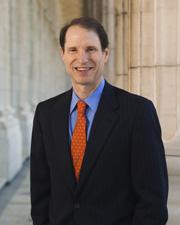
Sponsored by Ron WydenSen. Ron Wyden (D-OR)
Introduced May 22, 2019

AI-Generated Summary

Updated April 14, 2026 at 5:29 AM UTC

The bill amends the Clean Air Act’s definition of “renewable biomass” used in the renewable fuel program. It adds new categories of biomass from non‑federal lands, secondary forest‑product residues, and certain biomass harvested on federal lands that meet ecological or wildfire‑risk criteria, while removing an existing clause. The changes affect renewable fuel producers, landowners, tribal lands, and federal agencies that manage forest lands.

Key Provisions

  • Redesignates the existing clauses (iii)‑(vii) as (v)‑(ix) in the definition section.
  • Strikes the old clause (ii) and inserts a new definition covering trees and tree residue from non‑federal land, including tribal trust lands.
  • Adds a new clause (iii) that includes secondary residual materials from forest product manufacturing such as sawdust, wood chips, bark, and trimmings, regardless of land ownership.
  • Adds a new clause (iv) that permits biomass from federal land only if it is not from old‑growth stands unless part of a science‑based ecological restoration project, includes slash and pre‑commercial thinnings, follows federal harvesting rules, and comes from designated priority areas like wildland‑urban interfaces, ecological restoration sites, hazardous‑fuel reduction projects, or other wildfire‑threat priority zones.

Legislative Activity

Stay on top of the latest movement without scrolling through every action

1 earlier action
SenateIntro Referral Latest Action

Read twice and referred to the Committee on Environment and Public Works. (Sponsor introductory remarks on measure: CR S3062)

May 22, 2019

View full timeline
SenateIntro Referral

Introduced in Senate

May 22, 2019

SenateIntro Referral

Read twice and referred to the Committee on Environment and Public Works. (Sponsor introductory remarks on measure: CR S3062)

May 22, 2019

Floor Debate

3 members

What members said about S. 1614 on the floor

1 Republican2 Democrats
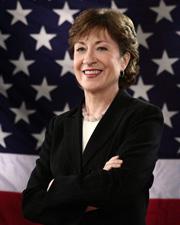
Susan M. Collins
Sen. Susan M. CollinsR-ME · May 22, 2019

Mr. President, I rise today to introduce the Better Energy Storage Technology Act. I am pleased to be partnering with Senator Heinrich on this initiative. I would also like to thank Senator Gardner,…

Ron Wyden
Sen. Ron WydenD-OR · May 22, 2019

Mr. President, Oregonians have a strong interest in using biomass as a source of renewable fuels. This desire, coupled with how well we grow biomass in Oregon, creates the opportunity to use…

Ron Wyden
Sen. Ron WydenD-OR · May 22, 2019

Mr. President, Oregonians have a strong interest in using biomass as a source of renewable fuels. This desire, coupled with how well we grow biomass in Oregon, creates the opportunity to use…

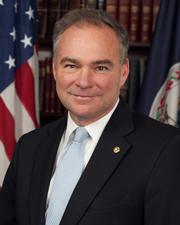
Tim Kaine
Sen. Tim KaineD-VA · May 22, 2019

Mr. President, today I am introducing the Foster Care Tax Credit Act, with my colleague Senator Jones. Enacting this bill would go a long way towards helping families with the expenses that come with…

Bill Text

Latest available legislative text

Reading Mode
Latest
Introduced in SenateIssued May 22, 2019

II

116th CONGRESS

1st Session

S. 1614

IN THE SENATE OF THE UNITED STATES

May 22, 2019

Mr. Wyden (for himself, Mr. Risch, Mr. King, Mr. Crapo, Mr. Merkley, and Ms. Collins) introduced the following bill; which was read twice and referred to the Committee on Environment and Public Works

A BILL

To amend the Clean Air Act to modify the definition of renewable biomass under the renewable fuel program.

1.

Definition of renewable biomass under renewable fuel program

Section 211(o)(1)(I) of the Clean Air Act (42 U.S.C. 7545(o)(1)(I)) is amended—

(1)

by redesignating clauses (iii) through (vii) as clauses (v) through (ix), respectively; and

(2)

by striking clause (ii) and inserting the following:

(ii)

Trees and tree residue from non-Federal land, including land belonging to an Indian tribe or an Indian individual that is held in trust by the United States or subject to a restriction against alienation imposed by the United States.

(iii)

Any secondary, residual materials generated from forest products manufacturing, including, but not limited to, sawdust, wood chips, shavings, bark, san­der­dust, and trimmings, regardless of whether the source of primary materials is derived from Federal or non-Federal land.

(iv)

Biomass materials obtained from Federal land that—

(I)

are not harvested from old growth stands, unless the old growth stand is part of a science-based ecological restoration project authorized by the Secretary of Agriculture or the Secretary of the Interior, as applicable, that meets applicable protection and old growth enhancement objectives, as determined by the applicable Secretary;

(II)

are slash, precommercial thinnings, or derived from ecological restoration activities;

(III)

are harvested in a manner consistent with applicable Federal laws (including regulations) and land management plans; and

(IV)

are derived within—

(aa)

the wildland-urban interface (as defined in section 101 of the Healthy Forests Restoration Act of 2003 (16 U.S.C. 6511)) from acreage included within a community wildfire protection plan (as so defined);

(bb)

a priority area on Federal land, as identified by the Secretary of Agriculture or the Secretary of the Interior, as applicable, in need of—

(AA)

ecological restoration;

(BB)

an authorized hazardous fuels reduction project under section 102 of the Healthy Forests Restoration Act of 2003 (16 U.S.C. 6512); or

(CC)

a project carried out under section 602(d) of that Act (16 U.S.C. 6591a(d)); or

(cc)

an area identified as a priority area for wildfire threat in a State-wide assessment and State-wide strategy developed in accordance with section 2A of the Cooperative Forestry Assistance Act of 1978 (16 U.S.C. 2101a).

.