Mr. President, I ask unanimous consent that the order for the quorum call be rescinded. Mr. President, today, I want to talk about the U.S. trade policy. This is something that affects every one of…
Mr. President, I ask unanimous consent that the order for the quorum call be rescinded.
Mr. President, today, I want to talk about the U.S. trade policy. This is something that affects every one of us. It affects all the families I represent, it affects our economy in a big way, and it affects our relations with other countries in significant ways.
Right now, we are fortunate to have a strong economy. When you look at the numbers, it is very encouraging. The tax reforms that were put in place at the end of 2017 and the pro-growth regulatory relief that has been put in place are actually doing exactly what many of us thought they would do.
When you look at the growth projections before the tax bill and the growth projections now, you will see that we have had a dramatic increase. If you look at the job projections, there is a dramatic increase in jobs. There were almost 2 million more jobs projected after the tax reform bill was passed. Why? It is because the tax reform bill was pro-growth and pro-jobs. It helps middle-class families, but it also helps small businesses, like the ones I visit all across my State of Ohio. They all have told me: You know, this is a nice shot in the arm for us. It gave us the ability to invest more in our equipment, in our people, and in our retirement savings.
Tomorrow, I will see it again. We will have a roundtable discussion at an Ohio manufacturer. This company makes tooling that is used in the aviation industry. They have already told me that they like the tax bill. I am going to ask them tomorrow what I ask all of these companies. I have visited with well over a dozen--several dozen--Ohio small businesses since the tax reform bill was passed. Specifically, I will ask them tomorrow: What happened to your bottom line, and what are you doing with the extra tax savings you are getting? What I think I will hear is what I have heard in other places, which is, We are investing more in people, and we are investing more in equipment. That is great.
The latest jobs report reflects all of this. When you look at the jobs report from last Friday--it was for the January time period--it showed an impressive 300,000 new jobs. That is way beyond expectations--302,000 new jobs in January. It also showed wages going up, which I think is even more impressive. In Ohio, wages have been pretty flat. In fact, for the last decade and a half, on average, wages have not gone above inflation. So when people say they are feeling the squeeze, they are. Expenses are up. Healthcare costs are up. Other expenses are up. Yet wages have been flat. I think that is one reason people feel that despite working hard and doing everything they were asked to do, they were not able to get ahead. Now they can feel they are getting ahead a little bit. If you look at the numbers from Friday, they indicate a 3.2-percent growth in wages for supervisory jobs, and for nonsupervisory jobs--you might think of those as more blue-collar jobs--there was a 3.4-percent increase in wages. That is just what we want. We want to see those wages starting to go up. This is above inflation.
By the way, the wage growth over the past 12 months is the highest it has been since before the great recession a decade ago. Finally, we are sort of climbing out of this great recession, and we are seeing the kinds of numbers we all hoped for.
This is all good news. Again, a lot of it is due to the fact that in this body and in the House, we passed legislation that helped to stimulate more economic growth, more jobs, and higher wages.
What I am concerned about is that we not do something now to jeopardize that economic growth. This is where trade policy is a risk. Some would say it is already putting a damper on what would otherwise be even greater growth. But what I am more concerned about than anything is the possibility that, as a country, we start to put more and more tariffs in place without showing that the imports coming in from other countries are being traded unfairly. That is what our trade laws basically say. They say: OK, if another country doesn't deal with us fairly, we get to level the playing field. So if they are sending their products to us and they are not fair, meaning that they are subsidized by the government, which happens a lot in nonmarket economies particularly--think of China--or they are sold at below their cost, which is called dumping--if they are dumping their products on us, that is not fair, is it? We have trade laws to deal with that.
I believe in trade, but I also believe strongly in trade enforcement. My legislation with Senator Brown called the Level the Playing Field Act has helped us win these trade cases when these countries are dumping. As an example, there is a 269-percent tariff--that is a high tariff--on some products from China, such as rolled steel products. Why? Because we showed that they were, in fact, not following the rules by subsidizing and dumping. We should do that.
There are also parts of our trade law that say: OK, on a temporary basis--temporary relief--we should be able to respond when another country sends a surge of imports into our country and there is material damage to a U.S. industry. So if there is a surge of imports and a U.S. company is materially damaged, we have a way to respond to that too. It is not permanent relief, but it says: Wait a minute. Let's let these companies get back on their feet and let these workers keep their jobs while we deal with the surge of imports and figure this out. That is kind of how our trade policy works, consistent with the international rules. If there is some unfairness, then we are able to respond.
Right now, we are doing this with China. The 301 law is being used to say to China: We are going to increase tariffs on your products because you are not trading fairly with us. You are using nontariff barriers. You are not treating our intellectual property properly. You are forcing our businesses--to be able to work in China, many of them have to have joint ventures or special licenses. That is not fair. We want to level that playing field. That is the purpose of those tariffs.
I think most people get that and understand it and support it. Even those who believe in more of a pure free-trade mentality know that we shouldn't allow cheating and that we should help to level the playing field. The problem is that over the last couple of years, we have started to use a part of our trade law that really is an exception to all of that. That is called the national security exception, which is also called section 232.
Section 232 of the Trade Expansion Act of 1962 has been in place now for 57 years. It has been used only half a dozen times in 57 years. Why? Because it is kind of a dangerous tool.
When you think about it, as Americans, all we have to say is, this is a national security issue, and therefore we are going to put tariffs on your product. You don't have to prove anything, as I talked about earlier. You don't have to prove that an industry has been damaged. You certainly don't have to prove that the other country is sending product that is dumped--sold at below its cost--or that is subsidized. You don't have to show a surge of imports. All you have to do is say ``This is a national security issue for us'' and put your tariffs in place. When you do that, guess what other countries do to you. They put their own tariffs in place because they are looking at this and thinking: Oh my gosh, so the United States is just putting these tariffs in place without demonstrating that this is a trade-enforcement measure because of unfairness or damage to their industries.
Frankly, many of these countries are happy to put more protectionist tariffs in place. It kind of works for them, too, because in many countries, that sort of approach is a more populous approach, in places such as Europe or the Middle East or Asia or Africa. They say: OK. We are going to put tariffs in place.
That is often applauded, but who gets hurt? The consumers in both countries get hurt. Think of that. Everybody has higher costs, higher taxes, higher tariffs on both sides, and eventually you end up building up tariffs to the point that it can be really dangerous for the economy.
That is my concern with section 232, the national security exception to our trade laws. Do I think it is a tool we
ought to have in the toolbox? Absolutely. I think that if there is a true national security concern, we ought to have section 232 there to ensure that we can respond.
As an example, if we are at a time of war and we need to be able to produce tanks in this country and we don't have any steel production here, in my view, it would be appropriate for us to put some tariffs in place and to help a domestic industry be able to provide that steel. Frankly, that is another avenue that other countries would take with us if they had a true national security concern. So there is a sort of level playing field there. That is permitted under the World Trade Organization rules, and other countries would do it as well, but, in my view, the way we have used it in the last couple of years is a little different.
Again, I think trade enforcement is very important. I am a hawk on going after countries that are not treating us fairly. I think with regard to China and its overcapacity of steel, it is a huge issue. That is one reason we have these huge tariffs in place on Chinese steel. Then they transship it through other countries, and we have to be much tougher on that. We have legislation called the ENFORCE Act. Senator Wyden was here on the floor a moment ago. He and I have worked on that together. That is important. Frankly, in my view, we need to do more to enforce that to keep China from going around to a third country and then sending it to the United States, if it is steel that is dumped or subsidized. But to say that with regard to countries that are our allies and countries that we trade with every day, we are going to use this national security exception, the 232, I have to tell you, I think that causes real problems, and we have seen it. Other countries have done what? They have increased their tariffs on us.
Think of Canada. When you put tariffs on Canada saying it is a national security concern--even though, by the way, with regard to steel, a product we sell more to Canada than they send to us. We send more steel to them from the United States than they do to us, and yet we are saying: It is a national security concern with your steel from Canada so we are going to slap on a tariff, say, 25 percent. What does Canada do? They turn around and put tariffs on our products.
We have gotten hit on that in Ohio because Canada is our No. 1 trading partner. We send more stuff to Canada than any other country-- much more. Our farmers in Ohio, our manufacturers in Ohio are nervous because they are seeing tariffs going up on their products going to Canada because Canada is retaliating because they don't see this as a fair thing we are doing. They don't think it is a national security threat.
Section 232 was designed, I think properly, to deal with real national security threats. I think it ought to be preserved for that. I think it ought to be used for that. I think we ought to aggressively go after countries that are trading unfairly, and when there is a surge and when there is a proven material damage to a U.S. industry, we ought to respond, but I think we have to be careful as to how we do it. I think we are otherwise inviting this escalation of tariffs on both sides, which is exactly what is happening.
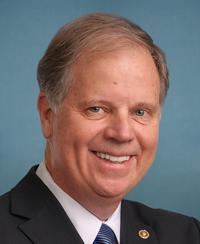
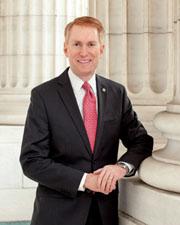
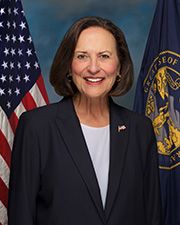
I am pleased to say that yesterday a group of us introduced legislation to try to get back to the original purpose of section 232. It is called the Trade Security Act. I introduced it last year. We reintroduced it again yesterday. I introduced it along with my colleagues Doug Jones, Joni Ernst, Dianne Feinstein, Lamar Alexander, Deb Fischer, Todd Young, Kyrsten Sinema, and Roger Wicker--not a group of Members you would see on every piece of legislation; some on the left, some on the right, some Republican, some Democratic--but a group who all agree, in this case, it is best for us to have some constraints on 232 to take it back to its original purpose, which is really for national security.
With regard to steel and aluminum and the 232 tariffs that were put in place back in 2017--you may know this, but when the administration was asked to opine on it, the Department of Defense said it is not a national security threat. That is now public. The memo from the Department of Defense said: We have enough steel production in this country to take care of our military needs. It is not a national security issue for us.
The Department of Commerce had a different view. Their view was that this is, broadly speaking, a national security threat so we should put these tariffs in place--again, without having to show injury or damage or without having to show unfairness.
Our legislation is a response to that. It doesn't affect what has happened in the past; it is prospective. What it does say is, going forward, we ought to have to prove it is a national security threat.
By the way, one reason this legislation is timely is, the administration has said they are now interested in putting additional 232 tariffs in place, potentially--and I say potentially because I hope they will not--not on steel and aluminum only but also on automobiles and auto parts.
There is a lot of nervousness about that. I talked earlier about our strong economy and working with the administration what we have been able to do on regulatory relief and on tax cuts and tax reforms. That is all good. I would tell you, the trade policy issues on 232 are making a lot of people nervous. There is a lot of uncertainty about what might happen, particularly with regard to autos and auto parts now.
In just a few weeks, the Commerce Department is required to release its report on 232. They will make a recommendation to the President on whether to proceed with 232. A lot of people, including a lot of folks in the U.S. auto industry and suppliers, are very concerned that the Commerce Department might find that auto imports threaten our Nation's security, and they will recommend the President take action. In my view, again, this would be a misuse of our trade tools. This is supposed to be for national security concerns. I don't think minivans from Canada pose a national security threat to the United States of America. I do know it poses a threat to the workers I represent. It is going to be bad for the auto industry and bad for its workers. By the way, all three of the Big Three U.S. auto manufacturers are against extending 232 to automobiles, and that is why they are supportive of our legislation.
I want to see more cars made in Ohio. I am OK if they are made in other States, too, but I want to see them made in America. I don't want to see more cars being made offshore. That is what I am concerned is going to happen if those tariffs go into place. Why? Because it is going to be a lot more expensive to make a car here. These cars are global cars now. The supply chains are all over the place. They end up being made in our States--including in Ohio, where we have a strong auto industry, and we love that, and strong suppliers--but they bring parts in from around the world.
The analysis I have seen shows that if we put 232 on automobiles, it would increase the cost of making a car in the United States by about $2,000--$2,000 a car. For imported vehicles, the cost would likely increase to about $6,000 a car.
Think for a moment about the impact on the families we talked about earlier who are finally seeing their wages begin to creep up. Working families who have played by the rules, have done everything right, are finally seeing this economy be strong enough that there is wage growth happening above inflation, and now they are told: Guess what. You want a new car? It is $2,000 more for your new car. That means that car payment is going to be a lot more. That means, frankly, I think a lot of people will delay buying a car. That is not good for the auto industry. I think it is something we should try to avoid.
Second, compounding these costs is the fact that, guess who is going to be in the crosshairs of retaliation if this happens: the auto industry.
Guess what our No. 1 export is from the United States of America in value, the No. 1 export of any product: cars and auto parts. Automobiles and auto parts are our No. 1 export. It is very likely, if we put in these tariffs on a national security basis, not because of unfairness, not because it is a surge, not because of the domestic industry being materially damaged--which is part of the international rules that people understand--but if we do it because of our national security exception, it is very likely, and I think it is
sure, that we are going to see retaliation, tariffs going up on their side, which again is going to hurt our country because one of every five cars and light trucks built in America is built for export, and we export a lot of auto parts, the No. 1 export. I am worried it is going to put a target on the autoworkers in Ohio and elsewhere if we move forward with this.
The Peterson Institute for International Economics estimates that section 232 auto tariffs would put 195,000 American jobs at risk. They also say, when retaliation is included, that jumps to potentially 624,000 American jobs on the chopping block. That is the Peterson Institute for International Economics. Check out their data on the website and see what you think. It is a big risk. That is the point.
These auto tariffs don't work; they don't work for farmers; they don't work for workers in other industries; they don't work, in my view, for our autoworkers because of this big risk we are talking about. About 25 percent of our State's factory workers are export workers in Ohio. Exports are really important to us. We want more exports. We want people to knock down their barriers to let us send more of our great ``Made in Ohio'' and ``Made in America'' products to them.
About one of every three acres planted in Ohio is planted for export: soybeans, corn, wheat. We want more markets because we want higher prices. Prices are low right now, partly because other countries are retaliating against us on agriculture. We want to open more of those markets to create more jobs and higher prices for our farmers.
Trade jobs, by the way, are good jobs too. These export jobs pay well--on average, 16 percent higher than other jobs. So it is not only more jobs, it is better jobs.
Instead of inviting retaliation and closing off international markets, we want policies that are going to open more markets. Cracking down on unfair trade--yes, absolutely. Cheating should never be acceptable. A level playing field is important, and there is not reciprocity now. We are a more open and free market than most other countries. So, yes, but let's do it based on the rules, based on fairness, and based on the kind of policies that aren't going to invite retaliation.
It is not only that national security is something we ought to use judiciously. When minivans from an ally like Canada are considered a national security threat, something is wrong, but it is also that this could be much broader than just autos.
After the Finance Committee's hearing on section 232 last summer, I asked the Commerce Department a question for the record about whether they believed there was an industry--any industry--in America that could not meet the national security criteria in section 232. Their response indicated they believe potentially every industry in America could meet that criteria. So it could move from autos to other industries, as far as they are concerned, even when, again, there is no sense that industry is under pressure, is materially injured, or where there is unfairness in the trade.
I think that is a huge departure from what this Congress meant 57 years ago when they wrote section 232. It was meant to be for national security. Let's keep it to that. Let's use our other trade laws appropriately and aggressively for other instances.
During the debate over section 232, Representative Cooper from Tennessee, the chairman of the Ways and Means Committee--the committee in the House that deals with trade--underscored the importance of the statute as a national security tool. He said:
The [purpose of the] national security exception is to
protect and preserve the national security. That is its sole
purpose. It is not intended to serve as a device to afford
protection to those industries who might claim it.
Don't take the chairman's word for it. I refer you to the Cabinet Task Force on Oil Import Controls report. In 1970, President Richard Nixon directed Secretary of Labor George Shultz--a friend of mine who was later Secretary of State--to conduct a comprehensive analysis of the national security implications of oil imports, and it remains today the best historical resources we have on the proper meaning of section 232. The report states:
No determination under section 232 or its predecessors have
ever been made on the ground of economic impact alone. And in
a generally healthy economy it cannot be presumed that
unrestricted trade in any one sector would by itself impair
the national security.
That was George Shultz. As I see it, with our economic growth and job creation right now, a trade deficit alone in automobile parts would appear insufficient to trigger restrictions based on national security.
With this history in mind, it is worth noting that the 232 statute has been used, again, very infrequently since 1962. We can find only a half dozen cases when it has been used. There have been 26 investigations. Only six times did the President take action. By the way, before this administration took action in 2017, the last one was 33 years ago in 1986. Again, one reason it has hardly ever been used is because it is viewed as an exception to our trade laws. You don't have to show injury to a domestic industry. You don't have to show a surge or unfair trade in any way. You don't have to show that there is something under the international rules that gives you the ability to impose those tariffs that then don't result in retaliation from others.
I remember, after President George W. Bush was elected, there was concern about doing something to help our steel industry at the time. We needed help in the steel industry, and section 232 was looked at. They investigated it at the President's request. In that case, the Commerce Department came back and said it is not a national security issue. So the President used another part of the trade law, an appropriate part, where he had to make some of these showings about material damage to the industry, which is section 201 in the trade laws.
Section 232 has been narrowly defined until now. I think we need to get back to that proper definition. That is exactly why we need this legislation. Misusing section 232 and the national security rationale not only leads to other countries increasing tariffs, but it also, in my view, risks us losing the tool altogether. I think we ought to keep the tool. I think it is an important tool to have as part of our response if there is a true national security--but if you misuse it, I believe what is going to happen is that the World Trade Organization is going to find that we no longer have this ability.
Why do I say that? Because there are already cases in the WTO, the World Trade Organization, against the United States. These cases are saying that 232 has been improperly used. They are saying because they filed these cases against us, they would like to have a decision by the WTO. I think we run a greater risk of losing this tool if the administration moves forward with autos and auto parts, and I think that is a real problem. The WTO could say that the United States can no longer use this national security tool. I would rather use it properly and be able to keep the tool.
Yesterday, when we introduced this legislation. We addressed the misuse of this tool. We said we wanted to preserve it for national security threats. I want to thank, in particular, Chairman Chuck Grassley of the Finance Committee for his very positive comments that he has consistently made about the Trade Security Act, last year and again this year.
This week, he talked about how he would like to work with us to get this proposal done. What does the proposal do?
First, it ensures that the proper experts of the government determine at the outset whether it is a national security threat or not. I mentioned that right now it is housed in the Commerce Department. It should be in the Department of Defense. They are the experts who determine the national security basis for import restrictions. Under our legislation, if the Department of Defense does determine through their research that there is a national security threat, then, it goes to the Commerce Department. The Commerce Department is in charge of the remedy, which is appropriate. By the way, with regard to steel, we know that the Department of Defense said that this is not a national security issue. At the end, of course, the President still makes the decision. But it is a two-step process to get there, which I think is very important.
Second, the bill gives Congress a voice in this. It allows Congress the opportunity to disapprove of a section 232 action by passing a joint resolution. Currently, Congress can disapprove of 232 actions through a joint resolution, but only with regard to oil, because when this was last used back during the oil embargoes, Congress reacted by saying: Well, with regard to oil, you have to have our approval after the fact.
I will tell you that our bill is not the only legislation on this topic. Other legislative approaches go further, and I think they effectively take away the national security tool by saying that instead of a motion of disapproval after the fact, there has to be a motion of approval from Congress to move forward.
I believe that under the Constitution, the congressional article I responsibilities--including commerce between the nations--require us to have a voice in this, but I also believe the administration needs to have the ability to react quickly to a true national security threat and not have to go through Congress, which sometimes, as you may have heard, takes some time. We tend to get tied up in knots up here quite a lot.
I like our approach better. I think it is about protecting auto States and export States from the consequences of misusing 232 in the future, but it does it in the appropriate way. This is about stopping retaliation against our farmers and our workers. It is not retroactive, but it is prospective, saying: Let's get the broadest consensus possible among industry, among Members of Congress, and within the Finance Committee to get something done here that takes us back to the original intent of section 232. Again, when properly used, it can be an important part of our trade enforcement arsenal for real national security concerns. We want to keep it for that. It should not be used inappropriately as it has been, in my view, without showing the national security threat. My hope is that this legislation now can move quickly through the Finance Committee and the Ways and Means Committee so that we can put in place something that makes sense to refocus on the original intent.
Ultimately, I believe the economic and legal case for 232 tariffs on automobiles going forward cannot be made. I believe that is why we need reform.
Let's restore this important tool to Congress's original intentions. Let's be sure section 232 is used appropriately and selectively for genuine national reasons.
The strength of our economy, as I said earlier, comes from the right policies, but, ultimately, it comes from hard-working and innovative Americans in the shops and the plants--as I will see tomorrow in the Ohio plants I mentioned earlier--and the farms around our States that send products all around the globe. We want more of that. They deserve a level playing field. We should give them the chance to compete.
Let's be sure that our trade policy doesn't result in escalating tariffs that hurt those very workers, those very farmers, and families. Let's find the right balance, including restoring important national security tools by not misusing it. I urge my colleagues to join us in supporting the Trade Security Act to help do just that.
I yield back my time.