
II
116th CONGRESS
1st Session
S. 429
IN THE SENATE OF THE UNITED STATES
February 7, 2019
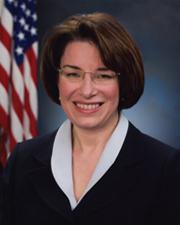
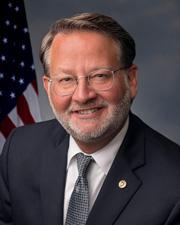
Ms. Klobuchar (for herself and Mr. Thune) introduced the following bill; which was read twice and referred to the Committee on Homeland Security and Governmental Affairs
A BILL
To require the establishment of exchange programs relating to cybersecurity positions between the private sector and certain Federal agencies, and for other purposes.
Short title
This Act may be cited as the Cyber Security Exchange Act
.
Cybersecurity professional exchange programs
Establishment of programs
Reports to Congress
In general
Not later than 180 days after the date of enactment of this Act, the Director of National Intelligence, the Secretary of Defense, the Secretary of Homeland Security, the Secretary of Energy, and the Attorney General shall each submit to the appropriate committees of Congress with respect to that agency head a report that contains—
a plan and timeline for implementing the program described in paragraph (2) at the agency (or, in the case of the Director of National Intelligence, at an element of the intelligence community); and
an evaluation of the benefits to the agency (or, in the case of the Director of National Intelligence, to an element of the intelligence community) from the establishment of the program described in paragraph (2).
Inability to establish program
If an agency head described in subparagraph (A) determines that the agency head is unable to establish the program required under paragraph (2) at the agency (or, in the case of the Director of National Intelligence, at an element of the intelligence community), the agency head shall submit to Congress a notification that describes—
the legal basis for that inability; and
any other specific factor that prevents the establishment of the program.
Establishment
Except in the case of a determination made under paragraph (1)(B), not later than 180 days after the date on which each agency head described in paragraph (1)(A) submits the report required under that paragraph, the agency head shall, after consultation with the Director of the Office of Personnel Management, establish a voluntary exchange program between the applicable agency (or, with respect to the Director of National Intelligence, an element of the intelligence community) and private sector institutions, under which—
a covered individual who is an employee of the agency, or of an element of the intelligence community, as applicable—
may elect to be temporarily detailed to a private sector institution that has elected to receive the covered individual; and
during the period of detail described in clause (i), shall be considered to be on detail to a regular work assignment in that agency or element for all purposes; and
a covered individual who is an employee of a private sector institution—
may elect to be temporarily detailed to the agency or element—
if the agency or element has elected to receive the covered individual; and
for a period of not shorter than 90 days and not longer than 2 years; and
during the period of detail described in clause (i)(II), shall—
receive from the private sector institution financial compensation, benefits, and any other type of compensation or support otherwise provided by or through the private sector institution during the course of the employment of the covered individual with the private sector institution; and
be considered to be an employee of the private sector institution, and not of the agency or element, for all purposes.
Rules of construction
Nothing in this Act may be construed to—
modify or otherwise affect any program that is in effect on the day before the date of enactment of this Act; or
prevent a covered individual who is detailed under subsection (a)(2)(B) from serving as an instructor at an institution of higher education or a research institution during that period of detail.
Definitions
In this section—
the term appropriate committees of Congress means—
with respect to the Director of National Intelligence—
the Select Committee on Intelligence of the Senate; and
the Permanent Select Committee on Intelligence of the House of Representatives;
with respect to the Secretary of Defense—
the Committee on Armed Services of the Senate; and
the Committee on Armed Services of the House of Representatives;
with respect to the Secretary of Homeland Security—
the Committee on Homeland Security and Governmental Affairs of the Senate; and
the Committee on Oversight and Reform of the House of Representatives;
with respect to the Secretary of Energy—
the Committee on Armed Services of the Senate;
the Committee on Energy and Natural Resources of the Senate;
the Committee on Armed Services of the House of Representatives; and
the Committee on Energy and Commerce of the House of Representatives; and
with respect to the Attorney General—
the Committee on the Judiciary of the Senate; and
the Committee on the Judiciary of the House of Representatives;
the term covered individual means an individual who has demonstrated expertise and work experience in cybersecurity or a related discipline;
the term cybersecurity or a related discipline—
means a discipline relating to cybersecurity; and
includes—
a field or discipline relating to—
intrusion detection;
secure software development;
attack mitigation;
system administration;
network services;
operating systems;
software application;
enterprise architecture;
internet services;
data management;
system analysis; or
malware analysis; and
any other field or discipline that the Director of National Intelligence, the Secretary of Defense, the Secretary of Homeland Security, the Secretary of Energy, or the Attorney General determines appropriate for the purposes of the applicable program established by that agency head under subsection (a)(2);
the term institution of higher education has the meaning given the term in section 101 of the Higher Education Act of 1965 (20 U.S.C. 1001);
the term intelligence community has the meaning given the term in section 3 of the National Security Act of 1947 (50 U.S.C. 3003); and
the term private sector institution includes—
a nonpublic or commercial person or business;
a research institution;
an institution of higher education; and
any other institution that the Director of National Intelligence, the Secretary of Defense, the Secretary of Homeland Security, the Secretary of Energy, or the Attorney General determines appropriate for the purposes of the applicable program established by that agency head under subsection (a)(2).