

H.R. 1079House117th Congress (2021-2023)In Committee

Desert Locust Control Act

Introduced February 15, 2021

AI-Generated Summary

Updated February 7, 2026 at 10:42 PM UTC

The Desert Locust Control Act creates a U.S. interagency working group to coordinate America’s response to the desert locust outbreak in East Africa. The group will develop a strategic plan to control the pests, lessen food‑security threats, and support economic and political stability in affected countries. It involves agencies such as USAID, State, Defense, Agriculture and others, and aims to help the people and governments of Kenya, Ethiopia, Somalia and neighboring regions.

Key Provisions

  • President must establish an interagency working group to coordinate U.S. actions on the locust outbreak.
  • Group composition: two USAID representatives and one representative each from the U.S. Mission to UN FAO, National Security Council, State Department, Defense Department, Agriculture Department, and any other relevant agencies; a USAID representative serves as chair.
  • Group duties include assessing the outbreak’s scope and COVID‑19 impacts, monitoring assistance effectiveness, reviewing regional and multilateral efforts, and delivering a comprehensive strategic plan within 90 days to control the outbreak and prevent future ones.
  • The working group must meet at least semi‑annually to implement the strategic plan.
  • The Act expires two years after enactment or when the locust surge ends, whichever occurs first.

Legislative Activity

Stay on top of the latest movement without scrolling through every action

11 earlier actions
SenateIntro Referral Latest Action

Received in the Senate and Read twice and referred to the Committee on Foreign Relations.

July 21, 2021

View full timeline
HouseIntro Referral

Introduced in House

February 15, 2021

HouseIntro Referral

Referred to the House Committee on Foreign Affairs.

February 15, 2021

HouseCommittee

Committee Consideration and Mark-up Session Held.

March 25, 2021

HouseCommittee

Ordered to be Reported (Amended) by Voice Vote.

March 25, 2021

HouseFloor

Ms. Houlahan moved to suspend the rules and pass the bill, as amended.

July 19, 2021 • 3:52 PM

HouseFloor

Considered under suspension of the rules. (consideration: CR H3655-3657; text: CR H3655-3656)

July 19, 2021 • 3:52 PM

HouseFloor

DEBATE - The House proceeded with forty minutes of debate on H.R. 1079.

July 19, 2021 • 3:52 PM

HouseFloor

At the conclusion of debate, the Yeas and Nays were demanded and ordered. Pursuant to the provisions of clause 8, rule XX, the Chair announced that further proceedings on the motion would be postponed.

July 19, 2021 • 4:04 PM

HouseFloor

Pursuant to the provisions of H. Res. 535, proceedings on H.R. 1079 are considered vacated.

July 20, 2021 • 4:44 PM

HouseFloor

Passed/agreed to in House: Pursuant to section 7 of H. Res. 535, and the motion offered by Mr. Hoyer, the following bills passed under suspension of the rules: H.R. 678; H.R. 1036; H.R. 1079, as amended; H.R. 1158; H.R. 1250; H.R. 1754; H.R. 1833, as amended; H.R. 1850; H.R. 1871; H.R. 1877, as amended; H.R. 1893; H.R. 1895; H.R. 2118; H.R. 2795, as amended; H.R. 2928; H.R. 2980, as amended; H.R. 3003; H.R. 3138, as amended; H.R. 3223; H.R. 3263; and H.R. 3264; and the following resolutions were agreed to under suspension of the rules: H. Res. 277; and H. Res. 294.(consideration: CR H3715-3730; text: CR H3716-3717)

July 20, 2021 • 4:44 PM

HouseFloor

Pursuant to section 7 of H. Res. 535, and the motion offered by Mr. Hoyer, the following bills passed under suspension of the rules: H.R. 678; H.R. 1036; H.R. 1079, as amended; H.R. 1158; H.R. 1250; H.R. 1754; H.R. 1833, as amended; H.R. 1850; H.R. 1871; H.R. 1877, as amended; H.R. 1893; H.R. 1895; H.R. 2118; H.R. 2795, as amended; H.R. 2928; H.R. 2980, as amended; H.R. 3003; H.R. 3138, as amended; H.R. 3223; H.R. 3263; and H.R. 3264; and the following resolutions were agreed to under suspension of the rules: H. Res. 277; and H. Res. 294. (consideration: CR H3715-3730; text: CR H3716-3717)

July 20, 2021 • 4:44 PM

SenateIntro Referral

Received in the Senate and Read twice and referred to the Committee on Foreign Relations.

July 21, 2021

Floor Debate

8 members

What members said about H.R. 1079 on the floor

5 Republicans3 Democrats
Christopher H. Smith
Rep. Christopher H. SmithR-NJ-4 · Jul 19, 2021

Mr. Speaker, I yield myself such time as I may consume. Mr. Speaker, I rise today in strong support of the Desert Locust Control Act, a bill I introduced along with my good friend and colleague,…

Chrissy Houlahan
Rep. Chrissy HoulahanD-PA-6 · Jul 19, 2021

Mr. Speaker, I move to suspend the rules and pass the bill (H.R. 1079) to establish an interagency working group to develop a comprehensive, strategic plan to control locust outbreaks in the East…

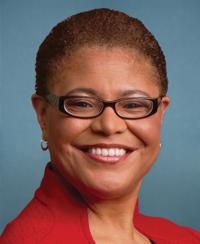
Karen Bass
Rep. Karen BassD-CA-37 · Jul 19, 2021

Mr. Speaker, once again I thank the chairman and the ranking member for bringing H.R. 1079, the Desert Locust Control Act to the House floor today. As chair of the subcommittee, I am glad to colead…

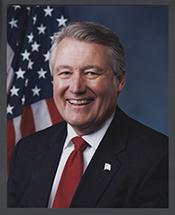
Rick W. Allen
Rep. Rick W. AllenR-GA-12 · Jul 20, 2021

Mr. Speaker, had I been present, I would have voted ``nay'' on rollcall No. 212. members recorded pursuant to house resolution 8, 117th congress Aderholt (Moolenaar) Buchanan (LaHood) DeSaulnier…

Steny H. Hoyer
Rep. Steny H. HoyerD-MD-5 · Jul 20, 2021

Mr. Speaker, pursuant to section 7 of House Resolution 535, I move to suspend the rules and pass the bills: H.R. 678; H.R. 1036; H.R. 1079; H.R. 1158; H.R. 1250; H.R. 1754; H.R. 1833; H.R. 1850;

Show 3 more
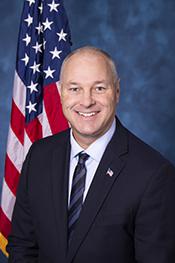
Pete Stauber
Rep. Pete StauberR-MN-8 · Jul 20, 2021

Mr. Speaker, had I been present, I would have voted ``nay'' on rollcall No. 212.

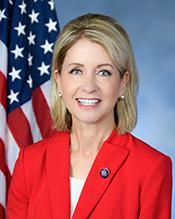
Mary E. Miller
Rep. Mary E. MillerR-IL-15 · Jul 19, 2021

Mr. Speaker, on that I demand the yeas and nays.

Matthew M. Rosendale, Sr.
Rep. Matthew M. Rosendale, Sr.R-MT · Jul 20, 2021

Mr. Speaker, on that I demand the yeas and nays.

Bill Text

3 versions available

Reading Mode
Latest
Referred in SenateIssued July 21, 2021

IIB

117th CONGRESS

1st Session

H. R. 1079

IN THE SENATE OF THE UNITED STATES

July 21, 2021

Received; read twice and referred to the Committee on Foreign Relations

AN ACT

To establish an interagency working group to develop a comprehensive, strategic plan to control locust outbreaks in the East Africa region and address future outbreaks in order to avert mass scale food insecurity and potential political destabilization, and for other purposes.

1.

Short title

This Act may be cited as the Desert Locust Control Act.

2.

Statement of policy

It is the policy of the United States to prioritize efforts to control the ongoing desert locust outbreak in East Africa and other affected regions, mitigate the impacts on food security, economic productivity, and political stability, improve interagency coordination to prevent future outbreaks, and promote resilience in affected countries.

3.

Findings

Congress finds the following:

(1)

The United States Agency for International Development reports that countries in East Africa are currently suffering the worst desert locust outbreak in decades, which will devour crops and pasture and destroy local livelihoods across the region.

(2)

As of December 2020, the Food and Agriculture Organization reported that there were 42 million people experiencing acute food insecurity in East Africa, which numbers are projected to increase if the desert locust outbreak is not controlled.

(3)

The desert locust outbreak in East Africa, particularly in Kenya, Ethiopia, and Somalia, is negatively impacting food security, local livelihoods and economic productivity, and may threaten political stability in the region.

(4)

Proactive investments now to control the desert locust outbreak could reduce the need for a much larger United States humanitarian response effort later, as well as support economic and political stability and build resilience in affected countries.

(5)

In order to optimize the United States response to the desert locust outbreak, an interagency working group should be established to develop and implement a comprehensive, strategic plan to control the desert locust outbreak in East Africa and other affected regions, mitigate impacts on food security, economic productivity, and political stability and prevent future outbreaks.

4.

Interagency working group

(a)

Establishment

The President shall establish an interagency working group to coordinate the United States response to the ongoing desert locust outbreak in East Africa and other affected regions, including the development of a comprehensive, strategic plan to control the outbreak, mitigate the impacts on food security, economic productivity, and political stability, and prevent future outbreaks.

(b)

Membership

(1)

In general

The interagency working group shall be composed of the following:

(A)

Two representatives from the United States Agency for International Development.

(B)

One representative from each of the following:

(i)

The United States Mission to the United Nations Agencies for Food and Agriculture.

(ii)

The National Security Council.

(iii)

The Department of State.

(iv)

The Department of Defense.

(v)

The Department of Agriculture.

(vi)

Any other relevant Federal department or agency.

(2)

Chair

The President shall designate one of the representatives from the United States Agency for International Development described in paragraph (1)(A) to serve as chair of the interagency working group.

(c)

Duties

The interagency working group shall—

(1)

assess the scope of the desert locust outbreak in East Africa and other affected regions, including its impact on food security, economic productivity, and political stability in affected countries;

(2)

assess the impacts of restrictions relating to the coronavirus disease 2019 (commonly referred to as COVID–19) pandemic on efforts to control the desert locust outbreak and mitigate its impacts and in exacerbating food insecurity;

(3)

monitor the effectiveness of ongoing assistance efforts to control the desert locust outbreak and mitigate its impacts and identify gaps and opportunities for additional support to such programs;

(4)

review the effectiveness of regional and multilateral efforts to control the desert locust outbreak and the coordination among relevant United States Government agencies, regional governments, and international organizations, including the World Food Programme and the United Nations Food and Agriculture Organization; and

(5)

not later than 90 days after the establishment of the interagency working group under subsection (a), develop and submit to the President and the appropriate congressional committees a comprehensive, strategic plan to control the desert locust outbreak, including a description of efforts to—

(A)

improve coordination among relevant United States Government agencies, regional governments, and international organizations, including the World Food Programme and the United Nations Food and Agriculture Organization;

(B)

ensure delivery of necessary assets control the desert locust outbreak and humanitarian and development assistance to address and mitigate impacts to food security, economic productivity, and political stability; and

(C)

to the extent practicable, prevent and mitigate future desert locust and other, similar destructive insect outbreaks (such as Fall Armyworm) in Africa and other parts of the world, which require a humanitarian response.

(d)

Interagency working group support

The interagency working group shall continue to meet not less than semi-annually to facilitate implementation of the comprehensive, strategic plan required by subsection (c)(5).

(e)

Sunset

This Act shall terminate on the date that is 2 years after the date of the enactment of this Act, or at such time as there is no longer an upsurge in the desert locust outbreak in East Africa, whichever occurs earlier.

(f)

Appropriate congressional committees defined

In this section, the term appropriate congressional committees means—

(1)

the Committee on Foreign Affairs and the Committee on Appropriations of the House of Representatives; and

(2)

the Committee on Foreign Relations and the Committee on Appropriations of the Senate.

Passed the House of Representatives July 20, 2021.

Cheryl L. Johnson,

Clerk