





I
117th CONGRESS
1st Session
H. R. 1522
IN THE HOUSE OF REPRESENTATIVES
March 2, 2021
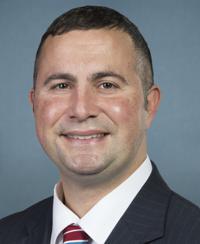
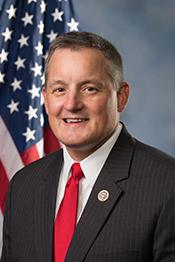
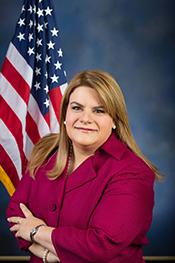
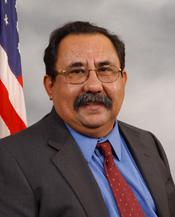
Mr. Soto (for himself, Miss González-Colón, Mrs. Murphy of Florida, Mr. Young, Mr. Torres of New York, Mr. Diaz-Balart, Mr. Raskin, Mr. Bacon, Mr. Bera, Mr. Bilirakis, Mr. Bishop of Georgia, Mr. Brendan F. Boyle of Pennsylvania, Mr. Carbajal, Mr. Carson, Ms. Castor of Florida, Mr. Correa, Mr. Crist, Mrs. Demings, Mr. Deutch, Mr. Evans, Mr. Foster, Ms. Lois Frankel of Florida, Mr. Gallego, Mr. Garbarino, Mr. Gimenez, Mr. Hastings, Mr. Katko, Mr. Kilmer, Mr. Krishnamoorthi, Mr. McNerney, Mr. Norcross, Ms. Plaskett, Mr. Posey, Mrs. Radewagen, Ms. Salazar, Mr. San Nicolas, Mr. Sessions, Mr. Sires, Ms. Stefanik, Mr. Swalwell, Mr. Trone, Mr. Vargas, Mr. Waltz, Ms. Wasserman Schultz, Ms. Wild, Ms. Wilson of Florida, Mr. Gomez, Mr. Brown, Mr. Johnson of Georgia, Mrs. Beatty, Mr. Beyer, Mr. Cohen, and Ms. Barragán) introduced the following bill; which was referred to the Committee on Natural Resources
A BILL
To provide for the admission of the State of Puerto Rico into the Union.
Short title
This Act may be cited as the Puerto Rico Statehood Admission Act
.
Findings
The Congress finds the following:
United States national sovereignty in Puerto Rico was established by the Treaty of Paris between the United States and the Kingdom of Spain (30 Stat. 1754), signed on December 10, 1898.
Puerto Rico is governed by the United States under laws enacted by Congress in the exercise of its power to make rules and regulations governing territory belonging to the United States, pursuant to article IV, section 3, clause 2 of the Constitution.
For reasons of precedent primarily related to the Philippines also ceded by Spain after the Spanish-American War, substantially the same majority in the United States Supreme Court that established the separate but equal
doctrine in Plessy v. Ferguson determined in the 1901 Downes v. Bidwell decision that Puerto Rico was an unincorporated territory of the United States, a status of possession that continues today.
After agreeing to independence for the Philippines, also acquired through the Spanish-American War, on March 2, 1917, Congress granted statutory United States citizenship to the residents of Puerto Rico. Such action has historically led to incorporation and eventual statehood but was denied to Puerto Rico due to anomalies emanating from the 1901 Downes ruling and its progeny, even as fellow Americans in Hawaii and Alaska attained statehood.
Puerto Rico has a territorial constitution that is republican in form and compatible with the United States Constitution as well as the principles of the Declaration of Independence, and that is equivalent to a State constitution, having been democratically ratified by the United States citizens of the territory on November 4, 1952, and subsequently approved by the Congress of the United States through Public Law 82–447.
Thirty-two territories previously have petitioned Congress for statehood based on democratically expressed consent of the governed, and each was duly admitted as a State of the Union pursuant to article IV, section 3, clause 1 of the United States Constitution, with equal rights and responsibilities of national and State citizenship under the United States Constitution.
Puerto Ricans have contributed greatly to the nation and its culture and distinguished themselves in every field of endeavor. However, the denial of equal voting representation and equal treatment by the Federal Government stands in stark contrast to their contributions.
Since becoming a United States territory, more than 235,000 American citizens of Puerto Rican heritage have served in the United States military.
Thousands of United States military service members of Puerto Rican heritage have received numerous medals, distinctions, and commendations of every degree, including for valorous military service in the twentieth and twenty-first centuries.
Nine United States military service members from Puerto Rico have been awarded the Medal of Honor, and many have been awarded the Distinguished Service Cross or the Navy Cross.
The 65th Infantry Regiment in Puerto Rico (known as the Borinqueneers
) was awarded the Congressional Gold Medal (Public Law 113–120) for its contributions and sacrifices in the armed conflicts of the United States, including World War I, World War II, and the Korean War.
To further recognize and pay tribute to the bravery of the Puerto Rican soldiers of the 65th Infantry Regiment, Congress expressed support for the designation of April 13 as National Borinqueneers Day in the National Defense Authorization Act for Fiscal Year 2021 (Public Law 116–283).
Unincorporated territory status means that Federal laws can be applied to Puerto Rico and its American citizens differently, on unequal and, at times inequitable terms, compared not only to the States and their residents, but also unlike territories that are parts of the United States. This has limited the development of Puerto Rico and hindered its economy.
Unincorporated territory status has resulted in millions of residents leaving Puerto Rico to secure equal rights of citizenship attainable only in a State, and that enable Americans to seek greater opportunities and a better quality of life in the States. Approximately 65 percent of all people of Puerto Rican origin now live in the States, with the increasing rate of population loss in the territory creating a severe strain on the local tax base and workforce participation.
Other than its unincorporated territory status and its unequal treatment under some Federal laws, Puerto Rico is socially, economically, politically, and legally integrated into the nation. Numerous territories admitted as States did not have as strong a record of self-determination favoring statehood as the majority votes by American citizens in Puerto Rico favoring admission to the Union.
In November 2012, a majority of voters rejected continuation of the current territory status, and 61.2 percent of those expressing a choice on status alternatives chose statehood.
In June 2017, a vote was held to confirm the aspirations of the people of Puerto Rico. As advised by the United States Department of Justice, all available status options were included in the ballot. Amid an opposition boycott, statehood received 97 percent of the votes casted, while independence and the current status received less than 3 percent of the vote.
In November 2020, following Alaska and Hawaii precedent, Puerto Rico voters were presented with the question: Should Puerto Rico be admitted immediately into the Union as a State? Yes or No
. A clear majority of 52.52 percent voted in the affirmative.
In December 2020, the Puerto Rico legislature, following the absolute majority victory obtained by statehood in the plebiscite, approved a Joint Resolution petitioning, on behalf of the People of Puerto Rico, that Congress and the President of the United States admit Puerto Rico into the Union as a State and appointed official representatives to manage the transition to statehood.
No large and populous United States territory inhabited by American citizens that has petitioned for statehood has been denied admission into the Union.
Admission
Subject to the provisions of this Act, and upon issuance of the proclamation required by section 7(c), the Commonwealth of Puerto Rico is hereby declared to be a State of the United States of America, and as such shall be declared admitted into the Union on an equal footing with the other States in all respects.
Physical territory
The State of Puerto Rico shall consist of all the islands, together with their appurtenant reefs, seafloor, and territorial waters in the seaward boundary, presently under the jurisdiction of the territory of Puerto Rico.
Constitution
The constitution of the State of Puerto Rico shall always be republican in form and shall not be repugnant to the Constitution of the United States and the principles of the Declaration of Independence. The constitution of the Commonwealth of Puerto Rico, as approved by Public Law 82–447 and subsequently amended, is hereby found to be republican in form and in conformity with the Constitution of the United States and the principles of the Declaration of Independence, and is hereby accepted, ratified, and confirmed as the constitution of said State.
Certification by President
Upon enactment of this Act, the President of the United States shall certify such fact to the Governor of Puerto Rico. Thereupon the Governor shall, within 30 days after receipt of the official notification of such approval, issue a proclamation for the election of Senators and Representatives in Congress.
Ratification vote
Ratification of Proposition
At an election designated by proclamation of the Governor of Puerto Rico, which may be either the primary or the general election held pursuant to section 8, or a territorial general election, or a special election, there shall be submitted to voters, for adoption or rejection, a ballot with the following ratification question: Shall Puerto Rico immediately be admitted into the Union as a State, in accordance with terms prescribed in the Act of Congress approved ……….. (date of approval of this Act)?: Yes _____ No _____.
.
Certified Results
If the foregoing proposition is adopted by a majority of the votes cast in the election conducted under subsection (a), the President of the State Elections Commission of Puerto Rico shall certify the results of the election and shall transmit the certified results of the election to the Governor. Not later than 10 days after the date of certification, the Governor shall declare the results of the election and transmit the certified results of the submission to the President of the United States, the President pro tempore of the Senate, and the Speaker of the House of Representatives.
Presidential Proclamation
Upon receipt of the Governor’s declaration pursuant to subsection (b), the President of the United States shall issue a proclamation declaring certified the results of the submission and the date Puerto Rico is admitted as a State of the Union on an equal footing with all other States, which date must follow the certification of results of the general elections required by section 6 of this Act, but not later than 12 months from the date on which the aforementioned submission results were certified in order to facilitate a transition process. Upon issuance of the proclamation by the President, Puerto Rico shall be deemed admitted into the Union as a State.
Termination of Act if Proposition Not Adopted
If the foregoing proposition is not adopted by a majority votes cast in the election conducted under subsection (a), the provisions of this Act shall cease to be effective.
Election of officers
The proclamation by the Governor in section 6 shall designate and announce the dates and other requirements for primary and general elections under applicable Federal and local law for representation in the Senate and the House of Representatives in accordance with the following:
In the first election of Senators, the two senatorial offices shall be separately identified and designated, and no person may be a candidate for both offices. Nothing in this section shall impair the privilege of the Senate to determine the class and term to which each of the Senators-elect shall be assigned.
In the first election of Representatives following admission, and subsequent elections until the next Census-based reapportionment cycle, Puerto Rico shall be entitled to the same number of Representatives as the State whose most recent Census population was closest to, but less than, that of Puerto Rico, and such Representatives shall be in addition to the membership of the House of Representatives as now prescribed by law: Provided, that any such increase in the membership shall not operate to either increase or decrease the permanent membership of the House of Representatives as prescribed in the Act of August 8, 1911 (37 Stat. 13), nor shall such temporary increase affect the basis of apportionment established by the Act of November 15, 1941 (55 Stat. 761; 2 U.S.C. 2a), for the Eighty-third Congress and each Congress thereafter, unless Congress acts to increase the total number of members of the House of Representatives. Thereafter, the State of Puerto Rico shall be entitled to such number of Representatives as provided for by applicable law based on the next reapportionment. The apportionment of congressional districts for the first election and subsequent election of Representatives shall be conducted as provided for by the Constitution and laws of Puerto Rico.
The President of the State Elections Commission of Puerto Rico shall certify the results of such primary and general elections to the Governor. Within 10 days of the date of each certification, the Governor shall declare the results of the primary and general elections, and transmit the results of each election to the President of the United States, the President pro tempore of the Senate, and the Speaker of the House of Representatives.
Continuity of laws, government, and obligations
Upon the admission of the State of Puerto Rico into the Union, the following shall apply:
Continuity of Laws
All laws of the United States and laws of Puerto Rico not in conflict with this Act shall continue in full force and effect following the date of admission of Puerto Rico as a State of the Union.
Continuity of Government
The individuals holding legislative, executive, and judicial offices of Puerto Rico shall continue to discharge the duties of their respective offices when Puerto Rico becomes a State of the Union.
Continuity of Obligations
All contracts, obligations, liabilities, debts, and claims of the Commonwealth of Puerto Rico and its instrumentalities shall continue in full force and effect as the contracts, obligations, liabilities, debts, and claims of the State of Puerto Rico and its instrumentalities.
Title to Property
The State of Puerto Rico and its political subdivisions, as the case may be, shall have and retain title to all lands and other properties, real and personal, over which the territory and its subdivisions presently hold title. The United States shall retain title to all property, real and personal, to which it presently has title, including public lands.
Repeals
All Federal and territorial laws, rules, and regulations, or parts of Federal and territorial laws, rules, and regulations, applicable to Puerto Rico that are incompatible with the political and legal status of statehood under the Constitution and the provisions of this Act are repealed and terminated as of the date of statehood admission proclaimed by the President under section 7(c) of this Act. Except for those parts that are not in conflict with this Act and the condition of statehood, the following shall be deemed repealed upon the effective date of the admission of Puerto Rico as a State:
The Puerto Rican Federal Relations Act of 1950 (Public Law 81–600).
The Act of July 3, 1950 (48 U.S.C. 731b–731e).
The Act of March 2, 1917 (Public Law 64–368).
The Act of April 12, 1900 (Public Law 56–191).
Severability
If any provision of this Act, or any section, subsection, sentence, clause, phrase, or individual word, or the application thereof to any person or circumstance is held invalid by a court of jurisdiction, the validity of the remainder of the Act and of the application of any such provision, section, subsection, sentence, clause, phrase, or individual word to other persons and circumstances shall not be affected thereby.