Mr. Speaker, I move to suspend the rules and pass the bill (H.R. 1621) to amend section 3661 of title 18, United States Code, to prohibit the consideration of acquitted conduct at sentencing, as…
Mr. Speaker, I move to suspend the rules and pass the bill (H.R. 1621) to amend section 3661 of title 18, United States Code, to prohibit the consideration of acquitted conduct at sentencing, as amended.
Mr. Speaker, I ask unanimous consent that all Members have 5 legislative days to revise and extend their remarks and include extraneous materials on H.R. 1621.
I yield myself such time as I may consume.
Mr. Speaker, I am very proud to support H.R. 1621, the Prohibiting Punishment of Acquitted Conduct Act, which offers a solution to a long- identified problem within our criminal justice system.
This bill provides necessary reform to current Federal sentencing practice that allows judges to sentence defendants based on conduct for which a jury has found them not guilty.
The Sixth Amendment to the Constitution provides that anyone accused of a crime shall enjoy the right to a speedy and public jury trial, while the Fifth Amendment provides that no person shall be deprived of life, liberty, or property, without due process of law.
These provisions mean that the government is bound to move each and every element of an offense for which a defendant is charged beyond a reasonable doubt during a jury trial, or that defendant must admit each element of an offense to support a plea of guilty. Absent that, those offenses are not found guilty, if you will, to the individual.
Notwithstanding this constitutional obligation, Federal judges routinely nullify not guilty verdicts rendered by juries and sentence defendants to significantly higher penalties based on acquitted conduct.
In its current form, 18 U.S.C. 3661 prohibits any limitation of the conduct a judge may consider when sentencing a defendant, even when a jury has determined that there was insufficient evidence to prove the defendant committed the charged offense; it seems clearly a constitutional violation.
Additionally, under the concept of ``relevant conduct,'' the U.S. Sentencing Guidelines allow judges to consider a range of conduct, including dismissed charges, uncharged conduct, and acquitted conduct when imposing sentences. Again, might I say, seemingly a very unfair direction given without limitations, and certainly without adherence to the constitutional amendments.
The fact-finding made by judges at sentencing is based on a lower evidentiary standard than at trial--that is, by a preponderance of evidence--which many scholars defined as a 50 percent chance that a claim is true.
The reform proposed in this bill ensures that judges punish defendants on facts proven beyond a reasonable doubt, criminal standard, the higher evidentiary standard of proof required during a jury trial, which some scholars attach a value of 90 to 95 percent surety.
Justice Ginsberg, a moderate liberal who became more liberal in later years, joined Justice Thomas and Justice Scalia, a staunch conservative, in his dissent in Jones v. United States, lamenting the failure of the Court to determine if the Sixth Amendment is violated when judges impose sentences based solely on judge-found facts.
While the Sentencing Guidelines suggested prison sentences from 27 to 71 months for the three defendants in the case, the trial judge imposed--if you can believe it--overwhelming sentences of 180, 194, and 225 months, based on the conduct the prosecution failed to prove.
Justice Scalia's often-quoted dissent was issued more than 7 years ago. Yet nothing has been done about this unjust, undemocratic practice and, really, unconstitutional, which diminishes the sanctity of the jury trial, the standard of reasonable doubt, which any layman can tell you. When you ask them what the standard is for proving guilt or innocence in a criminal trial, everybody knows the words, ``with reasonable doubt.''
Can you imagine? That is not the case.
The public check on the government's power and the overall integrity of the criminal justice system must be maintained.
H.R. 1621 would restore fairness to jury trials by amending Section 3661 to ban consideration of acquitted conduct at sentencing unless the conduct is considered for mitigation purposes.
Though I wish we were doing more to advance substantive criminal justice reform, I am happy to support this bipartisan bill that addresses an acute need while restoring the basic propositions of due process and the right to a trial by jury.
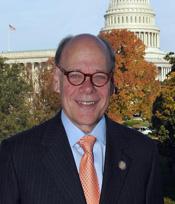
I want to express enthusiastic support and appreciation to Representative Steve Cohen, chair of the Subcommittee on the Constitution, Civil Rights and Civil Liberties, for his commitment to justice and for taking the lead on this significant, bipartisan bill, along with Representative Kelly Armstrong.
A broad coalition of advocates support this measure, including--R Street Institute, the ACLU, The Innocence Project, Brennan Center for Justice, the American Bar Association, Families Against Mandatory Minimums, The Leadership Conference on Civil and Human Rights, and the Federal Public and Community Defenders.
It is for that reason I hope that the Senate will take up this bill and pass the House version as soon as possible.
I ask my colleagues to support this bill and to continue working on additional measures to make our justice system more equitable and more transparent. I look forward to coming to the floor with those initiatives.
Mr. Speaker, I reserve the balance of my time.
Mr. Speaker, I yield 5 minutes to the gentleman from Tennessee (Mr. Cohen), the author of this legislation; the chairman of the Subcommittee on the Constitution, Civil Rights, and Civil Liberties of the Committee on the Judiciary; and a strong advocate for justice.
Mr. Speaker, I yield myself the balance of my time.
I thank the gentleman from Oregon for supporting this legislation. He cited a number of judges and courts who added their support to this important legislation.
Mr. Cohen's eloquence was in the efforts he has made to help those who have suffered injustice.
We thank Congressman Armstrong for his work as well. The fact that they are speaking in tandem speaks loudly on this floor.
As I close, I include in the Record the dissenting opinion of Justices Scalia, Thomas, and Ginsburg, with simple comments from their opinion:
``On petitioners' appeal, the D.C. Circuit held that even if their sentences would have been substantively unreasonable but for judge- found facts, their Sixth Amendment rights were not violated.''
That was found by the D.C. Circuit.
``We should grant certiorari to put an end to the unbroken string of cases disregarding the Sixth Amendment.''
So, you are more than affirmed that the Sixth Amendment in these cases is patently disregarded.
I include in the Record the Supreme Court dissent on the Jones v. United States case.
I will say that the failure to address this issue for so many years has contributed to the epidemics of overincarceration and mass incarceration, weakened the finality that a jury trial is meant to provide, and undermined overall public confidence in our justice system.
I really think this legislation has exposed some incredulous behavior because most people believe that you are sentenced on the reasonable doubt convictions as opposed to additional sidebar conversations that may come to the judge's attention in terms of other offenses.
Today, we consider a simple, narrowly tailored bill that builds on our bipartisan effort to create a fair justice system. This bill will make sure that defendants are punished only for the conduct that prosecutors are able to prove at trial, consistent with the constitutional guarantees of due process and the right to a trial by jury of their peers, and consistent with the principles on which country was founded.
Before I close, I join with my colleague from Tennessee's remarks and indicate the deepest sympathy to the family of the dean, Congressman Don Young. He is a voice--and I speak in the present. His presence was larger than life. He spoke to everyone. His booming voice is something that I am certainly going to find a great loss, as well as his love and passion for not only his family and his great State but also for this institution.
I don't know if we will ever find an institutionalist such as Don, but we can certainly follow in his footsteps and his desire for order when he cited the words ``regular order.''
We were blessed by having him here, and may he rest in peace.
Mr. Speaker, I ask that my colleagues join me in supporting this bill, and I yield back the balance of my time.
Mr. Speaker, I move to suspend the rules and pass H.R. 1621, the ``Prohibiting Punishment of Acquitted Conduct Act of 2021, as amended.
Mr. Speaker, I ask unanimous consent that all Members have 5 legislative days to revise and extend their remarks and include extraneous material on H.R. 1621.
Mr. Speaker, I yield myself such time as I may consume.
Opening Statement
Mr. Speaker. I am proud to support of H.R. 1621, the ``Prohibiting Punishment of Acquitted Conduct Act,'' which offers a solution to a long-identified problem within our criminal justice system.
This bill provides necessary reform to current federal sentencing practice that allows judges to sentence defendants based on conduct for which a jury found them not guilty.
The Sixth Amendment to the Constitution provides that anyone accused of a crime shall enjoy the right to a speedy and public jury trial, while the Fifth Amendment provides that no person shall be deprived of life, liberty, or property, without due process of law.
Together these provisions mean that the Government is bound to prove each and every element of an offense for which a defendant is charged beyond a reasonable doubt during a jury trial, or that a defendant must admit each element of an offense to support a plea of guilty.
Notwithstanding this constitutional obligation, federal judges routinely nullify not guilty verdicts rendered by juries and sentence defendants to significantly higher penalties based on acquitted conduct.
In its current form, 18 USC Sec. 3661 prohibits any limitation of the conduct a judge may consider when sentencing a defendant, even when a jury has determined that there was insufficient evidence to prove the defendant committed the charged offense.
Additionally, under the concept of ``relevant conduct,'' the U.S. Sentencing Guidelines allow judges to consider a range of conduct, including dismissed charges, uncharged conduct, and acquitted conduct when imposing sentences.
The fact-finding made by judges at sentencing is based on a lower evidentiary standard than at trial--that is by a preponderance of the law--which many scholars define as a 50% chance that a claim is true.
The reform proposed in this bill ensures that judges punish defendants based on facts proven beyond a reasonable doubt--the higher evidentiary standard of proof required during jury trials, which some scholars attach a value of 90 to 95% surety.
Justice Ginsburg moderate-liberal who became more liberal in later years, joined Justice Thomas and Justice Scalia, a staunch conservative, in his dissent in Jones v. United States, lamenting the failure of the Court to determine if the Sixth Amendment is violated when judges impose sentences based solely on judge-found facts.
While the Sentencing Guidelines suggested prison sentences from 27 to 71 months for the three defendants in the case, the trial judge imposed sentences of 180, 194, and 225 months, based on conduct the prosecution failed to prove.
Justice Scalia's often-quoted dissent was issued more than seven years ago.
Yet nothing has been done about this unjust, undemocratic practice, which diminishes the sanctity of the jury trial, the public check on the government's power, and the overall integrity of the criminal justice system.
H.R. 1621 would restore fairness to jury trials by amending Section 3661 to ban consideration of acquitted conduct at sentencing unless the conduct is considered for mitigation purposes.
Though I wish we were doing more to advance substantive criminal justice reform, I support this bipartisan bill that addresses an acute need while restoring the basic propositions of due process and the right to trial by jury.
I thank our colleague, Representative Steve Cohen, for his commitment to justice and for taking the lead on this significant, bipartisan bill alongside Representative Kelly Armstrong.
A broad coalition of advocates support this measure, including R Street Institute, the ACLU, The Innocence Project, Brennan Center for Justice, the American Bar Association, Families Against Mandatory Minimums, the Leadership Conference on Civil and Human Rights, and Federal Public & Community Defenders.
It is my hope that the Senate will take up and pass the House version of this bill soon.
I ask my colleagues to support this bill and to continue working together on additional measures to make our justice system more equitable and more transparent.