Reserved for the Speaker.
Legislative Activity
Stay on top of the latest movement without scrolling through every action
Introduced in House
January 3, 2021
Floor Debate
22 membersWhat members said about H.R. 2 on the floor
 ZL
ZL RD
RD NP
NP KM
KM SHH+17
Floor Debate
22 membersWhat members said about H.R. 2 on the floor
Madam Speaker, pursuant to House Resolution 179, I call up the bill (H.R. 1) to expand Americans' access to the ballot box, reduce the influence of big money in politics, strengthen ethics rules for…
Madam Speaker, pursuant to House Resolution 179, I call up the bill (H.R. 1) to expand Americans' access to the ballot box, reduce the influence of big money in politics, strengthen ethics rules for public servants, and implement other anti-corruption measures for the purpose of fortifying our democracy, and for other purposes, and ask for its immediate consideration in the House.
Madam Speaker, I ask unanimous consent that all Members may have 5 legislative days in which to revise and extend their remarks and to insert extraneous material on H.R. 1 into the Record.
I yield myself such time as I may consume.
Madam Speaker, I rise today in strong support of H.R. 1, the For the People Act of 2021. Today, we can deliver this to the American people. We can deliver the gold standard of reforms to protect the right of Americans to vote. We can take a huge step to fulfill that promise in our Constitution of a more perfect Union.
More voters cast a ballot in the 2020 election than in history, in an election that has been called the most secure in American history by election security experts.
The last election, conducted during a once-in-a-generation pandemic, saw changes that made it easier for many Americans to vote, with reforms like absentee voting and early voting. It also put into stark focus what many of us already knew: deep inequities persist in our democratic system.
Now comes the backlash to the increase in voter participation. That record turnout, with no credible instances of election irregularity, stimulated hundreds of bills in State legislatures to make it harder for Americans to vote in the future.
We should protect access to the ballot, not restrict it. H.R. 1 gives voters choices for how to cast their ballot. They want and need that.
The bill has a minimum of 15 days of early voting, minimum standards for the number and location of ballot drop boxes, and a national standard for no-excuse absentee voting. It improves access for voters with disabilities, addresses challenges faced by Native American voters living on Tribal lands, and improves access for uniformed and overseas voters.
H.R. 1 ends the practice of disenfranchising Americans with a prior felony conviction who are no longer incarcerated. It unrigs the drawing of congressional district lines by requiring independent redistricting commissions, removing politics from the process and creating fairer maps.
H.R. 1 begins to remove the advantages of dark money and secret donors and lets our neighbors and communities regain their voice to fully participate in our political system.
H.R. 1 will amplify the voices of small donors with an alternative, voluntary matching system for financing campaigns by empowering small- dollar contributors, without any taxpayer funds.
The bill will save money and bolster the integrity of election administration. It makes improvements to our election security and requires States to use individual, durable, voter-verified paper ballots, a simple safeguard from cybersecurity threats that ensures an auditable paper trail.
H.R. 1 will also strengthen congressional and executive branch ethical standards.
Democracy is resilient, but the falsehoods spread in the lead-up to and following the 2020 election, as well as the shocking events right here on January 6, showed us all that democracy requires us to defend it.
I urge all my colleagues to support H.R. 1 and ensure all Americans have an equal voice in our democracy.
Madam Speaker, I reserve the balance of my time.
Madam Speaker, I yield 1\1/2\ minutes to the gentleman from Rhode Island (Mr. Cicilline).
Madam Speaker, I would just note for the record that I am not worried about the administrators in Georgia. I am worried about the legislature in Georgia that just passed restrictions cutting Sunday early voting and absentee voting and restricting the use of drop boxes to suppress the vote.
Madam Speaker, I yield 1 minute to the gentlewoman from Georgia (Mrs. McBath).
Madam Speaker, I am delighted to yield 1 minute to the gentlewoman from Georgia (Ms. Bourdeaux), a new member of our House.
Madam Speaker, I yield 1 minute to the gentleman from Texas (Mr. Doggett).
Madam Speaker, I yield the gentleman from Texas an additional 30 seconds.
Madam Speaker, I am happy to yield 1 minute to the gentleman from California (Mr. Levin).
Madam Speaker, I am honored to yield 1 minute to the gentlewoman from Minnesota (Ms. Craig).
Madam Speaker, may I inquire as to the time remaining?
Madam Speaker, I am delighted to yield 1\1/2\ minutes to the gentleman from New York (Mr. Jones), who is a new Member from New York and an expert in election law.
Madam Speaker, I yield 1 minute to the gentlewoman from New Mexico (Ms. Leger Fernandez). It is an honor to recognize her as a member of the Committee on House Administration and one of the newest Members in the House, but an accomplished attorney.
Madam Speaker, it is interesting to listen to some of the comments that are made here this morning. We have talked a lot about Article I, Section 4, that says that the Congress may at any time regulate these elections. But what is the basis for that? It is really Article IV, Section 4, which says, ``The United States shall guarantee to every State in this Union a Republican Form of Government.''
If a majority of voters vote and their votes are not powerful, they are not counted. Or if Americans are prohibited from voting, even though they should be able to cast their vote, that is not a Republican form of government. So what we are doing here is the most important thing we could do, which is to preserve our American democracy.
Madam Speaker, I yield 1 minute to the gentleman from Maryland (Mr. Hoyer).
Madam Speaker, I yield 1 minute to the gentleman from Tennessee (Mr. Cohen), chairman of the Subcommittee on the Constitution, Civil Rights, and Civil Liberties.
Madam Speaker, I yield 1 minute to the gentlewoman from Massachusetts (Mrs. Trahan).
Madam Speaker, I just received word that the legendary civil rights leader Vernon Jordan has passed. In addition to our beloved John Lewis, I feel we are considering this bill in his memory and also to honor those who came before us who worked so hard to preserve our American democracy.
Madam Speaker, I yield 1 minute to the gentlewoman from California (Ms. Pelosi), the Speaker of the House.
Madam Speaker, I include in the Record a number of letters, the first from more than 150 groups urging support for the For the People Act, including the American Friends Service Committee, the Center for Disability Rights, Common Cause, Franciscan Action Network, the League of Conservation Voters, NETWORK Lobby for Catholic Social Justice and the Sierra Club.
Declaration for American
Democracy,
February 5, 2021.
Re More than one hundred and fifty Groups urge support for
the For the People Act (H.R. 1/S. 1).
Dear Member of Congress: On behalf of the below
organizations representing tens of millions of Americans, we
write in strong support of H.R. 1/S. 1, the For the People
Act. This transformational democracy reform package would
help return power to everyday American families and amplify
the voices of communities that have historically been
marginalized in our democracy.
For far too long, special interests, wealthy donors, and
vote suppressors have dominated our politics and attempted to
silence the voices of everyday Americans, especially in Black
and Brown communities. The For the People Act would help
shift power away from bad actors and transfer it to ``we the
people.''
The 2020 election has underscored the urgent need for
transformational democracy reform. Across the nation,
Americans experienced unprecedented voter suppression,
historic levels of dark money spent to drown out the voices
of everyday Americans, and rampant ethical abuses. One bill,
the For the People Act, addresses many of these problems.
Therefore, we are urging Congress to make this pro-voter,
anti-corruption legislation a first priority in the 117th
Congress.
Common-sense reforms in the For the People Act, most of
which are deeply popular across the political spectrum and
have passed in many states and localities, aim to accomplish
three overarching goals: (1) protecting and strengthening the
sacred right to vote, (2) ending the dominance of big money
in politics, and (3) implementing anti-corruption, pro-ethics
measures to clean up government.
Many of the critical issues that our nation faces--ensuring
quality, affordable health care, creating good paying jobs,
combating climate change, and achieving racial justice, to
name just a few--cannot be fully solved until we fix our
broken democracy. Wealthy special interests have too strong
of a grip on the status quo, and we need to first unlock this
stranglehold that they have on our political system.
We therefore urge you to support and vote for H.R. 1/S. 1,
the For the People Act, early in the 117th Congress to help
put the people back in charge of our democracy.
Sincerely,
Declaration for American Democracy (DFAD), African American
Ministers In Action, American Federation of Teachers (AFT),
American Friends Service Committee, American Promise,
Americans for Financial Reform, Americans for Tax Fairness,
Bend The Arc, Brady United Against Gun Violence, Brennan
Center for Justice, Center for American Progress, Center for
Disability Rights, Center for Media and Democracy, Center for
Popular Democracy, Citizens for Responsibility and Ethics in
Washington (CREW), Clean Water Action, Climate Law & Policy
Project, Climate Reality Project, Coalition to Stop Gun
Violence, Common Cause.
Communications Workers of America, Congregation of Our Lady
of Charity of the Good
Shepherd, U.S. Provinces; DC Vote, Defend Democracy, DemCast
USA, Democracy 21, Democracy Initiative, Democracy Matters,
Democratic Policy Center, Earthjustice, Earthworks,
Endangered Species Coalition, End Citizens United // Let
America Vote Action Fund, Equal Citizens, Faith in Public
Life, Faithful America, Fix Democracy First, Franciscan
Action Network, Free Speech For People, Friends of the Earth
U.S., Government Accountability Project.
Green Latinos, Greenpeace USA, Herd on the Hill, Hispanic
Federation, JPIC Committee of USA/Haiti Province of Religious
of Jesus and Mary, Ladies Who Launch, Lawyers for Good
Government (L4GG), Leadership Conference of Women Religious,
League of Conservation Voters, League of Women Voters of the
United States, Main Street Alliance, March for Our Lives,
Maryknoll Sisters, Mi Familia Vota, Moms Demand Action,
MomsRising, NARAL Pro-Choice America, National Advocacy
Center of the Sisters of the Good Shepherd, National
Association of Councils on Developmental Disabilities,
National Association of Social Workers.
National Council of Churches of Christ in the USA (NCC),
National Council of Jewish Women, Natural Resources Defense
Council, Network for Responsible Public Policy, NETWORK Lobby
for Catholic Social Justice, New American Leaders/New
American Leaders Action Fund, Oil Change U.S., Pax Christi
USA, People Demanding Action, People For the American Way,
People's Action, Poligon Education Fund, Population
Connection, Pride at Work, Progressive Turnout Project,
Protect Democracy, Public Citizen, Public Wise, Publish What
You Pay-US, Reclaim Our Democracy, Rock the Vote, Service
Employees International Union (SEIU).
Sierra Club, Sisters of Mercy of the Americas Justice Team,
Small Planet Institute, Stand Up America, Stand for Children,
The Loyal Opposition, The Workers Circle, Transparency
International U.S. Office, Unitarian Universalist
Association, Unitarian Universalists for Social Justice,
United Food and Commercial Workers International Union, URGE:
Unite for Reproductive & Gender Equity, Vote.org, We Are
Casa, Woman's National Democratic Club, #VOTEPROCHOICE, 20/20
Vision.
Selected State/Local Organizations
Arizona
Arizona Advocacy Network
Chispa Arizona
Fuerte Arts Movement
Living United for Change in Arizona (LUCHA)
National Council of Jewish Women Arizona
Planned Parenthood Advocates of Arizona
Progress Arizona
Rural Arizona Action
Sierra Club--Grand Canyon (Arizona) Chapter
Nevada
Chispa Nevada
MPower 360
Progressive Leadership Alliance of Nevada
Silver State Equality-Nevada
New Hampshire
Coalition for Open Democracy and Open Democracy Action
Indivisible New Hampshire
New Hampshire Independent Voters
NH Ranked Choice Voting
New Hampshire Voters Restoring Democracy
New Hampshire Youth Movement
NH Sierra Club
350 New Hampshire
603 Forward
Virginia
Activate Virginia
Arlington Young Democrats
Indivisible Below the Beltway
Madison County Democratic Committee
Network NOVA
Persist Fairfax
RepresentUS Virginia--The Clean Money Squad
RISE for Youth
SW Poor People's Campaign
Unitarian Universalist Church of Arlington Virginia
Unitarian Universalist Legislative Ministry of Virginia
Unitarian Universalist Congregation of Fairfax
Virginia Coalition of Human Rights
Virginia Democracy Forward (VADF)
Virginia Justice Democrats
Virginia Political Cooperative
Winchester Frederick County Democratic Committee
West Virginia
Catholic Committee of Appalachia
Mid-Ohio Valley Climate Action
National Association of Social Workers West Virginia
Chapter
National Rural Social Work Caucus (WV)
OVEC-Ohio Valley Environmental Coalition
Our Future West Virginia
RiseUpWV
West Virginia Environmental Council
West Virginia Poor People's Campaign
Women's March West Virginia
WV Citizens for Clean Elections
WV Citizen Action Group
WV Working Families Party
Madam Speaker, I will include in the Record more letters in support of this legislation, H.R. 1. I also include letters from the Leadership Conference on Civil and Human Rights and a letter from attorneys general around the United States: the attorneys general of Maryland, Colorado, Connecticut, Delaware, the District of Columbia, Illinois, Iowa, Maine, Massachusetts, Michigan, Minnesota, Nevada, New Jersey, New Mexico, New York, Oregon, Pennsylvania, Rhode Island, Vermont, Virginia, and Washington. The attorneys general of all of these States have written in support of H.R. 1.
The Leadership Conference
on Civil and Human Rights,
January 19, 2021.
Support H.R. 1, the For the People Act
Dear Representative: On behalf of The Leadership Conference
on Civil and Human Rights, a coalition of more than 220
national organizations committed to promoting and protecting
the civil and human rights of all persons in the United
States, and the 82 undersigned organizations, we write in
strong support of H.R. 1, the For the People Act. We are
pleased that the incoming Senate leadership has today
announced it intends to introduce this critical bill as S. 1.
The For the People Act represents a transformative vision
for American democracy. It would create a democracy that
welcomes every eligible voter's chance to participate in
civic life and a democracy that demands integrity, fairness,
and transparency in our nation's elections. For far too long,
voter suppression has been a shameful reality in our
country--undercutting the power and representation of African
Americans, Latinos, Asian Americans and Pacific Islanders,
Native Americans, people with disabilities, Arab Americans,
and other communities historically excluded from our
political process. The ability to meaningfully participate in
our democracy is a racial justice issue. It is a civil rights
issue. And the need for legislative action is urgent. The
U.S. House of Representatives passed the For the People Act
in March 20 I 9, and we are pleased that Speaker Pelosi has
committed to making this bill a top priority in the new
Congress.
The recent and deadly attack on the U.S. Capitol by far-
right extremists attempting to overturn the free, fair, and
secure 2020 presidential election was a catastrophic reminder
of the fragility of our democracy. This violent insurrection
did not happen in a vacuum. It was paired with numerous
hurdles that voters faced during the pandemic-plagued 2020
election cycle and exacerbated by the relentless efforts by
President Trump to undermine election integrity, impose
barriers to the ballot box, and discount the votes of
communities of color. These experiences reinforce the urgent
need to repair our democratic system. The historic voter
turnout in the November election despite these challenges
demonstrated the determination and resilience of the American
people.
Not every flaw in our democracy can be easily fixed, but
there are strong and ready solutions to many of the most
significant voting rights problems. H.R. 1 would enhance and
ensure democracy in America by establishing many critical
reforms in federal elections, including:
Ensuring early voting and polling place notice: H.R. 1
would require at least 15 consecutive days of in-person early
voting including weekends, for a minimum of 10 hours each
day, and ensure that early voting polling places are
accessible by public transportation. The bill would also
require that voters be given a minimum of seven days' notice
if their polling place location is changed.
Safeguarding the right to vote by mail: Sixteen states
require voters to provide an excuse as to why they are unable
to vote in person on election day in order to receive an
absentee ballot. This practice is designed to impede the vote
and was particularly galling during the COVID-19 pandemic.
H.R. I would eliminate such restrictions on the right to vote
by mail. The bill would require the prepayment of postage by
the government on return envelopes for absentee ballots or
voter registration forms.
Reforming voter registration: Nearly 20 percent of people
who are eligible but do not vote cite registration hurdles as
the main reason for not voting. H.R. 1 would modernize
America's voter registration system and improve access to the
ballot box by requiring states to establish automatic voter
registration (``AVR''), same day registration (``SDR''), and
online voter registration for voters across the country, and
by ensuring that all voter registration systems are inclusive
and accessible for people with disabilities. A YR alone could
add an estimated 50 million people to the voter rolls, and
SDR increases voter turnout by roughly 10 percent.
Ensuring reasonable wait times to vote: Voters in some
states last year were forced to stand in line for more than
10 hours to vote, and recent studies have shown that such
barriers occur more frequently in communities of color. H.R.
I would require states to ensure that voters do not have to
wait longer than 30 minutes to cast their ballot at a polling
place.
Permitting voting without a photo ID: Between 2010 and
2020, 16 states enacted strict voter identification laws.
H.R. I requires states to allow registered voters in states
with a photo ID requirement to sign a sworn affidavit to vote
if they lack a photo ID.
Requiring access to drop boxes: During the 2020 election
cycle, some states politicized and limited the use of drop
boxes. H.R. 1 would require states to provide secure drop
boxes as an option for voters casting absentee ballots.
Restoring voting rights for formerly incarcerated people:
H.R. I would restore voting rights for people with felony
convictions who have finished their sentence, a necessary
repudiation of our nation's discriminatory and racially
violent past. This would re-enfranchise approximately 4.7
million voters nationwide. Reforming felony
disenfranchisement has strong bipartisan support; in 2018, 65
percent of Florida voters cast their ballots to restore the
right to vote for over 1.4 million people.
Combating voter purging: H.R. 1 would overturn the Supreme
Court's troubling 2018 decision in Husted v. A. Philip
Randolph Institute that allowed Ohio to conduct massive
purges from its voter rolls based on non-voting in past
elections. Such practices disproportionately target and
remove traditionally marginalized people from registration
rolls. Voting should not be a ``use it or lose it'' right.
Prohibiting deceptive practices and voter intimidation:
H.R. 1 would ban the distribution of false information about
elections to hinder or discourage voting. This provision is
particularly important in an era in which Facebook, Twitter,
and other digital platforms have been readily manipulated to
spread misinformation about elections and voting rights to
vulnerable communities. The bill would also increase the
criminal penalties for intimidating a voter for the purpose
of interfering with their right to vote or causing them to
vote for or against a candidate.
Reforming redistricting: H.R. 1 would be a milestone in the
battle against the extreme partisan gerrymandering our
country has witnessed in recent years, by requiring states to
draw congressional districts using independent redistricting
commissions that are bipartisan and reflect the demographic
diversity of the region. It would establish fair
redistricting criteria and safeguard voting rights for
communities of color.
Modernizing election administration: H.R. 1 would
reauthorize the Election Assistance Commission--an
independent, bipartisan commission that plays a vital role in
ensuring the reliability and security of voting equipment
used in our nation's elections. It would also promote
election reliability and security by requiring voter-verified
permanent paper ballots and enhanced poll worker recruitment
and training. And H.R. 1 would prohibit state election
administrators from taking an active part in a political
campaign over which they have supervisory authority.
Committing to restoring the Voting Rights Act (``VRA''):
H.R. 1 contains a commitment to restoring the landmark VRA
and updating its preclearance provision, which is crucial to
prevent racial discrimination in the voting process. VRA
restoration is being pursued on a separate legislative track
that will involve investigatory and evidentiary hearings,
thus enabling Congress to update the preclearance coverage
formula and develop a full record on the continuing problem
of racial discrimination in voting. In 2006, the VRA was
reauthorized on a unanimous vote in the Senate and a near-
unanimous vote in the House. We need the same type of broad
and bipartisan support for restoring the VRA today.
H.R. 1 would also make significant advances in the areas of
campaign finance and ethics reform. It would correct the
rampant corruption flowing from the corrosive power of money
in our elections. It would replace the current campaign
finance system that empowers the super-rich and big
corporations with one that relies on small donors and public
matching funds. It would end secret election spending and
force disclosure of all election-related spending. And it
would call for a constitutional amendment to overturn the
disturbing Citizens United decision that made it
impossible to restrict outside spending by corporations or
billionaires. In addition, H.R. 1 addresses our government
ethics crisis by, among other things, requiring the
development of a code of conduct for Supreme Court
Justices to enhance accountability on ethics and recusal
issues; overhauling the Office of Government Ethics to
strengthen federal ethics oversight; establishing more
robust conflict of interest requirements for government
officials; prohibiting members of Congress from using
taxpayer dollars to settle allegations of employment
discrimination; and requiring presidents to disclose their
tax returns.
The For the People Act provides a North Star for the
democracy reform agenda. It is a bold, comprehensive reform
package that offers solutions to a broken democracy.
Repairing and modernizing our voting system goes hand in hand
with reforms that address the rampant corruption flowing from
the corrosive power of money in our elections, and reforms
that address the myriad ethical problems that plague all
three branches of the federal government. The reforms in the
For the People Act are necessary to advance racial justice
and ensure that our government works for all people, not just
a powerful few.
Congress must also pass two other essential racial justice
and democracy reform bills: the John Lewis Voting Rights
Advancement Act--which would restore a critical provision of
the Voting Rights Act gutted by the Supreme Court's infamous
2013 Shelby County v. Holder decision--and the Washington,
D.C. Admission Act, which would grant long overdue statehood
status to the nation's capital.
Shortly before his death last year, Representative Lewis
remarked: ``In our country, the right to vote is precious--
almost sacred. Countless people marched and protested for
this right. Some gave a little blood, and far too many lost
their lives. Around the globe, generations of U.S. officials
boasted of this legacy and progress. Today, the world is
horrified in watching Americans--especially people of color--
once again stand in immovable lines and experience
undeniable, targeted, systematic barriers to democracy . . .
. Time is of the essence to preserve the integrity and
promises of our democracy.''
Congress and the Biden-Harris administration must heed this
call. As the 2020 election cycle and the recent violent
assault on the U.S. Capitol made abundantly clear, our
democracy is vulnerable and is in dire need of protection. We
must enact transformational change to build a democracy that
works for everyone. The civil and human rights coalition is
strongly committed to expanding the franchise and fixing our
democracy, and we urge both chambers of Congress to pass the
For the People Act as early as possible in the 117th
Congress.
Sincerely,
The Leadership Conference on Civil and Human Rights,
American Federation of State; County, and Municipal
Employees, American Federation of Teachers, American-Arab
Anti-Discrimination Committee (ADC), Americans for Democratic
Action (ADA), Andrew Goodman Foundation, Appleseed Network,
Arab American Institute, Association of People Supporting
Employment First (APSE), Autistic Self Advocacy Network, Blue
Future, BOLD ReThink, Brennan Center for Justice at NYU
School of Law, Center for Law and Social Policy (CLASP),
Clearinghouse on Women's Issues, Common Cause, Communications
Workers of America, Daily Kos, Declaration for American
Democracy, DemCast USA, Democracy 21.
Demos, End Citizens United/Let America Vote Action Fund,
Equal Justice Society, Equality California, Faith In Public
Life, Family Equality, Feminist Majority Foundation, GLSEN,
Government Accountability Project, Impact Fund, In Our Own
Voice: National Black Women's Reproductive Justice Agenda,
Iota Phi Lambda Sorority Inc., Psi Chapter, Iota Phi Lambda
Sorority-Epsilon Phi, Iota Phi Lambda Sorority, Inc., Iowa
Citizens for Community Improvement, Japanese American
Citizens League, Justice for Migrant Women, Justice in Aging,
Kansas Appleseed Center for Law and Justice, Lambda Legal,
Lawyers' Committee for Civil Rights Under Law.
League of Women Voters of the US, Missouri Voter Protection
Coalition, MomsRising, NAACP, National Action Network,
National Association of Human Rights Workers, National
Association of Social Workers, National CAPACD--National
Coalition for Asian Pacific American Community Development,
National Center for Law and Economic Justice, National Center
for Lesbian Rights, National Council of Jewish Women,
National Education Association, National Employment Law
Project, National Equality Action Team (NEAT), National
Homelessness Law Center, National Organization for Women,
National Partnership for Women & Families, National Women Of
Achievement, Incorporated National Workrights Institute.
Oxfam America, Patriotic Millionaires, People For the
American Way, People's Parity Project, PFLAG National, Prison
Policy Initiative, Progressive Turnout Project, Public
Citizen, Public Justice, Rock the Vote, SC Appleseed Legal
Justice Center, Service Employees International Union (SEIU),
Sikh American Legal Defense and Education Fund (SALDEF),
Silver State Equality-Nevada, Texas Progressive Action
Network, The United Methodist Church--General Board of Church
and Society, True North Research, UnidosUS, URGE: Unite for
Reproductive & Gender Equity, When We All Vote, Wisconsin
Faith Voices for Justice, Women Lawyers On Guard Action
Network, Inc.
Madam Speaker, I yield 3 minutes to the gentleman from Maryland (Mr. Sarbanes), who is the author of H.R. 1.
Madam Speaker, I yield an additional 1 minute to the gentleman from Maryland.
Madam Speaker, may I ask how much time is remaining on each side?
Madam Speaker, I yield 1 minute to the gentlewoman from Pennsylvania (Ms. Scanlon), who is a member of the House Judiciary Committee.
Madam Speaker, may I inquire as to how much time is remaining?
Madam Speaker, I yield myself such time as I may consume.
Madam Speaker, there have been a number of statements made on the floor today that were hair-on-fire inaccurate, and 5 minutes would not be enough to actually correct the mistakes and the incorrect comments that have been made, but let me just address a couple of them.
I keep hearing ``speech czar.'' I must confess, when I first heard that, I thought, what the heck are they talking about? Then I looked at the rhetoric, and it appears that there is an objection to section 603 of the bill, which allows the chair of the FEC and other commissioners to take certain actions.
Now, it has nothing to do with being a speech czar. There is no connection with that. To suggest that the FEC doing its job is somehow becoming a speech czar is just not correct.
I have heard a lot of comments about the voucher program. People have objected to our tax dollars being spent. Well, here is the good news: There are no tax dollars being spent in this program. It is a pilot project that allows for a matching system to see whether small donors can actually empower more diversity and empower the voices of ordinary Americans as compared to the big interests.
It is not funded by taxpayer funds, and it is not funded from a source that
could be used for anything else in the government. It is an additional penalty to corporations that have done wrong and are fined. There will be an additional fine to fund this pilot project.
I have heard that somehow H.R. 1 would allow the IRS to go after conservative groups. That is not true. Section 4501 simply repeals the prohibition that prevents the IRS from examining the meaning of social welfare in the context of 501(c)(4) organizations. That is about any group that misuses the Tax Code for politics, pretending to be a social welfare group, whatever their ideology. It never made sense to preclude the IRS from doing this job. That would be like prohibiting the FEC from administering the Federal elections code.
Voter ID: Members act as if that is just a piece of cake. Well, 11 percent of eligible voters in the United States don't have an ID, and they can't get it because they don't have the money to pay for the underlying documents that would be necessary to get that ID. And those 11 percent are disproportionately senior citizens, young people, people with disabilities, low-income voters. So what is the alternative? They sign under penalty of perjury. They can be prosecuted for a felony if they are lying.
Ballot harvesting: There is no such thing as harvesting ballots. It is about getting someone you trust to turn in your ballot for you if you can't do it yourself. We have had that in California for many years. I will note that Republican candidates used that extensively in California this year. There was no evidence of fraud when they did it, and there was no evidence of fraud when Democrats did it. You give your ballot to your neighbor, if you wish. The neighbor has to sign, and they turn it in for you. That is not fraud, and it is not a problem.
Finally, I just want to address the issue of so-called Federal overreach. The Constitution of the United States, Article I, Section 4 says this: ``The times, places, and manner of holding elections for Senators and Representatives shall be prescribed in each State by the legislature thereof,'' but here is the important next section, ``but the Congress may at any time by law make or alter such regulations.'' And that is what we are doing in H.R. 1.
I think it is interesting that earlier this year the Republican Study Committee endorsed the Save Democracy Act. That legislation would establish national standards for prohibiting automatic voter registration, to make it hard to cast a ballot, to impose restrictive rules on vote tabulation. So, I guess that overreach only matters to my colleagues if it empowers voters, not if it restricts voters.
For too long, this Chamber has been silent, and this silence has harmed the people. We need to stop that silence and vote ``yes'' on
Madam Speaker, pursuant to House Resolution 179, I offer amendments en bloc.
I yield myself such time as I may consume.
Madam Speaker, this bloc of amendments provides important additions to H.R. 1 that strengthen the bill and enhance voter access.
This bloc includes, for example, an amendment from the gentlewoman from Pennsylvania that requires States to ensure that there are polling places during the early voting period on college campuses. This will help young people to engage in our elections and will likely help boost youth turnout.
It also includes an amendment from the gentlewoman from North Carolina that will help ensure the timely delivery of absentee ballots by the Postal Service. It calls for the Postal Service to perform same- day processing of ballots when they are received at a postal facility.
Also included is an amendment from the gentlewoman from Georgia that supports access to the franchise. It implements voter protections by ensuring that States cannot prohibit access to voting materials provided by third parties, such as get-out-the-vote organizations.
There is also an amendment from the gentleman from Pennsylvania that allows for voter education information at naturalization ceremonies for newly sworn-in citizens. That will help educate and inform new citizens about the opportunities to register to vote.
Finally, there is an amendment from the gentlewoman from Texas that exempts cybersecurity assistance, including assistance in responding to threats or harassment online, from limits on coordinated political party expenditures.
Madam Speaker, I support these amendments. I urge their adoption, and I reserve the balance of my time.
Madam Speaker, I yield 1 minute to the gentleman from Massachusetts (Mr. Auchincloss), a new member of the House who has two amendments encompassed in this en bloc amendment.
Madam Speaker, I continue to reserve the balance of my time.
Madam Speaker, I am pleased to yield 1 minute to the gentlewoman from Missouri (Ms. Bush), a new Member of Congress and a member of the House Judiciary Committee, who I serve with.
Madam Speaker, I yield myself such time as I may consume.
Just a few points. As I am sure the gentleman from Illinois knows, we had a markup last year on H.R. 1, and one of the issues raised was the propriety of having taxpayer dollars fund the pilot program, the matching program.
And we agreed--we agreed with that observation. So we changed it. We made an amendment to address that concern.
It is not an additional--an existing fund. If a corporation does wrong and is assessed a fine, there is an additional fine hit on that bad-doing corporation that would fund the pilot project. And if there aren't enough bad-doers to actually fully fund the program, the program is scaled back. There is no taxpayer money in this program.
These amendments in this bill address things that are important. And let me just reference the letter from the attorneys general that I included in the Record earlier. We are talking about what is happening right now, and this is what they state:
``. . . State legislators have seized upon former President Trump's baseless voter fraud allegations to curtail mail-in voting options, impose stringent voter ID requirements, limit voter registration opportunities, and allow even more aggressive purging of voter rolls. In the wake of a safe and secure election, which enabled greater levels of voter participation than in over a century, we should be building on this progress, not dismantling it.''
And that is what this act would do. They go on to say:
``The act includes several measures that would neutralize these cynical efforts at voter suppression. . . .''
Madam Speaker, I think we should recognize that what is going on in State legislatures around the United States right now is, in fact, what the attorneys general have said, a cynical effort to suppress the vote, because we have the greatest voter turnout in American history with the new tools that the pandemic actually led us to: a broader opportunity to cast your vote by absentee, a broader opportunity to vote early.
We had great turnout. And I don't know in the end which party will benefit when more Americans vote.
Could it be the Republicans? Could it be the Democrats?
I don't know. But I do know this: Who will win is America. America wins when all Americans have a chance to cast their vote.
So, once again, I would like to thank the attorneys general of Maryland, Colorado, Connecticut, Delaware, Illinois, Iowa, Maine, Massachusetts, Michigan, Minnesota, Nevada, and Washington for standing up for the rule of law, for pointing out that H.R. 1 will lead to clean elections, and that American democracy needs repairing, and this bill will repair it.
Madam Speaker, I urge a ``yes'' vote on the en bloc amendments, and I yield back the balance of my time.
Madam Speaker, on that I demand the yeas and nays.
Madam Speaker, pursuant to House Resolution 179, I rise to offer amendments en bloc No. 2.
Madam Speaker, my Republican colleagues are the authors of all of the amendments included in this en bloc, and I think these amendments represent a number of thoughtful amendments that will improve the bill.
Included is an amendment that exempts any State that does not utilize voter registration on the enactment date of this act and continuously thereafter from complying with voter registration requirements in the act.
This is reasonable, as North Dakota does not have voter registration. As the State does not require voter registration, it is reasonable not to force them to begin doing so now.
There is also an amendment in this en bloc that requires a report to Congress on the impact of widespread mail-in voting on the suffrage of Active Duty military servicemembers, how quickly their votes are counted and whether the high volumes of mail-in votes makes it harder for those individuals to vote.
Republicans and Democrats alike, can agree that insights into how to better secure our election infrastructure are needed to protect our democracy.
Included in this en bloc is an amendment to require a report to Congress on the data collection practices; the required necessary security resources; and the impact of a potential data breach of local, State, or Federal online voter registration systems.
Additionally, there is an amendment directing the Election Assistance Commission to study the use of blockchain technology to enhance election security. I hope that study will include the use of electricity in the creation of blockchain technology.
Much of H.R. 1's provisions are aimed at restoring the American public's faith in the government by improving ethics standards imposed on public officials.
An amendment included in this en bloc would require ethics waivers granted by Congress to the executive branch officials to be disclosed, and require members of the Presidential transition team to disclose nongovernmental positions they have held in the year prior to starting their service on the transition team.
I thank my colleagues on the other side of the aisle for putting forward these amendments, and I believe it will gather bipartisan support.
Madam Speaker, I reserve the balance of my time.
Madam Speaker, as I said in my opening remarks, we believe these amendments are reasonable ones. I support them, and I yield back the balance of my time.
Madam Speaker, I thank the gentlewoman from Missouri (Ms. Bush) for yielding.
Madam Speaker, I would just like to note that the underlying bill provides that once individuals are re-enfranchised, they may vote. And H.R. 1 also ends the practice of so-called prison gerrymandering, where persons who are incarcerated are counted where they are incarcerated not in their home districts, even though they cannot vote there.
Now, I know different people have different viewpoints on this amendment. The committee Democrats have no official position, but speaking just personally, I feel there is merit to this amendment. If you are going to count the individuals for redistricting purposes in their prisons, then I think they have to be allowed to vote there, or else that entire scheme is completely wrong.
Madam Speaker, further, it occurs to me that those who oppose it think that denying a vote would somehow be a deterrent to criminal conduct. In fact,
empowering people to be full citizens encourages rehabilitation.
Mr. Speaker, I rise to oppose the amendment.
Mr. Speaker, I yield myself such time as I may consume.
Mr. Speaker, this amendment would strike subtitle C of title III, the election security title in H.R. 1, which requires the President to produce a national strategy for protecting U.S. democratic institutions. It also creates a national commission to protect United States democratic institutions to counter threats.
In light of the evidence of foreign interference in the 2016, 2018, and 2020 Federal elections, the Federal Government needs a coordinated approach to protect and secure our democracy. While our election infrastructure officials have said that the 2020 election was the most secure in history, we know it is not because our foreign adversaries are no longer attempting to interfere in our elections. They will continue their efforts, and we must take steps to ensure our elections continue to be secure.
This provision in H.R. 1 is important to that endeavor. The national strategy will provide guidance on how to protect against cyberattacks, influence operations, disinformation campaigns, and other activities that could undermine the security and integrity of United States democratic institutions.
The purpose of the national commission to protect the United States democratic institutions is to counter efforts to undermine democratic institutions within the United States. The national strategy and commission will be important to protecting the integrity of our elections and preventing foreign interference in our democracy.
Mr. Speaker, we must stay vigilant. Our enemies are not resting, and neither are we. This provision is an important part of the bill.
Mr. Speaker, I urge my colleagues to vote ``no'' on the amendment from the gentleman from Illinois. I reserve the balance of my time.
Mr. Speaker, I will just note that I oppose this amendment. I will wait until the next amendment to go into the underlying bill. I think much of what has been said this morning and this afternoon is simply incorrect.
Mr. Speaker, I yield back the balance of my time.
Mr. Speaker, on that I demand the yeas and nays. The SPEAKER pro tempore. Pursuant to section 3(s) of House Resolution 8, the yeas and nays are ordered.
Pursuant to clause 8 of rule XX, further proceedings on this question are postponed.
Amendments En Bloc No. 3 Offered by Ms. Lofgren of California
Pursuant to House Resolution 179, I rise to offer amendments en bloc.
Mr. Speaker, I yield myself such time as I may consume.
Mr. Speaker, this bloc of amendments provides important additions to the bill.
Among the amendments in the bloc is an amendment from the gentleman from Arizona that promotes language accessibility for voting and ensures that notices at polling locations take into consideration factors including the languages spoken in the jurisdiction.
An amendment from the gentleman from Arizona and the gentlewoman from New Mexico improves voting access for individuals with disabilities in the Four Corners region of Arizona, New Mexico, Colorado, and Utah by making technical fixes to the Protection and Advocacy for Voting Access provisions.
An amendment from the gentlemen from Rhode Island and Wisconsin implements a recommendation of the Cyberspace Solarium Commission to ensure the security of our elections and resilience of our democracy by creating the position of a senior cyber policy adviser at the Election Assistance Commission.
An amendment from the gentlewomen from Virginia and Florida prohibits taxpayer funds from being added into the freedom from influence fund.
During the 2020 election, Postmaster General DeJoy implemented sudden operational changes that disrupted timely mail services and the delivery of absentee ballots. An amendment in this bloc from the gentlewoman from Michigan ensures that can never happen again by prohibiting operational changes at the Postal Service for 120 days before a Federal election.
This bloc of amendments also includes an amendment from the gentleman and gentlewoman from Minnesota that requires State election officials to undertake accessible public education campaigns to inform voters of any changes to election processes made in response to public emergencies.
Finally, it includes four amendments from the gentlewoman from the Virgin Islands. One of these amendments applies Federal voter protection laws to the territories, including protection against voter intimidation, interference, and voting by aliens in Federal elections in the territory; that would be noncitizens.
Another of these amendments permits each of the territories to provide and furnish statues in Statuary Hall. That is an important amendment that allows each of the territories representation among the statues in the Halls of Congress. These amendments represent long, overdue recognition of important contributions of the territories.
Mr. Speaker, I support these amendments, and I urge their adoption, and I reserve the balance of my time,
Mr. Speaker, I yield 1\1/2\ minutes to the gentlewoman from Texas (Ms. Jackson Lee), my colleague in the Judiciary Committee.
Mr. Speaker, I yield 1 minute to the gentlewoman from Michigan (Mrs. Lawrence).
I yield myself such time as I may consume. Madam Speaker, last week, this House voted on a bill that was sold as pandemic relief, yet less than 9 percent of that bill was for public health funding to…
I yield myself such time as I may consume.
Madam Speaker, last week, this House voted on a bill that was sold as pandemic relief, yet less than 9 percent of that bill was for public health funding to combat COVID-19, and $140 million of that bill is going to a failed rail project in Speaker Pelosi's district.
This week, the Democrats have put forth a bill titled ``For the People,'' but the bill has nearly 800 pages of provisions that take election decisions away from State and local officials and put them in the hands of the Federal Government. It attacks Americans' First Amendment right to free speech, and it publicly funds Members of Congress' campaigns using corporate dollars.
There is a pattern emerging. The Democrats are bringing bills to the floor under the guise of being for the people, but their bill actually benefits the politicians.
As I said, I have many issues with H.R. 1, including the mandates this bill puts on States and provisions that attack our First Amendment rights. But I want to focus on one particular provision in this bill right now, and that is how the Democrats' number one priority is a bill that funds their own campaigns.
H.R. 1 would launder corporate dollars through the U.S. Treasury and use those dollars to publicly fund congressional campaigns. Based on 2020 fundraising numbers, that creates access to more than $7 million in laundered corporate dollar public funds to bolster my colleagues' campaign coffers. This is the 6-to-1 match program that my colleague talked about for small-dollar donations.
I know when I speak with my constituents back home, establishing a program that helps me acquire more money for my campaign is not what they think the Federal Government should be working on.
At the Rules Committee, because this bill did not go through regular order and did not receive a markup in the House Administration Committee, we submitted amendments to not only strike this program altogether and prevent sitting Members of Congress from financially benefiting from this bill, but also requiring any increase in corporate fines to be used to help the pandemic relief.
I can think of a lot better ways to spend the $7 million that would be just for my district, like pandemic relief. We could maybe reopen our schools or rebuild a fund to help women's shelters and rape crisis centers. Amazingly, Democrats wouldn't even allow these amendments for a vote on the floor today.
It is disappointing because I had hoped that we could all agree that helping our country through this pandemic or just simply focusing on the American people is more important than lining our own campaign coffers. Clearly, this bill is not for the benefit of the people, but it is for the politicians' campaign coffers.
I also want to note that this bill is opposed by 16 secretaries of state, nine former FEC Commissioners, the National Disability Rights Network, the Institute for Free Speech, and more than 130 other nonprofit organizations, but supported by Indivisible, a group whose sole purpose is to elect Democrats. I think this speaks volumes as to why my friends on the other side of the aisle are rushing this bill through with little debate and next to no input from Republicans.
Despite what my friends on the other side of the aisle continue to tell Americans, this bill is not for the people. This bill is for the politicians. I urge a ``no'' vote on this bill.
Madam Speaker, I reserve the balance of my time.
Madam Speaker, I yield 2 minutes to the gentleman from Georgia (Mr. Loudermilk), a great member of the House Administration Committee, and my good friend.
Madam Speaker, I yield an additional 30 seconds to the gentleman.
Madam Speaker, I yield 1 minute to the gentleman from California (Mr. McClintock).
Madam Speaker, I yield 1\1/2\ minutes to the gentlewoman from New York (Ms. Tenney), the newest member of this Congress.
Madam Speaker, I yield an additional 30 seconds to the gentlewoman from New York.
Madam Speaker, I yield 1 minute to the gentleman from California (Mr. Valadao), a refreshing sight to see back on the House floor.
Madam Speaker, I yield 1 minute to the gentleman from Oklahoma (Mr. Lucas), a very good friend.
Madam Speaker, I yield 1 minute to the gentlewoman from Arizona (Mrs. Lesko), my good friend.
Madam Speaker, I yield 1\1/2\ minutes to the gentleman from Arkansas (Mr. Womack), my good friend.
Madam Speaker, I yield 1\1/2\ minutes to the gentleman from the great State of Minnesota (Mr. Emmer), my good friend.
Madam Speaker, just for the viewers on C-Span who wondered why time stopped here in the House for that minute the majority leader spoke, I want to remind them all that is what we call the majority leader's magic minute.
Madam Speaker, I yield 1 minute to the gentleman from Texas (Mr. Pfluger), my good friend and one of the newest Members.
Madam Speaker, I yield 1\1/2\ minutes to the gentleman from Arizona (Mr. Biggs), my good friend.
Madam Speaker, in spite of my hesitance to trust this timing, can I get a time check to see how much we have left?
Madam Speaker, I yield 2 minutes to the gentleman from Wisconsin (Mr. Steil), another member of the Committee on House Administration.
Madam Speaker, I yield myself such time as I may consume.
Madam Speaker, no matter how many times Speaker Pelosi and the Democrats continue to say that there is not a publicly funded program to put money directly into her Members' congressional campaigns, it doesn't make her statement true.
In this bill, it is the first-ever corporate money since 1907 that is laundered through the Federal Government, through the Department of Treasury, and goes right into our own congressional campaigns, up to $7 million, using 2020 numbers.
Madam Speaker, I am angry that the Speaker continues to talk about States, like Georgia, following the law to make sure that their voter rolls are complete and accurate when, in her own home State of California, the corrupt secretary of state would not even commit to removing over 400,000 deceased or moved voters from the voter rolls, and many of them, if not all of them, got live ballots.
This bill would place the corruption that we see in California and export it nationwide. Let me tell you, that corrupt secretary of state, huh, what a deal, we now call him a U.S. Senator.
Madam Speaker, I yield 1 minute to the gentleman from Texas (Mr. Roy).
Madam Speaker, I yield 1\1/2\ minutes to the gentleman from Texas (Mr. Crenshaw).
Madam Speaker, I do also have a stack of letters in opposition. I will include them in the Record. I won't go through each of them.
Frank LaRose,
Ohio Secretary of State,
Columbus OH,
For Immediate Release:
Thursday, February 25, 2021.
LaRose Calls on Congress to Reject Federal Takeover of Elections
House Resolution 1 Would Bring Sweeping, Unworkable and Unfunded Change
Across the Nation's 50 Unique Election Systems, Causing Chaos and
Damaging Voter Confidence
Columbus.--Today, Ohio Secretary of State Frank LaRose
called on the United States Congress to vote against House
Resolution 1, a bill that would effectively take over control
of how states conduct elections. HR 1 imposes significant
changes that ignore both the United States Constitution and
the unique election systems across the 50 states in an effort
to standardize how states vote.
``Ohio's November 2020 election was the most successful on
record, but Speaker Nancy Pelosi and Majority Leader Chuck
Schumer want to wipe it all away with a massive power-grab,''
said LaRose. ``Remember, each state election system is
unique--shaped by time and trusted by their respective
voters. Forcing uniform standards, procedures, and
expectations into state election systems, some far different
than others and not built for those requirements, is like
forcing a square peg into a round hole. It won't work.''
Article 1, Section 4 of the Constitution states that
``[t]he Times, Places and Manner of holding Elections for
Senators and Representatives, shall be prescribed in each
State by the Legislature thereof,'' but that ``the Congress
may at any time by Law make or alter such Regulations, except
as to the Places of chusing Senators.'' In Federalist Paper
No. 59, Alexander Hamilton contended that such regulation was
only necessary ``whenever extraordinary circumstances might
render that interposition necessary to its safety''. Moreso,
state-level elections and the election of the president have
remained outside of the purview of congress.
However, the question of whether it's even within the power
of congress to take over how states run elections isn't even
the most important question. Instead, the better question is
``should they?'' In the 59 presidential elections since 1789,
each has resulted in the successful election of a President.
Voting laws have evolved across the 50 states, providing more
and more access, security, and accuracy. Over time, each of
those same 50 states have created their own unique election
systems. From who administers the elections, to how votes are
cast, to how a vote is protected--each system was born of
federalism.
Like human beings, no voting system is perfect.
Improvements and changes happen as the people, working
through their respective state legislatures, see fit. In
Ohio, a state whose elections have long been under the
national spotlight, we've developed a system which has
ensured voters have confidence in the outcome of elections.
As a result, voter turnout is at an all-time high, voter
fraud and voter suppression are exceedingly rare, and our
efforts to strengthen the security of our elections have
become a national model. Even as we faced enormous
challenges, last year we in Ohio ran the most successful
election in our state's history. It's no surprise that other
states are now coming to us to learn our best election
practices so they can mirror them back home.
That's how it's supposed to work. One of the great
motivations of federalism is the state role as a laboratory
for democracy, with each state innovating to become a better
version of itself, and sharing those lessons with other
states. That experiment has allowed our nation to become the
best in the world. We need to keep that experiment going and
encourage Ohio's congressional delegation to vote against
House Resolution 1.
Secretary LaRose will soon be sending a letter to
congressional leadership and Ohio's congressional delegation
requesting a no vote on HR 1.
Madam Speaker, I yield 1 minute to the gentleman from California (Mr. McCarthy). Hopefully, he will soon be the majority leader or actually the Speaker of the House. He is not part of that California corruption I mentioned earlier.
Madam Speaker, I yield 1\1/2\ minutes to the gentleman from Ohio (Mr. Jordan), my good friend and the ranking member of the Judiciary Committee.
Madam Speaker, I yield 2 minutes to the gentleman from Alabama (Mr. Palmer), the chair of the Republican Policy Committee and my good friend.
Madam Speaker, you can tell we have got some dedicated Members of Congress here to debate this bill.
Madam Speaker, I yield 1 minute to the gentleman from New York (Mr. Garbarino), my great friend and one of the newest Members of Congress.
Madam Speaker, I yield 1 minute to the gentlewoman from California (Mrs. Steel), my good friend and another freshman Member of our historic freshman class.
Madam Speaker, I yield an additional 15 seconds to the gentlewoman from California (Mrs. Steel).
Madam Speaker, may I inquire as to how much time is remaining?
Madam Speaker, I yield myself such time as I may consume.
Madam Speaker, vote ``no'' on this disastrous piece of legislation. Obviously, the timekeeper didn't keep the time right; I should have more.
Madam Speaker, I yield back the balance of my time.
Madam Speaker, we have so much opposition on our side to this bill. I yield 1\1/2\ minutes to the gentleman from Georgia (Mr. Carter), my good friend, since we ran out of debate time on general debate.
Madam Speaker, I yield 1\1/2\ minutes to the gentleman from Ohio (Mr. Gonzalez), my good friend, who, in spite of once being an Ohio State Buckeye and an Indianapolis Colt, it took him coming to Congress to finally win a football championship.
The gentleman is right. We really did enjoy having him on that bipartisan congressional football championship team.
Madam Speaker, I yield 1\1/2\ minutes to the gentlewoman from Oklahoma (Mrs. Bice), another star member of this freshman class.
It is interesting that during this same debate 2 years ago, we had many in the majority come talk about this bill. I would say they must feel a little bit different this time.
Madam Speaker, I yield 1\1/2\ minutes to the gentleman from Wisconsin (Mr. Fitzgerald), another mediocre--I mean, a star freshman of our historic class and my good friend.
Madam Speaker, I yield an additional 15 seconds to the gentleman from Wisconsin.
Madam Speaker, I yield myself such time as I may consume.
Madam Speaker, here we are again with more Federal election mandates that the majority would impose on our States and localities. Article I, Section 4 of the Constitution gives States the primary authority to set the ``times, places, and manner of holding elections for Senators and Representatives.''
Congress' role in this space is purely secondary and reserved only for correcting highly significant and substantial deficiencies. We saw nothing in 2020 that would rise to the level of a complete and total nationalization of our election system.
To give you some sense of the level of control the majority feels it should exert over our elections, amendments in this en bloc would mandate even the positioning of ballot drop boxes and polling locations. It would also mandate voters' requests for absentee ballots and the methods used for recruiting poll workers.
The underlying bill would require States to provide 15 days of early voting at 10 hours a day, even in States that conduct their elections completely by mail.
The underlying bill would regulate the amount of time a voter could wait in line to vote. Here is the deal: No one wants any voter to wait in a long line to vote, but setting aside the constitutional issues for a second, do we really think this body can make a one-size-fits-all decision that works for the unique people who live in each of our diverse 50 States?
This provision, coupled with the bill's private right of action, would simply set up a stopwatch stakeout at polling locations for ambulance-chasing trial attorneys.
States run elections in this country. I urge each of my colleagues to speak with their State's secretary of state or chief election officials and local election officials. Learn from the people who actually administer elections. State and local election administrators know best the needs of their voting population.
I speak with secretaries of state from across the country regularly to keep up to date on election issues. Just last week, at the only hearing held in this Congress on the underlying bill, the minority called the only witness who had even ever administered an election. So I know many of my colleagues could benefit from learning more about their State's election processes.
For these reasons, I urge a ``no'' vote on these amendments and the underlying bill.
Madam Speaker, I reserve the balance of my time.
Madam Speaker, I see we have a new clock watcher. How much time do we have remaining?
Madam Speaker, I yield myself such time as I may consume.
Madam Speaker, we can't say much more about how bad this bill is. Just the distortions, the mistruths, and just obvious malicious errors coming from the majority about what this bill does is frustrating.
Last Congress, when this bill was introduced, this bill started funding Members of Congress' campaigns with taxpayer dollars. And back then, under the 2018 calculations, every Member of Congress was only eligible to get about $4 million added to their campaign accounts.
Now, if you look at the top 20, 11 Democrats make up the top 20, and 9 Republicans, in disbursements over the 2020 cycle. Every single Member of this body is eligible through the 6-to-1 matching program to get $7.2 million.
No matter what Speaker Pelosi says, no matter what the majority says--they can tell you it is not true--read the bill. It is in the bill.
They are going to say, well, it is not taxpayer dollars. Let me go through the process. It is corporate money, corporate dollars that we cannot get in our campaigns right now that is then taken from corporations who, in their name, are bad actors.
Remember, Congress sets the level of fines. And a lot of these fines already go to good causes, like crime victim funds, rape crisis centers. They are going to get shortchanged because that
money is taken from corporate fines that are corporate dollars laundered through the Federal Government.
This money comes out as public money, taxpayer dollars, and then it is given directly to Members of Congress' campaigns.
Madam Speaker, a vote for this bill is a vote for you, yourself, $7.2 million in your own campaign.
Madam Speaker, I yield back the balance of my time.
Mr. Speaker, I have an amendment at the desk.
Mr. Speaker, I yield myself such time as I may consume.
Mr. Speaker, the need for this amendment is another example of this bill not being updated from last year.
We have made huge efforts on cyber issues and successfully had an election year this year with no foreign interference. This is in large part due to the efforts of DHS and the Election Assistance Commission. I even took part this summer in a tabletop exercise to prepare for cyberattacks.
Mr. Speaker, if we had considered this bill in committee, we could have talked about our success in this area during the last election. This is another example of the Democrats not knowing what is in their legislation and rolling out their standard bill without a thoughtful review.
Absolutely no one wants foreign interference in our elections.
Mr. Speaker, absolutely no one wants foreign interference in our elections, but the last thing we need to do is create a commission with another layer of bureaucracy when we have programs in place that have been successful for our local election officials. It is because of some great work by CISA that we should be recognized.
Mr. Speaker, finally, this amendment would violate separation of powers and attempt to control the judicial branch, threatening our independent courts. It is disappointing that this is the only amendment of mine and the other Republican members of the committee that the majority Democrats allowed through.
We submitted 25 amendments to restore the ability to run our elections to the States and localities that this bill takes away; eliminate the fund to publicly finance campaigns using corporate dollars and instead use that money for pandemic relief for the American people; prevent sitting Members of Congress' campaigns from benefiting from this bill; protect Americans' First Amendment right, without fear of retaliation from the Federal Government; and the list goes on and on.
Mr. Speaker, unfortunately, the majority did not allow these amendments to come to the floor. While I urge passage of this amendment, for those reasons and many more, I urge a ``no'' vote on the underlying legislation.
Mr. Speaker, I reserve the balance of my time.
May I inquire as to how much time I have remaining.
Mr. Speaker, I yield myself such time as I may consume.
Mr. Speaker, one of the big problems that I see in this election arena is a bill that 2 years ago was written with the assistance of special interests before we were even sworn in to the 116th Congress. It was announced and put forward with every member of the majority signing on as cosponsors the day we were all sworn in.
That is not the process that the Democratic majority promised the American people when they gave my colleagues the privilege to serve in this majority.
Mr. Speaker, here we go again. It is like Groundhog Day. Instead of introducing the same bill, they made some changes, which is great. Still, this is a problem of the nationalization of our elections. Also, it limits free speech.
There was no negotiation with us, no markup in our committee, no ability for us to have a voice.
Mr. Speaker, to top it off, none of us in the minority want any campaign dollars coming from corporations that are then laundered and then made into public funds through the Federal Government and then put in their own campaigns. We don't want one dollar, let alone the limit now of $7.2 million that each and every person in this institution would be eligible to get into our own campaigns. That is not campaign finance reform. That is not what my constituents want. That is the furthest thing from what the minority wants.
Mr. Speaker, I reserve the balance of my time.
Mr. Speaker, I urge a ``yes'' vote on this amendment. It is a commonsense amendment that is going to protect the bipartisan work that our officials have done to protect Americans' elections and address cybersecurity issues and foreign interference.
Mr. Speaker, I yield back the balance of my time.
Mr. Speaker, I rise in opposition at this point in time.
Mr. Speaker, I yield 2 minutes to the gentlewoman from Iowa (Mrs. Hinson), another star of the historic diverse class of new freshmen.
Mr. Speaker, I yield 1\1/2\ minutes to the gentleman from Georgia (Mr. Hice), the subcommittee chair that has oversight of elections on the Oversight Committee.
Mr. Speaker, can I inquire again how much time is remaining? We have a lot of folks who want to talk.
Mr. Speaker, I yield 1 minute to the gentlewoman from Tennessee (Mrs. Harshbarger), a member of this historic freshman class.
Madam Speaker, I join the gentlewoman from California (Ms. Lofgren) in her beautiful acknowledgment of the passing of Vernon Jordan. Madam Speaker, I also commend her for her great leadership in…
Madam Speaker, I join the gentlewoman from California (Ms. Lofgren) in her beautiful acknowledgment of the passing of Vernon Jordan.
Madam Speaker, I also commend her for her great leadership in honoring
our Constitution with this For the People legislation. I am fond of saying of Chairwoman Lofgren that she has so much experience, so much knowledge, such deep values about our Constitution and about our electoral system and how they are connected. I thank her for her tremendous leadership.
Madam Speaker, I also thank John Sarbanes for his long-term dedication to this For the People legislation so that we can have elections that enable people to participate more fully. That is what this is all about. Mr. Sarbanes chaired the Democracy Reform Task Force. He is the godfather of this bill. His determination, his deliberation, and his dedication to democracy have brought us to this important moment for the American people.
Madam Speaker, I am especially pleased that this moment is happening in March when it is Women's History Month because I am very fond of saying that if we reduce the role of money in politics and increase the level of decency and civility, we will be able to elect many more women, many more people of color, many more young people into elective office. I am absolutely certain of that in terms of women, and this legislation does just that.
Madam Speaker, ``We the people,'' the first words of the Preamble to the Constitution, how appropriate that that is what this legislation is called.
I come to this conversation, not just as Speaker of the House, but as a person who, for years, was a leader in the California Democratic Party. Our purpose was to remove obstacles of participation for Democrats or Republicans. That is what the law requires. That was the right thing to do. Whether it was in registration or getting out the vote, we had to be nonpartisan. That is what this legislation does.
Madam Speaker, it is very interesting in the rules of the House that we can have people misrepresent the facts, but if we call them on it, our words are taken down for mistrusting the integrity of Members. But let's be very clear: There is no public funding use of taxpayer money for congressional races in this legislation, no matter what you hear someone else say. There will be an amendment on the floor.
Madam Speaker, speaking of amendments, there are 56 amendments. The list takes pages and pages and pages, so this will take a couple of days to deal with. This idea that we don't have a full discussion and full amendment process, let's not talk about process. Let's talk about the policy and what we hope to achieve.
The first 300 pages of this bill were written by John Lewis to eliminate voter suppression, which has become rampant in our country. How do we say to our Founders, ``We salute you for what you have done, and we are going to do everything in our power to make sure we suppress the vote''? It is so inconsistent. We see even just in recent days a torrent of pieces of legislation to reduce voter participation. So, that is what we are going to do.
Madam Speaker, another aspect of this that distorts our democracy is the partisan gerrymandering. That is why I salute the distinguished chairwoman for her leadership for a long time now in putting forth redistricting by way of commission.
The people should choose their politicians. Politicians should not be choosing their voters by this political gerrymandering. This legislation does that.
Part of voter suppression that people don't always recognize is the suffocation of the airways of big, dark, special interest money.
And one aspect of this bill that has such popular appeal is the fact that people will realize if we reduce the role of big, dark money in politics, we increase the voices of the people. We will have a better chance to preserve our planet if big, dark money, special interest money is not weighing in.
We have a better chance of protecting our children from gun violence with background check legislation if big, dark money, in terms of our gun lobbies, is not weighing in. We have a chance to reduce the cost of healthcare. We have the chance to increase paychecks. The list goes on and on.
Big, dark money has been an obstacle to progress for America's working families, suppressing the ability of people to bargain collectively, suppressing the rights of workers in our country. So, again, this is, as Mr. Sarbanes says, this caffeinates all the other issues because it gives people confidence that it really can happen, that we really can pass legislation that is not dominated, and the debate of it is not suffocated. The airways suffocated big, dark money.
Of course, we have to look at what is happening in terms of misinformation in the social media and the rest. And what we want to do is to clear the air; clear the air of that big, dark money; clear the air of political gerrymandering; and clear the air of the voter suppression that is out there.
Just last night, the Georgia House passed a draconian new voter restriction bill, which would end weekend voting, slash the number of mail ballot drop boxes, impose restrictive voter ID for mail ballots, among other actions.
They know that their issues are losers with the America people when they oppose some of the issues that are very popular in the public domain. They know that big money and voter suppression is their path to victory, and that is why they are engaged in this. These voter suppression tactics are fundamentally discriminatory.
In 2018, 70 percent of the Georgia voters purged from the rolls were African American. And nationwide, counties with larger minority populations had fewer polling places and poll workers per voter. In fact, 1 in 13 Black Americans cannot vote due to disenfranchisement laws nationwide.
We must ensure that all voters have a voice in their democracy, particularly in light of many grave challenges that our Nation faces today. Strong, clean, ethical leadership for the people is needed to tackle today's crisis, ranging from the pandemic and economic crisis to the national reckoning on racial equality and justice, and, as I mentioned earlier, the surging climate crisis.
The For The People Act will meet this moment. Again, the moment: restoring the public's trust in government, and re-empowering our leaders to fight in the people's interest, not the special interest. It will combat big, dark money in politics, taking on the power of special interests, forcing disclosure, reining in the lobbyist influence and empowering small donors.
I do believe that one of the most undemocratic acts of the Supreme Court of the United States in its history was the so-called Citizens United decision.
How could the Justices of the Supreme Court ever have made such a decision?
I don't know if they examined their conscience in light of what has happened since then with big, dark money weighing in. And they gave very little opportunity--usually when the Court makes a decision, Congress can act, change the law, change the perspective, make it more constitutional, whatever the question is; but not with Citizens United. They went all out, closed every window to any opportunity to make change in the House of Representatives, except one: Disclosure.
Disclosure. They said, okay, you can pass a law that says you must disclose. When this decision was made, we tried to have a disclosure act. We had 59 votes in the Senate, not 60. So we couldn't pass it because the Republicans in the Senate said, No, we cannot insist on disclosure.
When that happened, the Chamber of Commerce, it was reported that they said, oh, if we had to disclose, our members would not be giving of their chamber, would not be giving in the big amounts because they didn't want the public, their employees, their customers, their clients to know how much big money they were spending to suppress the vote and the discussion in our country.
So the Republicans supported low disclosure. The money flowed and continues to flow. It must be stopped.
Now, it would take a constitutional amendment to overturn Citizens United, and I think we should strive for that. However, in the meantime, it would take an act of Congress to say: You are proud of who you are supporting in a big, dark money way?
Disclose it. Let's have disclosure. The public has a right to know, your employees have a right to know, your customers and your community has a right to know how you are weighing in against their interests, against clean air for their children, clean safety in
terms of water safety in their neighborhoods in terms of gun violence protection, safety in terms of preserving the planet, safety in terms of issues that relate to the health. The list goes on and on.
There is a direct connection between the suppression of the vote; the suffocation of the airways with big, dark money; and the health and well-being of the American people.
So this bill will combat big, dark money in politics. As I said, it will expand voting rights, ensuring secure and accurate elections, guarding elections from foreign interference. Let me say that again.
Why would the Republicans oppose guarding the elections from foreign interference?
This is one of the most popular aspects of this legislation in the public.
Again, the For the People Act would hold elected officials accountable, establishing tougher ethics, establishing conflict of interest rules for all government officials to ensure that public officials are working for the public good.
The For the People Act is unifying, supported by a majority of the American people across the country, Democrats, Republicans, Independents, more than 170 civil rights groups, environmental, faith- based, consumer protection, and gun safety groups, all of whom know this legislation is urgently needed.
Two examples. Stacey Abrams of Fair Fight wrote yesterday: ``The For the People Act understands the facets of free and fair elections: mitigating voter suppression, advancing a fair redistricting process, and empowering small dollar donors to have a more prominent rule in our elections. Together, this comprehensive bill signals a restoration of our Nation's commitment to the most durable democratic Republic.''
I will say it again: Together, this comprehensive bill signals a restoration of our Nation's commitment to the world's most durable democratic Republic, the United States of America.
Passing and enacting H.R. 1 will put the American people back in charge of the Republic, paving the way for transformative progress in terms of policy for our country, for the future, for our children. With this legislation, we can build back better for the people, advancing justice, opportunity, and progress for families in every ZIP Code.
Madam Speaker, to restore our democracy and to advance progress for the people, I urge a strong vote for H.R. 1, the For the People Act.
Again, I express my appreciation to Madam Chair Zoe Lofgren, John Sarbanes, and so many others; Mondaire Jones, speaking for the freshman class and what it means to young people to come into the process, not to be blocked by big, dark money and foreign influence in our elections.
Vote against foreign influence in elections. Vote for H.R. 1.
Madam Speaker, this week Democrats are pushing partisan legislation that would change how we conduct elections and how we can speak about political issues. This legislation is the Democrats' most…
Madam Speaker, this week Democrats are pushing partisan legislation that would change how we conduct elections and how we can speak about political issues. This legislation is the Democrats' most pressing priority. Every single Democrat is a cosponsor.
Democrats made this bill H.R. 1, which is reserved for the bills the majority thinks are the very most important.
Madam Speaker, you know--and those who are watching and those across the country should understand--that when you become the majority, you reserve the first 10 numbers for whatever you want them to be. So this could have been H.R. 2, H.R. 3, H.R. 4, H.R. 5, H.R. 6, all the way up to 10 or go on to any other number.
When I went out to talk to my constituents in the world of COVID who are out of work and out of school, not one of them would think H.R. 1 would be something for politicians to protect themselves to get reelected. But every single Democrat believes that is the case.
It wouldn't just be in my district, but I would say that if you talk to any American, they would say: Back to work, back to school, and back to health.
Madam Speaker, the priorities here are wrong. But it is not just because the Speaker thinks it so, because every single Democrat cosponsored this bill. It was bad when the Democrats introduced it before COVID, and it is bad that they prioritize this over the children going back to school, or people going back to work, or making sure every American who wants a vaccine
gets one. No. It shows the truth about what people think is the worst about people in Congress. They prioritize themselves over everything else.
Let's understand this bill. After a year of our country suffering through a pandemic, the Democrats' first piece of legislation does not help the millions of students still out of school, and it does not help the 10 million Americans who are still unemployed. No. Democrat legislation only helps themselves. Democrats want to use their razor- thin majority, not to pass bills to earn voters' trust, but to ensure they don't lose more seats in the next election.
Madam Speaker, I know the leadership on the other side predicted that they would win 20 seats. They only lost. I know that this is the most razor-thin majority the Democrats have seen in the last 100 years, so I guess that is why it is the top priority for every single Democrat.
Now, there are problems with this bill, so let's understand it.
First, H.R. 1 sends public dollars to fund political campaigns. Yes.
Can you believe that, Madam Speaker?
Madam Speaker, it is the number one priority you got elected to Congress to do. Forget everything else, I want to make sure I get more taxpayer money to fund my own campaign. I have to make sure I get reelected--not that the kids go back to school and not to distribute vaccines--to create a slush fund so that politicians can run for reelection.
Let me explain it to you, Madam Speaker. It is in the fine print. Let's say someone donates $200 to a preferred candidate. Under H.R. 1, taxpayers now must chip in not $200, but $1,200.
Where in the world can you get that type of return on your investment?
That is amazing.
You talk somebody into giving you $200 for your campaign, Madam Speaker, so the taxpayers now have to give you $1,200. No wonder you made it the most important bill because it only focuses on you.
Democrats want to raise this money through new fines on corporations which the government will use to pay for campaigns and political consultants. I guess Democrats don't actually believe corporate money is bad in politics.
Today, corporations can't give. I guess they found a loophole to help them.
Second, H.R. 1 weakens the security of our elections by making it harder to protect against voter fraud. This bill automatically registers voters from the DMV and other government databases such as food stamps. In most cases it would prevent officials from removing ineligible voters from the rolls and make it harder to verify the accuracy of voter information. Currently, an estimated 24 million voter records across the country appear to be inaccurate or invalid, and as we saw during the pandemic, this created chaos and confusion.
It doesn't matter if you are a Democrat, Republican, or Independent. Everyone has a personal story of a friend, their family, or their neighbor receiving a ballot they shouldn't have. Every one of those stories erodes trust in election integrity. Yet, under H.R. 1, future voters can be dead or illegal immigrants or maybe even registered two to three times. I guess Democrats just don't care, as long as they get reelected.
Third, H.R. 1 rewrites election laws and imposes one-size-fits-all partisan rules from Washington.
Under the Constitution, we generally defer to States and counties to run elections. Democrats want to change that. First, they outlaw Dr. Seuss, and now they want to tell us what to say.
They want to remove reasonable debates about early voting, registration, and no-excuse mail-in balloting from the States and counties and resolve them with a single Federal solution decided by the whims of Washington. It is not unusual, because I know the committee is also looking at, even though someone didn't win an election, appointing somebody different in Congress.
They want to stop States from listening to their residents on the very best way to protect ballot integrity, whether it is passing voter I.D. laws or using basic safeguards like checking their voter rolls against the Post Office change-of-address system.
They want to mandate no-excuse mail-in balloting and 15 days of early voting as the post-pandemic norm.
Madam Speaker, in the last election, at least twice a week somebody would send me a picture of the ballots that were mailed to their home of people who had died or of people who had not lived there in 8 years. This would guarantee that continues.
Fourth, H.R. 1 politicizes the Federal Election Commission by turning it from an evenly divided commission into a partisan one. But they are also going to create a speech czar.
Can you imagine? The Federal Election Commission has an even number of Republicans and an even number of Democrats. You have the smallest majority you have had in more than 100 years, so your number one priority is to make sure you can't keep that bipartisan. Let's put our thumb on the scale and make sure we get one more Democrat than Republican. Then we can create a speech czar and tell people what to say and what they can't say.
So they can't tell us in a bill we just passed that there is $140 million for a subway just outside the Speaker's office. That would be wrong. But we also could get $200, but get $1,200 from the taxpayer. Who wouldn't want this bill? Every single Democrat does.
H.R. 1 weaponizes the IRS--can you imagine that--by allowing the IRS to consider an organization's political views before granting tax exemptions. Now, they are going to pick and choose. You know, I thought this was unbelievable until I read this document.
If you live in China and you want to fly on an airline, you can walk up to the desk, you can have your money, but that doesn't determine whether you get a ticket. You know what determines whether you get a ticket? Your score; what you have said. And if you said something that the government doesn't like, you can't fly on that plane. Unbelievable, right? That could never happen in America.
Well, now we have a speech czar, we have made sure the Federal Election Commission is where they are, and now we weaponize the IRS to do exactly that.
Remember, under President Obama's IRS, this power was abused by Lois Lerner and other bureaucrats to target conservative nonprofits during the 2012 election. It was a massive scandal, a clear and intolerable violation of public trust, and a crime, which is why singling out groups for political views is banned.
One hundred thirty nonprofits wrote to Congress to strongly object to H.R. 1. Why would nonprofits object to this? They said America should be able to ``support causes we believe in without the fear of harassment or intimidation.'' Well, I guess they are right, because if this majority makes the number one issue--in a world of a pandemic, unemployment, and kids out of school--the protection of themselves, I would be afraid, too.
If you are serious about restoring public trust in government, the ban must remain in place.
Madam Speaker, Democrats call H.R. 1 the For the People Act, but it really should be called the for the politicians act. It is not designed to protect Americans' vote. It is designed to put a thumb on the scale in every election in America so that Democrats can turn a temporary majority into permanent control. It is an unparalleled political grab. I urge all my colleagues to oppose it.
Madam Speaker, I thank the chairwoman for yielding, and I thank John Sarbanes, my colleague from Maryland, for all the work that he has done and the extraordinary leadership that Zoe Lofgren has done…
Madam Speaker, I thank the chairwoman for yielding, and I thank John Sarbanes, my colleague from Maryland, for all the work that he has done and the extraordinary leadership that Zoe Lofgren has done in bringing this bill to the floor last year and bringing it back this year. It was passed with unanimous support on our side of the aisle because our Members know that Americans are frustrated, and they feel somewhat shut out from their democracy. This is a bill for the people.
I thank all of those who have worked for so long on making sure that Americans have access to the ballot.
Madam Speaker, last year, we lost an extraordinary giant in our country. His
name was John Lewis, an acolyte of Martin Luther King Jr., and a servant for the people.
This is a very, very important bill. One could say that everything else we do depends on this bill because, in our democracy, government only works if those it serves have faith that it is truly a government ``of the people, by the people, and for the people.''
Madam Speaker, of course, it was Abraham Lincoln who spoke those words, mourning those who gave their lives in a great struggle to preserve our Union as it faced the evils of slavery, sedition, and secession.
That war was a war to not only give freedom to other human beings, but it was also a war, at its heart, which tried to live out the creed that all men are created equal; endowed by their creator--not by this Congress, not by the majority, not by the Constitution, not by the President, or any of us, but by their creator--with certain unalienable rights. And certainly, in a democracy, voting, knowing who you are voting for, knowing who you are supporting, who you are voting for are critical.
Even in that dark moment of the Civil War, when so many were losing hope for the success of our great American experiment in democracy and constitutional government, President Lincoln encouraged us to renew our faith as Americans in that project.
Now, in 2021, though the crises we face are different than in 1863, our Nation is clearly facing grave challenges. January 6 taught us that. January 6 took us by the scruff of the neck and shook us and said, ``Beware, lest you lose your democracy.''
A pandemic has led to the deaths of more than half a million Americans. Its subsequent economic crisis has put more than 10 million out of work and millions of families and small businesses are struggling to get by.
Deep racial and political divisions threaten to tear our country apart with misinformation and mistrust as dangerous to our Republic as any virus or recession.
Madam Speaker, the American people must have faith that their government is truly theirs; their collective expression and will is heard; and that it can deliver results that improve their lives and offer them hope for a better future. That is what H.R. 1 does, the For the People Act: Reassure the American people that their government will always work for them.
First, it will protect the sacred right to vote--protect the sacred right to vote--by ensuring that every American can participate equally and without undue barriers to casting their ballots.
No counting of jelly beans in a jar; no reciting verbatim the Constitution and Declaration of Independence; no poll tax; no effort to make it more difficult for people to register, more difficult to vote.
Bloody Sunday, a stark example of how committed some people were and some people still are, to not permitting people who they think will vote against them to vote.
H.R. 1 would be the most consequential piece of voting rights legislation enacted since we passed the Help America Vote Act, which I was proud to sponsor.
Second, this bill roots out corruption in government by increasing ethical standards and limiting the corrosive effects of dark money in our political campaigns.
My mother used to say: ``Consider the source.'' Consider who is talking to you. And if you don't know who is contributing, if you don't know who is paying for those ads for Citizens for a Better America, who is against that. But you don't know who it is. You don't know what interest they have that they are paying out millions of dollars to promote.
By forcing super-PACs to disclose their donors, H.R. 1 will ensure that American voters know exactly who is paying for the campaign ads they see or hear. And by requiring Presidential and Vice Presidential candidates to release 10 years' worth of tax returns, as most have done--with one singular, stark exception--it will provide voters with information critical to ensuring that those seeking our highest offices are free from conflicts of interest. Are they representing themselves or are they representing the people?
Third, H.R. 1 will end partisan redistricting, whereby politicians choose their voters instead of the other way around. Too many voting districts are drawn in a way to limit voters' voices in our democracy.
So many times we saw the central city cut up into pies, where you had a sliver of the city here, a sliver of the city here. And all of you know that happened. What was it designed to do? To take away the voting power of those who the people in the State legislature did not like.
Now, most of you are too young to remember Baker v. Carr and Reynolds v. Sims, when the Supreme Court said, ``Oh, no, we are not representing trees, we are representing people, and you are going to have to district.''
And then we had subsequent legislation which said, you cannot make it impossible for certain constituencies to elect people who look like them, talk like them, think like them. That has to end, and the only way to do it is through a national approach that creates, as this bill does, a nonpartisan process in each State.
Madam Speaker, lastly, H.R. 1 includes a number of provisions to increase transparency and accountability so that the American people can see what their elected officials are doing and make sure they are doing their jobs properly.
Through all of these steps, House Democrats will deliver on our pledge to renew Americans' faith in government by making sure it works for the people.
Madam Speaker, I urge my colleagues to join me in supporting this legislation so consequential to our democracy and our ability to deliver results for our constituents.
But I also ask the American people to join me in believing in what government can achieve when we take steps to make it work in the way our Founders intended.
With the challenges we are facing, with the divisions and mistrust that abound, let us seize this moment, as Lincoln once did, to rededicate ourselves to the work of ensuring that ``government of the people, by the people, and for the people shall not perish from this Earth.''
Let us do so with a strong--and my hope is bipartisan--vote to pass H.R. 1 and send it to the Senate.
Madam Speaker, I would be glad to yield to my friend.
Madam Speaker, I think that is a legitimate debate to have. I think we have been having that debate. Very frankly, I tell my friend from Texas that I think we won that debate. We won it in the courts over and over and over again, but understand that does not mean we ought not to have the debate here.
Madam Speaker, I would not be opposed to such a debate. This bill, I think, is a bill which has been debated over and over again in committee and on the floor and has passed through the Senate. Unfortunately, the Senate didn't take it up. We didn't have a conference because they had a different perspective on the question the gentleman raises. They chose not to debate it. They chose not to address it. They chose to ignore the problems that clearly do exist.
Madam Speaker, I think the gentleman's point is well-taken. I think, at some point in time in the future, we ought to have that debate, either on legislation you introduce or others introduce. I would support that effort.
Show 8 more
Madam Speaker, I rise in opposition to the package of en bloc amendments. These amendments continue to go down a path that is partisan and unnecessary. I also strongly oppose the underlying bill,…
Madam Speaker, I rise in opposition to the package of en bloc amendments. These amendments continue to go down a path that is partisan and unnecessary.
I also strongly oppose the underlying bill, H.R. 1, the so-called For the People Act.
Madam Speaker, H.R. 1 would retract the hard work that States such as Oklahoma have done to improve our election laws.
When I served in the Oklahoma State Legislature, we implemented requirements to ensure the security of our elections in our State. However, H.R. 1 includes a Federal mandate that would take away the ability of States to oversee and manage their own elections.
Madam Speaker, I include in the Record a letter from Paul Ziriax, the secretary of the Oklahoma State Election Board, in which he raises serious concerns that H.R. 1 would supersede most of Oklahoma's election laws.
Oklahoma State Election Board,
Oklahoma City, OK, February 25, 2021.
Hon. Jim Inhofe, United States Senator.
Hon. James Lankford, United States Senator.
Hon. Kevin Hern, United States Representative, District 1.
Hon. Markwayne Mullin, United States Representative, District
2.
Hon. Frank Lucas, United States Representative, District 3.
Hon. Tom Cole, United States Representative, District 4.
Hon. Stephanie Bice, United States Representative, District
5.
To the Honorable Members of the Oklahoma Congressional
Delegation: As Oklahoma's chief election official, I am
writing to make you aware of my concerns regarding H.R. 1, as
introduced in the U.S. House of Representatives, and its U.S.
Senate companion, S. 1.
H.R. 1's election administration component would result in
an unnecessary federal takeover of election administration
policy across the nation. One sponsor's stated goal of this
legislation is to ``overcome rampant voter suppression''--yet
I have seen no evidence of such rampant ``suppression'' here
in our state.
H.R. 1 would supersede most of Oklahoma's election
administration and election integrity laws, making our
elections less secure, more complicated to administer, and
much more expensive to conduct. Although H.R. 1 claims to
only apply to ``federal'' elections, almost all elections
here could be affected because Oklahoma's state and county
elections are held on the same dates as federal elections.
Although the concerns with H.R. 1 are too numerous to
provide an exhaustive list in this letter, there are some
fairly amazing levels of micromanagement of elections in this
legislation: from requiring ``self-sealing'' return
envelopes, to setting the number of days of ``early'' voting,
to mandating that new state voting systems be capable of
``ranked choice'' elections, to dictating how close voting
locations must be to public transportation stops.
H.R. 1 is incompatible with many of Oklahoma's existing
state laws. For example, Oklahoma law requires that federal
elections must be certified one week after the date of the
election. But H.R. 1 disregards such deadlines, requiring
absentee ballots to be accepted and counted 10 days after
Election Day--which is three days after the state must
certify the election results.
This legislation takes direct aim at Oklahoma's existing
election integrity laws, making it virtually impossible for
election officials to verify the identity of in-person and
mail absentee voters, requiring states to allow untrackable
absentee ballot harvesting, mandating voter registration by
telephone, and making it nearly impossible to prevent double
voting by allowing voters to vote anywhere in the state
whether they are registered to vote at that location or not.
In an H.R. 1 world, Oklahoma election officials would have no
means to reassure the electorate that an election is fraud-
free.
Other provisions will add great uncertainty to elections in
Oklahoma, such as the requirement that tribal leaders can
determine certain voting locations on tribal land--which
given the recent U.S. Supreme Court's McGirt decision, might
be interpreted as most of the State of Oklahoma.
Finally, H.R. 1 does not include realistic timelines for
implementing its election administration changes. By our
estimation, implementing even a few of its major provisions
might take years--yet H.R. 1 demands that dozens of major new
election administration policies and technologies be put in
place in time for the 2022 elections. This is setting up
election officials for failure, and I fear that many
experienced election administrators in our state may quit or
retire rather than attempting the near-impossible task of
implementing the provisions of H.R. 1 should it become law.
There are legitimate disagreements about election policies.
In fact, most states have very different election procedures.
This is by design. Under the Constitution and our federal
system of government, it is the responsibility of State
Legislatures to determine the time, manner and place of
elections. Congress should not attempt to implement a one-
size-fits-all set of election rules for the states. For this
reason, it seems likely that the enactment of H.R. 1 would
almost certainty lead to costly and lengthy litigation.
If you or your staff would like to discuss this issue
further, please feel free to contact me. Thank you.
Sincerely,
Paul Ziriax, Secretary,
Oklahoma State Election Board.
Madam Speaker, the Constitution is clear that
States prescribe the time, places, and manner of holding elections.
While the majority claims that this is a bill to reform our political system, the reality is that the changes in this bill would likely lead to a greater incidence of voter fraud and would deprive States of the right to oversee the administration of their own elections.

Madam Speaker, I rise today in support of the Bush- Jones Amendment to H.R. 1, a critical amendment which clarifies that felony convictions do not bar any eligible individual from voting in federal…
Madam Speaker, I rise today in support of the Bush- Jones Amendment to H.R. 1, a critical amendment which clarifies that felony convictions do not bar any eligible individual from voting in federal elections, including individuals who are currently incarcerated.
This amendment seeks to reverse discriminatory voter restrictions that disproportionately affect the African American voting population, which continues to be targeted by mass incarceration, police profiling, and a biased criminal justice system.
Voting is a right of citizenship, not a privilege any of us earns, and should not be connected to punishment.
Felon disenfranchisement laws were crafted with the intent to disenfranchise as many African Americans as possible after the Civil War, and today, one in every 16 African Americans of voting age is disenfranchised, a rate 3.7 times greater than that of non-African Americans.
According to PEW Research, over 10 percent of the adult population in Texas was a felon as of 2010.
Nearly 5.2 million Americans are disenfranchised while serving time behind bars.
These Americans are full members of our civic life, and they have ties to their families and communities, engage in robust civic life, and many of them have been or will be released back into their communities.
The white supremacists who championed such measures were very clear on their reasons.
Disenfranchising a specific group of people undermines democracy, and it does so with a particular impact on people of color.
In many states, state disenfranchisement laws have explicitly racist origins, and it's time to put this ghost of Jim Crow behind us.
Many states have already begun to recognize the right to vote for those serving time.
Vermont and Maine are the only U.S. states, in addition to Puerto Rico, that allow all people with felony convictions, including those incarcerated, to vote.
Alabama, Mississippi, and Alaska allow some people who are incarcerated to vote, depending on their felony convictions.
Additionally, Washington D.C. passed a measure just last year which allowed those incarcerated to vote in the November 2020 election.
This amendment is supported by a host of civil rights, racial justice, and criminal legal reform organizations, including the Leadership Conference, Demos, the Sentencing Project, the National Immigration Project, the National Council of Churches, and more.
Madam Speaker, we must not allow our democracy to slide back into the worst elements of this country's past, to stand idly by as our treasured values of democracy, progress, and equality are poisoned and dismantled.
I urge all members to join me in supporting the Bush-Jones Amendment to H.R. 1.
Mr. Speaker, I thank the gentlewoman from California, the chair of the Committee on House Administration, for the work that she has done.
It is interesting to hear a speech by the former President, following in his tradition of denial of a fair election, but announcing that he believes that there should be only 1 day for an election to take place, denying essential workers, not recognizing the disaster of COVID-19, denying rural voters and minority voters the opportunity in some stressful time to be able to vote.
H.R. 1 considers all factors in ensuring the empowerment of all voters in this Nation. The United Methodist Church offered these words, ``We hold governments responsible for the protection of the rights of the people to free and fair elections . . . the form and the leaders of all governments should be determined by exercise of the right to vote guaranteed to all adult citizens.''
This legislation recognizes that and recognizes that the dark days of 4 years ago of voter suppression and opposition to minorities voting, the lack of empowerment, are over with in H.R. 1. And I want to support amendments 22 and 23, to ensure that individuals with disabilities can vote.
I want to make sure that young people on college campuses are not discriminated against, as they have been in my community with polling places that they have had to stand in long lines.
I want to make sure as well that women are protected in privacy with making sure that their addresses are not printed so that they will not be subjected to assault, sexual assault, and violation of privacy. H.R. 1 provides an opportunity for justice and
the right way to vote, I ask for the recognition of that.
Madam Speaker, if my Democrat colleagues were serious about making elections fair and honest, they would start by enforcing a law they passed, the National Voter Registration Act of 1993. That law…
Madam Speaker, if my Democrat colleagues were serious about making elections fair and honest, they would start by enforcing a law they passed, the National Voter Registration Act of 1993.
That law requires that every State and every county maintain accurate voter files. Yet, the Pew Research Center reported that there are 24 million people improperly registered. 1.8 million of them are dead. 2.7 million are registered in more than one State. The State of Michigan is 105 percent registered to vote, with 16 counties that are between 110 and 119 percent registered. Pennsylvania has over 800,000 inactive voters still on the State's voter registration files, and Los Angeles County has 1.6 million more people registered to vote than live in the county who are qualified to vote.
There are 17 Democrat Members still serving in this Congress who voted for that law, including the Speaker and the majority leader. If you were serious about cleaning up our elections, you would enforce that law.
As if the Federal takeover of elections isn't enough, this bill would also force taxpayers to foot the bill for campaigns.
Just a few weeks ago, the majority stripped my colleague, Marjorie Taylor Greene, of her committee assignments. This week, though, they seem to believe that even though she isn't allowed to serve on any standing committees, she should receive taxpayer-financed campaign contributions.
Based on the formula in this bill and what Representative Greene has raised already, this bill would give her over $7 million. Every Democrat who voted to strip her of her committee assignments has cosponsored the bill that will send over $7 million of taxpayer money to fund her reelection.
If this bill passes, it will create a ruling class and tremendously undermine Americans' right to self-government. In fact, this bill should be called for the permanent ruling class act.
No one who truly wants fair and honest elections, no one who wants people to have faith that their vote counts, will vote for this bill.
Madam Speaker, if my Democrat colleagues were serious about making elections fair and honest they would start by enforcing a law they passed--The National Voter Registration Act of 1993. That law requires that every state and every county maintain accurate voter files. Yet the Pew Research Center reported that there are 24 million people improperly registered . . . 1.8 million are dead, 2.7 million are registered to vote in more than one state. The state of Michigan is 105 percent registered to vote with sixteen counties with voter registration between 110-119 percent.
Pennsylvania has over 800,000 inactive voters still on the state's voter registration files and Los Angeles County had 1.6 million more people registered to vote than people living in the county who are qualified to vote. The failure to maintain accurate voter files is an invitation for election fraud. If my Democrat colleagues are serious about restoring confidence in our elections they should be pushing states to comply with the law. There are 17 Democrat members still serving in this Congress who voted for the National Voter Registration Act including the Speaker and the Majority Leader. Why aren't they pushing for cleaning up our voter registration files in every state?
As if the federal takeover of elections wasn't enough, this bill would also force taxpayers to foot the bill for campaigns. Just a few weeks ago the majority stripped my colleague Marjorie Taylor Greene of her committee assignments. This week they seem to believe that though she isn't allowed to serve on any standing committees she should receive taxpayer financed campaign contributions. Based on the formula in this bill and what Rep. Greene has raised already this bill would give her over $7 million. Every Democrat who voted to strip Rep. Greene of her committees has also co-sponsored the bill that would send over 7 million dollars to fund her re-election.
If this bill passes it will create a ruling class and tremendously undermine Americans' right to self-government. In fact, this bill should be called the For The Permanent Ruling Class Act. No one who truly wants fair and honest elections, No one who wants the American people to trust our elections, to have faith that their vote counts, will vote for this bill.
Madam Speaker, I rise today to introduce the Build America Act of 2021, legislation that will provide $10 billion annually for merit-based infrastructure grants across the country. For years, House…
Madam Speaker, I rise today to introduce the Build America Act of 2021, legislation that will provide $10 billion annually for merit-based infrastructure grants across the country. For years, House Democrats have called for a dramatic investment in infrastructure, and for years, these calls have gone unanswered. I am hopeful that this will be the year that we finally make the investments we need. I am proud to introduce my legislation today--not for a massive, all-encompassing infrastructure package--but rather, for a commonsense expansion of successful programs based on need and merit that will ensure we put money towards the greatest infrastructure needs regardless of any additional package passed in the House.
My legislation will significantly increase the size and scope of two existing infrastructure grant programs, the Capital Investment Grant Program (CIG), also known as New Starts/Small Starts, and the BUILD Grant Program, formerly known as the Transportation Investment Generating Economic Recovery Grant Program, or TIGER Grants. These programs have been immensely successful in the past, assisting rural and urban communities prioritize their own needs. Each program requires matching funds from those seeking assistance, making them smart and effective avenues for leveraging federal funding to make a real impact across the country.
My bill takes these programs out of the annual appropriations process. Instead, it establishes them as mandatory programs with permanent and expanded funding streams totaling more than $10 billion annually.
This expansion will be welcome news to the thousands of communities like those I represent. Consider this, since 2009, Congress has dedicated more than $8 billion for multiple rounds of TIGER/BUILD funding. In FY2020 alone, the program received over $9 billion in applications. That is more than the total amount of funding over a 10- year period in just a single fiscal year. The process is competitive, and it allows the U.S. Department of Transportation (DOT) to reward applicants that exceed eligibility criteria and demonstrate commitments to their projects.
By increasing these funding levels and removing the programs from the annual appropriations process, we will take the guesswork and uncertainty out of the programs. This in turn will allow communities around the country to submit funding requests for projects of national, regional, or metropolitan-area significance, including the construction and repair of roads, bridges, and tunnels, the installation of high- speed internet, revitalization of drinking water infrastructure, and the construction and expansion of fixed-guideway public transportation systems, including subways, light rail, commuter rail, and bus rapid transit (BRT).
Madam Speaker, we have talked about prioritizing a large-scale infrastructure package for years. Last Congress, the House passed H.R. 2, the Moving Forward Act, a $1.5 trillion plan to rebuild American infrastructure. However, like so many other bills passed during the 116th Congress, it was ignored by the Republican controlled Senate. We need to get serious.
Every four years, the American Society of Civil Engineers issues a ``Report Card'' for America's Infrastructure. The report depicts the condition and performance of American infrastructure, assigning letter grades based on
the physical condition and needed investments for improvement across 16 major infrastructure categories. The most recent report card was issued in 2017. Among the national rankings, transit systems were rated a D- and roads were rated a D.
Dams: D.
Drinking water: D.
Inland waterways: D.
Levees: D.
We need to move this process forward. I urge my colleagues to support this critically important bill, so that our country can begin making the investments it desperately needs.

H.R. 1, For the People Act, is one of the most important bills Congress can consider because it strengthens and reforms our democracy at a time in history when it is especially fragile. This sweeping…
H.R. 1, For the People Act, is one of the most important bills Congress can consider because it strengthens and reforms our democracy at a time in history when it is especially fragile. This sweeping legislation is divided into three sections: voting, campaign finance, and ethics. Its numerous provisions expand voting rights, diminish the corrosive influence of money in politics, and bolster ethics and transparency to ensure government works for the people.
Voting is a fundamental right in a democracy, and H.R. 1 will expand voter rolls by requiring every state to adopt automatic and same-day voter registration, just as California has. The bill ends partisan gerrymandering by requiring states to adopt independent redistricting commissions and makes it easier to vote by expanding early voting and allowing every American to vote by mail, just as millions did last November during the pandemic.
H.R. 1 reforms our campaign finance system to address the disastrous Citizens United decision that opened the floodgates to unlimited contributions from anonymous donors. The legislation establishes a public Fair Elections Fund to match small dollar donations,
strengthens Federal Election Commission (FEC) oversight of Super PACs, and requires ``dark money'' independent expenditure groups to disclose their donors just as candidates and Super PACs must do.
Lastly, the bill holds public officials accountable by closing lobbyist registration loopholes, strengthens conflict of interest rules, and empowers the Office of Government Ethics to better enforce ethics laws.
I'm very proud that H.R. 1 includes two major provisions I authored. The bill includes my Presidential Tax Transparency Act which requires the president and vice president to publicly release their tax returns annually. It also requires major party candidates for both offices to release ten prior years of tax returns within 15 days of accepting their party's nomination. Tax returns contain vital information such as whether a candidate has paid any taxes; what assets they own; if they've borrowed money and from whom; whether they've taken advantage of tax loopholes and offshore tax shelters; and whether they have foreign bank accounts. The disclosure of a presidential candidate 's tax returns is particularly important because the American people should be able to vet their finances before the election.
For decades, presidents and presidential candidates voluntarily released their tax returns. I introduced the Presidential Tax Transparency Act in 2016 when this bipartisan tradition was abandoned and it became clear that we could no longer rely on voluntary disclosure. Presidential candidates must be held to the highest standards of transparency to ensure confidence that they will work solely for the interests of the American people, not their own financial gain.
I'm also pleased that H.R. 1 establishes Election Day as a federal holiday. I've introduced similar legislation with Rep. Donald McEachin in the past three Congresses to give Americans the time off they need to vote and participate in our democracy. U.S. voter turnout in 2020 was the highest in over a century, but it consistently lags behind turnout in other established democracies, many of which vote on a weekend or holiday. While there are many factors that influence voter turnout, making Election Day a federal holiday will make voting easier and give Americans an opportunity to celebrate the importance of civic engagement and participation in the proud American tradition of self- governance.
H.R. 1 includes all of these important reforms and many others, and I'm proud to vote in favor of this critical legislation.
Madam Speaker, I thank madam chair, Zoe Lofgren, for her incredible work on this bill. Madam Speaker, I rise today in support of H.R. 1, the For the People Act, a bill that was designed to respond to…
Madam Speaker, I thank madam chair, Zoe Lofgren, for her incredible work on this bill.
Madam Speaker, I rise today in support of H.R. 1, the For the People Act, a bill that was designed to respond to the deep cynicism so many Americans feel when they look at their democracy and wonder if their voice still matters in it.
We heard many grievances from Americans across the country over the last few years, but they fall into three basic categories. The first was, they kept saying to us: We want to get to the ballot box every 2 years without having to run an obstacle course.
We should be the gold standard among our peer nations when it comes to voting, but we haven't reached that point yet. H.R. 1 creates that opportunity.
By the way, let me thank the Republican voters across the country who, in the last election, used automatic voter registration where it existed, used early voting opportunities where that was afforded, and used a no-excuse absentee ballot to cast their ballot in the midst of a pandemic. To Republican voters, Independent voters, and Democratic voters this is not controversial.
We are just trying to create some baseline, uniform standards and best practices so people can get to the ballot box. When they get up in the morning and they have decided that is the day they are going to go vote, it shouldn't be a trial to get to the voting booth and to the ballot box. That is all we are trying to do. That is not controversial, and that is not partisan out in the country. Maybe here it is, but not out in the country.
The second thing they said to us is: When you get to Washington, behave yourself, act right, act ethically, be transparent, and be accountable.
So we have a whole set of reforms in here that are designed to do that.
The third thing they have been pleading with us about is: Don't get tangled up in the money. Remember where you came from and remember who you work for. Lean towards the people and not towards the special interests, the deep-pocketed donors, the insider political donor class, the big money, the PACs, the super-PACs, and the lobbyists. Work for us, the people.
So we are trying to address that in H.R. 1. None of these things is controversial. The only controversy is how it has taken us this long to address these grievances that people feel across the country. H.R. 1, the For the People Act, is our opportunity to do that.
Why is it a whole package?
Sometimes people say: Well, we are going to take this piece and take that piece.
It is because the people told us--they were smart enough to know--if you fix one thing and you don't fix the other thing, our voice still doesn't matter.
Madam Speaker, if you get fair elections in place but, when the Representatives get to Washington they get taken hostage by the special interests and still get influenced by the big money, then you haven't solved our problem as the American people who want our voice to be heard. So we have to do the whole package.
Let me close with this. John Lewis, who is not with us anymore, fought for voting rights. He knew the vote was sacred. He told us to keep our eyes on the prize. Today we do that.
Elijah Cummings, whom I served with in Baltimore for many, many years, often told the story that on his mother's deathbed she beckoned him close, and the last thing she said to him was: Don't let them take the vote.
We are not going to let them take the vote.
Madam Speaker, I rise today to express my strong opposition to H.R. 1 and my great disappointment that the Majority refused to allow my commonsense amendments to be offered to this bill. This bill…
Madam Speaker, I rise today to express my strong opposition to H.R. 1 and my great disappointment that the Majority refused to allow my commonsense amendments to be offered to this bill. This bill was written behind closed doors and though Members of Congress offered over 180 amendments to improve this bill only 56 were allowed to be offered on the House floor. That is a travesty for Congress and the American people who want and deserve honest and transparent elections.
While serving in the Florida Senate I was tasked with reforming Florida's election laws following the 2000 election and chaos that ensued. Having tackled election reform in the aftermath of an uncertain election, I know firsthand how important it is to restore confidence and eliminate existing grey areas that may lead to fraud or raise questions about fairness.
Events surrounding the 2020 election raised questions from my constituents about the operation and certification of voting machines used throughout our state and the nation. Chief among those concerns was whether our voting machines are connected to the internet and vulnerable to manipulation through hacking. To answer these and other questions I contacted the U.S. Election Assistance Commission which certifies voting hardware and software for use in our elections.
In her letter to me, the Inspector General of the U.S. Election Assistance Commission addressed this topic stating that the ``EAC believes Michigan may use modem transmission features in at least some of its Dominion voting systems.'' This is in direct conflict with assertions by the maker of the Dominion Voting System who stated, ``. . . Voting systems are by design meant to be used as closed systems that are not networked meaning they are not connected to the Internet.''
To end the confusion on this issue and restore confidence in our system, I filed an amendment that would prohibit voting systems from being connected to the Internet; specifically, stating that no system or device upon which ballots are programmed or votes are cast or tabulated shall be connected to the Internet at any time. That would ensure the integrity of voting machines. Unfortunately, that amendment was not allowed to be debated and voted on.
My second amendment would ensure that election machines are fully auditable--no longer would election officials and election equipment providers deny full audits of elections due to proprietary software or hardware. The American people have a right to a full audit of any election to ensure the full integrity of elections. There is no good reason to oppose this amendment but, again, it was not allowed to be debated and voted on.
And, my third amendment would have prohibited the use of voting systems produced by a foreign entity. It would also require all components of the voting systems be manufactured and maintained in the United States. Why should the votes of the American people be subject to counting using foreign equipment that cannot be audited and that may be connected to the Internet? My amendments would ban all three of these things.
By denying elected Members of Congress a vote on these amendments, Speaker Pelosi decided against providing full transparency and accountability in our federal elections. This partisan bill should be rejected.
Madam Speaker, we must protect voting integrity. The bill before us today, H.R. 1, nationalizes our elections. It imposes poorly drafted, unconstitutional mandates on States. The bill weakens…
Madam Speaker, we must protect voting integrity. The bill before us today, H.R. 1, nationalizes our elections. It imposes poorly drafted, unconstitutional mandates on States. The bill weakens critical voter integrity provisions. Let me explain.
Madam Speaker, first, the bill guts voter ID protections. For example, in Wisconsin, a State with strong voter ID laws, this law would allow an individual to vote without an ID by simply providing a sworn statement. That is it.
Are there other areas where we would allow individuals to avoid our laws so easily? Could you board an airplane by simply providing a statement as to who you are? The purpose of this provision is to weaken the integrity of our elections.
Madam Speaker, wait, there is more. This bill legalizes ballot harvesting. In Wisconsin, we saw a clerk in Madison conduct ballot collections in broad daylight. This bill would legalize ballot harvesting nationwide. The purpose of this provision is to weaken the integrity of our elections.
Madam Speaker, if that is not bad enough, just wait. There is more. This bill will allow Federal funding of congressional campaigns. It would give government money to fund politicians' reelection campaigns. It would give government money to buy negative TV ads. I am not sure about all my colleagues in this House, but I can tell you that not once has an individual told me that the problem with our elections is there is just not enough money.
Madam Speaker, we need to strengthen our election system. We need to protect the integrity of our elections. This bill nationalizes our elections, weakens voter integrity, is an affront to the First Amendment, and is a poor use of government money.
Madam Speaker, I urge my colleagues to join me in opposing this bill,
Madam Speaker, I yield 2 minutes to the gentleman from Kentucky (Mr. Comer), my colleague.
Madam Speaker, I yield 2 minutes to the gentleman from North Dakota (Mr. Armstrong), my colleague and good friend.
Madam Speaker, I yield 3 minutes to the gentleman from Texas (Mr. Burgess), my colleague.
Madam Speaker, although I do not support the underlying bill, H.R. 1, these five amendments brought before us improve what is otherwise a bad bill. I think these studies would be helpful, in particular, to our servicemembers.
And we recognize the unique position the State of North Dakota has in our system.
Madam Speaker, I encourage a ``yes'' vote on the en bloc, and I yield back the balance of my time.
Madam Speaker, I rise in opposition to the amendment.
Madam Speaker, I yield 1\1/2\ minutes to the gentleman from Wisconsin (Mr. Tiffany), my colleague and good friend.
Madam Speaker, I yield an additional 15 seconds to the gentleman from Wisconsin.
Madam Speaker, I yield 2 minutes to the gentleman from North Carolina (Mr. Murphy), who is my colleague and good friend.
Madam Speaker, I yield an additional 30 seconds to the gentleman from North Carolina.
Madam Speaker, I reserve the balance of my time.
Madam Speaker, I yield back the balance of my time.
Show 11 more
Madam Speaker, I thank the gentleman for the recognition. Madam Speaker, I rise today to offer an amendment to H.R. 1, Burgess amendment No. 12, which would require the Attorney General of the United…
Madam Speaker, I thank the gentleman for the recognition.
Madam Speaker, I rise today to offer an amendment to H.R. 1, Burgess amendment No. 12, which would require the Attorney General of the United States to submit a report to Congress on the impact of widespread mail-in voting on the ability of Active Duty military servicemembers to vote, how quickly their votes could be counted, and whether the higher volumes of mail-in votes makes it harder for those individuals to vote in national elections.
America's servicemembers put their lives on the line to protect our country and everything it stands for. We must ensure their voices are heard in our elections. If the majority has their way with the underlying bill in permanently expanding mail-in voting, Congress must first know that such policies won't negatively impact those we rely on to ensure that our voices are heard in the first place.
A second amendment, Burgess amendment No. 13, would require a report on voter data collection efforts at local, State, and Federal levels, and make the resources necessary to defend such efforts from cyberattacks and the impact of potential data breaches of local, State, or Federal online voter registration systems.
H.R. 1, the underlying bill, includes the Voter Registration Modernization Act, which requires that all Americans have access to online voter registration, a significant expansion of this service in many parts of the country. Voter online registration can be quick, easy, and convenient. It also poses significant risks for those same citizens by increasing the cyber-infrastructure requirements at all levels of government and introduces cybersecurity challenges in areas that have not previously had online registration.
We are all familiar with the concept, if it goes on a network, it can be hacked. Data breaches pose a real threat to Americans' privacy, to their financial security. We have seen time and again how poor digital hygiene, or insufficient cybersecurity, have created new vulnerabilities to Americans' personally identifiable information.
Madam Speaker, Americans deserve to know how this mandate in the underlying bill will impact their local voting systems and their personal privacy. Many areas of the United States have successfully implemented online voter registration, and that could be great for those voters. However, many election precincts, and even some States, do not have adequate infrastructure or resources to ensure proper protection of the personally identifiable information that is required to be collected to register to vote.
This amendment would provide our constituents information to either provide a sense of security that their voter data will be properly protected or will serve as a warning as to how this could impact their voting system.
Madam Speaker, I urge an ``aye'' on both votes.
Madam Speaker, I urge all Members, on a bipartisan basis, to support this amendment. When reviewing H.R. 1 as introduced this Congress, I noticed it was missing several ethics provisions that were…
Madam Speaker, I urge all Members, on a bipartisan basis, to support this amendment.
When reviewing H.R. 1 as introduced this Congress, I noticed it was missing several ethics provisions that were included in the bill last Congress when Donald Trump was President. But now that Joe Biden is President, those ethics provisions conveniently disappeared.
What was missing from this updated version of H.R. 1 were the following provisions:
Requirements that Presidential transition teams disclose a list of all positions each transition team member held outside the Federal Government for the previous 12-month period, including paid and unpaid positions.
Requirements that Presidential transition teams disclose sources of compensation for each transition team member exceeding $5,000 a year for the previous 12-month period.
And a requirement that the head of the Federal department or agency, or their designee, shall not permit access to the Federal department or agency, or employees of such department or agency, that would not be provided to a member of the public for any transition team member who does not make the required prior employment and conflicts of interest disclosures.
It is clear the absence of these provisions was pure politics, but my amendment adds those provisions back since what is good for a Republican President is good for a Democrat President or his or her administration.
Ethical principles are supposed to be universal. They are supposed to apply equally. And this bill, that so obviously exempts one political party from ethics rules, is not itself ethical. Many Democrats should vote for this amendment since it restores what Democrats proposed in the last Congress. We took the exact language and included it in this bill.
If this bill had gone through regular order and had been marked up in a committee, we could have addressed these discrepancies at the committee level instead of imposing this extended amendment process on the whole House. But this bill did not go through regular order, and so I offered this amendment at the Committee on Rules. This amendment restores to the bill ethics provisions that were originally intended to apply for President Trump and his advisers but were dropped from the bill for President Biden's administration.
Applying ethics rules to one political party but not another is wrong. The Committee on Rules, to their credit, took a step toward correcting this wrong by making this evenhanded amendment in order. Now, it remains for the full House to pass this amendment and to show its agreement on a bipartisan basis that ethics rules should apply equally.
Madam Speaker, I urge all members to join me in supporting the Comer amendment No. 18 in en bloc No. 2.
Madam Speaker, today I introduced the Road User Charge Advancement Act of 2021. This legislation passed the House last session in Section 5401 of the Moving Forward Act (H.R. 2, 116th Cong.) and…
Madam Speaker, today I introduced the Road User Charge Advancement Act of 2021. This legislation passed the
House last session in Section 5401 of the Moving Forward Act (H.R. 2, 116th Cong.) and builds on the successful Surface Transportation Systems Funding Alternatives (STSFA) program to further enhance national understanding and competencies in collecting a road user charge.
Increased vehicle fuel efficiency and a stagnant federal gas tax have encouraged increased demand on our transportation system without proportionally contributing to necessary maintenance and investment. In just a few years, the United States will no longer be able to finance our transportation system based on gallons of fuel consumed. Surface transportation faces significant funding challenges which have only deepened during the COVID-19 pandemic. The federal gas tax, unchanged since 1993, has lost more than 71 percent of its purchasing power due to inflation and fuel efficiency gains. As a result, Congress has transferred more than $153 billion in general fund revenues to prop up the Highway Trust Fund since 2008. Without new sources of revenue, or increasing existing sources, the total Highway Trust Fund shortfall is projected to reach nearly $190 billion in the next 10 years.
Two national transportation study commissions, authorized in 2005, named a road usage charge based on vehicle miles travelled (VMT) as the most promising revenue alternative to the gas tax and the ``consensus choice'' for the future. Since then, California, Colorado, Delaware, Hawaii, Minnesota, Missouri, New Hampshire, Oregon, Utah, Washington, and Wyoming have operated or are operating pilot projects where drivers are charged for miles traveled as part of the STSFA program.
The Road User Charge Advancement Act of 2021 would reauthorize the STSFA program through Fiscal Year 2025, increase the authorization amount to $35 million, and reduce the state match requirement to incentivize more states to participate. The legislation also includes annual reporting requirements to provide more frequent knowledge- sharing opportunities and provides special consideration for states that are collecting revenues in their pilots.
I look forward to working with my colleagues in the House and Senate to advance this legislation as part of a surface transportation reauthorization package and provide communities with longterm funding certainty to meet their infrastructure needs.
Madam Speaker, I rise, not only in opposition to this bill, but in strong opposition, especially to the attempt to nationalize our Federal elections, and the notion that people like Joseph Kirk, of…
Madam Speaker, I rise, not only in opposition to this bill, but in strong opposition, especially to the attempt to nationalize our Federal elections, and the notion that people like Joseph Kirk, of Bartow County, Georgia, the elections superintendent, who has done a phenomenal job administering our elections, is not as qualified as people here in this room as to how to run an election. More importantly, the idea that bureaucrats up here in Washington, D.C., can administer an election in Bartow County better than our elections supervisor can and has is a notion beyond compare.
In fact, this flies in the face of our Founders, especially those at the Constitutional Convention. You see, there were arguments against Article I, Section 4, the Elections Clause, because the fear that was stated was that those in power could use that power to manipulate elections to keep them in power, that one day someone would use this authority to manipulate the elections so they can maintain power. Madam Speaker, I believe we have arrived at that.
Now, Alexander Hamilton, he argued the opposite. He said it is important that institutions of government be able to preserve themselves, but this was a backup. It was a backup that the States had the priority to run their own elections. In fact, he said it should only be used when ``extraordinary circumstances might render that interposition necessary to its safety.''
We are not in that extraordinary circumstance. In fact, the extraordinary circumstance that will be stated over and over again is how we ran the election in 2020 under COVID.
Now, many of the provisions set out in this legislation, including universal mail-in ballots, a ban on voter ID laws, and mandated ballot harvesting, were changes that were made by States illegally in 2020 that caused a lot of the problems that we saw.
Madam Speaker, it may be a novel idea, but I stand firmly against Federal overreach in the constitutional responsibilities of State and local governments. Unfortunately, H.R. 1 flies in the face of our Governors, our secretaries of state, our local election officials, and, more importantly, the people of this Nation.
If there is any other reason to be against it is why an 800-page bill went to 11 committees and could only receive 2 hours of a hearing in the smallest committee in this body. The American people want to know what you are hiding when you continue to ramrod legislation through.
Madam Speaker, I rise today in ardent opposition to H.R. 1, the alleged For the People Act. Before I do that, I want to speak to the recent amendment submitted that would allow criminals, convicted…
Madam Speaker, I rise today in ardent opposition to H.R. 1, the alleged For the People Act.
Before I do that, I want to speak to the recent amendment submitted that would allow criminals, convicted felons, in this country to vote. I have traveled around the world. I don't know any country in this world that allows criminals, convicted felons, to vote. That is not keeping them from committing their crime. It is called punishment. It is punishment for their crime. It is unconscionable to me we are actually debating some of these things that we debate on the floor now.
Madam Speaker, the last election showed the Democrats' true goals for reform, a way to permanently federalize the States' elections away from Republicans.
If someone would read the Constitution, it is a beautiful document. It talks about States making their own election law. This bill, if anything, should be referred to as the for the politicians act.
Madam Speaker, let's just look at the process before I lambast the policy. There were 183 amendments submitted, but only 56 were made in order. Of those 56, only eight were allowed by Republican Members.
Thanks to the McGovern rule, Democrats are continually able to submit rule bills on the floor without a committee markup--it is called the democratic process--without a markup or a hearing.
Madam Speaker, policywise, things look even worse. This massive bill provides taxpayer money to finance incumbents' campaigns. It curbs free speech, significantly increases Federal bureaucracy and red tape, and creates a one-size-fits-all Federal election system.
Madam Speaker, our Founders purposefully decentralized our election process to give States the authority to conduct a smooth and open election day. Get the Federal Government out of State and local affairs. Not every precinct is equal or is of the same composition. Eastern North Carolina is not the same, thank God, as California; Portland, Oregon; or Manhattan.
Madam Speaker, furthermore, many of these changes were made without the input of State and local leaders who have the best on-the-ground knowledge.
Madam Speaker, several organizations oppose this bill. I urge my colleagues on both sides to oppose H.R. 1 and support the Republican alternative, the Save Democracy Act.
This is about our elections. This is what makes the United States different from everywhere. If we allow fraud in our electoral process, this Nation is lost.
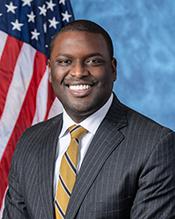
Madam Speaker, today, we legislate for the people. Our passage of H.R. 1 is deeply personal to me. Unlike many of the people we are used to seeing in our politics, I don't come from money or from a…
Madam Speaker, today, we legislate for the people.
Our passage of H.R. 1 is deeply personal to me. Unlike many of the people we are used to seeing in our politics, I don't come from money or from a political family. I was raised by a young, single mother who worked multiple jobs to make ends meet, and we still needed Section 8 housing and food stamps to get by.
Of course, my family struggles could be traced to one common cause, and that is our broken democracy. At the root of why housing, higher education, and healthcare are out of reach for so many millions of Americans is the fact that our democracy does not reflect the will of the American people. Independent redistricting commissions would change that.
When I ran for Congress, the first question political insiders asked me wasn't what I would be campaigning on or how much support I had in my community, but, rather, how much money could I raise?
Public campaign financing would change that.
Many people were surprised that I defeated a billionaire who tried to purchase this congressional seat. But my election should not be the exception to the rule; rather, it should be the norm. Once we pass H.R. 1, it will be.
Madam Speaker, I rise to vindicate the right to vote as precisely that, a constitutional right, not a privilege, a right.
It is a travesty that our Nation's laws do not fully protect the right to vote. The reason, of course, is white supremacy. Over 150 years ago, during Reconstruction, we tried to build a multiracial democracy in this country. For the first time, Black people won seats in this very Chamber, but white supremacists were not having it. So, like today's Republican Party, they devised ways to deny Black people the right to vote.
Madam Speaker, thanks to the 15th Amendment, they could not expressly prohibit Blacks from voting, so they barred prisoners from voting. Then they invented excuses to put Black people in those prisons. It took 70 years for a Black candidate to win a seat in this Congress from the South again.
These Jim Crow laws remain on the books. They are why over 5 million incarcerated people are barred from voting. These people look like me. They are parents. They are children. They fall in love. They make mistakes just like we do. They are citizens of the United States of America just like we are, and they deserve the right to vote.
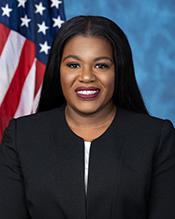
Madam Speaker, St. Louis and I rise today in support of the en bloc amendment to H.R. 1, the For the People Act. Our country's unhoused community members are criminalized, disregarded, and demonized.…
Madam Speaker, St. Louis and I rise today in support of the en bloc amendment to H.R. 1, the For the People Act.
Our country's unhoused community members are criminalized, disregarded, and demonized. I have been unhoused and, in those bleak days, I felt as though my own government had forsaken me.
My amendment to expand voting access to our unhoused community is rooted in love, a love that says you do not need an address for your vote to matter.
We must ensure our unhoused community members and our neighbors are protected from States that want to suppress their votes.
Madam Speaker, I urge a ``yes'' vote.
Madam Speaker, I have an amendment at the desk.
Madam Speaker, St. Louis and I rise to offer an amendment to H.R. 1, the For the People Act, which would restore the right to vote to our community members serving sentences for felony convictions.
I want to extend my deepest gratitude to Congressman Jones for this partnership.
Madam Speaker, America does not love all of its people, and we see that. Right now, more than 5 million people are legally barred from participating in our elections as a result of criminal laws. That is, 1 in 44 Americans, 500,000 Latinx Americans, 1.2 million women, and 1 in 6 Black folks.
Madam Speaker, this cannot continue. Disenfranchising our own citizens, it is not justice.
Madam Speaker, I yield 1 minute to the gentlewoman from California (Ms. Lofgren).
Madam Speaker, I yield 1\1/2\ minutes to the gentleman from New York (Mr. Jones).
Madam Speaker, may I ask how much time is remaining.
Madam Speaker, let me just say, currently, Vermont, Maine, the District of Columbia, and the Commonwealth of Puerto Rico allow for individuals to vote who are incarcerated, just to be clear.
Madam Speaker, I yield 30 seconds to the gentlewoman from Michigan (Ms. Tlaib).
Madam Speaker, I yield 30 seconds to the gentleman from New York (Mr. Bowman).
Madam Speaker, I yield myself the balance of my time.
I thank my colleagues, Representative Sarbanes and Representative Lofgren, for their leadership on this bill.
Madam Speaker, just to put it out there as a reminder, we are talking about actual people. We are talking about humanity. We are talking about access. We are talking about the right to vote. These are people. I urge a ``yes'' vote.
Madam Speaker, I yield back the balance of my time.
Madam Speaker, today I introduced the Bicycle Commuter Act of 2021. This legislation passed the House last session in Section 90436 of the Moving Forward Act (H.R. 2, 116th Cong.) and would reinstate…
Madam Speaker, today I introduced the Bicycle Commuter Act of 2021. This legislation passed the House last session in Section 90436 of the Moving Forward Act (H.R. 2, 116th Cong.) and would reinstate and improve the bicycle commuter tax benefit.
The bicycle is the most efficient form of urban transportation ever devised. Cycling reduces carbon emissions, provides enormous physical and mental health benefits, and is one of the most cost-effective modes of transportation available. Communities across the country have realized these benefits and substantially invested in building better bike networks and improving facilities for biking to work. These investments are one of the reasons that rates of biking to work have increased by more than one-third since 2000. Still, however, only 0.51 percent of workers biked to work in 2019.
Despite these impressive developments, there is no commuter tax benefit for biking to work--like we have for parking and transit. First enacted in 2009, the bicycle commuter benefit was a tax benefit that employers could offer to provide a reimbursement of up to $20/month for expenses relating to bicycle commuting expenses. But if an employee elected
to take advantage of the bicycle commuting reimbursement, they were not eligible to receive transit or parking commuter benefits. The Tax Cuts and Jobs Act suspended the bicycle commuting reimbursement benefit through 2025, taking away a valuable financial incentive for people who choose to bike to work.
With more employees choosing to bike to work, it is critical that Congress reinstates the bicycle commuter benefit and uses this opportunity to improve the benefit to reflect present-day commuting options. The Bicycle Commuter Act of 2021 reinstates the bicycle commuter benefit and changes the structure of the benefit by making it a pre-tax benefit, allowing employees to receive a higher benefit amount, allowing the benefit to be used with parking and transit, and adding bikeshare and electric bikes as an eligible expense.
I look forward to working with my colleagues in the House and Senate to enact this legislation and provide Americans with cleaner, more efficient ways of commuting to work.
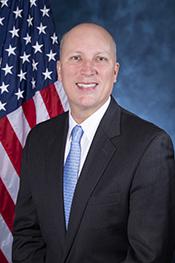
Will the gentleman from Maryland yield? Madam Speaker, I appreciate the gentleman yielding. Madam Speaker, as the gentleman knows, we have had a dialogue back and forth about the need for amendment,…
Will the gentleman from Maryland yield?
Madam Speaker, I appreciate the gentleman yielding.
Madam Speaker, as the gentleman knows, we have had a dialogue back and forth about the need for amendment, the need for debate on the floor. And what I would ask the gentleman is, for example, if the gentleman would agree that in 2004 we had former President Jimmy Carter, Democrat, and James Baker, Republican--hardly ideologues from the standpoint of division that we see today--agree that there are issues of bail and balance.
And what I would ask is: Why don't we have a debate here on the problems and concerns and potential fraud with mail-in ballots that is a nonpartisan concern? That is one example, and there are bunch. Why do we not have that debate robustly here on the floor for the American people to see, if we are talking about transparency?
And I ask the question respectfully of the gentleman from Maryland.
Madam Speaker, I would point out that the Speaker of the House came to the floor and used her magic minute, but doesn't stay on the floor and debate. There is no debate on this floor.
And then the Speaker said that there were amendments, 56 amendments. Forty-nine of them are Democratic amendments, hand-selected by a small group in the Rules Committee. Forty-nine are Democratic amendments.
So don't buy into the Kabuki theater that you are seeing on the floor of the House of Representatives.
You know what?
I can't ask to take down the words of the Speaker, even though the essence of her argument is that I am a bigot. Let's be very clear. The arguments being distilled on the floor today is that Republicans, my colleagues and I, that we are bigots.
Why?
Because they use fancy words like ``voter suppression'' to say that we are wanting to tamp down people's access to polls.
Nothing can be further from the truth. Heaven forbid we want to use voter identification. Heaven forbid we want to honor the will of the people through their legislature in the States passing rules to make sure that our system is actually working, using voter identification that the American people use to fly, that the American people use to do everything else. If I demand that, I am a bigot.
Madam Speaker, today I introduced the Bikeshare Transit Act of 2021. This legislation passed the House last session in Sections 1210 and 2102 of the Moving Forward Act (H.R. 2, 116th Cong.) and would…
Madam Speaker, today I introduced the Bikeshare Transit Act of 2021. This legislation passed the House last session in Sections 1210 and 2102 of the Moving Forward Act (H.R. 2, 116th Cong.) and would make bikeshare systems eligible to receive funding to enhance related public transportation service or transit facilities.
America is in the middle of a bikeshare revolution: at least 119 communities have bikeshare systems, supporting a network of more than 100,000 bikes. In 2019, riders took 50 million trips on bikeshare systems, and the number of trips and systems has grown every year since 2010. The COVID-19 pandemic has further increased demand for bicycles and bikeshare systems as people seek transportation options. Systems are operating in communities of all sizes from Los Angeles and Portland to Topeka and Conway, Arkansas.
While some existing bikeshare programs received federal dollars to develop their systems, the lack of an established source of federal financial support has proved an impediment to many other projects. Since the term ``bikeshare'' is not included in federal law or described as a form of transit, bikeshare systems and departments of transportation are forced to operate in a gray area, creating challenges for funding and maintaining bikeshare systems.
This legislation makes bikeshare systems eligible to receive funding to enhance related public transportation service or transit facilities. Federal funding can be used for acquiring or replacing bikeshare- related equipment and constructing bikeshare facilities. Bikeshare systems will also be listed as eligible projects under the Congestion Mitigation and Air Quality (CMAQ) Improvement Program. The Bikeshare Transit Act will remove significant barriers facing new and existing bikeshare projects applying for federal funding while underscoring that bikeshare programs drive economic development and are an important part of bringing choice and adding value to America's transportation system.
I look forward to working with my colleagues in the House and Senate to include this legislation in a long-term surface transportation reauthorization package.
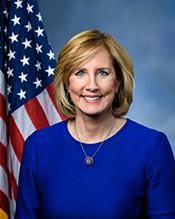
Madam Speaker, I rise today in opposition to H.R. 1, the so-called For the People Act. My colleagues on the other side of the aisle are touting this sweeping legislation as a win for transparency and…
Madam Speaker, I rise today in opposition to H.R. 1, the so-called For the People Act.
My colleagues on the other side of the aisle are touting this sweeping legislation as a win for transparency and election integrity. Nothing could be further from the truth.
This bill is an attempt to destroy democracy by federalizing aspects of U.S. elections constitutionally delegated to the States. It would prohibit commonsense voter ID rules, encourage ballot harvesting, require no-excuse absentee and early voting, permit felons and noncitizens to vote, and make colleges and universities trusted voter registration agencies.
I know firsthand the need for election reform and the consequences of
elections run without transparency and oversight. I was sworn into office over 30 days late, after an exhaustive 100-day postelection count in the race for New York's 22nd Congressional District. In the run-up to the 2020 election, New York Governor Andrew Cuomo rushed through a series of executive orders that mirrored many of the policies the Democrats are now proposing in H.R. 1. The result was one of the most poorly run elections in the entire Nation. It was a disgrace to our system of government.
If H.R. 1 had become law, I can confidently say it would have been virtually impossible to conduct a fair and transparent race. New York's election debacle reveals H.R. 1's real-world consequences.
If this legislation had been adopted, the errors exposed in my race wouldn't be the exception. It would have been bureaucratic chaos and that would have been the norm.
Mr. Speaker, it is clear we need reforms to restore confidence in our elections, but what my Democratic colleagues are proposing would dramatically change election law. The American people are demanding a commonsense framework for election reform that strengthens security without compromising integrity.
Congress should focus on delivering results to the American people, not perpetuating their own power at an irreversible and grave cost to our democratic principles.
Bill Text
Legislative text isn't available for this bill yet.