Madam Speaker, pursuant to House Resolution 1499, I call up the bill (H.R. 3372) to authorize implementation grants to community-based nonprofits to operate one-stop reentry centers, and ask for its…
Madam Speaker, pursuant to House Resolution 1499, I call up the bill (H.R. 3372) to authorize implementation grants to community-based nonprofits to operate one-stop reentry centers, and ask for its immediate consideration in the House.
Madam Speaker, I ask unanimous consent that all Members may have 5 legislative days in which to revise and extend their remarks and include extraneous material on H.R. 3372.
Madam Speaker, I yield myself such time as I may consume.
Madam Speaker, H.R. 3372, the One Stop Shop Community Reentry Program Act of 2021, is truly a public safety-minded bill that would create a grant program within the Department of Justice to support community reentry intake and coordination centers.
The centralized centers opened pursuant to this bill would offer those leaving incarceration the resources necessary to successfully rejoin and reintegrate into our communities through DOJ and community- funded reentry programs.
Now, let me be very clear: I am delighted that there are the kind of sensitive community efforts across America, spotty in different States and different cities, who believe in reentry. That is why we believe this legislation is so important, because it federalizes and increases the opportunity for all Americans facing the daunting responsibilities of what reentry is to have a lifeline.
There exists a great need for these programs envisioned in this legislation as more than 600,000 people return to their communities each year after serving time in State and Federal prisons, as do nearly 9 million people from county jails, while more than 2.5 million people complete parole and probation.
We can't deny these people an opportunity to be again contributing citizens in a positive way.
Individuals with criminal convictions face daunting challenges upon release. The overwhelming majority of those released from custody receive minimum preparation during their incarceration and inadequate assistance to get back on their feet after they are released.
Their convictions may limit employment prospects, educational and training opportunities, public housing assistance, and access to social services. They should not, but they do.
Even a minor criminal conviction can erect substantial barriers and trigger far-reaching collateral consequences, maybe even access to college education.
Due in part to the difficulty of overcoming these barriers, five out of six people who have spent time in a State prison will be arrested for a new crime within 9 years of their release.
We cannot waste human resources or talent in this way. That is why policies designed to improve reentry outcomes have broad bipartisan support, as demonstrated by the passage of our First Step Act and the Sentencing Reduction Act, which incentivizes education and recidivism reduction programs for people in Federal prisons.
While the First Step Act and Second Chance Act, first introduced by my good friend, Danny Davis, and other initiatives have been successful at the Federal level, the majority of returning citizens are exiting State and local facilities, and there is no overall and comprehensive effort to address the challenges of reentry.
An example of the type of community reentry center supported by this legislation is in Tulsa, Oklahoma,
where community organizations offer a comprehensive model of reentry services. The services offered through the Tulsa Reentry One-Stop have significantly reduced recidivism and increased employment. In 2015, 77 percent of the individuals who successfully completed their reintegration program remained employed after exiting the program. There is the proof.
H.R. 3372 would establish a grant program to support reentry centers like Tulsa and ensure support is more available for all individuals across the Nation from the moment they are released. Support would include assistance with transportation, housing, skills training, and even advanced education.
One-stop reentry centers would also assist reentering individuals in obtaining identification and applying for eligible public benefits. Those who have formal reentry plans would be able to find case management assistance and court-directed wraparound support at the reentry centers.
This, again, would be a lifeline for a new direction, not for the individual only, but for their family, their neighbors, their neighborhood, and where they live.
In addition to the one-stop reentry centers, this bill would authorize a second mechanism to assist individuals reentering communities that do not have large enough populations of reentering individuals to maintain a standalone reentry center. In these communities, H.R. 3372 would provide grants to operate free reentry hotlines that operate 24 hours a day, 7 days a week, to assist those recently released from incarceration with reentry services near their homes.
Madam Speaker, the Judiciary Committee has a responsibility not to look only at urban crises, urban crime, and urban solutions. We must look at the hamlets, villages, suburbia, and elsewhere. Rural communities need our assistance.
We specifically thought it was important to have this hotline to be able to assist them. This element of the bill is particularly important in our smaller communities.
Some of my colleagues on the other side of the aisle might argue that the funding authorized in the bill is too high, but we know that the high rates of recidivism equal this amount of money, leaving individuals coming out of incarceration as having nowhere to go.
Their actions can become more costly to Americans than our investment in changing their lives.
This bill would address a pressing nationwide need, providing individuals with the tools and support they need to successfully reenter society, ultimately making our community safer.
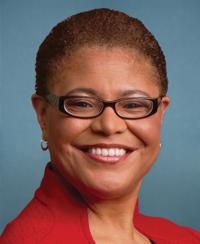
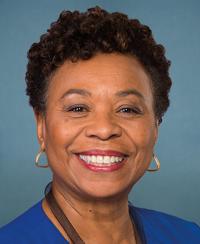
Now, I have had the privilege of serving alongside of Representative Karen Bass for a number of years. I take this moment to publicly, on behalf of her colleagues, congratulate her for her next step in life: Becoming the first woman to ever become mayor of the great city of LA.
I can say that because there is another great city, Houston.
But I give her my congratulations and I know her colleagues would do so, as well.
Representative Bass worked with leadership on this issue, as well as joining with bipartisan cosponsors. We know it has widespread support and, therefore, we are looking forward to introducing this important legislation, and I urge my colleagues to support it.
Madam Speaker, I reserve the balance of my time.
Madam Speaker, my dear friend, Ranking Member Jordan, speaks to a particular point that I just have to respond.
I am so glad he cited positive examples of what a reentry program can do, but he is giving evidence, comfort, and advocacy for this legislation. Because isolated programs will not help Americans. We now give a broad-based opportunity for cities, hamlets, villages, and counties across America--rural and urban, North, South, East and West-- to look at their landscape of those reentering and accessing this one- stop program.
We have already said 600,000 are released, and we have already said that these persons want to rehabilitate themselves. Why would anybody oppose this legislation? And it is bipartisan. Let me remind my friends that these are individuals who have served their time.
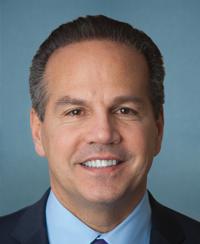
Madam Speaker, I yield 2 minutes to the gentleman from Rhode Island (Mr. Cicilline), a distinguished member of the committee and the subcommittee chair.
Madam Speaker, I yield myself such time as I may consume. There lies the key element to my friends who are ignoring the fact that this one-stop legislation has bipartisan support. It means that someone who was in opposition to my party, my caucus, supports this. The work that Ms. Bass did with all of us was a bipartisan effort. And the reason is because this is an investment.
And my friends keep talking about grants. And so it is the grant that continues to be the line of argument and the--how should I say it--the bee sting. And they are wrong because grants have oversight. Grants require these organizations to apply and present the best practices, the best evidence. And so I am very glad that it is a grant. But it also gives those with broad needs across the land the fair opportunity to apply for a grant to be able to have these kinds of programs.
The one-stop model that this legislation promotes would aim to provide complete reentry services to address the critical elements of the reentry process that promote long-term reentry success, which as I said, is housing, employment, education, and healthcare.
The bill will ensure that returning citizens can effectively access the services funded through the many bills that we have tried to work on.
Now let me just be very clear. One of my good friends called off a list of offenders that really triggers fear, apprehension, and distaste. Well, those are the very individuals that we would hope that through treatment, medical care and otherwise, and getting them into a proper program, that they can be contributing, that their families do not have to be fearfully looking over their shoulder as to what have they done next. We have to try. And these programs will hire those who have a difficult time finding employment. But you can be assured that working with the program they will be screened prior to their employment; their employment will reduce their likelihood to recidivate.
Mr. Speaker, I think it is extremely important that we take the tough questions and give good answers. Tough questions about: What do you do with those who are trying to reenter? What you do is you have a good program that is tough and that it works.
Mr. Speaker, I reserve the balance of my time.
Mr. Speaker, just in a moment let me indicate that you can always find just a sliver on which to oppose.
I hold in my hand a whole list of Republicans that believe the bill works and should work. So that, we should take off the table. Republicans and Democrats support this legislation.
And then I can assure you that people answering the phone will not be randomly answering the phone. They will be under a supervised program, as this program relates. We would hope and expect that they would be the kind that can listen and take the intake of those who are desperate and trying to find a way not to go back to crime.
Mr. Speaker, I have no further speakers, and I reserve the balance of my time.
Mr. Speaker, I yield myself the balance of my time to close.
Mr. Speaker, I always like a words game with my good friend from Ohio, so let me clarify.
An isolated program means that a program in Tulsa and a program in Pennsylvania do not help someone in Idaho. And so what this one-stop program does is it gives the good works of the people of Pennsylvania and Tulsa, it gives Americans the opportunities in cities, hamlets, urban centers, and rural hamlets the opportunity to have the same exact program and to invest in the 600,000, those who are coming out of incarceration, give them the same opportunity for ensuring that they will have that access to this program
That is what our intent was on the Judiciary Committee, and that is what the intent was on the many individuals, if you will, who were trying to craft something that will work for all of America.
Now, let me share with you, Mr. Speaker, an article titled: ``To keep people from returning to jail, Mesa County follows other communities' reentry roadmap.'' Many people transitioning from jail or prison struggle to reenter society. So here is Mesa County's new program with housing, jobs, transportation, and mental health services.
What we simply want to do is to get this program out.
I will just share you with the story of Richard Gallegos who was locked up in the Mesa County jail for the first time at age 18. He spent the next 8 years in and out of jail--typically drug- and alcohol- related misdemeanors that sometimes led to more serious incidents, including nonviolent domestic disputes and resisting arrest. He said that at 27 he was sentenced to prison for a drug and firearms violation.
Altogether, Gallegos, was born and raised in Grand Junction and now 45 years old, has spent 5 years in State prison, and 3 years in county jail, and for the past 4 years he has been on probation. He now works at a job where he is learning masonry, a switch from the oil and gas industry work he did previously.
``I am staying honest, humble,'' he said. ``I try not to walk with too much shame. The best thing in my favor is I have been forgiven by those I have wronged. They understand my drug addiction.''
These are individuals whom we don't want to throw by the wayside. We want to make sure they get into this program.
Mr. Speaker, I include this article in the Record.
[From the Colorado Sun, Nov. 8, 2022]
To Keep People From Returning to Jail, Mesa County Follows Other
Communities' Reentry Roadmap
(By Sharon Sullivan)
Richard Gallegos was locked up in the Mesa County Jail for
the first time at age 18. He spent the next eight years in
and out of jail--typically drug and alcohol-fueled
misdemeanors that sometimes led to more serious incidents,
including (nonviolent) domestic disputes and resisting
arrest, he said. At 27, he was sentenced to prison for a drug
and firearms violation.
Altogether, Gallegos, born and raised in Grand Junction and
now 45 years old, has spent five years in state prison and
three years in county jail. For the past four years, he has
been on probation. He now works at a job where he's learning
masonry, a switch from the oil and gas industry work he did
previously.
``I'm staying honest, humble,'' he said. ``I try not to
walk with too much shame. The best thing in my favor is I
have been forgiven by those I've wronged. They understand
drug addiction.''
Gallegos shares an apartment with an adult daughter, but
many formerly incarcerated friends are not so lucky, he said.
``People are coming out of jail with no resources,''
Gallegos said. ``You better hope you have a support system.
Resources are slim to none coming out of county jail.
``You're on your own, facing what put you in there in the
first place. People's first thought is often, `I want to do
what's right--but where do I go?' ''
Mesa County officials have long recognized that many people
transitioning from jail or prison struggle with substance
abuse, mental illness or both--compounding the multiple other
challenges they face when reentering society, and often
lacking much-needed resources like Gallegos did.
The Mesa County Sheriff's Office compared names of frequent
users of the jail with frequent visitors to emergency rooms
at Grand Junction's two acute care hospitals, Community
Hospital and St. Mary's Medical Center. (To protect patient
privacy, the two hospitals did not disclose names, but
confirmed that many people appeared on both lists.) They
identified 60-90 frequent users of both the jail and
emergency rooms. Most of these frequent users face challenges
related to mental health diagnoses or substance abuse, said
Mesa County Commissioner Janet Rowland, who has led an effort
to address the issue.
In September, Mesa County launched a new multiagency
collaboration (county officials refer to it as MAC), aimed at
helping people successfully transition from incarceration.
The collaboration connects people to agencies that can assist
with employment, housing, transportation and other basic
needs, as well as access to mental health services or
rehabilitation programs to combat drug or alcohol addictions.
Reentering society
In April 2021, 50 percent of people held in the Mesa County
Jail were on mental health medications, Mesa County Sheriff
Todd Rowell said. Mental health and/or substance abuse issues
are a significant factor in recidivism rates at the jail,
said Rowell. While people can receive treatment for these
conditions while incarcerated, they often lack continuity of
care once they leave jail and, thus, can be prone to
reoffending, he said.
In 2020, when overall arrests were down due to the COVID-19
pandemic, one man was arrested 19 times, Rowell noted. A
dozen other people were arrested four to eight times each.
``I was frustrated. I felt people had almost zero chance to
succeed after jail,'' Rowell said. ``Life is hard anyways,
particularly after spending three months in jail. Finding
work is almost impossible. It's a benefit to any county to
understand those challenges to change the recidivism.''
Mesa County did not have a transition coordinator at its
jail until it hired Julie Mamo in 2019. She visited jails in
Boulder and Douglas counties to learn about their reentry
programs while creating Mesa County's program. The new
multiagency collaboration builds on the program Mamo founded.
Thus far, Mesa County has enlisted three agencies to
provide services to help people with reentry: Amos
Counseling, a Grand Junction-based counseling service;
Foundations 4 Life, an organization that provides substance
use disorder and mental health services to people involved in
the justice system; and the Freedom Institute, a nonprofit
that offers WAGEES (Work and Gain Education and Employment
Skills), a community reentry program within the Colorado
Department of Corrections.
The Freedom Institute has already been providing WAGEES
services for prison parolees in Grand Junction. Its new
county contract now allows the Freedom Institute to offer
those same services to the jail population.
Lisa Mills, Mesa County's behavioral health strategies
manager, decides which agency can best meet the specific
needs of a person leaving jail. Case managers are given no
more than 10 clients--the goal is to meet with people daily
if necessary--to ensure they are adhering to prescription
medications, able to access food assistance, acquire bus
passes, find employment and housing. Upon release, people are
met at the jail by an agency staff member for rides to where
they are staying or wherever else they need to go. The
agencies work closely with the jail's two transition
coordinators.
The county secured a $400,000 grant from the Colorado
Department of Human Services' Office of Behavioral Health to
fund the program. St. Mary's Medical Center and the Mesa
County Sheriff's Office each pitched in another $300,000 for
a total of $1 million.
``It's a long overdue program,'' said Lieutenant Henry
Stoffel of the Mesa County Sheriff's Office. ``A lot of
people leave our facility and don't have basic human needs,
and so they often reoffend. We want to get them out of that
cycle.''
Returning to prison for minor offenses
It's taken 45-year-old Gary Swenson 20 years to get out of
that cycle. His involvement with the justice system began at
age 12 when he was sentenced to a Colorado juvenile detention
center for a burglary he committed with a relative and two
friends. By age 18 he was addicted to methamphetamine. He has
spent half his life in and out of state prison.
Swenson said he found it challenging to meet his parole
obligations without a reliable source of transportation.
Public transit didn't exist in the Grand Valley when he
needed it, and he wasn't allowed to drive until he had
fulfilled parole obligations. Employers were annoyed that he
asked to leave work a couple times each week to attend
mandatory substance abuse classes. He also had to take time
off to submit weekly urine samples for drug screenings--which
he was required to pay for himself, along with the classes.
``Your employer has to be real understanding, which they're
usually not,'' Swenson said.
He said most of his time behind bars was for parole
violations, including once for receiving a speeding ticket,
or on other occasions for missing those classes--all
violations for which he'd be sent right back to prison.
``It was always a prison sentence,'' as opposed to
probation or a halfway house, Swenson said.
ProPublica (a national nonprofit media outlet that receives
funding from The Colorado Trust) recently reported on how
easy it is to be sent back to prison for minor offenses. The
number of people in Colorado who return to prison within
three years is 50 percent, one of the worst recidivism rates
in the nation, according to a 2018 Virginia Department of
Corrections report cited by ProPublica.
Douglas County's reentry program includes a jail
medication-assisted treatment program that helps people with
opioid use disorder. The county had a 42 percent recidivism
rate in 2021, which is lower than the statewide average, said
Nicole Beckett, the jail-based behavioral health services
administrator in Douglas County. Its reentry program includes
working with probation officers, pretrial officers, public
defenders and community behavioral health professionals.
``It's definitely our goal to disrupt the cycle of
incarceration,'' Beckett said. ``People with substance use
disorders face risk of relapse, making them a challenging
population to help.''
Boulder County's reentry program added a housing
coordinator, Kim Smith, in 2019 to focus specifically on
helping people find housing in the city's extremely tight
market. People on probation are prohibited from leaving
Boulder County to seek more affordable housing elsewhere.
With such a competitive housing market, landlords can easily
choose not to rent to people with criminal records, said
Smith. The reentry program has seen an 80 percent success
rate of people avoiding recidivism.
Mesa County officials say reentry programs are rare in
rural areas due to a lack of resources. County Sheriffs of
Colorado, a nonprofit that provides programs and support to
sheriffs statewide, does not track the number of counties
offering transition programs.
While Mesa County Jail offers some programs in-house, it
needs more space, and continuity of care has been an issue
once people leave jail, Stoffel said. He would like the
jail's transition program to double or triple in size, and
said he expects reentry programs to increase across Colorado.
``They're in treatment for 45 days; recovery is for life,''
Mamo said.
Readjusting to life
In July, Mamo launched a program similar to one she
witnessed in Douglas County that helps people acquire
identification cards. A Department of Motor Vehicles mobile
unit comes to the jail twice a month to issue IDs.
``Most people need two forms of ID,'' said Lory Villumsen,
a second transition coordinator hired in June. ``We process
the application to help with getting them their Social
Security card.'' The transition team is additionally working
on finding birth certificates for people.
Mamo has created partnerships with transitional sober
living spaces, reunited people with family members who reside
outside the community, and enrolled people in treatment
programs--sometimes out of town. The challenges of reentry
are similar, whether transitioning from jail or prison,
except lengthier prison sentences often means a person has
become more ``institutionalized,'' making it more difficult
to adjust to life on the outside, Mamo said.
People who are incarcerated are told when to eat, when to
sleep, what to wear and what to do; ``when people leave jail,
we need to empower them to make all these decisions,''
Stoffel noted.
Freedom Institute executive director Micah Espinoza hopes
that working with people leaving county jail will keep them
out of prison.
``Once you're convicted of a felony, and have fulfilled
your sentence, you still pay for that the rest of your
life,'' Espinoza said. As part of the multiagency
collaboration, ``we're targeting people going in and out of
jail for typically petty offenses. Why are they committing
these crimes? It's usually poverty, homelessness, substance
abuse, mental health.''
Swenson said he's learned from his mistakes; he's been out
of prison for almost two years and is on unsupervised
probation for the first time. He works as a peer specialist
for the Circle Program, a residential treatment program in
Grand Junction for men age 18 and older with concurrent
substance abuse and mental health disorders.
``There are people in this program I've been in prison
with, gotten high with,'' Swenson said. ``They see 'if Gary
can do it,' they can. It's me not forgetting where I came
from.
``Instead of locking people up for possession, give us an
opportunity first to work with them,'' he continued. ``A lot
of guys don't want to be high, live on the streets, be
homeless--it's just all they know. Being part of this program
is a chance to see an opportunity.''
My concluding remarks include programs in Boulder County that can be done.
Finally, Mr. Speaker, once you are convicted of a felony and have fulfilled your sentence, you will still pay for the rest of your life. We need to find a way where these individuals can contribute and not be those who enter out and then go in. It is important to learn from their mistakes, but we have got to help them.
Mr. Speaker, I ask my colleagues to support the underlying legislation. Again, I thank those who cosponsored it and the main cosponsor, Congresswoman Karen Bass.
Mr. Speaker, H.R. 3372, the ``One Stop Shop Community Reentry Program Act of 2021,'' is a public-safety minded bill that would create a grant program within the Department of Justice to support community reentry intake and coordination centers.
The centralized centers opened pursuant to this bill would offer those leaving incarceration the resources necessary to successfully rejoin and reintegrate into our communities through DOJ and community- funded reentry programs.
There exists a great need for the programs envisioned in this legislation, as more than 600,000 people return to their communities each year after serving time in state and federal prisons, as do nearly nine million people from county jails, while more than 2.5 million people complete parole or probation each year.
Individuals with criminal convictions face daunting challenges upon release. The overwhelming majority of those released from custody receive minimal preparation during their incarceration and inadequate assistance to get back on their feet after they are released, while their convictions may limit employment prospects, educational and training opportunities, public housing assistance, and access to social services.
Even a minor criminal conviction can erect substantial barriers and trigger far-reaching collateral consequences. Due in part to the difficulty of overcoming these barriers, five out of six people who have spent time in a state prison will be arrested for a new crime within nine years of their release.
That is why policies designed to improve reentry outcomes have broad bipartisan support, as demonstrated by passage of the First Step Act, which incentivizes education and recidivism-reduction programs for people in federal prisons.
While the First Step Act, Second Chance Act, and other initiatives have been successful at the federal level, the majority of returning citizens are exiting state and local facilities, and there is an overall need for a more comprehensive approach to address the challenges of reentry.
An example of the type of community reentry center supported by this legislation is in Tulsa, Oklahoma where community organizations offer a comprehensive model of reentry services. The services offered through the Tulsa Reentry One-Stop have significantly reduced recidivism and increased employment. In 2015, 77% of the individuals who successfully completed their reintegration program remained employed after exiting the program.
H.R. 3372 would establish a grant program to support community reentry centers like the Tulsa Reentry One-Stop and ensure support is made available for all individuals the moment they are released. Support would include assistance with transportation, housing, and skills training.
One Stop reentry centers would also assist reentering individuals in obtaining identification and applying for eligible public benefits. And those who have formal reentry plans would be able to find case management assistance and court directed, wrap-around support at the reentry centers.
In addition to the One Stop reentry centers, this bill would authorize a second mechanism to assist individuals reentering communities that do not have large enough populations of reentering individuals to maintain a standalone reentry center.
In these communities, H.R. 3372 would provide grants to operate free, reentry hotlines that operate 24 hours a day, 7 days a week, to assist those recently released from incarceration with reentry services near their homes. This element of the bill is particularly important for rural and smaller communities.
Some of my colleagues on the other side of the aisle might argue that the funding authorized in this bill is too high. But we know that the high rates of recidivism of individuals leaving incarceration are far more costly to American communities.
This bill would address a pressing nationwide need, providing individuals with the tools and support they need to successfully reenter society, ultimately, making our communities safer.
I thank our colleague, Representative Karen Bass, for her leadership on this issue, as well as her bipartisan cosponsors, for introducing this important legislation, and I urge my colleagues to support it.
Recognizing the high rates of recidivism in our communities and the lack of access to reentry resources, H.R. 3372 would establish a
new grant program within DOJ to support One Stop Community Reentry Centers.
When individuals lack access to reentry services such as housing, job training, and mental health resources, they are more like to be rearrested and reincarcerated. This bill would improve public safety by reducing recidivism.
I urge my colleagues to support it.
Mr. Speaker, I yield back the balance of my time.
Mr. Speaker, let me rise in great enthusiasm for an important amendment that calls for an evaluation and a determination as to whether or not this is impacting positively those who are in the program.
I have already read stories about Robert and a number of others; if this program spreads across America to urban hamlets, villages, counties, and rural communities, then we need to know how effective it is.
I am almost positive it will be very effective as a worthwhile investment for the 600,000 people who are released, but this amendment will ensure that we have the right kind of amendment for best practices and best evidence.