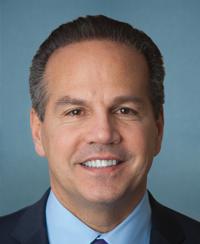
Madam Speaker, pursuant to House Resolution 900, I call up the bill (H.R. 4445) to amend title 9 of the United States Code with respect to arbitration of disputes involving sexual assault and sexual…
Madam Speaker, pursuant to House Resolution 900, I call up
the bill (H.R. 4445) to amend title 9 of the United States Code with respect to arbitration of disputes involving sexual assault and sexual harassment, and ask for its immediate consideration in the House.
Madam Speaker, I ask unanimous consent that all Members may have 5 legislative days in which to revise and extend their remarks and insert extraneous material on H.R. 4445.
Madam Speaker, I yield myself 3 minutes.
Madam Speaker, H.R. 4445, the Ending Forced Arbitration of Sexual Assault and Sexual Harassment Act, would restore access to justice for survivors of sexual assault or sexual harassment who are forced to settle their disputes against their harassers and abusers in a private system of arbitration that is often stacked against them.
Arbitration was originally developed as an alternative to the court system for parties of relatively equal bargaining power to enter into voluntarily. In recent decades, however, forced arbitration clauses have become ubiquitous in our lives, largely in the form of take-it-or- leave-it contracts between very large companies and individual consumers. As a result, these clauses have rendered our court system, in which plaintiffs have far stronger protections, inaccessible to far too many.
Nowhere is that trend more apparent or problematic than in the workplace. It is projected that, by 2024, 80 percent of private-sector workers will be forced to sign an arbitration clause when accepting employment. And consider that, over the past 5 years, employers prevailed over their employees in 98 percent of these arbitration cases. But these numbers cannot capture the true human toll of forced arbitration.
Last November, the Judiciary Committee heard powerful testimony from four survivors of sexual assault and sexual harassment about their harrowing experiences and the deep wounds they continue to carry with them to this day. It was a hearing none of us will forget, and we appreciate these brave women coming forward and sharing their stories.
Each of these women was subject to horrific treatment by a person with power over their lives. Then, when they sought to hold their assailants accountable in court, they were forced to relive the trauma of their harassment and assault to find that their only recourse was a secretive arbitration process that was stacked against them.
Forced arbitration clauses, buried deep in the fine print of the paperwork required as a condition of employment, have bound workers to a system in which they are nearly guaranteed to fail, foreclosed the possibility of ever having their day in court, and in almost every case taken away their right even to discuss their experience.
The company gets to pick the judge and the jury, truncate the discovery process, choose the law applied, and
prevent all appeals. When the company wins, it can request that the victim pay its attorney's fees, and it can ensure that misconduct never sees the light of day.
H.R. 4445 removes these barriers to justice for survivors of sexual assault or sexual harassment by giving them a real choice of whether to go to court or to arbitrate their claim.
In doing so, this legislation ends this unjust and, frankly, repulsive system in which American companies are better off retaliating against victims of sexual assault than taking responsibility and holding perpetrators responsible for their horrific actions.
Madam Speaker, I include in the Record a letter to Members of Congress dated February 4, 2022, and a letter to House leadership dated February 7, 2022, both from organizations in support of H.R. 4445.
February 4, 2022.
Re Pass the Ending Forced Arbitration of Sexual Assault and
Sexual Harassment Act of 2021 (HR. 4445).
Dear Members of Congress: On behalf of the undersigned
organizations, we write in support of the Ending Forced
Arbitration of Sexual Assault and Sexual Harassment Act of
2021 (H.R. 4445), a bill that would provide important new
opportunities for individuals who experience sexual
harassment and assault to seek justice without being forced
into closed-door and secretive forced arbitration
proceedings, where the deck is too often stacked against
them.
Today, individuals are routinely forced to sign an
arbitration clause to resolve disputes as a condition of
obtaining a job or purchasing a good or service, often
through language buried in fine print. Many individuals who
sign such documents have no idea they have waived the ability
to enforce their rights in court. Arbitrators are often
chosen and paid by companies. There is no public record of
the proceedings or the outcome, and rarely an opportunity to
appeal the arbitrator's decision. Many who come forward with
reports of sexual harassment or sexual assault, cannot afford
legal counsel. The arbitration clause may force them to bear
some of the significant costs of the arbitration. The
resolution of their disputes may fail to make them whole for
the harm they have suffered.
The lack of public accountability enabled by forced
arbitration has played a harmful role in allowing sexual
harassment and assault to persist in the shadows. In the four
years since #MeToo went viral, thousands of individuals,
disproportionately women, have come forward to share their
experiences--many several years after the fact--and to demand
justice. When women and all those who have experienced
assault and harassment share their stories, it gives others
the courage to come forward as well. But when women who
report such conduct are forced into arbitration, that
secretive process with no public accountability further
silences survivors, and employers and companies can continue
to employ and protect serial sexual harassers.
The Ending Forced Arbitration of Sexual Assault and Sexual
Harassment Act is an important step towards restoring power
to survivors of sexual assault and sexual harassment by
ensuring they will not be forced into arbitration. It is
admittedly a partial solution, as no individual should be
forced to waive their ability to fully enforce their rights
to be free from other forms of unlawful harassment,
discrimination, and exploitation, whether as workers, as
consumers, as patients, or as students. We are therefore
hopeful that as a complement to this bill, Congress will
quickly take up and pass the FAIR Act (H.R. 963) and
Restoring Justice for Workers Act (H.R. 4841), which would
ensure that companies can no longer circumvent the legal
system by forcing individuals into arbitration. But the
Ending Forced Arbitration of Sexual Assault and Sexual
Harassment Act represents an important partial restoration of
individuals' rights to seek accountability and justice.
Accordingly, we urge you to support this legislation. If you
have any questions, please contact Emily Martin
(emartin@nwlc.org) at the National Women's Law Center.
Sincerely,
National Women's Law Center, National Employment Law
Project, National Employment Lawyers Association.
I thank my colleagues, Representatives Bustos, Griffith, Jayapal, and Buck, for their leadership on this issue. I urge my colleagues to support this bipartisan legislation, and I reserve the balance of my time.
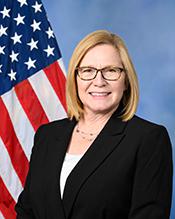
Madam Speaker, I yield 4 minutes to the gentlewoman from Illinois (Mrs. Bustos), the sponsor of this bill.
Madam Speaker, I yield 2 minutes to the gentlewoman from Washington (Ms. Jayapal).
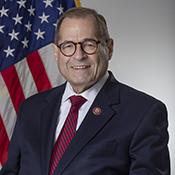
Madam Speaker, I yield 1\1/2\ minutes to the distinguished gentleman from New York (Mr. Jeffries).
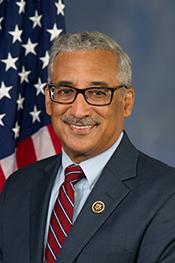
Madam Speaker, I yield 1 minute to the gentleman from Georgia (Mr. Johnson).
Madam Speaker, I yield 3 minutes to the gentlewoman from Texas (Ms. Jackson Lee), a distinguished member of the Judiciary Committee.
Madam Speaker, I yield 2 minutes to the gentleman from Rhode Island (Mr. Cicilline), a distinguished member of the Committee on the Judiciary.
Madam Speaker, I yield 1\1/2\ minutes to the gentlewoman from Pennsylvania (Ms. Scanlon), another distinguished member of the Committee on the Judiciary.
Madam Speaker, I yield 1\1/2\ minutes to the gentleman from Maryland (Mr. Raskin), another distinguished member of the Committee on the Judiciary.
Madam Speaker, I yield 1\1/2\ minutes to the gentlewoman from Texas (Ms. Garcia), another distinguished member of the Committee on the Judiciary.
Madam Speaker, I yield 1\1/2\ minutes to the gentlewoman from North Carolina (Ms. Ross), another distinguished member of the Committee on the Judiciary.
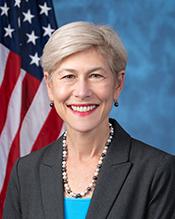
Madam Speaker, I yield 1\1/2\ minutes to the distinguished gentlewoman from Connecticut (Ms. DeLauro).
Madam Speaker, I reserve the balance of my time.
Madam Speaker, I yield myself such time as I may consume.
Madam Speaker, H.R. 4445, the Ending Forced Arbitration of Sexual Assault and Sexual Harassment Act, removes barriers to justice for survivors of sexual assault or sexual harassment by giving them a real choice of whether to go to court or to arbitrate their claim after the dispute has arisen.
Mr. Jordan is right. Many such victims, if given the choice, will choose to go to court. Why shouldn't they? In arbitration, they lose 98 percent of the cases. The employer wins 98 percent of the cases in arbitration. Why? Well, for one thing, the employer picks the arbitrator, and the arbitrator is paid. So, naturally, the arbitrator wants to rule in such a way that he or she is likely to get hired again.
But 98 percent of the cases brought by women who have been sexually harassed who are in forced arbitration are lost by them. That is why this bill is necessary.
If we want to give women who have been sexually harassed a fair chance at justice, we must pass this bill. If we want to give women who have been sexually harassed a fair chance at winning against their employer who did the sexual harassment or allowed the sexual harassment, we must pass this bill.
That is why this critical measure is supported by a broad coalition of public interest organizations, including the National Alliance to End Sexual Violence, the National Center on Domestic and Sexual Violence, the National Coalition Against Domestic Violence, the National Partnership for Women and Families, RAINN, and many others.
Not one single group that deals with sexual violence opposes this bill. Only employer organizations oppose this bill because it stacks the deck in their favor.
Madam Speaker, I want to thank my colleagues, Representatives Bustos, Griffith, Jayapal, and Buck, for their leadership on this issue, and I urge my colleagues to support this bipartisan legislation.
Madam Speaker, I yield back the balance of my time.
Madam Speaker, I claim the time in opposition to the amendment, although I am not opposed.
Madam Speaker, I yield myself 45 seconds.
Madam Speaker, I rise in support of the amendment offered by the distinguished gentleman from Colorado (Mr. Buck), the ranking member of the Subcommittee on Antitrust, Commercial, and Administrative Law.
This amendment simply clarifies that H.R. 4445 does not amend current law outside of the Federal Arbitration Act. It reflects the bipartisan input of several of my colleagues in the House and Senate, including the bill's sponsor, Congresswoman Bustos.
Importantly, this amendment would protect the rights of survivors of sexual harassment by ensuring that they have a choice of litigating or arbitrating any case relating to the conduct that is alleged to constitute sexual harassment under applicable law. It does so by making clear that anything related to sexual harassment or assault as currently defined by law is covered by this bill.
This would include retaliation or any other misconduct that gives rise to the underlying claim alleging a violation of these laws and reflects an important compromise struck to protect these cases.
Madam Speaker, I urge my colleagues to support this amendment, and I reserve the balance of my time.
Madam Speaker, I yield 1\1/2\ minutes to the gentlewoman from Illinois (Mrs. Bustos), the sponsor of the bill.
Madam Speaker, I yield 1 minute to the gentleman from California (Mr. Correa).
Madam Speaker, I yield 1\1/2\ minutes to the distinguished gentlewoman from California (Ms. Speier).
Madam Speaker, in closing, I thank Mr. Buck for offering this helpful amendment.
I thank Ms. Speier, and I thank all the people who have been so helpful on this bill.
Madam Speaker, I yield back the balance of my time.