Madam Speaker, I move to suspend the rules and pass the bill (H.R. 546) to regulate monitoring of electronic communications between an incarcerated person in a Bureau of Prisons facility and that…
Madam Speaker, I move to suspend the rules and pass the bill (H.R. 546) to regulate monitoring of electronic communications between an incarcerated person in a Bureau of Prisons facility and that person's attorney or other legal representative, and for other purposes.
Madam Speaker, I ask unanimous consent that all Members have 5 legislative days to revise and extend their remarks and include extraneous material on the bill under consideration.
Madam Speaker, I yield myself such time as I may consume.
Madam Speaker, the first thing I would like to do is thank our distinguished chair of the Democratic Caucus, Mr. Jeffries, for working with us and moving forward on this bill, along with the chairman of the full committee, Mr. Nadler.
Madam Speaker, H.R. 546, the Effective Assistance of Counsel in the Digital Era Act requires the Federal Bureau of Prisons to establish a system that ensures the confidentiality of all privileged electronic communications between incarcerated individuals and their attorneys or legal representatives.
H.R. 546 is identical to bipartisan legislation sponsored by Representative Hakeem Jeffries last Congress. Last September, the House approved this bill by voice vote. However, the Senate failed to take up the measure prior to adjournment. As we move forward today, I hope that the House will approve this bill with broad support, again, so that the Senate will take swift action and President Biden can sign this much- needed proposal into law.
Madam Speaker, H.R. 546 addresses important constitutional protections for criminal defendants, and all of these I support. The Sixth Amendment to the United States Constitution provides the right to counsel, to assist in the defense of those accused of criminal offenses. In order to represent their clients in an effective manner, defense attorneys must have the ability to communicate candidly with their clients.
The attorney-client privilege, which keeps communications between individuals and their attorneys confidential, exists in part to foster open communications. This privilege is a fundamental component of the effective assistance of counsel guaranteed by the Constitution. Of course, this privilege does not protect communications between a client and an attorney made in furtherance of or in order to cover up a crime or fraud, also known as the crime-fraud exception. We understand that.
Outside of any custody setting, defendants are less constrained in their ability to have candid conversations with their attorneys. Generally, out-of-custody defendants can go to their attorneys' offices, speak with them freely on the phone, or send written or electronic correspondence without fear of interference or monitoring. To an extent, in-custody defendants also have these protections.
For example, in the Federal system, Bureau of Prisons' regulations ensure that inmates can meet with their attorneys without auditory supervision. Current regulations also allow confidential phone calls and letters between inmates and their attorneys. But these same protections do not apply to email communications for the nearly 152,000 individuals currently in Federal custody, including those in pretrial detention who have not been convicted of any crime.
I know that my colleagues can see that that is definitively a denial of the civil rights, civil liberties, and the criminal justice rights that these individuals should have access to.
H.R. 546 would ensure that all communications between attorneys and their clients remain confidential, including email.
Madam Speaker, over a decade ago, the Federal Bureau of Prisons recognized the growing importance of email, which is important in providing efficient and swift communications between inmates and individuals on the outside.
Since 2009, Bureau of Prisons' inmates have been able to access emails
through a system known as TRULINCS. However, TRULINCS requires inmates and their contacts to consent to monitoring of all communications, even email exchanges between inmates and their attorneys. That, I think we all understand, is unfair.
Madam Speaker, during the last decade, email has grown rapidly and is the primary means of communication between inmates and their attorneys. During the current pandemic, emails have become even more important given how difficult it is for attorneys to meet with their clients.
Without appropriate safeguards, the Bureau of Prisons risks severely hindering the effective representation of inmates by limiting attorney- client privilege for electronic communications. Therefore, H.R. 546 would require the Bureau to implement an adequate system to ensure that these attorney-client communications remain confidential--again, a constitutional provision or principle of the right to counsel.
H.R. 546 also includes additional protections, including the requirement of the contents of electronic communications be destroyed when an inmate is released from prison, as well as authorizing the suppression of evidence obtained or derived from access to information that is in violation of the provisions set forth in the bill.
Madam Speaker, this is an important bill. Its time is now. I commend our colleague, Representative Jeffries, for his effort and leadership in developing this bipartisan legislation. This proposal has already received broad support by the House during the last Congress, and now we must act swiftly to see it enacted into law, moving to the United States Senate, and seeing the United States Senate act quickly for it to be signed by President Joe Biden.
Madam Speaker, I urge all of my colleagues to join us in support of this bill today, and I reserve the balance of my time.
Madam Speaker, as a senior member of the Judiciary, Committee, I rise in strong support of H.R. 546, the bipartisan ``Effective Assistance of Counsel in the Digital Era Act,'' reintroduced by Congressman Jeffries of New York, legislation that ensures that email communications between people in Federal Bureau of Prisons (BOP) custody and their legal teams are protected with the same privilege as legal visits, letters, and phone calls.
This legislation was reported out of the Judiciary Committee unanimously in the 116th Congress and was passed in the House twice-- once as part of a COVID relief bill and later without objection on the House floor.
The principles of justice, fairness, and due process upon which our legal system is built necessitate confidentiality between the accused and their defense counsel.
Attorney client privilege is one of the oldest privileges for confidential communications and has been an important part of the American legal system for hundreds of years.
This privilege is critical when clients are in custody, and the form of communication--whether it be in person, by letter, by telephone, or by email--should have no bearing on that protection.
Currently, individuals held in BOP facilities are uniformly denied the ability to have privileged communications with their lawyers through TRULINCS, the only email system available to them.
In order to use the BOP system, incarcerated individuals must sign a waiver acknowledging that their communications may be monitored.
Without signing the waiver, they cannot use the email system, cutting off any opportunity to communicate electronically.
The need for access to privileged email is long overdue, and it is more critical than ever today.
As the COVID pandemic has raged across the country and spread through detention facilities, BOP has restricted in-person visits, and unmonitored calls and legal mail are more difficult to use.
But incarcerated clients' need to have access to their lawyers is undiminished, and in many instances is heightened by the delays and fears brought on by the pandemic.
Email is the safest and most cost-effective means of communicating.
The Effective Assistance of Counsel in the Digital Era Act remedies many of these concerns by striking the right balance between the government's limited interest in accessing certain email communications with a warrant and the need to properly protect communications subject to the attorney-client privilege.
This legislation will only require the Department of Justice to change procedures concerning attorney-client communications and still maintains the ability for United States Attorneys to access other emails.
Privileged communication is the cornerstone of attorney-client relationships and inseparable from the due process rights on which the U.S. legal system is founded.
It is past time for BOP to bring its policies into the 21st century and ensure that electronic communications between people in custody and their legal teams are protected.
I urge all Members to join me in voting for H.R. 546, the ``Effective Assistance of Counsel in the Digital Era Act.''
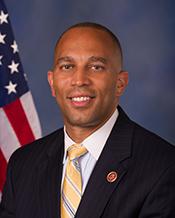
Madam Speaker, I yield 4 minutes to the distinguished gentleman from New York (Mr. Jeffries), the sponsor and author of this bill, the chairman of the Democratic Caucus.
Madam Speaker, I yield the gentleman from New York (Mr. Jeffries) an additional 1 minute.
Madam Speaker, I yield myself the balance of my time.
Let me thank the gentleman from North Carolina (Mr. Bishop) for his collegial response and his very important remarks on collaboration for important legislation like this.
Let me also thank the distinguished gentleman from New York for finding an Achilles' heel that would really and continues to undermine the true sense of attorney-client privilege and to respect that privilege, whether you are in custody or not, and also recognizes the increasing utilization of the digital world to file briefs, to make arguments, and, of course, to find that divide between those in-custody inmates incarcerated and those that are not in custody. We are now moving to extensive virtual court proceedings.
As we well know, individuals in custody are making a number of efforts to prove their innocence. They are appealing. They are seeking new trials. They, too, have rights that should be respected under both the Criminal Code and the Constitution.
So, again, I thank the gentleman for his thoughtfulness and all the bipartisan cosponsors that he has.
Madam Speaker, H.R. 546 would ensure that the attorney-client privilege, again, is safeguarded in all communications between criminal defendants and their attorneys. This bipartisan legislation addresses an issue that is essential to the fair administration of the criminal justice system.
During this ongoing pandemic, this measure has become even more urgent when there is even more reliance on electronic communications between attorneys and incarcerated individuals.
For these reasons, I urge my colleagues to join me in supporting this bipartisan legislation.
Madam Speaker, I yield back the balance of my time.