Madam Speaker, by direction of the Committee on Rules, I call up House Resolution 1377 and ask for its immediate consideration. Madam Speaker, for the purpose of debate only, I yield the customary 30…
Madam Speaker, by direction of the Committee on Rules, I call up House Resolution 1377 and ask for its immediate consideration.
Madam Speaker, for the purpose of debate only, I yield the customary 30 minutes to the gentlewoman from Minnesota (Mrs. Fischbach), pending which I yield myself such time as I may consume. During consideration of this resolution, all time yielded is for the purpose of debate only.
General Leave
Madam Speaker, I ask unanimous consent that all Members be given 5 legislative days to revise and extend their remarks.
Madam Speaker, yesterday the Rules Committee met and reported a rule, House Resolution 1377, providing for consideration of four measures: H.R. 4118, H.R. 6448; H.R. 5768, and H.R. 8542, all under closed rules.
For H.R. 4118 and H.R. 6448, the rule provides 30 minutes of general debate equally divided and controlled by the chair and ranking minority member of the Committee on the Judiciary for each bill and motions to recommit for each measure.
For H.R. 5768, the rule provides 30 minutes of general debate equally divided and controlled by the chair and ranking minority member of the Committee on the Judiciary, self-executes a manager's amendment from Chairman Nadler, and provides a motion to recommit.
For H.R. 8542, the bill provides 30 minutes of general debate equally divided and controlled by the chair and ranking minority member of the Committee on Energy and Commerce and a motion to recommit.
Madam Speaker, Democrats in this Congress have been focused on building safer communities since day one. We believe that every child in America deserves the safety and security of growing up in a community free from violence, trusting that the people who keep them safe will do that regardless of the color of their skin or the ZIP Code that they live in. We believe that the need to fight crime and improve safety in our communities should unite us, not divide us.
These are good bills that we are considering today that will make our communities safer.
The Mental Health Justice Act creates a grant program for States and local governments to train and dispatch mental health professionals to respond to emergencies that involve people with behavioral needs.
The VICTIM Act establishes a grant program to hire, train, and retain detectives and victim services personnel to investigate shootings and support victims.
The Break the Cycle of Violence Act provides grants to communities for evidence-based community violence intervention and prevention programs designed to interrupt cycles of violence.
The Invest to Protect Act creates a grant program to provide police departments of fewer than 125 officers training resources for calls involving people with substance use disorders, mental health needs, and for people with disabilities.
I am glad that we are moving forward today. I am thankful to my colleagues who have worked on these bills.
Do I want more?
Of course.
Will I keep fighting for us to do more?
Absolutely.
The truth is we still haven't made meaningful gains when it comes to accountability. The House passed the George Floyd Justice in Policing Act. Sadly, the Senate is yet to act on that bill.
But I don't want the perfect to be the enemy of the good, and if you don't like what is in one of these bills or all of them, then you can vote against them. But I strongly urge everybody on both sides of the aisle to vote ``yes'' on the rule so we can at least move this forward and have the opportunity to debate these measures.
I am confident that many of the provisions of these four bills will help save lives. But this conversation can't end here. We need to keep making our communities safer in new, innovative, and imaginative ways. We can start by passing this rule and passing the underlying legislation.
Madam Speaker, I reserve the balance of my time.
Madam Speaker, I yield myself such time as I may consume.
Madam Speaker, I have great respect for my colleague from Minnesota and appreciate serving with her on the Rules Committee, but I think the only talk about politics here is from the gentlewoman from Minnesota.
She talks about defunding the police. The bills that are before us are grant programs. So I am not sure what she is talking about. If you want to talk about politics, fine, let's talk about voting records.
Madam Speaker, I include in the Record a Washington Post article titled ``21 House Republicans vote against awarding Congressional Gold Medal to all police officers who responded on January 6.''
[From the Washington Post, June 15, 2022]
21 House Republicans Vote Against Awarding Congressional Gold Medal to
All Police Officers Who Responded on Jan. 6
(By Felicia Sonmez)
Twenty-one House Republicans on Tuesday voted against
awarding the Congressional Gold Medal to all police officers
who responded to the Jan. 6 violent attack on the Capitol by
a pro-Trump mob.
The measure passed the House with overwhelming bipartisan
support from 406 lawmakers. But the 21 Republicans who voted
``no'' drew immediate condemnation from some of their
colleagues, and the vote underscored the lingering tensions
in Congress amid efforts by some GOP lawmakers to whitewash
the events of that day.
Rep. Robert C. ``Bobby'' Scott (D-Va.) called the ``no''
votes ``a sad commentary on the @HouseGOP,'' while Rep. Adam
Kinzinger (R-Ill.) declared, ``How you can vote no to this is
beyond me.''
``Then again, denying an insurrection is as well,''
Kinzinger, a vocal critic of former president Donald Trump,
said in a tweet. ``To the brave Capitol (and DC metro PD)
thank you. To the 21: they will continue to defend your right
to vote no anyway.''
In an interview on CNN Tuesday night, Rep. Gerald E.
Connolly (D-Va.) called the 21 ``no'' votes ``a new low for
this crowd.''
``They voted to overturn an election. But in their vote
today, they kind of sealed the deal of basically affiliating
with the mob,'' Connolly said. ``They now are part of the
insurrectionist mob. They brought enormous disrepute and
dishonor on themselves in not honoring the brave men and
women who defended the Capitol of the United States--
everybody in it, but also defending the symbol of democracy
in the world, not just here in the United States.''
In March, when an initial version of the legislation was
brought to the House floor, a dozen Republicans voted against
the measure. Many of those who voted ``no'' said they
objected to the use of the term ``insurrectionists'' in the
resolution.
Those GOP lawmakers included Reps. Andy Biggs (Ariz.),
Thomas Massie (Ky.), Andy Harris (Md.), Lance Gooden (Tex.),
Matt Gaetz (Fla.), Marjorie Taylor Greene (Ga.), Louie
Gohmert (Tex.), Michael Cloud (Tex.), Andrew S. Clyde (Ga.),
Greg Steube (Fla.), Bob Good (Va.) and John Rose (Tenn.).
The House and Senate then remained in a standoff for three
months over whether to honor all law enforcement who
responded on Jan. 6 or to award the Congressional Gold Medal
to one officer in particular, Capitol Police Officer Eugene
Goodman, who single-handedly diverted an angry mob away from
the Senate chamber.
The Senate had already unanimously voted to give the Gold
Medal exclusively to Goodman. The medal, bestowed by
Congress, is a symbol of national appreciation for
distinguished achievements.
Ultimately, both chambers agreed to slightly modify the
House legislation. Four Gold Medals will be awarded: one for
the Capitol Police, one for the D.C. police, another for the
Smithsonian Institution and another to be displayed inside
the Capitol building along with a plaque that names all law
enforcement agencies who helped repel the rioters that day.
On Tuesday, Gooden, one of the 12 House Republicans who
voted against the legislation in March, voted in favor of the
new bill.
But the number of opposing votes grew, with 10 other House
Republicans switching their votes from ``yes'' to ``no.''
Those Republicans are Reps. Lauren Boebert (Colo.), Barry
Moore (Ala.), Ralph Norman (S.C.), Matthew M. Rosendale
(Mont.), Chip Roy (Tex.), Paul A. Gosar (Ariz.), Warren
Davidson (Ohio), Scott Perry (Pa.), Jody Hice (Ga.) and Mary
Miller (Ill.).
Some of those who voted ``no'' on Tuesday said they
objected to the use of the words ``temple'' or
``insurrection'' in the resolution.
``I wouldn't call it an insurrection,'' Greene said,
according to Politico.
Some House Republicans, such as Clyde, have sought to
recast the violent mob's actions on Jan. 6 as little
different from a ``normal tourist visit'' to the Capitol.
Others have sought to play down that day's events in
different ways.
During the storming of the Capitol on Jan. 6, rioters
attempted to break into the House chamber, punching and
busting glass, resulting in the death of Ashli Babbitt, whom
police shot when she attempted to climb through a shattered
glass door.
Gosar has previously claimed that Babbitt had been
``executed''--even though she defied police warnings and the
officer who fatally shot her was cleared of any criminal
wrongdoing.
Gosar did so again Tuesday, claiming during a House hearing
that a Capitol Police officer was ``lying in wait'' for
Babbitt and that she was ``executed,'' Politico reported.
Rep. Liz Cheney (R-Wyo.), who was ousted from House
Republican leadership over her criticism of Trump's role in
the Jan. 6 insurrection, denounced Gosar's remarks Tuesday
evening.
Madam Speaker, you heard that right: 21 of our colleagues across the aisle opposed a simple bill honoring the heroes of January 6; officers who now bear physical and psychological scars from that day because they fought to protect us in the Capitol. It is disgraceful. Yet, nothing about that from the other side of the aisle in terms of just how disgraceful that was.
You can talk politics, but if you want to talk about the substance of these bills, then do so and acknowledge what they are. They are bills that will help make our community safer. They are bills that, quite frankly--I should also point out that I think all but one of the bills is the same as they were in July.
I am not quite sure what the fuss over the fact that we are bringing these things up right now is all about. They are good bills that will help make our community safer. Look, I trust that we pass the rule. Some thoughtful Republicans will vote in favor of some of them or all of them.
If you don't believe that this is an appropriate thing to do, then you can vote ``no.'' That is your right, and you can go home and explain it to your constituents.
Madam Speaker, I reserve the balance of my time.
Madam Speaker, I yield myself such time as I may consume.
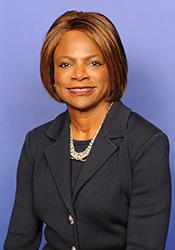
Madam Speaker, just for the record, because I think it is important to have an accurate record, the text of three of these bills has been available for over a month. Even the manager's amendment on the VICTIM Act of 2022, which the distinguished gentlewoman from Florida (Mrs. Demings) has introduced has been available for almost a month.
Again, the only one talking about politics is the gentlewoman from Minnesota, but I guess that is all they have.
Madam Speaker, I include in the Record letters in support of the VICTIM Act of 2022 from the National Association of Police Organizations, from the National Fraternal Order of Police, from the International Association of Chiefs of Police, from the National Police Foundation, all in support of the VICTIM Act.
National Association of
Police Organizations, Inc.,
Alexandria, VA, June 14, 2022.
Hon. Jerrold Nadler,
Chair, Committee on the Judiciary,
House of Representatives, Washington, DC.
Hon. Jim Jordan,
Ranking Member, Committee on the Judiciary,
House of Representatives, Washington, DC.
Dear Chairman Nadler and Ranking Member Jordan: On behalf
of the National Association of Police Organizations (NAPO),
representing over 241,000 sworn law enforcement officers
across the United States, I am writing to advise you of our
support for the Violent Incident Clearance and Technological
Investigative Methods (VICTIM) Act, H.R. 5768, and thank the
Committee for considering this legislation.
Our nation's cities and communities are experiencing a
historic rise in violent crime. Murders and non-fatal
shootings are going unresolved at higher rates as law
enforcement agencies do not have the officers and resources
to dedicate to improving clearance rates for these horrendous
crimes. The VICTIM Act will help address this issue by
supplying much needed grant funding to agencies to fill,
replenish, train, and support their detective and homicide
personnel. Through this legislation, law enforcement will be
able to focus on solving these violent crimes that have such
a detrimental impact on our communities and improve the
services that they render to victims.
We urge the Committee to join us in support of the VICTIM
Act and we look forward to working with you to ensure law
enforcement agencies have the support and resources necessary
to serve and protect our communities.
Sincerely,
William J. Johnson, Esq.,
Executive Director.
Madam Speaker, I would respectfully suggest to my colleague that they are supporting this legislation not because of politics, they are supporting it because they think it is actually good for our communities and will make our communities safer.
Madam Speaker, I include in the Record a Forbes article titled ``Trump Loyalists' Calls To Defund the FBI, and Other Hypocrisies.''
[From Forbes, Aug. 12, 2022]
Trump Loyalists' Calls To Defund the FBI, and Other Hypocrisies
(By Shaun Harper)
Federal Bureau of Investigation agents executed a warrant
to search former U.S. President Donald Trump's Mar-a-Lago
estate in Palm Beach, Florida this week. They were reportedly
looking for classified documents that weren't supposed to
leave the White House during the presidential transition.
Materials for which the FBI was looking apparently have
national security implications. In a press conference
yesterday, Attorney General Merrick Garland said he
``personally approved'' the search of Trump's home.
Shockingly and ironically, many Trump loyalists are calling
for the FBI to be defunded.
Following the police-executed murders of George Floyd and
Breonna Taylor in 2020, Black Lives Matter activists and
other Americans called for a defunding of police departments
across the country. Trump, most of his supporters, and
several others fiercely rejected this proposal. They praised
law enforcement officers and advanced what became known as
the ``Blue Lives Matter'' campaign. There was occasional
acknowledgment that a small number of bad apples sometimes
engage in bad behaviors. But systemic racism in policing?
Absolutely not. Opponents of the defund the police movement
loudly applauded the bravery, sacrifice, and integrity of law
enforcement officers.
Trump supporters who opposed defunding the police two years
ago are now calling for the FBI, a law enforcement agency, to
be defunded. Among them is Florida Republican congressional
candidate Anthony Sabatini, who in a CNN interview deemed the
FBI ``totally useless.'' He also wants FBI agents to be
arrested.
Garland, our nation's top cop, ``needs to be
assassinated,'' one person who may (or may not) be a Trump
supporter tweeted. This is just one of many social media
posts this week calling for violence against the Attorney
General and the FBI. Ricky Shiffer, an armed man who
allegedly fired into an FBI office building with a nail gun
and was armed with an AR-15-style rifle, was killed following
a car chase and standoff with law enforcement officers in
Cincinnati yesterday. Shiffer was allegedly part of pro-Trump
extremist groups that attacked the U.S. Capitol last year.
The hypocrisy over opposing defunding the police in 2020,
but calling for the FBI to be defunded now, is clear--though
not at all atypical. Trump loyalists have done versions of
this before.
``Lock her up,'' they chanted, as 2016 Democratic
Presidential nominee Hillary Clinton was accused of storing
classified information on private, unencrypted email servers
in her home. Paradoxically, a version of this is why FBI
agents searched Trump's Florida estate this week.
The same group that reached determinations of Clinton's
guilt before, during, and after the investigation of her
swiftly determined that the FBI is wrong about Trump and
should therefore be defunded.
Another example are the ``My Body, My Choice'' posters that
many Trump supporters carried during rallies held throughout
the pandemic to oppose masking and vaccine mandates. That
phrase had been long used in pro-choice demonstrations. Most
Trump supporters aren't pro-choice, right?
The opposition of President Barack Obama nominating Merrick
Garland for the Supreme Court seat that became vacant eight
months prior to the 2016 election is a third example of
hypocrisy. Trump supporters and other GOP members
successfully argued that an outgoing president shouldn't have
the authority to nominate a new justice to the Court with so
little time remaining in his tenure. Yet, many of those same
politicians and other conservatives were fully on board with
Trump nominating Amy Coney Barrett to the Supreme Court just
38 days before the 2020 presidential election.
And then there is the racialized double standard that
played out in the January 6 Capitol Insurrection. On June 1,
2020, a group of mostly peaceful demonstrators gathered near
the White House to protest George Floyd's murder. They killed
no one and did no damage to the White House or any other
federal building. But Trump still called in the National
Guard to aggressively remove them from the streets. His
supporters defended the president's decision. Just six months
later, hundreds of angry Trump loyalists, most of them white,
violently attacked the U.S. Capitol. Their actions resulted
in five deaths and the injuries of 140 law enforcement
officers.
The inescapably obvious role that race played in the
January 6 insurrection hasn't been talked about much, if at
all, in the recent congressional hearings. Had Black
Americans attacked the Capitol, I am certain that Trump
supporters, as well as other conservatives and liberals
alike, would have reached near-unanimous agreement on what
happened that day and the necessary legal repercussions. I
also remain convinced that most Black protestors would have
been immediately killed had they scaled and otherwise
violently entered any federal building, let alone the one in
which Vice President Mike Pence and congresspersons were
meeting at the time. Trump and his loyalists surely would've
argued those Black insurrectionists deserved whatever law
enforcement officers did to them that day, hence the
hypocrisy.
Madam Speaker, I remind my Republican colleagues that just last month a number of them openly and unabashedly messaged around defunding and dismantling the FBI. Some even sold campaign merchandise with that tagline. Let that sink in, I would say to my colleagues.
In any event, pass the rule. Let's have the debate on these bills. If you want to promote safer communities, then you will support them. If you want to just do politics as usual, then you will follow the lead of my colleague from Minnesota and vote against them.
Madam Speaker, these are good bills, and I reserve the balance of my time.
Madam Speaker, I yield myself such time as I may consume.
Madam Speaker, first of all, I thank the gentlewoman from Minnesota for conceding that the text of three of the bills was available for a month. I am glad we could set the record straight on that.
The second thing I will say is that at least two of these bills have bipartisan cosponsorship. The VICTIM Act has four Republican cosponsors. The Invest to Protect Act has 24 Republican cosponsors. Maybe they didn't get the memo that they are supposed to put politics ahead of people, but the bottom line is they are cosponsors of this. I would expect, unless their arms are twisted, that they will vote for the bills on final passage.
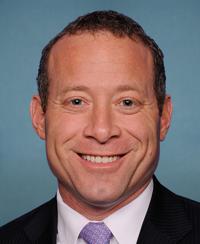
Madam Speaker, I include in the Record a letter from 101 human rights, civil rights, racial justice, religiously affiliated, and gun safety organizations who wrote in support of Congressman Horsford's bill, H.R. 4118, the Break the Cycle of Violence Act. I think that is worth noting.
July 30, 2021.
We the undersigned 101 human rights, civil rights, racial
justice, religiously affiliated and gun safety organizations
write in support of the Break the Cycle of Violence Act (S.
2275/H.R. 4118). We urge you to swiftly pass the Break the
Cycle of Violence Act to provide at least $5 billion in
federal funding over eight years for community gun violence
prevention programs.
Gun violence in the U.S. is a crisis, disproportionately
impacting Black and Brown communities nationwide. Gun
homicides are the leading cause of death among Black men ages
15-34 and the second-leading cause of death for Latino men
and boys of the same age range. Black men are more than ten
times as likely to be the victims of gun homicides than white
men. In 2019, 14,414 people died from gun homicides in the
U.S. Nearly 60 percent--8,607--of gun homicide deaths were
Black people. Yet Black people represent just 14.7 percent of
the U.S. population.
With a surge in gun sales in the wake of COVID-19,
shootings are increasing across the U.S., contributing to the
crisis. According to the Centers for Disease Control and
Prevention, there were 39,707 deaths in 2019, the most recent
year for which government data is available with 14,414 of
those being gun homicides. The Gun Violence Archive, a non-
profit organization that tracks and documents gun injuries
and deaths, published data in May 2021 indicating that the
number of deaths in 2020 had risen to a staggering 43,554
with 19,398 of those being gun homicides.
Evidence-based, community violence prevention programs have
been proven to reduce gun violence and save lives, while
investing resources in impacted communities. There are three
well-established models of gun violence prevention programs
that have proven successful in reducing violence, some of
which are referenced in both President Biden's executive
actions and guidance and in the Break the Cycle of Violence
Act. The Group Violence Intervention (``GVI'') strategy, a
form of problem-oriented policing (as opposed to traditional
``incident-driven'' policing), was first used in the
enormously successful Operation Ceasefire in Boston in the
mid-1990s where it was associated with a 61 percent reduction
in youth homicide. The program has now been implemented in a
wide variety of cities with consistently impressive results.
An analysis of more than 20 GVI programs showed a significant
reduction in firearm violence. The most successful of these
programs have reduced violent crime in cities by an average
of 30 percent and improved relations between law enforcement
officers and the neighborhoods they serve. The GVI model has
a remarkably strong track record: a documented association
with homicide reductions of 30 to 60 percent.
A study of the Cure Violence model, first implemented in
Chicago, found that its implementation in several targeted
districts in Chicago was associated with a 38 percent greater
decrease in homicides and a 15 percent greater decrease in
shootings, compared to districts that did not receive the
intervention. A 2018 evaluation of Philadelphia's Cure
Violence Program found that shootings decreased
significantly, compared to other matched comparison areas.
An example of Hospital Based Violence Intervention, the
third model of evidence-based violence prevention programs,
is the San Francisco Wraparound Project, first introduced in
2005. In its first six years of operation the Wraparound
Project was associated with a fourfold decrease in injury
recidivism (re-injury from gun-shot wounds) rates. Moreover,
studies have shown that this form of intervention saves
hospitals money by preventing future injuries, both for the
patient and for anyone the patient may have considered
retaliating against.
Investment, training, and support for culturally
appropriate violence prevention workers with lived experience
in impacted communities has proven successful in cities
across the U.S., yet lack of political will has resulted in
many advocates and community leaders working with limited or
no resources.
For example, Lamar Johnson of B.R.A.V.E. Chicago, said:
``Our after-school program is a non-profit- we run it through
the church--and the funding comes mostly from private donors.
The majority of the city's budget goes to law enforcement--
and that's not just Chicago, that's most cities. We've met
with mayors' administrations so many times and presented our
case, but they don't give us funding. The whole system is so
broken, because the focus is on the criminal justice system.
If someone is addicted to drugs, they go to jail before they
go to the hospital to get treatment. It's the mindset.''
Recognizing the effectiveness of these programs and the
heroic people like Lamar who lead them, President Biden, on
March 31, 2021, announced his intention to include $5 billion
for gun violence prevention programs in the American Jobs
Plan. This builds on the efforts of Senator Booker and
Representative Horsford to pass the Break the Cycle of
Violence Act, first introduced in the 116th Congress. If
passed, it would provide funding for federal grants to
communities that experience 20 or more homicides per year and
have a homicide rate at least twice the national average, or
communities that demonstrate a unique and compelling need for
additional resources to address gun and group-related
violence. Each grant awarded would be renewable over five
years, and funds would be commensurate with the scope of the
proposal and the demonstrated need.
While it is impossible to place a dollar amount on a
person's life or the cost of that loss to their families,
communities, and loved ones, the astronomical financial
impact of gun violence on U.S. society cannot be overlooked.
According to a 2020 study by physicians and researchers, gun
violence costs the U.S. healthcare system $170 billion per
year. The Health Alliance for Violence Intervention estimates
it would cost an estimated $827 million per year, or $5.36
billion over eight years, to fund sustained and adequate
violence intervention programs in the 48 U.S. cities with the
highest rates of violence--hence the call on Congress to pass
at least $5 billion over eight years for community gun
violence prevention programs.
With sustained investment into gun violence prevention
programs and a national comprehensive strategy aimed at
reducing gun violence, particularly in Black and Brown
communities, Congress can make inroads to reducing gun
violence in all communities and ensure the right of everyone
to live free from the threat of gun violence. Congress has an
obligation to take action to invest in communities ravaged by
gun violence and to make efforts to prevent gun violence and
protect the lives and safety of all individuals, particularly
in the face of evidence that the 2020 gun-related injury and
death tolls in the U.S. have been the highest in decades.
We urge Congress to act urgently to pass the Break the
Cycle of Violence Act to ensure at least $5 billion in
federal funding over eight years for community gun violence
prevention programs that save lives.
Sincerely,
Amnesty International USA, Community Justice Action Fund,
ACLU, African American Ministers in Action, Ban Assault
Weapons Now!, Brady, BRAVE Youth Leaders, Ceasefire Oregon,
Ceasefire Pennsylvania, Center for American Progress, The
Coalition to Stop Gun Violence, CommonSpirit Health,
Congregation of Sisters of St. Agnes and the CSA-USA
Associate Community Congregation of the Sisters of St. Joseph
of Peace, CT Against Gun Violence.
Dominican Sisters of Houston, Dominican Sisters--Grand
Rapids, Dominican Sisters of Sinsinawa, Everytown for Gun
Safety, First Unitarian Universalist Church of Houston,
Franciscan Action Network, Franciscan Peace Center,
Franciscan Sisters of the Sacred Heart, Generation Progress,
Giffords, GPEC-ICHV, Grandmothers Against Gun Violence, Grey
Nuns of the Sacred Heart, Gun Violence Prevention PAC
Illinois, The Health Alliance for Violence Intervention, Holy
Spirit Missionary Sisters, USA-JPIC.
Honor with Action Coalition, Houston League of Business &
Professional Women, IHM Sisters--Justice, Peace and
Sustainability Office, Indivisible Northern Nevada, Institute
of the Blessed Virgin Mary, Intercommunity Peace and Justice
Center, Iowans for Gun Safety, Jewish Women International,
www.Journey4ward.org, Leadership
Conference of Women Religious, Leadership Team of the
Felician Sisters of North America, March for Our Lives DC,
Marylanders to Prevent Gun Violence, Massachusetts Coalition
to Prevent Gun Violence, Moms Demand Action.
NAACP, National Coalition Against Domestic Violence,
Newtown Action Alliance, Newtown Junior Action Alliance,
Nonviolence Institute of Rhode Island, North Carolina Council
of Churches, North Carolinians Against Gun Violence,
Northwest Coalition for Responsible Investment, Not My
Generation, Ohio Coalition Against Gun Violence, People for a
Safer Society, Presentation Sisters, San Francisco, CA,
Reconstructionist Rabbinical Association, Region VI Coalition
for Responsible Investment, Religious of the Sacred Heart of
Mary, Western American Area.
Restorations Ministries, Inc., Rhode Island Coalition
Against Gun Violence, Sacred Ground Ministries, Saint Mark's
Episcopal Capitol Hill DC, San Diegans for Gun Violence
Prevention, Sandy Hook Promise, School Sisters of Notre Dame-
Atlantic Midwest Office, School Sisters of Notre Dame,
Central Pacific Province, Sisters of Bon Secours, USA,
Sisters of Charity, BVM, Sisters of Charity Federation,
Sisters of Charity of Nazareth Congregational Leadership,
Sisters of Charity of Nazareth Western Province Leadership,
Sisters of Charity of Saint Augustine, Sisters of Mercy of
the American Justice Team.
Sisters of Notre Dame de Namur USA, Sisters of St. Dominic
of Blauvelt, New York, Sisters of St. Dominic Racine, WI,
Sisters of St. Francis of Assisi, Sisters of St. Joseph of
Boston, Sisters of Saint Joseph of Chestnut Hill,
Philadelphia, PA, Sisters of St. Joseph of Carondelet, LA,
Sisters of St. Joseph of NW PA, Sisters of St. Mary of Namur,
Sisters of the Holy Cross, Sisters of the Humility of Mary,
Squirrel Hill Stands Against Gun Violence, Stop Handgun
Violence, Students Demand Action, Survivors Lead.
Team Enough, Trinity Health, Union of Sisters of the
Presentation of BVM, USA Unit, United Church of Christ,
Justice and Local Church Ministries, Ursuline Sisters of
Cleveland, Ursuline Sisters of Louisville, KY, Ursuline
Sisters of Mount Saint Joseph, Wheaton Franciscans JPIC
Office, Youth Advocate Programs, Inc, Youth Over Guns.
Madam Speaker, again I inserted earlier an article talking about the Republicans that would not even honor the men and women of the Capitol Police who defended us on January 6. I continue to believe that that was a disgraceful moment.
But when the gentlewoman says that somehow they will always stand on behalf and honor members of law enforcement--let me just read a few quotations here. Representative Jeff Duncan from South Carolina:
``The FBI has proven time and again that it is corrupt to the core. At what point do we abolish the Bureau and start over?''
Representative Paul Gosar of Arizona says:
``I will support a complete dismantling and elimination of the Democrat brownshirts known as the FBI. This is too much for our Republic to withstand.''
Representative Lauren Boebert of Colorado:
``The GOP majority must defund all forms of tyranny throughout Biden's government. @FBI.''
Representative Marjorie Taylor Greene of Georgia:
``Impeach Merrick Garland and defund the corrupt FBI. End political persecution and hold those accountable that abuse their positions of power to persecute their political enemies, while ruining our country. This shouldn't happen in America. Republicans must force it to stop.''
On Marjorie Taylor Greene's website, she is selling defund the FBI T- shirts, so it is my friends on the other side of the aisle who want to defund law enforcement, who want to defund the police.
There is an old saying: Physician, heal thyself. You ought to take that to heart. The bottom line here is that these are bills that will help improve safety in our communities. These are bills that local officials, local law enforcement organizations, want. The only people who don't want them are my friends on the other side of the aisle.
If you want to vote no, vote no. But I suspect that some on the minority side understand what their communities want, and they don't want politics as usual. They don't want people putting politics over people. What they want is help for their communities.
You have a chance. You can either vote yes to help the communities or vote no. That is your choice.
Madam Speaker, I think these bills are good bills. We should support the rule. We should support the underlying bill.
Madam Speaker, I reserve the balance of my time.
Madam Speaker, I yield myself such time as I may consume.
Madam Speaker, my colleague from Minnesota said, if I am quoting it right, ``They expect us to believe they support our law enforcement.'' I will be honest with you. I don't expect my colleagues to believe anything, but I expect them to read the bills and to decide whether or not, if you pass these bills, they will help make our communities safer or not.
The gentleman from Florida didn't like three of the bills, but he likes one of the bills. The beauty of this rule is you will be able to vote on all of them, and you can vote no on the ones you don't like, and you can vote yes on the ones that you do like.
When we talk about how law enforcement has been under attack, I don't want to hear any lectures from my friends on the other side of the aisle. I went through a whole litany of Republican Members who were calling for defunding the FBI.
My friends have a Member on the Republican side who actually is selling defund the FBI T-shirts on her web page. It says, ``Defund the FBI.'' It is defund the police. My colleagues don't seem to care much about that.
I will go back to something else that I still can't get out of my mind, and that was the vote on awarding a Congressional Gold Medal to the United States Capitol Police officers who saved the lives of everybody who was here that day, and 21 Republican Members voted no. That is a disgrace. That has brought shame on this institution.
So, don't lecture any of us about our support for law enforcement when 21 of the Members on the other side of the aisle voted no on a Congressional Gold Medal to honor the brave men and women who protected us in this Chamber on that day. Enough.
Madam Speaker, I reserve the balance of my time.
Madam Speaker, I yield myself such time as I may consume.
Madam Speaker, I include in the Record an article from The Guardian titled ``'Republicans are defunding the police: FOX News anchor stumps Congressman.''
[From the Guardian, June 28, 2021]
Republicans Are Defunding the Police--Fox News Anchor Stumps
Congressman
(By Martin Pengelly)
The Fox News anchor Chris Wallace made headlines of his own
on Sunday, by pointing out to a senior Republican that he and
the rest of his party recently voted against $350bn in
funding for law enforcement.
``Can't you make the argument that it's you and the
Republicans who are defunding the police?'' Wallace asked Jim
Banks, the head of the House Republican study committee.
The congressman was the author of a Fox News column in
which he said Democrats were responsible for spikes in
violent crime.
``There is overwhelming evidence,'' Banks wrote,
``connecting the rise in murders to the violent riots last
summer''--a reference to protests over the murder of George
Floyd which sometimes produced looting and violence--``and
the defund the police movement. Both of which were supported,
financially and rhetorically, by the Democratic party and the
Biden administration.''
Joe Biden does not support any attempt to ``defund the
police'', a slogan adopted by some on the left but which
remains controversial and which the president has said
Republicans have used to ``beat the living hell'' out of
Democrats.
On Fox News Sunday, Banks repeatedly attacked the so-called
``Squad'' of young progressive women in the House and said
Democrats ``stigmatised'' law enforcement and helped
criminals.
``Let me push back on that a little bit,'' Wallace said.
``Because [this week] the president said that the central
part in his anti-crime package is the $350bn in the American
Rescue Plan, the Covid relief plan that was passed.''
Covid relief passed through Congress in March, under rules
that meant it did not require Republican votes. It did not
get a single one.
Asked if that meant it was ``you and the Republicans who
are defunding the police'', Banks dodged the question.
Wallace said: ``No, no, sir, respectfully--wait, sir,
respectfully ... I'm asking you, there's $350bn in this
package the president says can be used for policing . . .
``Congressman Banks, let me finish, and I promise I will
give you a chance to answer. The president is saying cities
and states can use this money to hire more police officers,
invest in new technologies and develop summer job training
and recreation programs for young people. Respectfully, I've
heard your point about the last year, but you and every other
Republican voted against this $350bn.''
Turning a blind eye to Wallace's question, Banks said: ``If
we turn a blind eye to law and order, and a blind eye to
riots that occurred in cities last summer, and we take police
officers off the street, we're inevitably going to see crime
rise.''
Wallace asked if Banks could support any gun control
legislation. Banks said that if Biden was ``serious about
reducing violent crime in America'', he should ``admonish the
radical voices in the Democrat [sic] party that have
stigmatised police officers and law enforcement''.
Despite working for Republicans' favoured broadcaster,
Wallace is happy to hold their feet to the fire, as grillings
of Donald Trump and Kevin McCarthy have shown.
He has also attracted criticism, for example for failing to
control Trump during a chaotic presidential debate last year
which one network rival called ``a hot mess, inside a
dumpster fire, inside a train wreck''.
Last year, Wallace told the Guardian: ``I do what I do and
I'm sitting there during the week trying to come up with the
best guests and the best show I possibly can and I'm not
sitting there thinking about how do we fit in some media
commentary.
``We're not there to try to one-up the president or any
politician.''
Madam Speaker, if you look at the voting record of many of our colleagues on the other side of the aisle, you will see few to none supported recent funding bills that also direct money toward supporting local law enforcement. If they think that we are on a crusade to defund the police, well, the last few years of funding the police say otherwise.
Madam Speaker, I also include in the Record a Rolling Stone article titled `` `Back-The-Blue' Republicans Bail on Moment of Silence for Fallen Capitol Police Officers.''
[From Rolling Stone, Jan. 6, 2022]
`Back-The-Blue' Republicans Bail on Moment of Silence for Fallen
Capitol Police Officers
(By Tim Dickinson)
The Republican Party holds itself as the champions of law
enforcement. They campaign on slogans of ``Back the Blue.''
They hold rallies flying the ``Thin Blue Line'' flag. They
purport to celebrate the cops who shield the nation from
violence and anarchy.
But when it came time to show up in the halls of Congress
for a remembrance of the sacrifices Capitol and Metropolitan
Police made defending our democracy from violence last Jan.
6, Republicans lawmakers didn't bother to show up. Only one
sitting Republican officeholder showed up, Wyoming Rep. Liz
Cheney. She was accompanied by her father Dick, the former
vice president.
On that dark day one year ago, the ``Thin Blue Line'' was
not a metaphor. Police put their bodies and lives in harm's
way, attempting to blockade the joint session of Congress
from the violent mob of Trump supporters who sought to stop
the peaceful transfer of power after a lawful election. These
cops were beaten, tased, tear gassed, dragged down steps, and
crushed in doorways. More than 140 were injured in the
insurrection, and five officer deaths (including subsequent
suicides) have been linked to the violence and trauma of Jan.
6.
``I want to acknowledge our fallen heroes of that day,''
said Speaker Nancy Pelosi, leading a House session marking
the anniversary of the attack. ``Now I ask all members to
rise in a moment of silence in their memory.''
As the officials rose, the visual of a nearly empty GOP
side of the aisle was chilling, as Sen. Chris Murphy of
Connecticut noted on Twitter:
At the moment of silence for the Capitol Police officers
who died, there were only two Republicans who showed up.
Rep. Lynn Cheney. And her father. The 80 year old former
Vice President.
An extraordinary image of where this country's politics are
right now.
--Chris Murphy January 6, 2022
Speaking to reporters at the Capitol, the former vice
president said he attended the House session to mark ``an
important historical event.'' Cheney elaborated that he was
``deeply disappointed we don't have better leadership in the
Republican Party to restore the Constitution.'' The swipe at
Senate minority leader Mitch McConnell and House minority
leader Kevin McCarthy--who could not be bothered to attend
the remembrance, and who have done little to combat Trump's
destructive and ongoing lies about the 2020 election--was
unmistakable.
Rep. Cheney's attendance was not surprising. She is the top
Republican on the bipartisan congressional committee
investigating the events of Jan. 6, and has been consistent
and unabashed in her criticism of Donald Trump, blaming him
directly for the violence at the Capitol. Cheney has been
treated as a pariah by Trump--who has called her a ``bitter,
horrible human being''--and was ousted from GOP House
leadership earlier this year for refusing to kowtow to the
Dear Leader.
Rep. Adam Kinzinger, the other Republican on the Jan. 6
committee, is expecting the birth of a child and could not
attend. ``Wish I could be there too, but I'm on baby watch,''
he tweeted. ``I am in spirit.''
Madam Speaker, I find it hard to believe that someone says they back the police when they don't even do the bare minimum and show up and remember those who fought to save the lives of our very democracy and every single person in this Chamber that day.
Madam Speaker, I reserve the balance of my time.
Madam Speaker, I yield myself the balance of my time.
I thank the gentlewoman for that closing statement. I keep hearing the Democrats want to defund the police, so here we are on the House floor talking about creating grant programs to help keep communities safer. Now the Republicans are the ones who are talking about defunding the police. Do you see the irony?
Democrats actually have solutions in these four bills; real ideas that have been publicly available for months to make our streets safer and reduce crime. Republicans are the ones talking about defunding and abolishing the FBI.
I will remind my colleagues that you have Republican Members who are raising campaign funds by selling Defund the FBI T-shirts. Want to talk about disgusting?
No mention of that from my colleagues. Fundraising off of selling T- shirts to defund the police; that is what my friends are doing.
Again, I go back to my point earlier. I still can't get over that 21 Republicans couldn't even vote to give a Congressional Gold Medal to the men and women who defended us on January 6. I mean, talk about disgusting. Couldn't show up on the House floor for a moment of silence to honor those police who lost their lives as a result of what happened on January 6. Talk about disgusting.
We have ideas here that I think are worth bipartisan support. Some of this stuff I think should have been brought up under suspension. But, again, my friends put politics ahead of people. We want to put people ahead of politics.
Take the VICTIM Act, H.R. 5768. This establishes a grant program in the Department of Justice to help State, Tribal, and local law enforcement agencies improve their clearance rates for homicides and nonfatal shootings. To me, that seems common sense.
The Break the Cycle of Violence Act, H.R. 4118, creates a nationwide strategy to make our communities safer by addressing both the symptoms and root causes of violence.
The Invest to Protect Act, H.R. 6448, makes targeted investments to ensure that local police departments have the training they need to keep our communities safe.
The Mental Health Justice Act, H.R. 8542; one in four fatal police encounters ends the life of an individual with severe mental illness. The Mental Health Justice Act makes it easier to send trained mental health professionals to respond to individuals experiencing a mental health crisis.
To me, these are basic, commonsense bills that I think the overwhelming majority of people in this country, Democrats, Republicans, Independents, would all support.
You want to talk about not supporting our law enforcement. Republicans voted against $350 billion in the American Rescue Plan that could be used for policing. So please don't lecture us about defunding the police. Republicans only seem to support law enforcement when they are looking for votes. That is a common theme here, when it is politically convenient for them. It is really shameful, and it is cynical. It is why people get frustrated with Washington because everything has a political motivation.
On stuff that we all should come together on, my friends on the other side of the aisle always come up with an issue, an excuse not to do the right thing. You don't have to agree on everything to agree on something, and this is something we ought to agree on and we ought to come together on and get it done.
These are good bills, Madam Speaker, bipartisan bills. I urge a ``yes'' vote on the rule and the previous question, and I yield back the balance of my time.
Madam Speaker, I move the previous question on the resolution.
The previous question was ordered.